Imagine a world without electric lights…
No glowing lamps at night, no twinkling streetlights, not even the cozy light above your bed.
Just… darkness.
A long time ago, in the dimly lit 1800s, nights were truly dark. People used candles, oil lamps, or gas lamps for light—but these could be smoky, dangerous, and sometimes even cause fires. Inventors around the world were on a quest:
“How can we turn electricity into light?”
Then, three brilliant inventors changed everything…
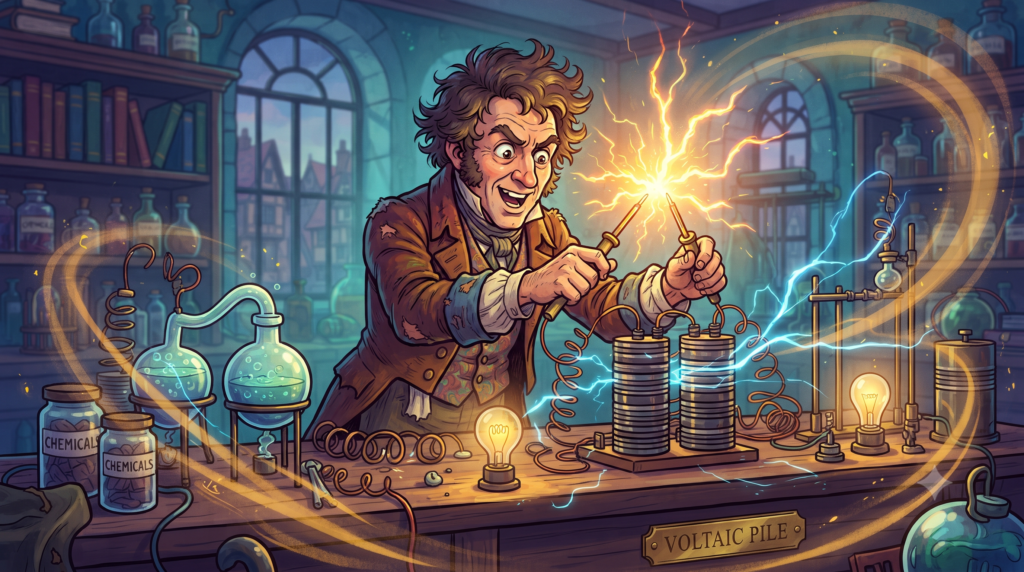
Our story begins with Humphry Davy, born in 1778 in Cornwall, England. As a boy, he was curious and loved science experiments. He didn’t go to fancy schools, but he learned by reading, experimenting, and sometimes even blowing things up (in the name of science, of course!).
One famous incident involved him deliberately causing controlled explosions inside glass apparatus to see how different gases behaved — not the safest pastime, especially in the days before safety goggles.
In 1809, Davy connected two charcoal rods to a battery and—FLASH!—he created the very first electric light. It was called an arc lamp because it made a bright arc of light between the rods.
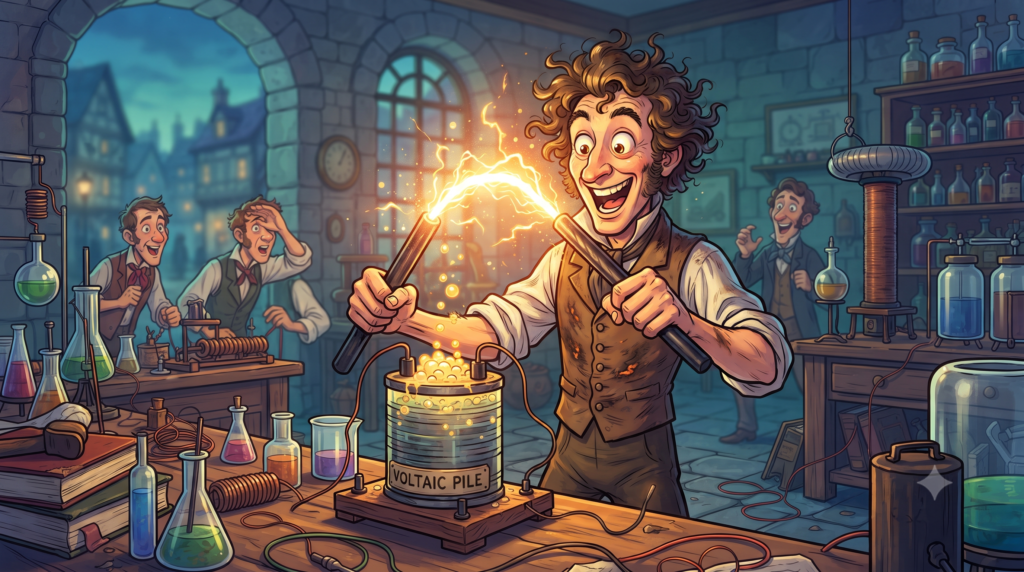
But there was a problem… it was too bright, didn’t last long, and sometimes caught things on fire. Still, Davy had proven something amazing: Some materials glow when electricity passes through them.
💡 Fun Fact
Humphry Davy also invented a special lamp for miners so they could work underground without the risk of explosions from open flames.
Joseph Swan – The Glow Gets Safer
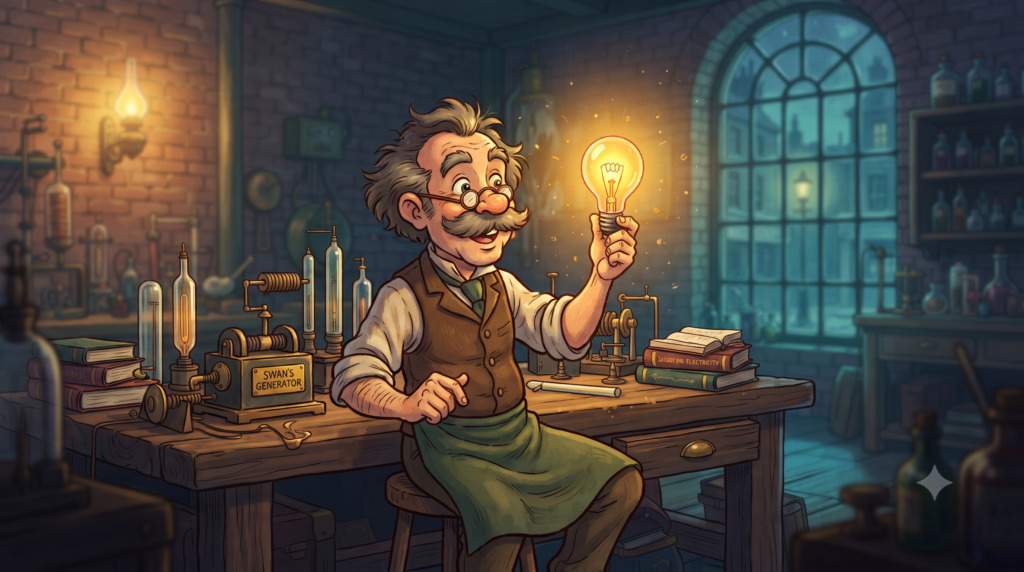
Joseph Swan, born in 1828 in Sunderland, England, loved tinkering with gadgets and was fascinated by photography before he turned his attention to lighting.
He knew the main problem was keeping the filament from burning up. Swan’s clever idea was to remove air from the glass bulb, because without oxygen, the filament wouldn’t catch fire so easily.
In 1878, his invention lit up his own house in Gateshead—it became the first house in the world lit by a light bulb.
But his bulbs still didn’t last very long, so the search for the perfect light continued.
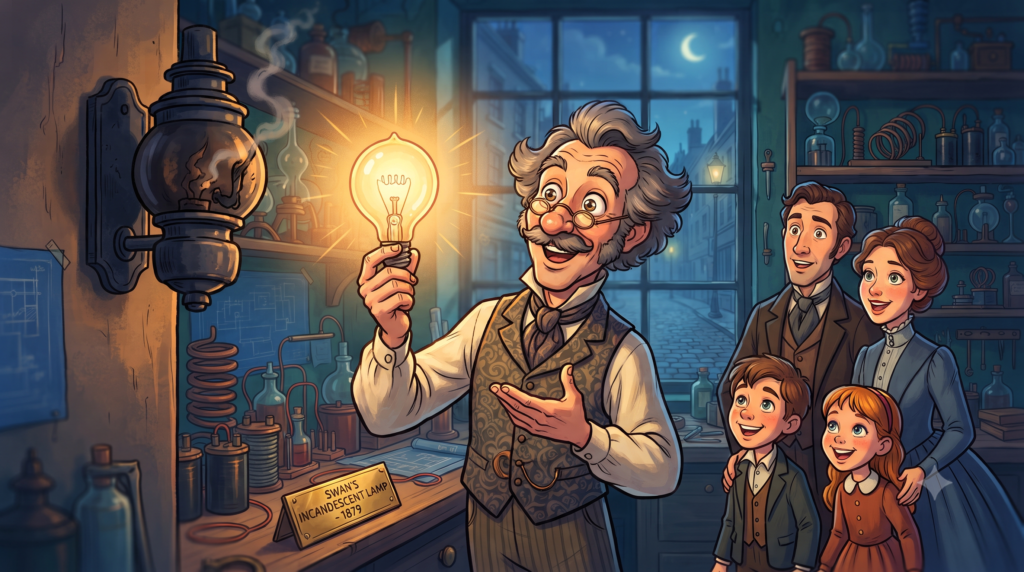
💡 Fun Fact
Early buildings with Swan’s electric lights had signs telling people not to light the bulbs with a match, because many people were so used to lighting oil lamps that they didn’t realize electricity didn’t need fire.
Thomas Edison – The Light that Lasted
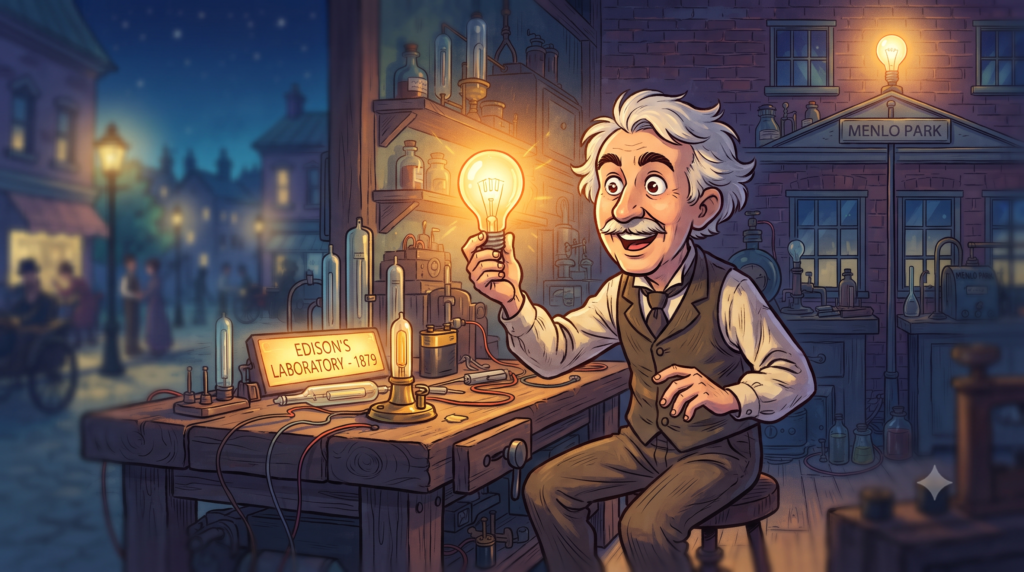
Across the ocean in the United States, Thomas Edison, born in 1847, was a curious boy. He didn’t do well in traditional school, so his mother taught him at home.
He set up his first laboratory in the basement and once accidentally set it on fire.
By the late 1870s, Edison was experimenting with light bulbs too. He realized the secret was finding the right filament—something that could glow for a long time without breaking.
After 4,700 experiments, Edison discovered that carbonized bamboo could burn for more than 1,200 hours.
In 1880, his practical bulb was ready, and soon he and Swan joined forces to bring electric light to everyone.
Edison also built power stations, so whole cities could glow at night.
💡 Fun Fact
Edison once said, “We will make electricity so cheap that only the rich will burn candles.”
Lesser-Known Facts to Amaze You
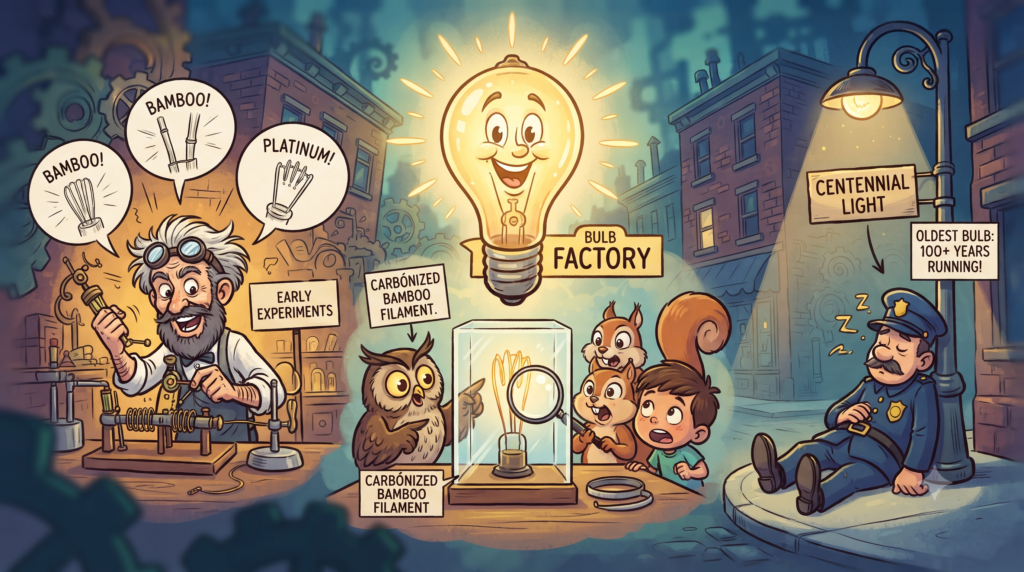
Edison once tried human beard hair as a filament. It didn’t work well—but it shows how creative he was.
Swan and Edison argued over who invented the light bulb first, but later became business partners.
The first electric company in 1882 had only 52 customers, but today billions of bulbs light up the world.
How the Light Bulb Works 💡
Have you ever wondered how a light bulb actually lights up? Today we’re diving into the science behind this everyday miracle.
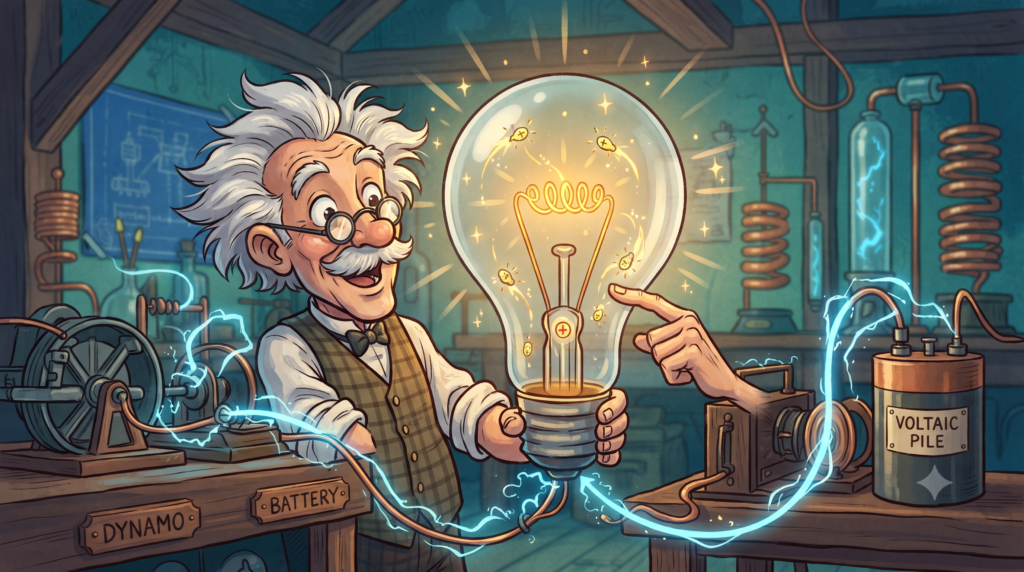
This is what a typical light bulb looks like on the inside. And yes—it’s more than just a glowing wire.
When you flip the switch, electricity flows through the metal contact at the bottom and travels up through special wires called contact wires.
The electricity finally reaches the curly wire called the tungsten filament. Tungsten is super strong and resists the flow of electricity, which causes it to become extremely hot—over 2,500°C.
When it gets that hot, it glows. This is called incandescence, which means glowing because of heat.
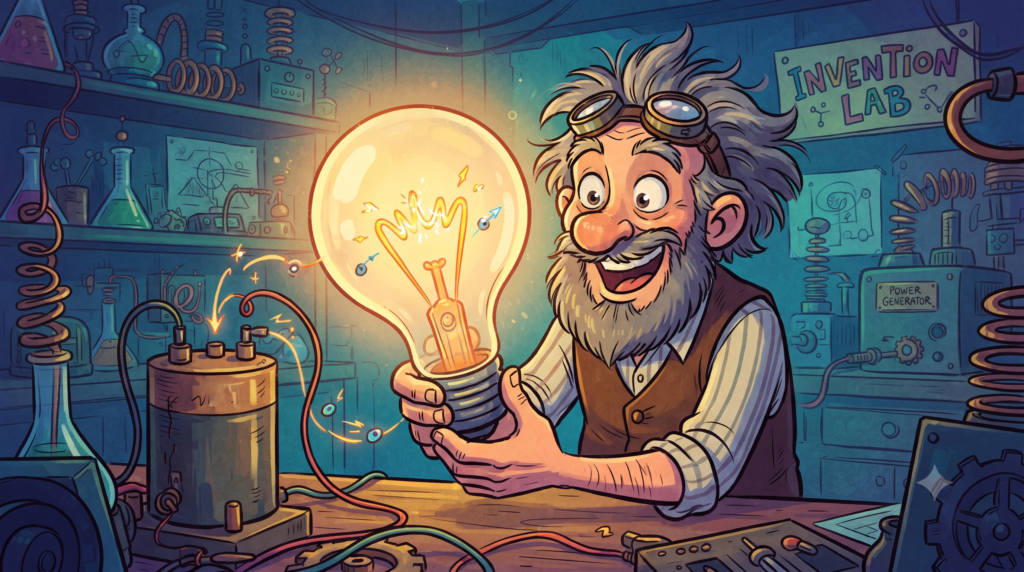
But if it’s so hot, why doesn’t it burn instantly?
Inside the bulb is a special gas, usually argon or nitrogen, which protects the filament from burning.
The entire setup is sealed inside a glass bulb to keep the gas in and the air out.
Electricity flows into the bulb through the wires.
The tungsten filament becomes extremely hot.
The heated filament starts glowing brightly.
Energy transforms into visible light.
✨ After the Light Bulb… ✨
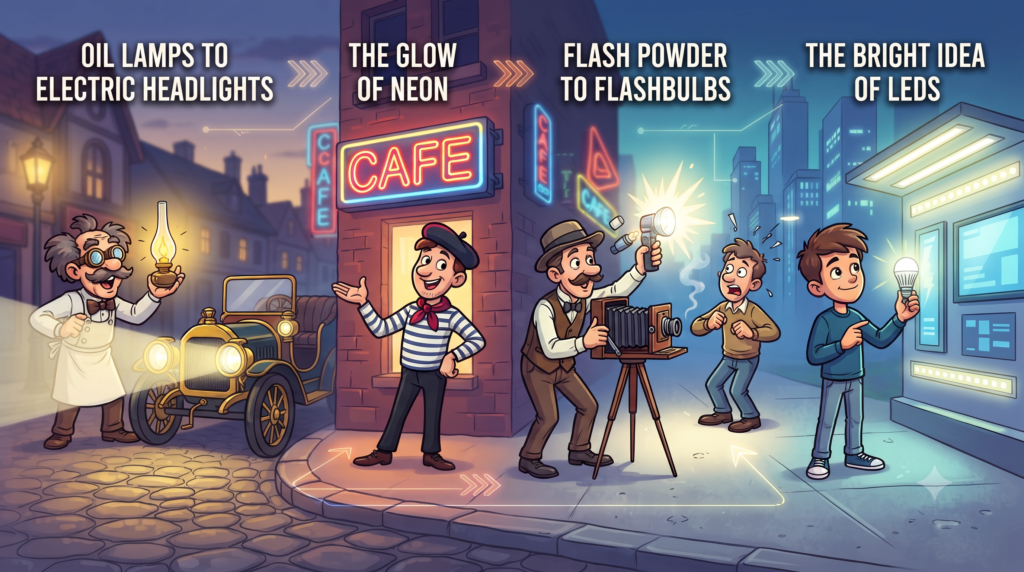
The invention of the light bulb changed the world. Streets and homes could now be lit safely at night.
Soon came even more amazing inventions.
From Oil Lamps to Electric Headlights – A Bright Upgrade
In the early days of cars, around the late 1800s, vehicles used oil or acetylene lamps instead of electric headlights.

The light was weak and unreliable.
Wind or rain could easily blow them out.
Drivers had to light them before every journey.
By the 1910s, electric headlights became brighter, safer, and more reliable, replacing oil lamps completely.
💡 Fun Fact
In 1912, Cadillac introduced the first car with a complete electrical system, including headlights, an electric starter, and ignition.
The Glow of Neon – How Neon Lights Were Invented
In 1910, French engineer Georges Claude discovered that passing electricity through neon gas inside a glass tube produced a brilliant red-orange glow.
Unlike traditional light bulbs, neon lights had no filament. Instead, the gas itself produced the light.
By the 1920s, neon signs became popular for shops, theatres, and advertisements.
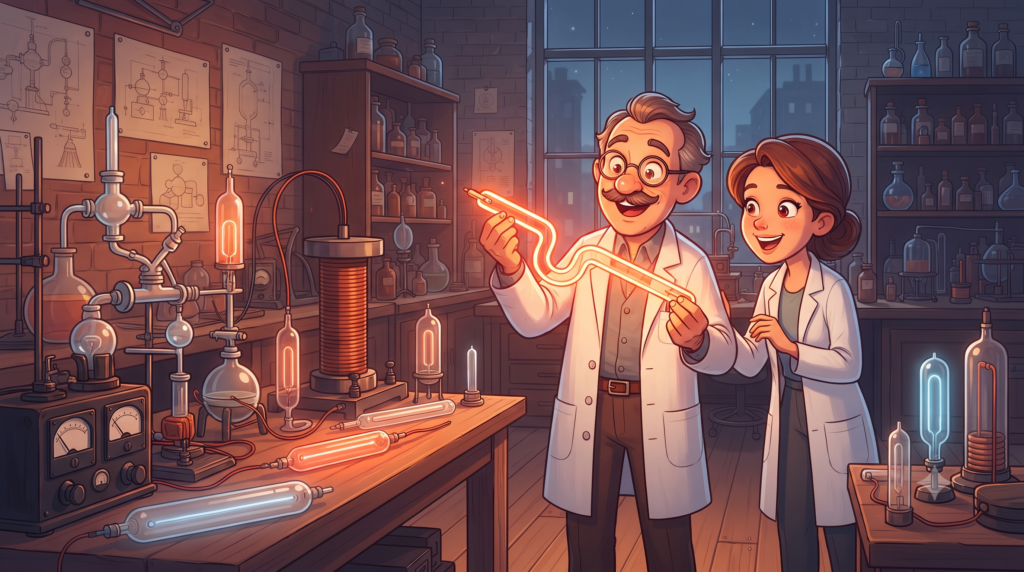
Different gases and coatings later made it possible to create blue, green, pink, and many other colors.
🌈 Fun Facts About Neon
The first neon sign in the United States was sold in 1923 to a car dealership in Los Angeles.
Not every “neon” sign actually contains neon gas. Different gases can create different colors of glowing signs.
Neon is one of the rarest gases in Earth’s atmosphere.
From Flash Powder to Flashbulbs – Lighting Up Photography
Before flashbulbs, photographers relied on flash powder, which created a bright but dangerous explosion of light.
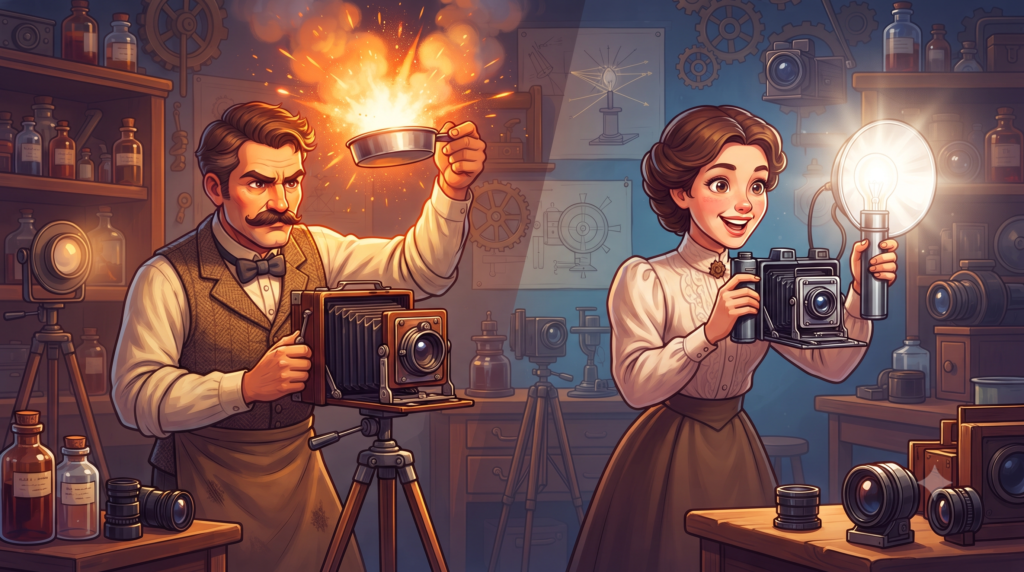
In 1929, the invention of the flashbulb made photography much safer.
These bulbs contained oxygen and a fine magnesium or aluminum wire that produced an intense flash when electricity passed through it.
Flashbulbs soon became widely used for indoor photography, journalism, and scientific work.
📸 Fun Facts About Flashbulbs
The first commercial flashbulbs were made in Germany by Johannes Ostermeier.
Some flashbulbs were bright enough to illuminate an entire sports stadium.
Each flashbulb could only be used once.
The Bright Idea of LEDs – Lighting the Future
The LED (Light Emitting Diode) story began in 1962, when Nick Holonyak Jr. created the first visible red LED.
Early LEDs were dim and mainly used as indicator lights in calculators and watches.
Over time they became brighter, cheaper, and available in many colors.
They consume less electricity, last much longer, and produce very little heat.

💡 Where LEDs Light Up Our World
TV Screens
Smartphones
Car Headlights
Traffic Lights
Home Lighting
💡 The LED Revolution
The first LEDs were very dim and could not light an entire room like modern LEDs do today.
Bright blue LEDs were invented in 1994, making energy-efficient white LED lighting possible.
This breakthrough earned the inventors the 2014 Nobel Prize in Physics.
Hundreds of tiny LEDs can fit inside a modern smartphone display, creating bright and sharp images.
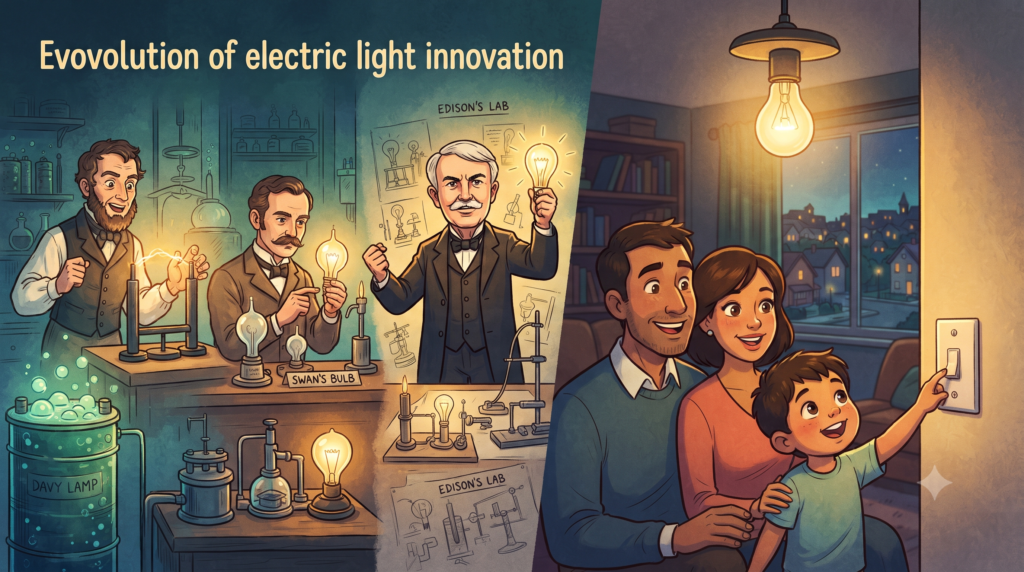
Three Inventors. One Brilliant Journey. A World Forever Changed.
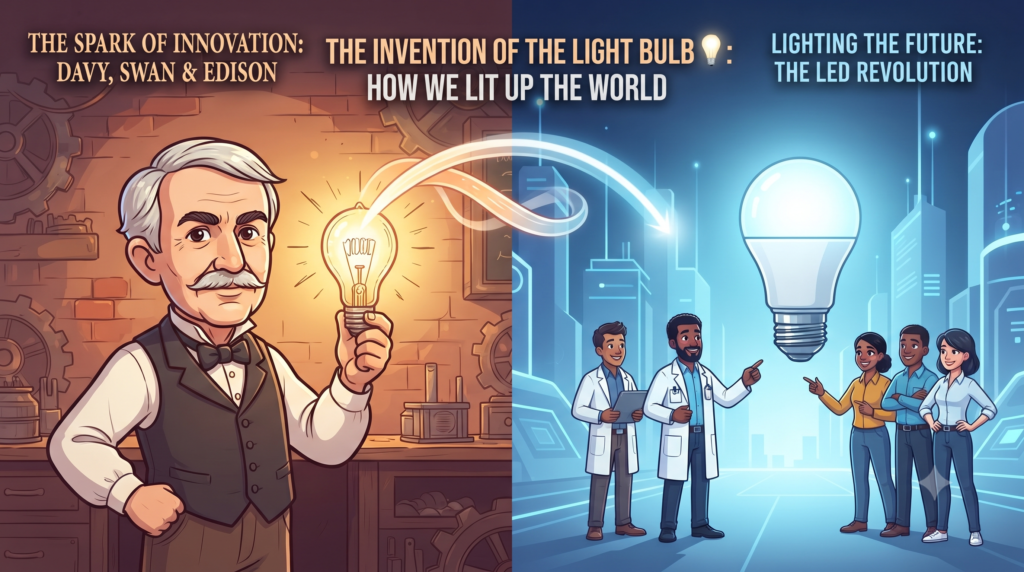
And that’s how three brilliant minds—Humphry Davy, Joseph Swan, and Thomas Edison—lit up our nights and changed human history forever.
The journey from arc lamps to incandescent bulbs, neon lights, flashbulbs, and LEDs shows how human curiosity and innovation continue to brighten our future.
Like | Share | Subscribe – YouTube Channel Link: https://www.youtube.com/@ciderstudiodr




Leave a Reply