Chocolate – Nature’s Sweetest Treat
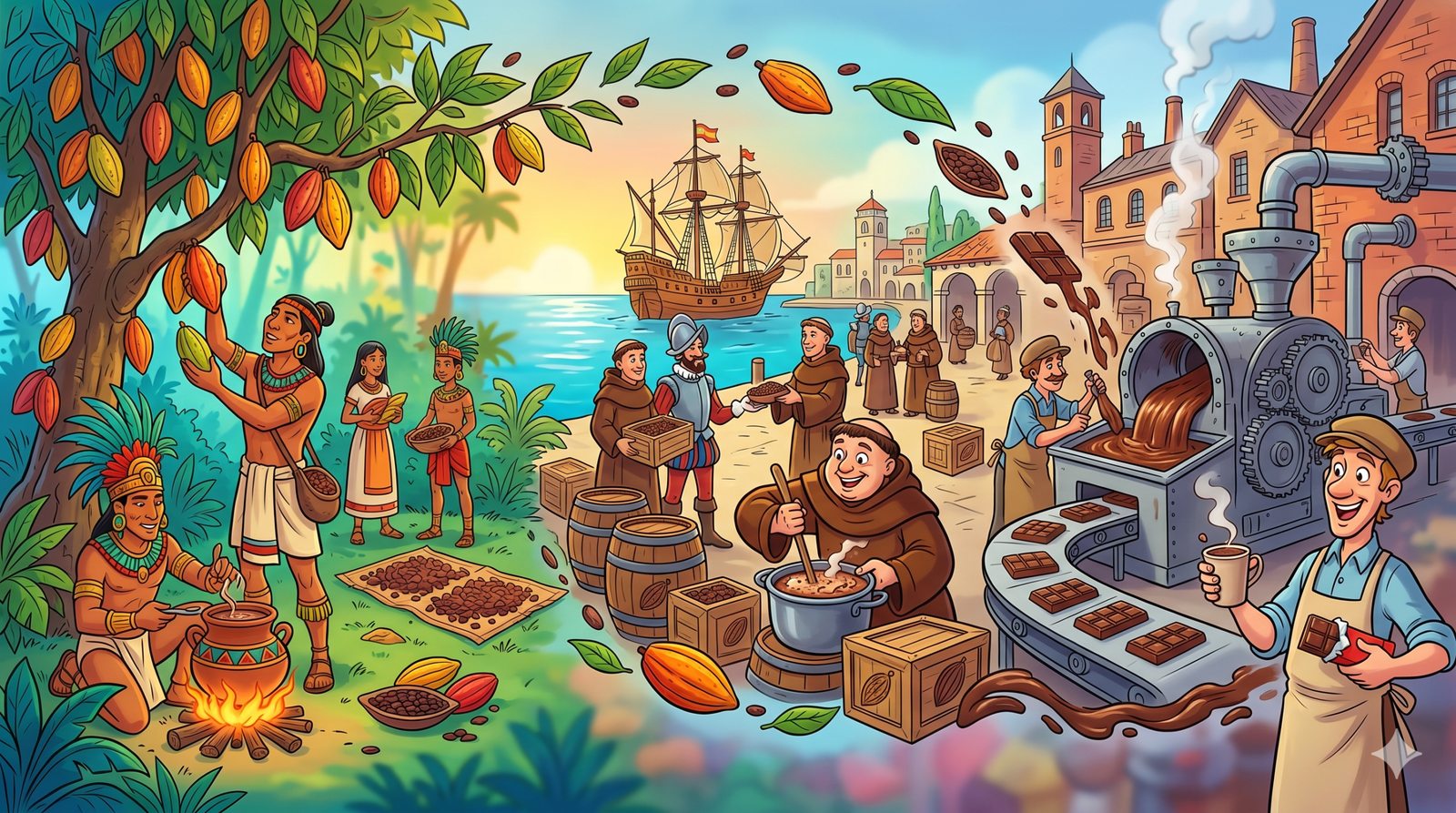
Chocolate is one of the world’s most loved flavors, but its story began very differently from the sweet chocolate bars we enjoy today.
From the tropical rainforests of Central and South America to chocolate shops and candy aisles around the world, chocolate has traveled an incredible journey. It began as a bitter, ceremonial drink and eventually became a global favorite.
But where did chocolate really come from, and how did it become the sweet treat we know today?
The Origin of Chocolate: The Cacao Tree and the “Food of the Gods”
What is Theobroma cacao?
Chocolate begins with the cacao tree, whose scientific name is Theobroma cacao. In Greek, Theobroma means “food of the gods.”
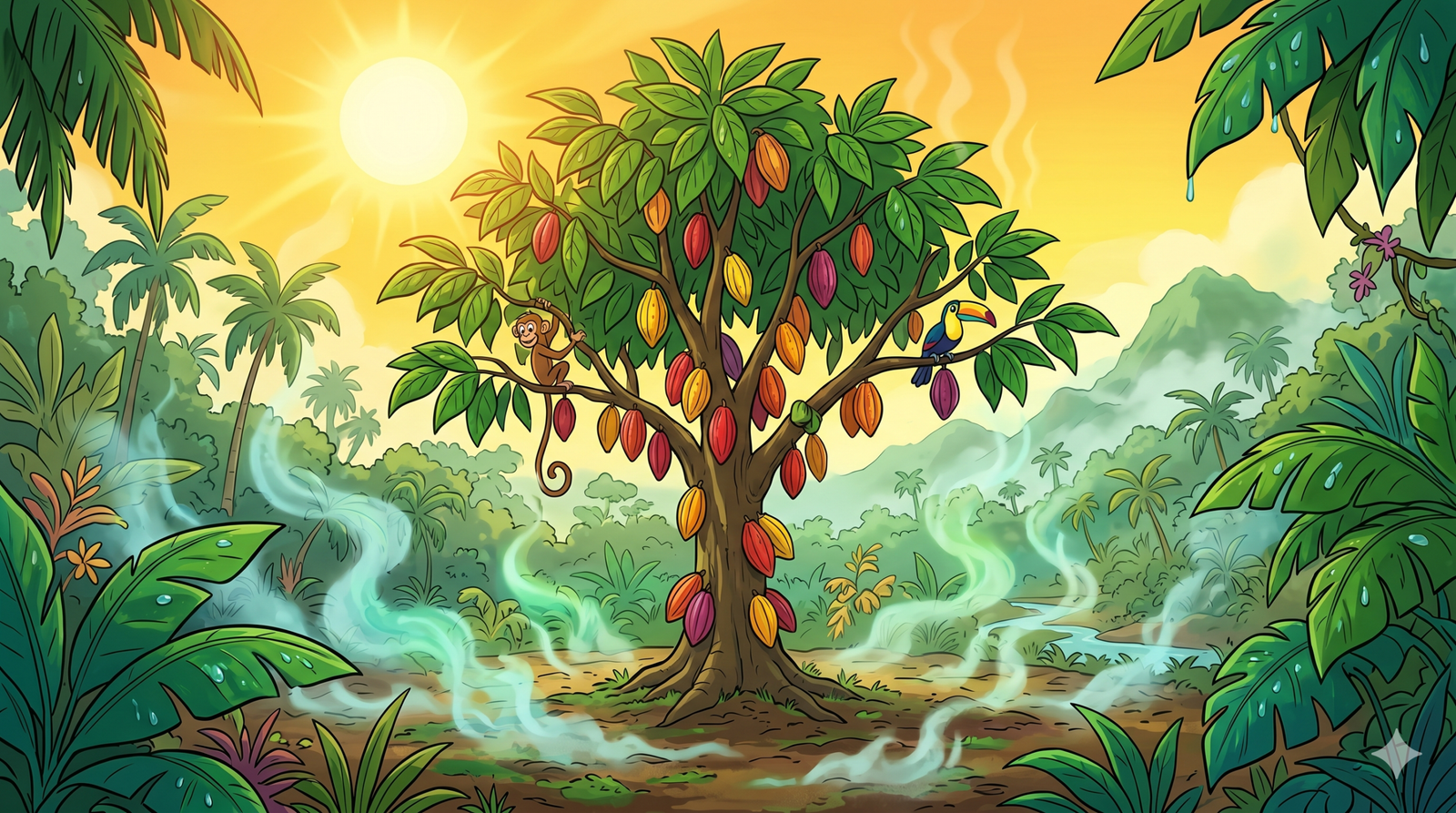
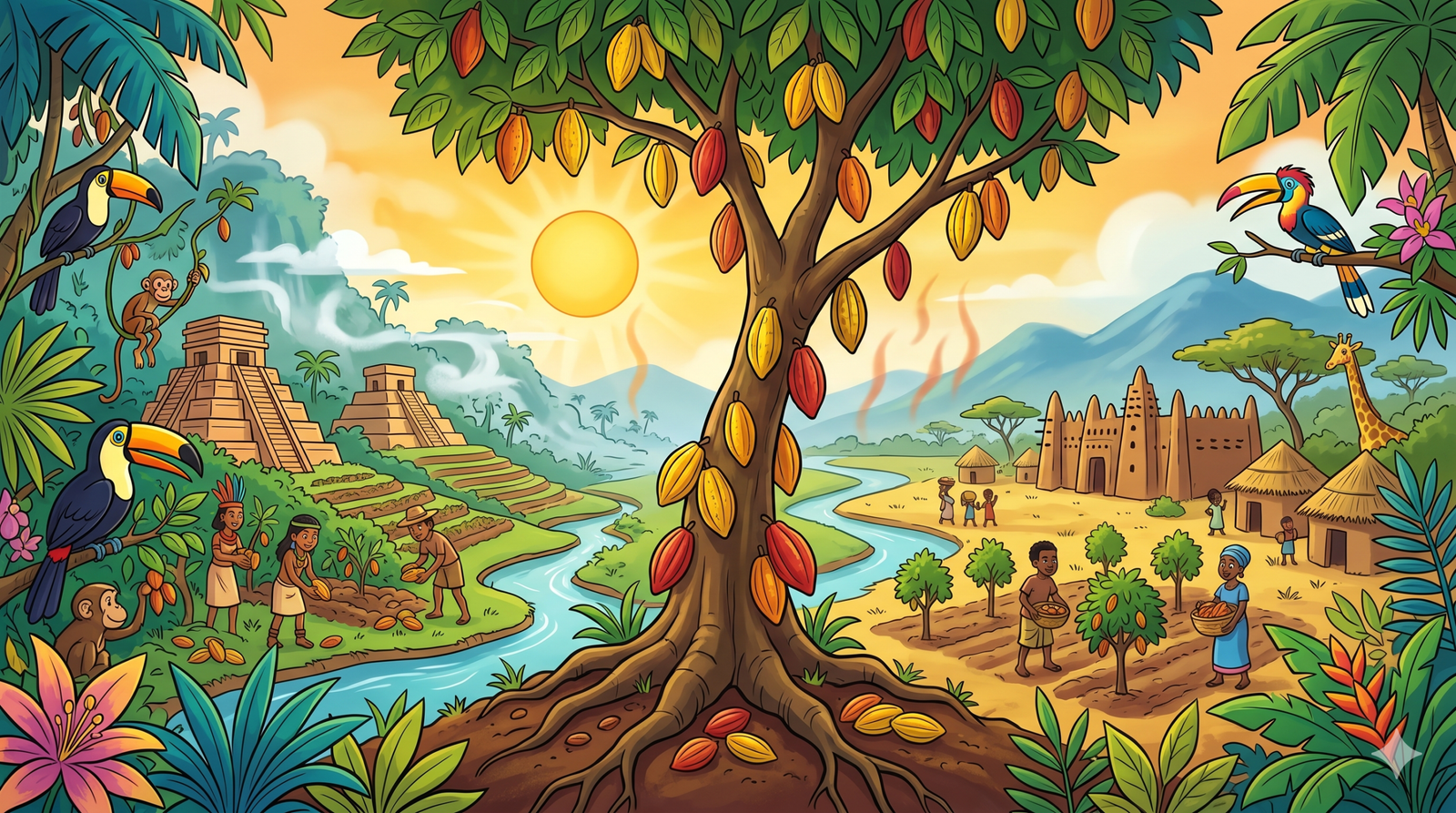
The cacao tree grows best in hot and humid climates near the equator.
Where does cacao grow?
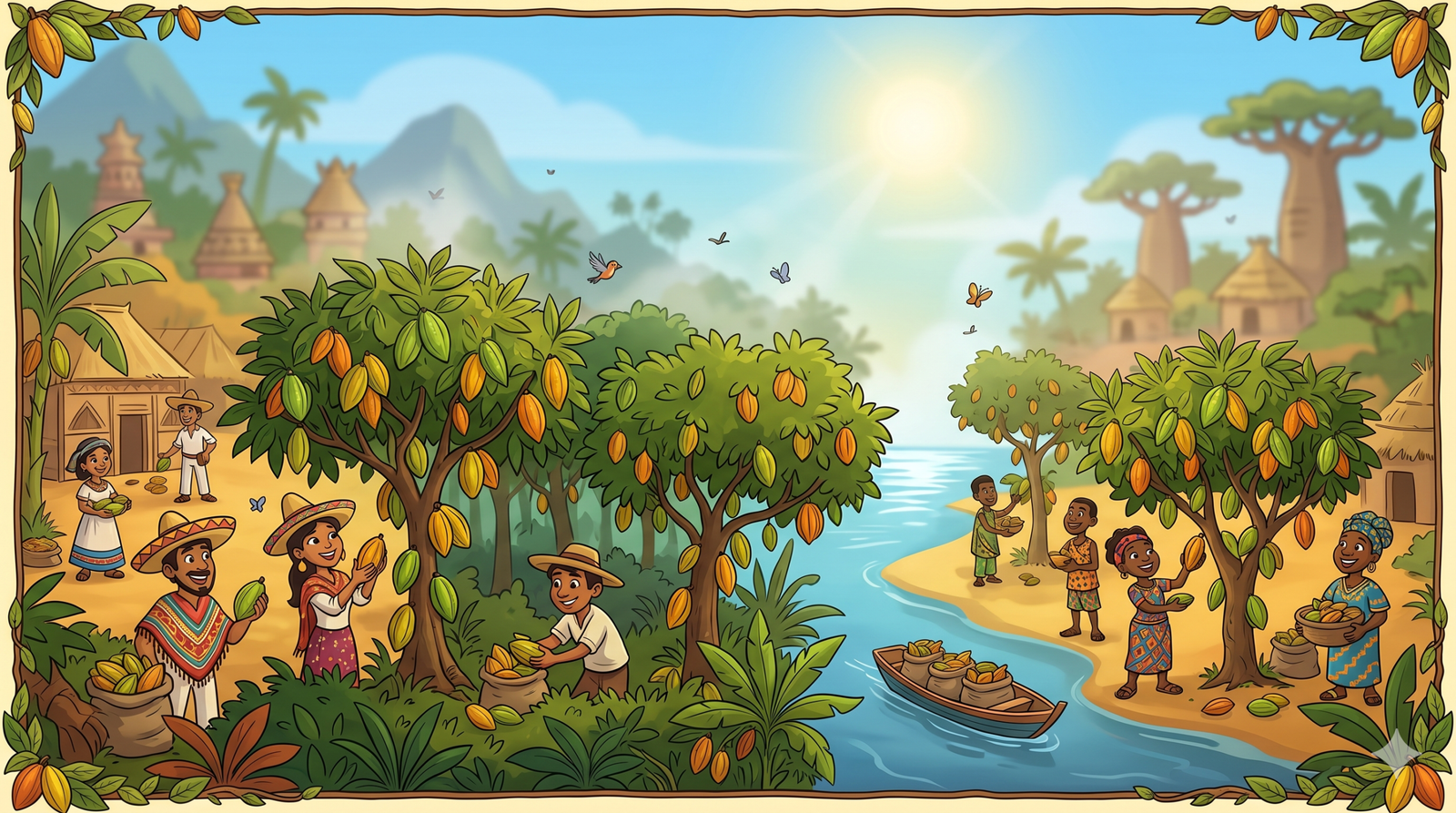
Cacao originally comes from the tropical regions of Central and South America. Countries such as Mexico, Brazil, and Ecuador became important cacao-growing regions, followed later by countries in West Africa.
Inside the cacao pod: From beans to chocolate
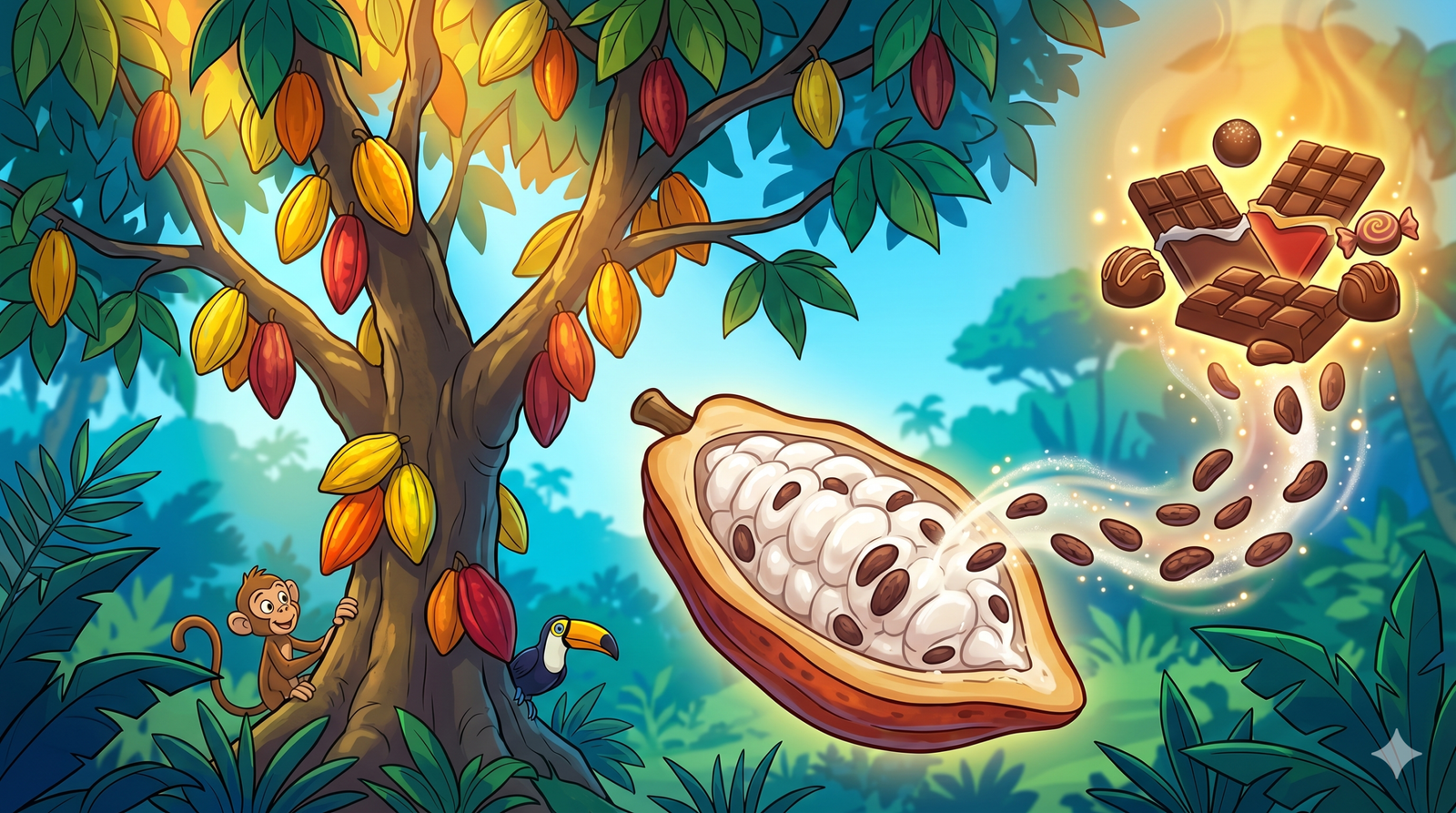
The cacao tree produces colorful pods that can be yellow, orange, or red. Inside each pod is a sweet, fruity white pulp surrounding around 20–50 bitter cacao beans.
These bitter beans are the key ingredient that eventually becomes chocolate.
The First Chocolate Lovers: The Maya and Aztec Civilizations
How ancient people consumed chocolate
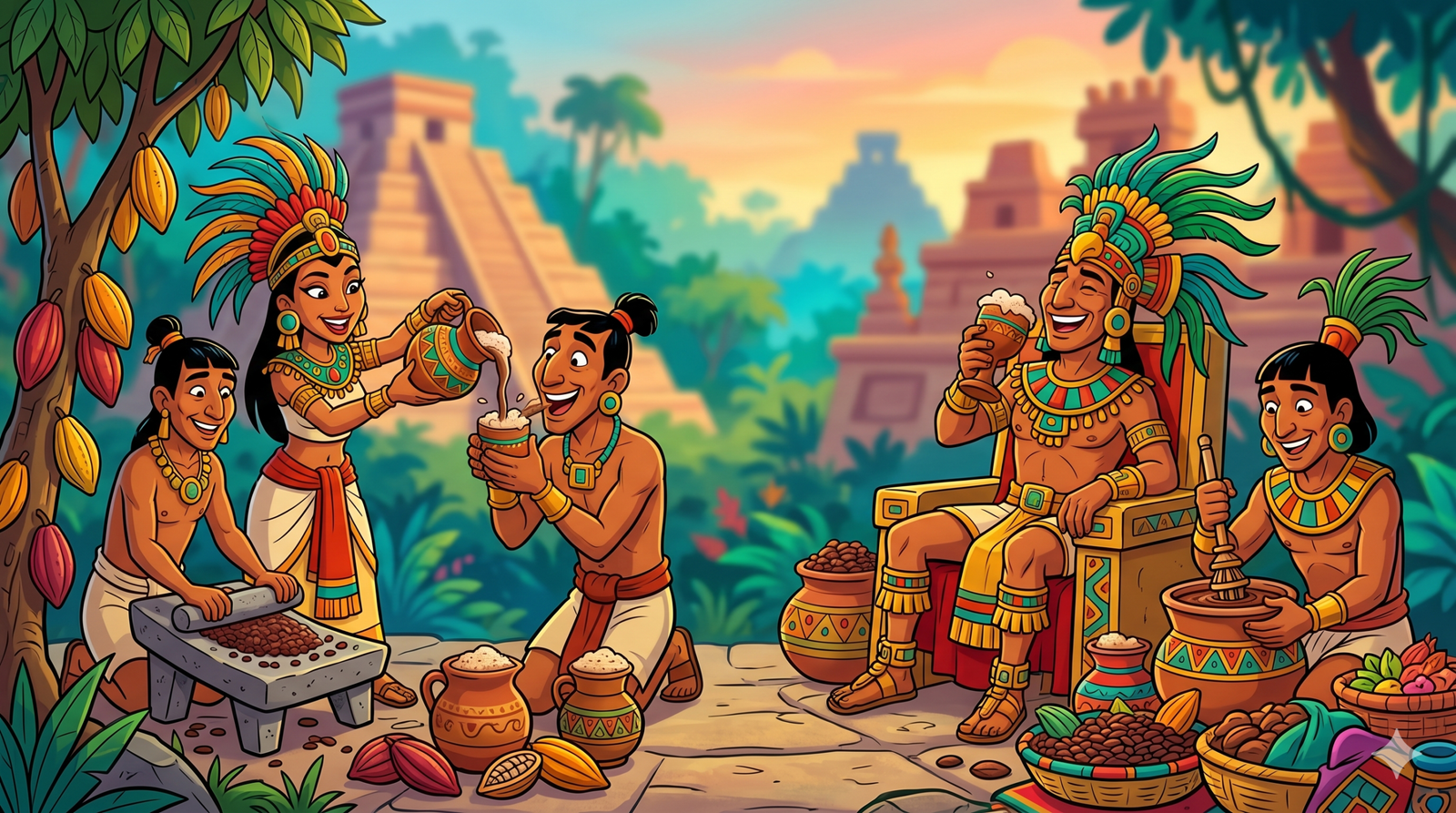
Long before chocolate bars existed, ancient civilizations such as the Maya and Aztecs enjoyed cacao in a very different way.
The creation of the bitter drink “Xocolatl”
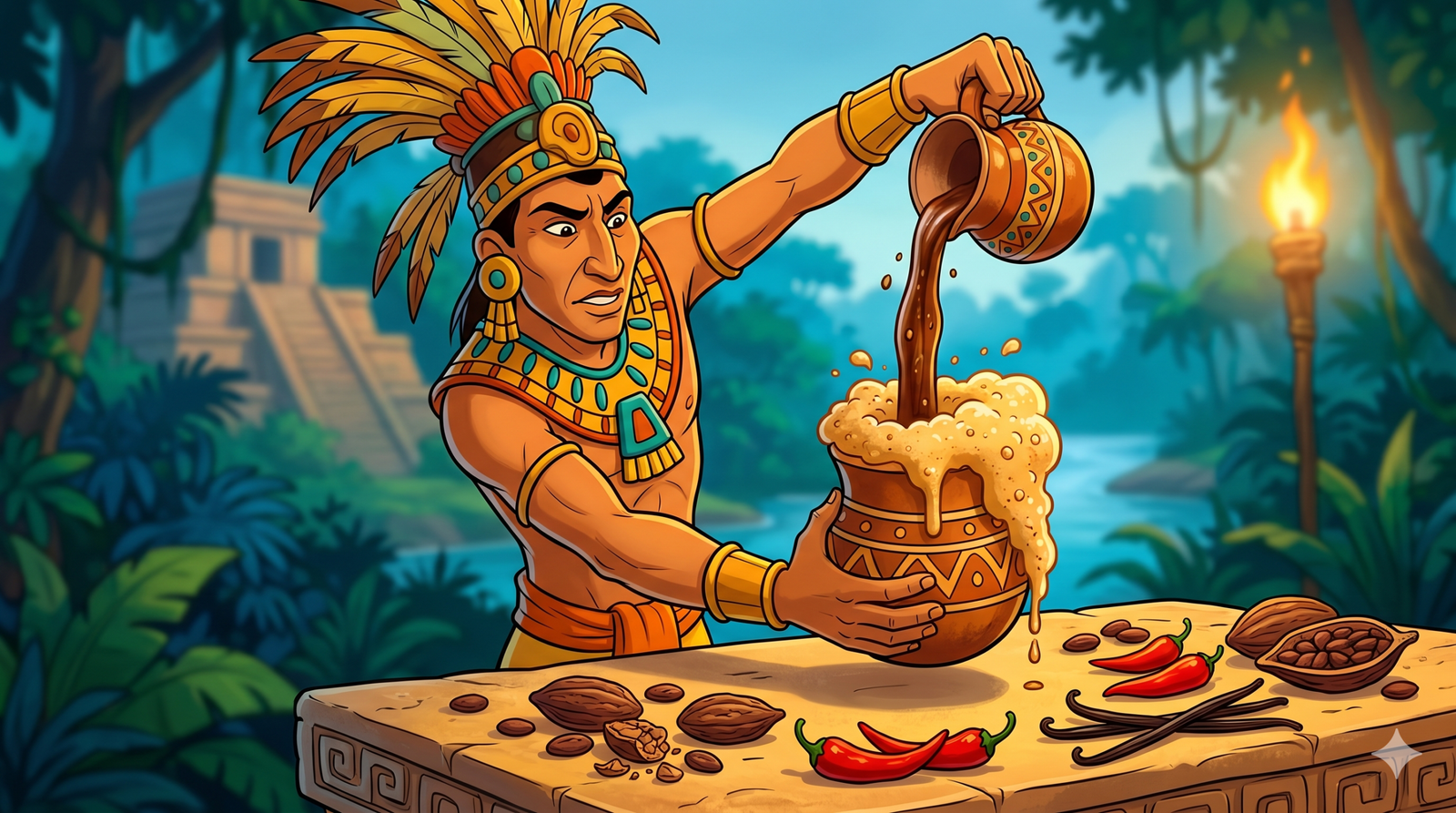
They roasted and ground cacao beans and mixed them with ingredients such as water, chili peppers, vanilla, cornmeal, and other spices.
The resulting bitter and frothy drink was called “xocolatl.” This is where the word “chocolate” comes from.
Why cacao was considered sacred
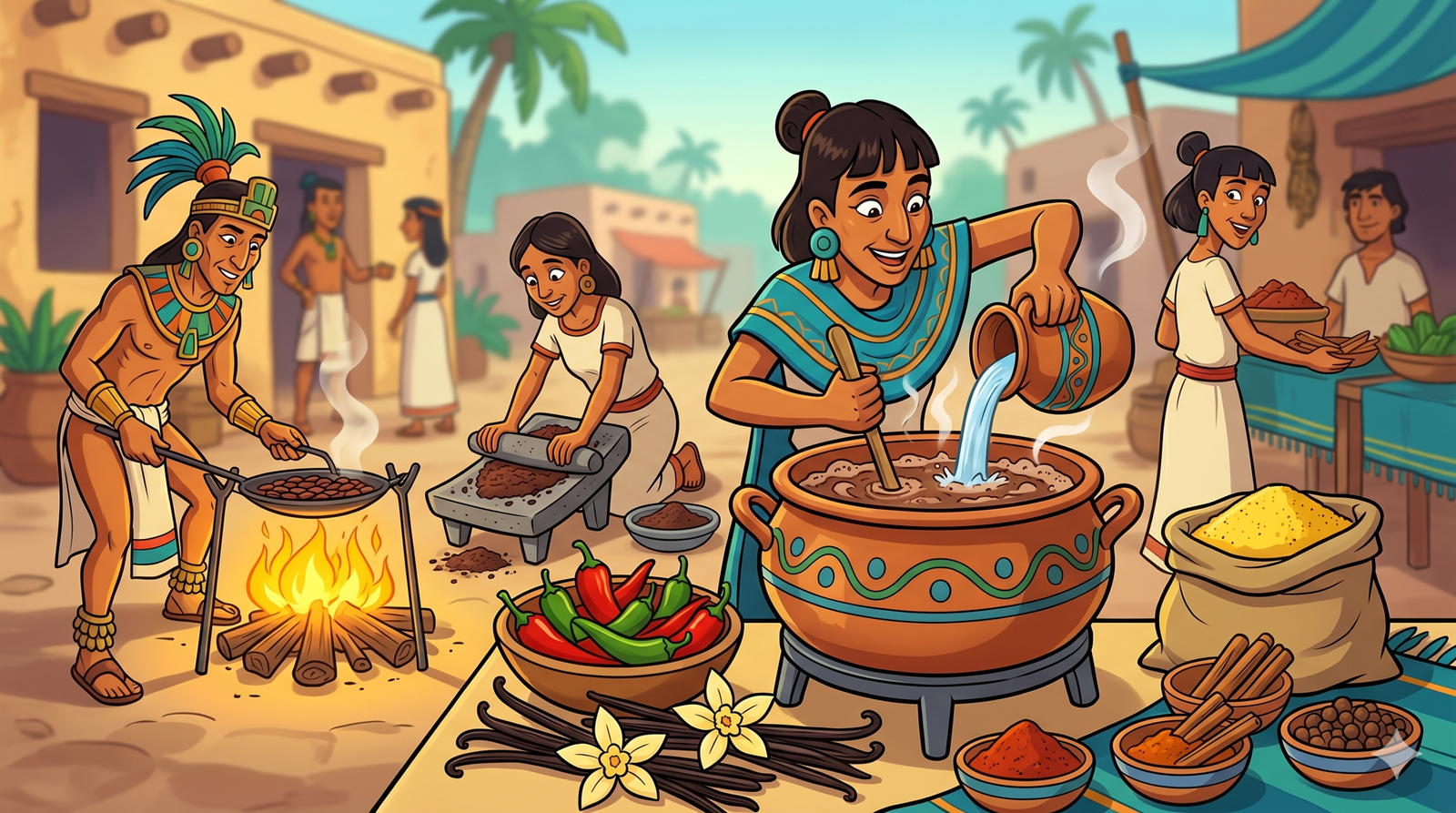
For the Maya and Aztecs, cacao was much more than a drink. It was considered a sacred drink, a symbol of power, and even a form of medicine.
Cacao Beans as Currency: When Chocolate Was Money
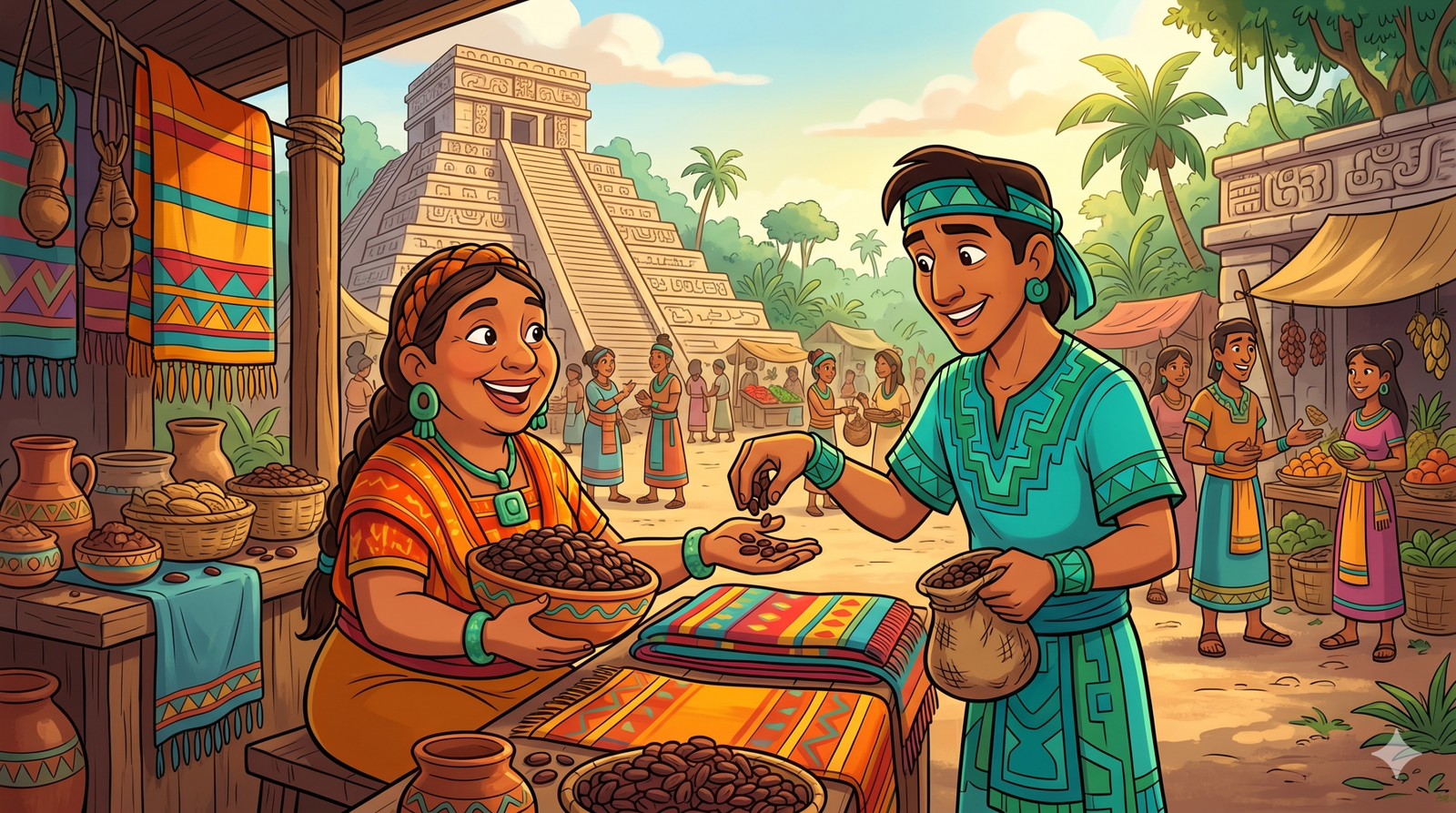
Cacao beans were so valuable to ancient civilizations that they were sometimes used as currency.
Instead of simply being a food ingredient, cacao had real economic value. This shows just how important and precious cacao was to the Maya and Aztec civilizations.
Montezuma II: The Aztec Emperor Who Loved Chocolate
The Chocolate-Loving Emperor
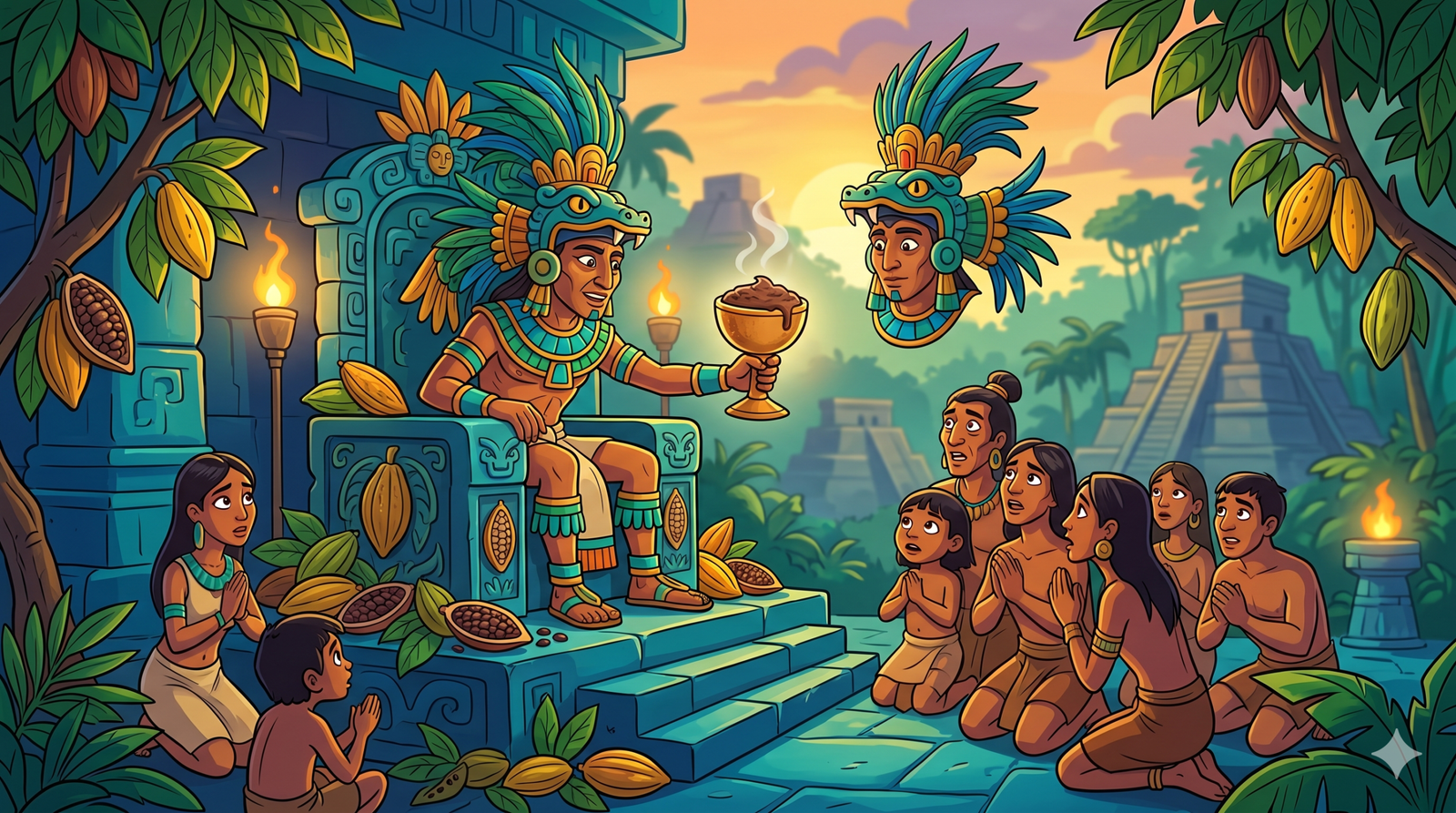
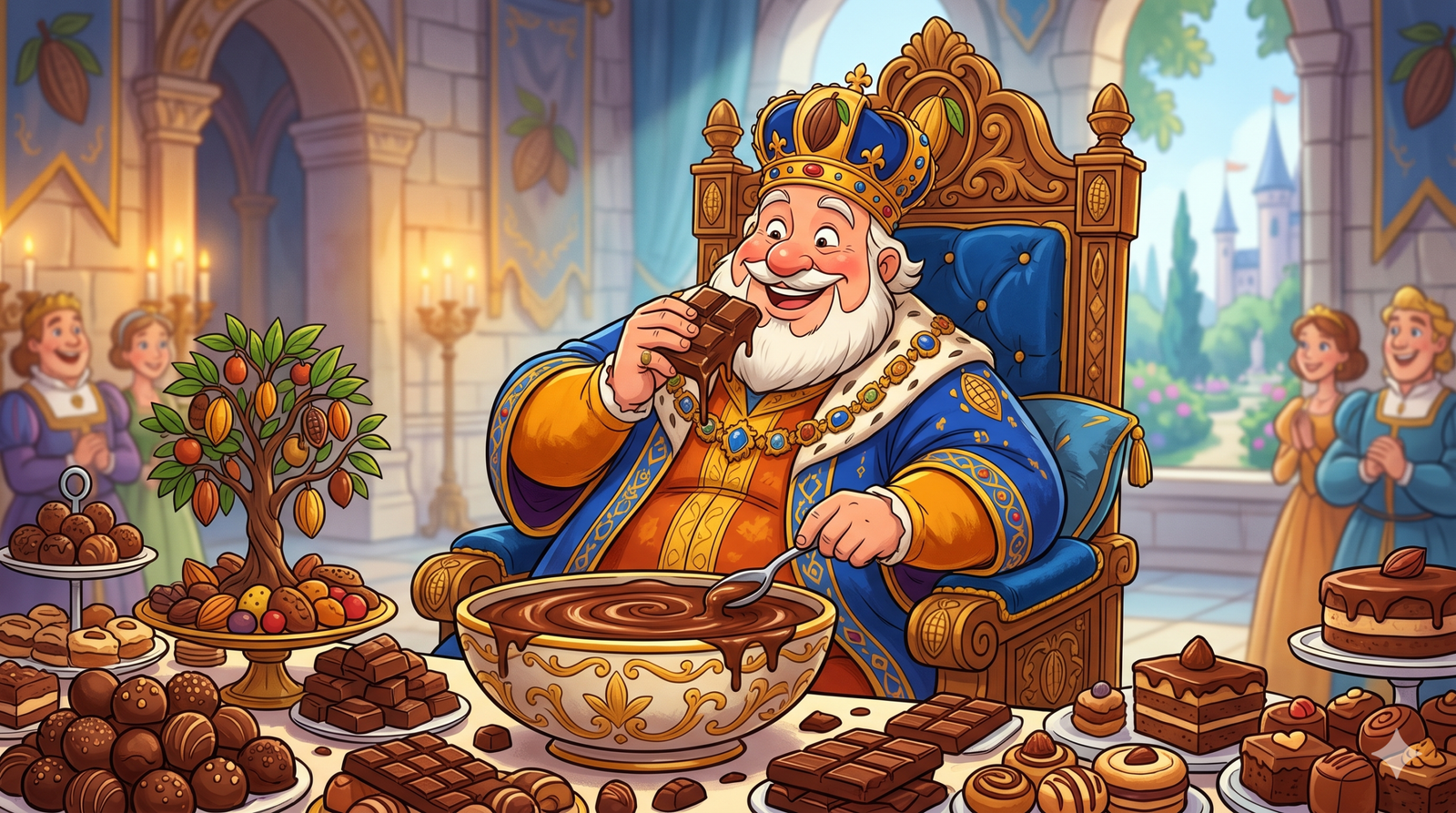
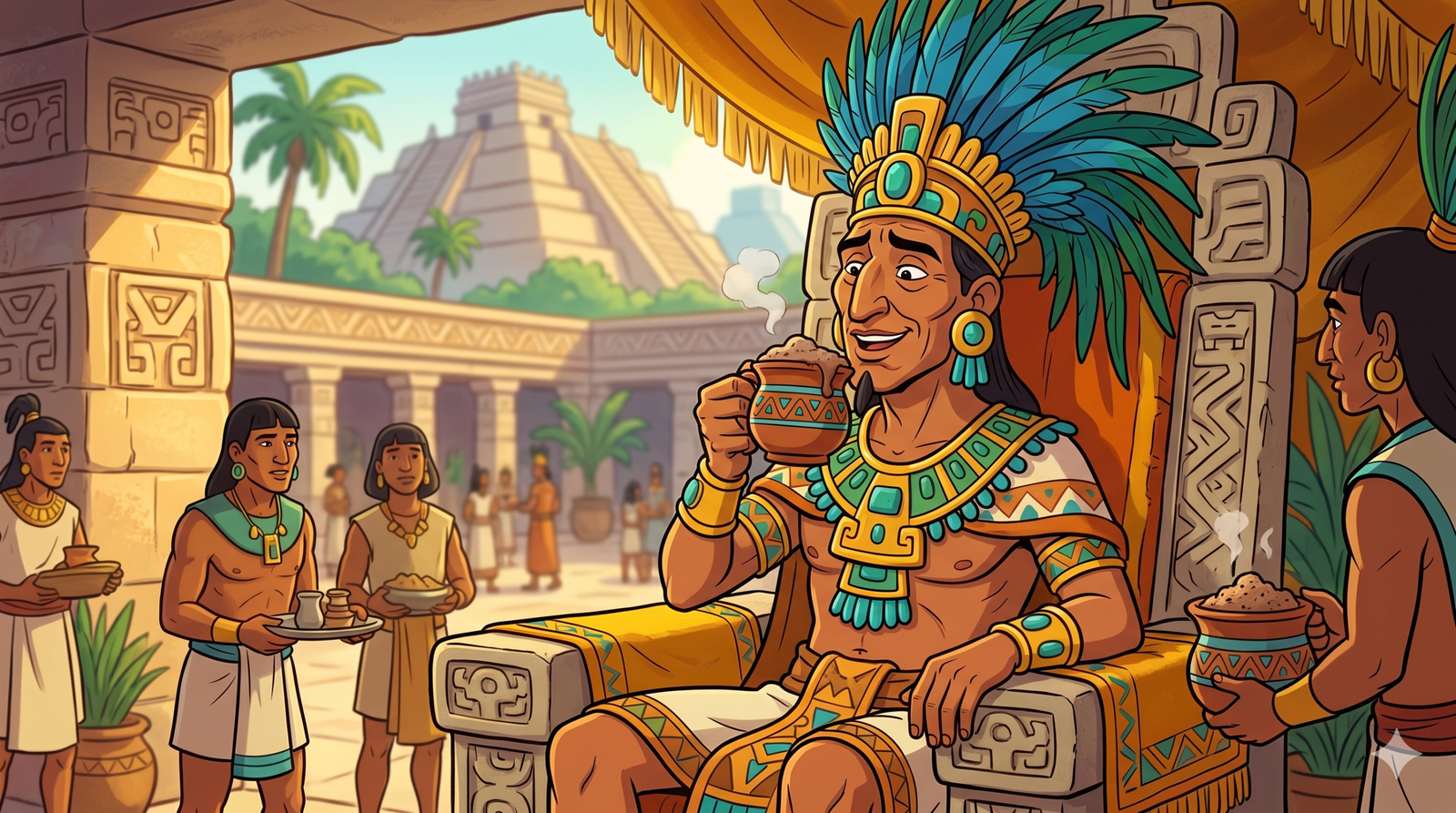
One famous chocolate lover was Montezuma II, the ruler of the Aztecs in the early 1500s.
Legend says that he drank dozens of cups of cacao every day, sometimes served in golden goblets. 🍵
Power, Wisdom & Luxury
He believed the drink gave him strength, energy, and wisdom.
At the time, chocolate was a royal luxury enjoyed by the powerful and wealthy. 💎
Chocolate Travels to Europe: The Sweet Transformation
Spanish Explorers Discover Cacao: The Journey Begins to Europe
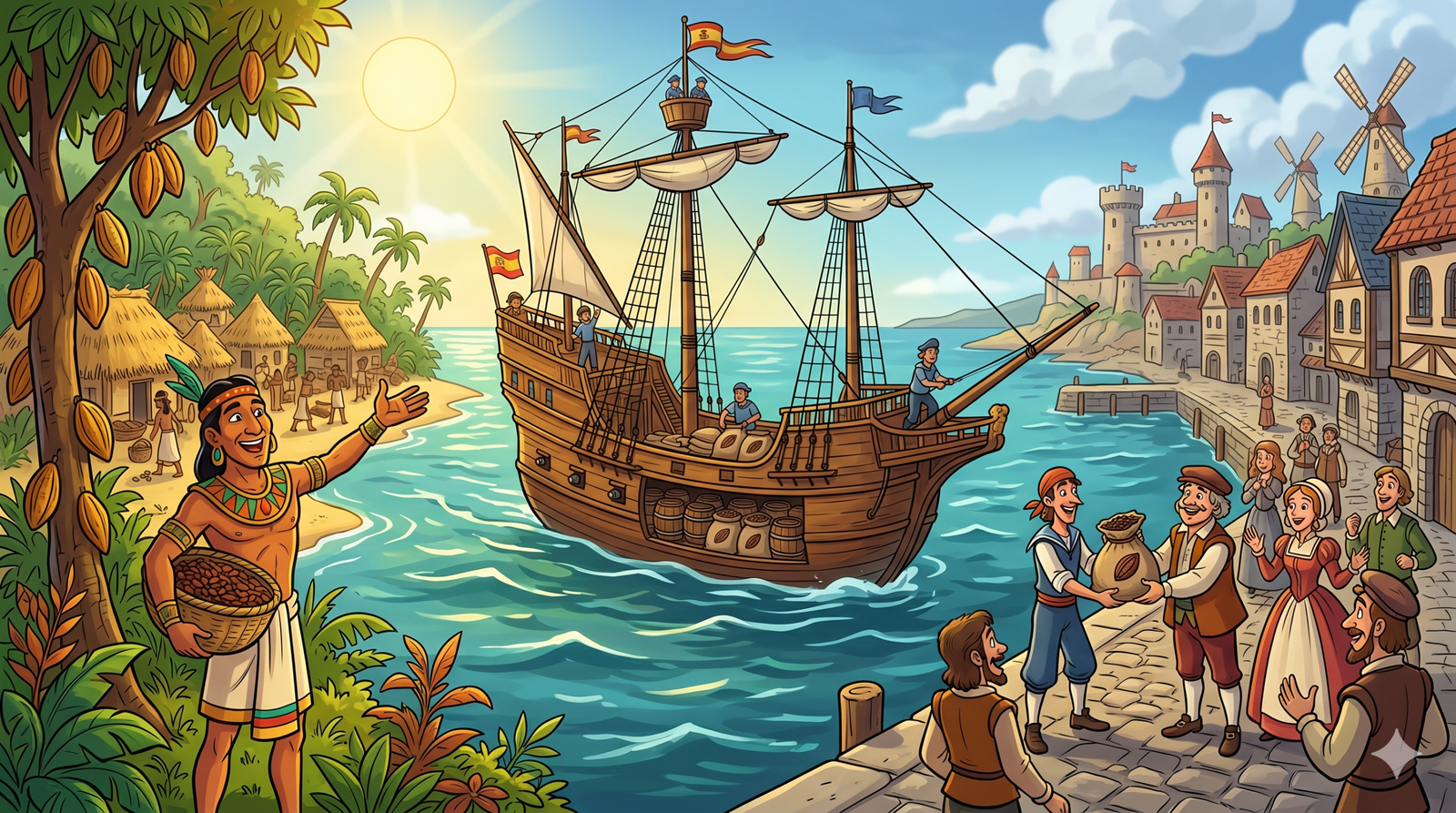
In the 1500s, Spanish explorers arrived in the Americas and discovered cacao.
One of the famous explorers associated with this period was Hernán Cortés.
The Spanish soon realized that cacao could become a valuable product and took it back to Spain.
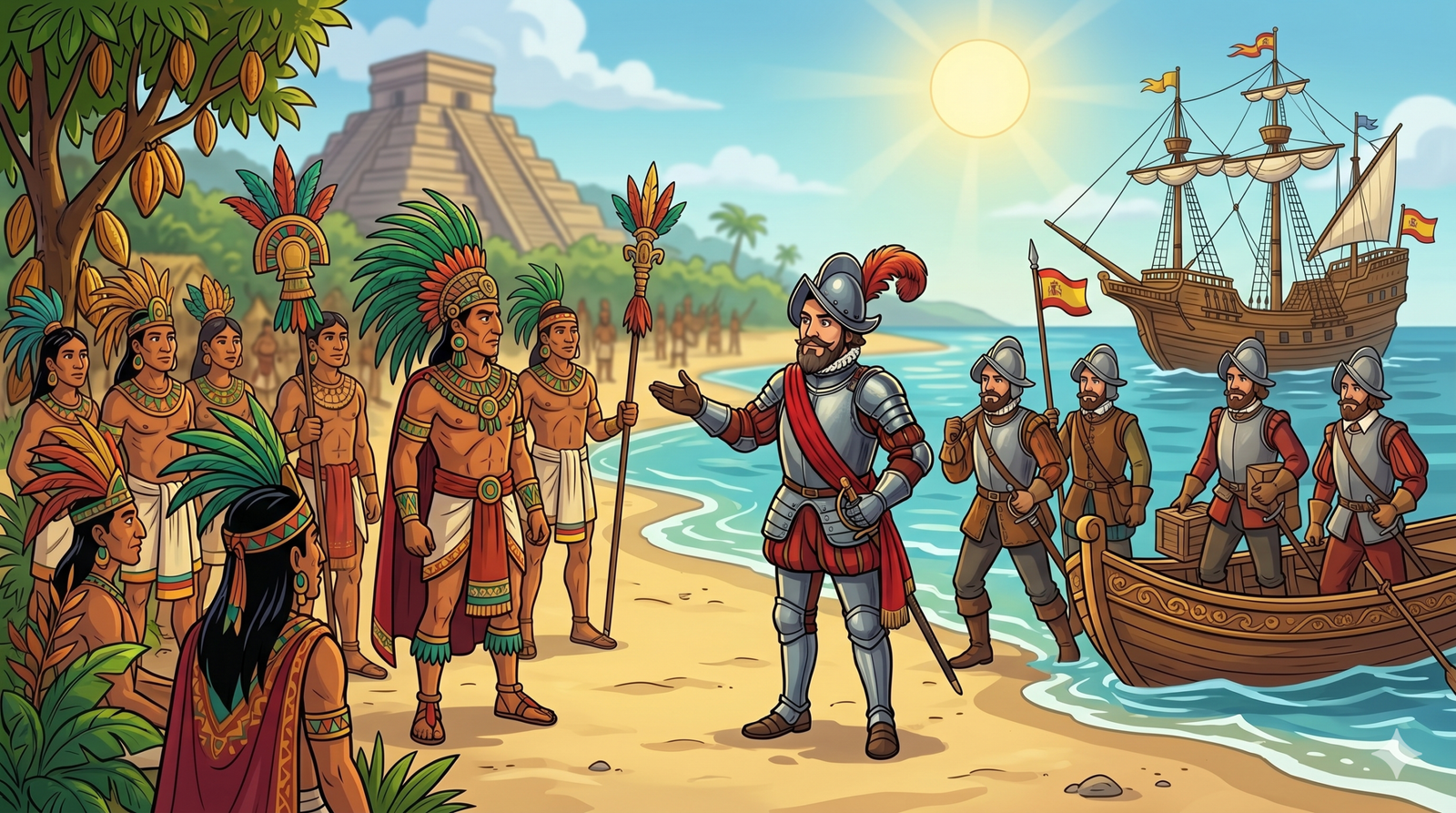
Cacao Begins Its Journey to Europe
From the Americas to Spain, cacao began a remarkable journey that would transform the history of chocolate.
Cacao was no longer limited to the Americas. Its journey across the Atlantic was about to change chocolate forever.
How Sugar Changed the Taste of Chocolate The Sweet Transformation
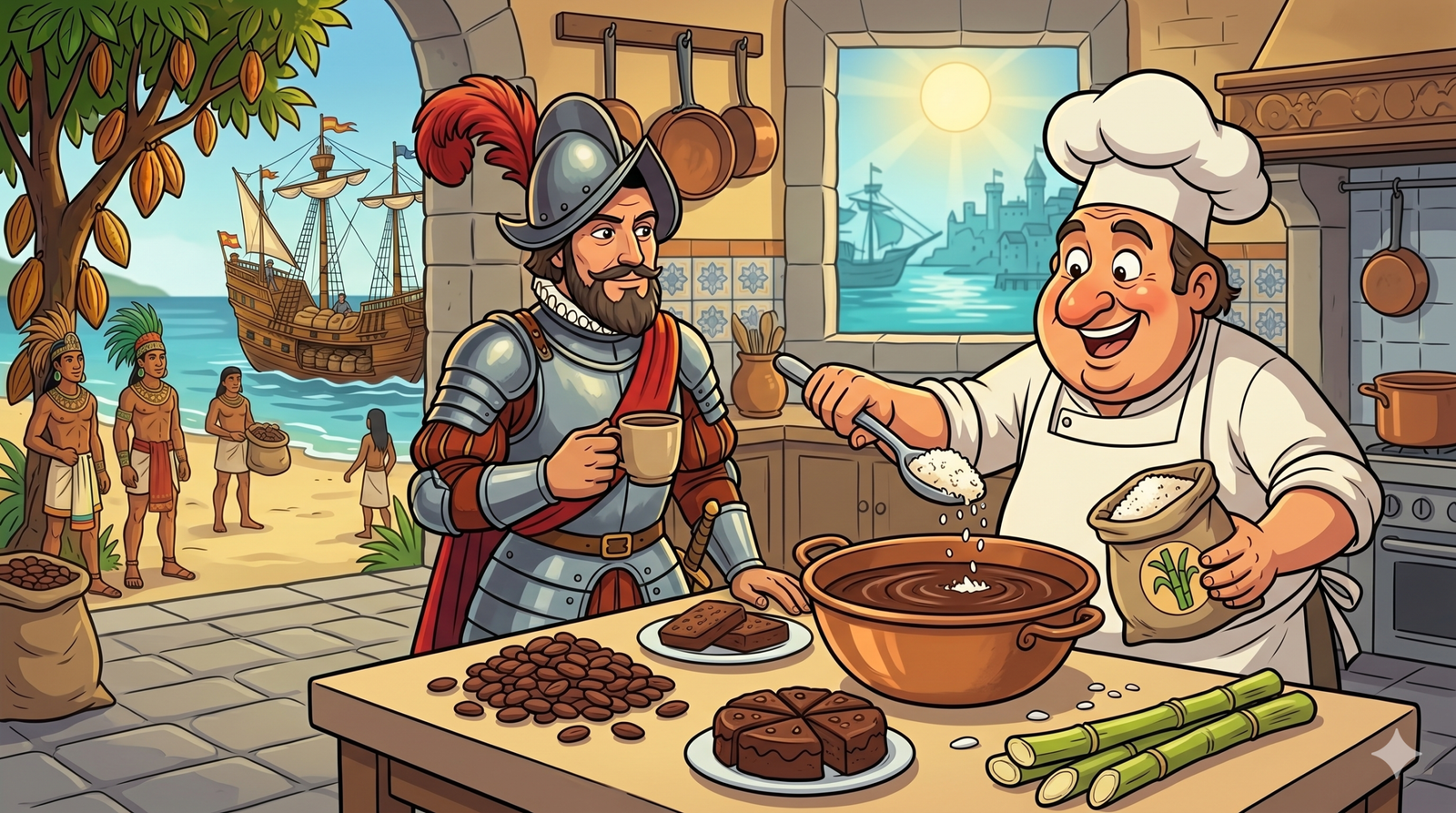
The Spanish made an important change to the bitter cacao drink: they added cane sugar.
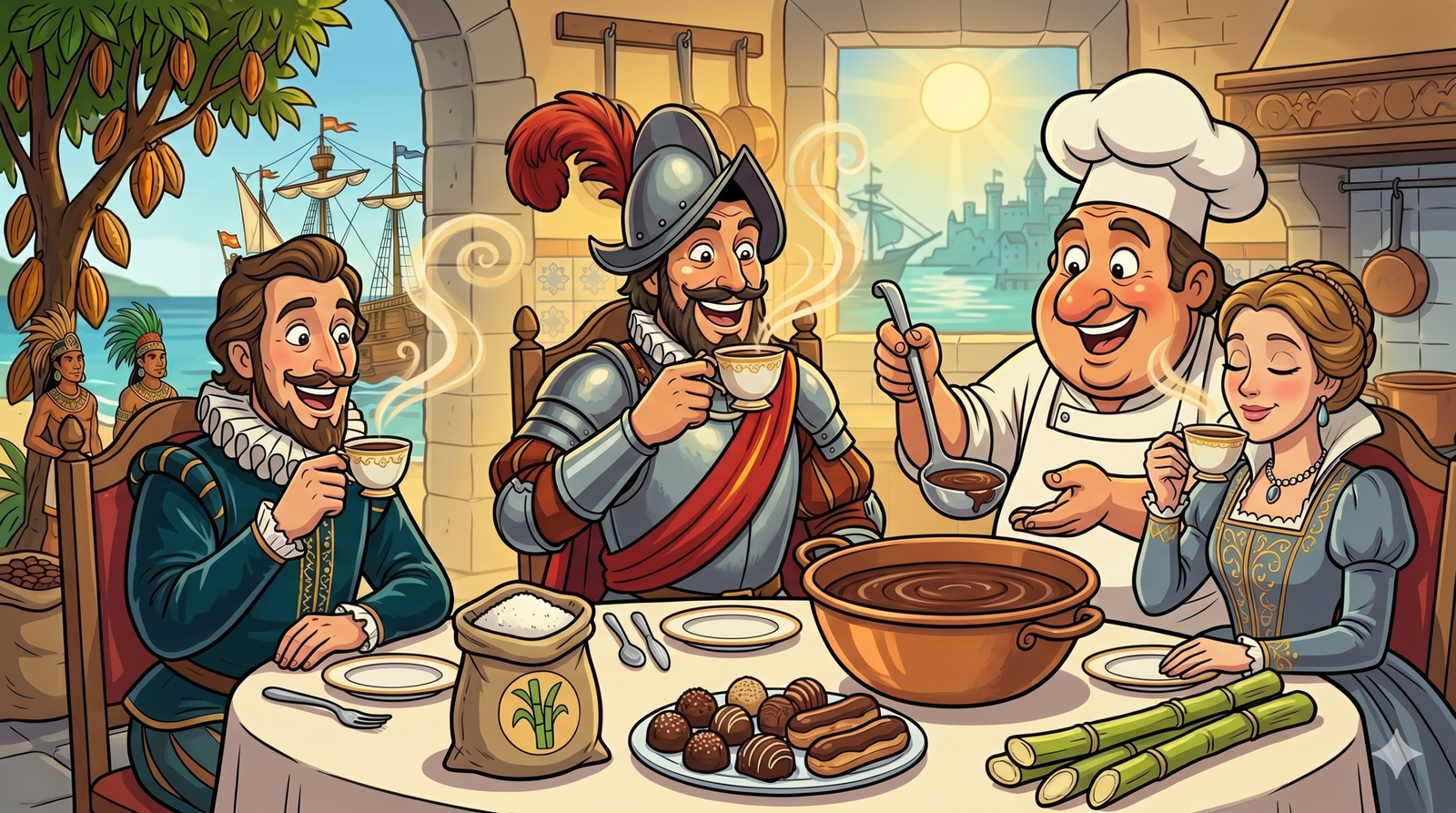
This transformed the bitter drink into something much sweeter, and Europeans quickly developed a taste for chocolate.
The Rise of Chocolate Across European Countries
From Spain, chocolate began its journey across Europe.
Chocolate soon spread from Spain to France, Italy, and England.

🇫🇷 France 🇮🇹 Italy
Chocolate moved beyond Spain and began finding admirers in France and Italy, where it became associated with refinement and luxury.
🇬🇧 England
Chocolate eventually reached England, adding another important chapter to its growing popularity across Europe.
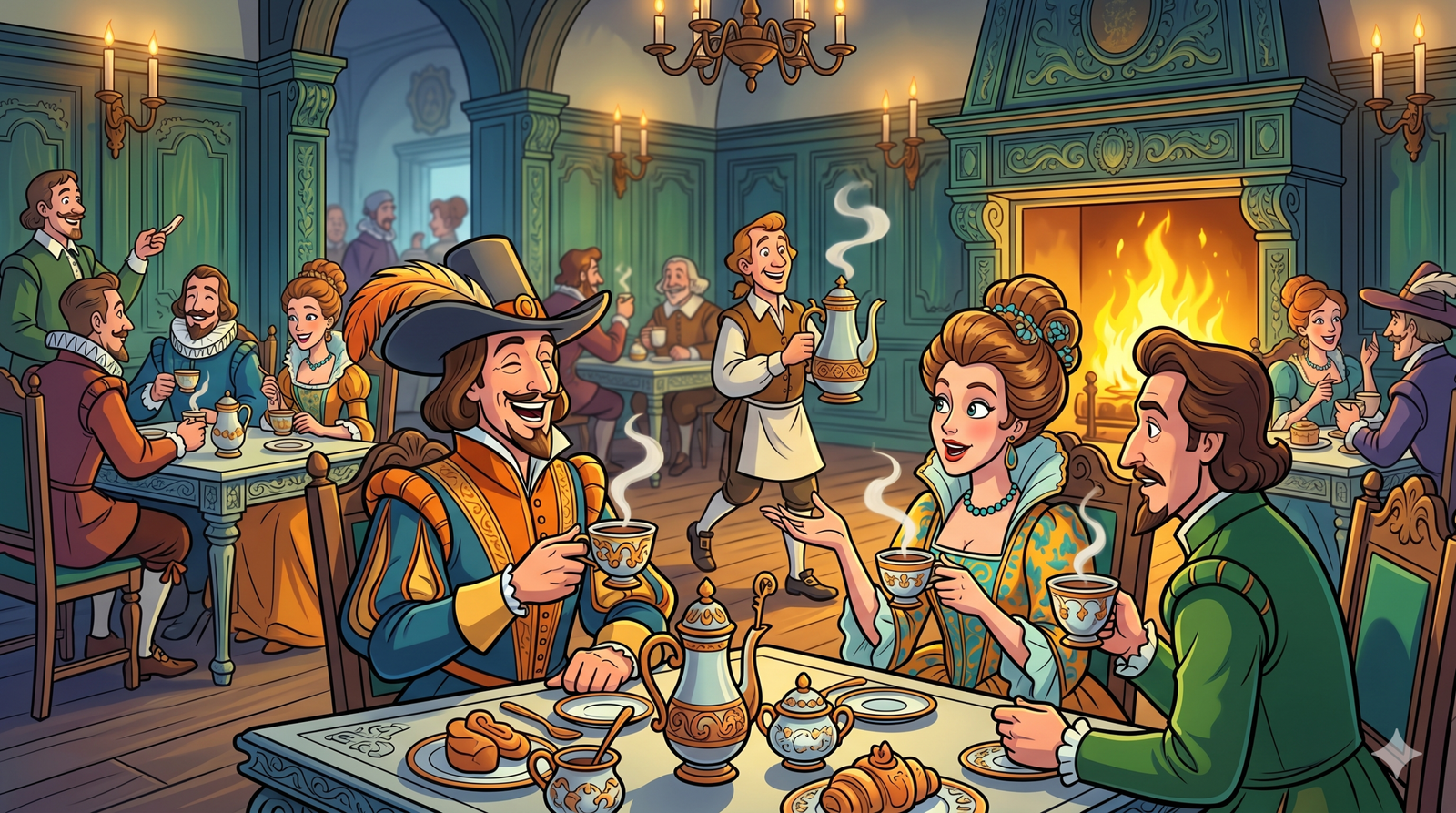
The Rise of European Chocolate Houses: When Chocolate Became a Social Experience
Chocolate as a Luxury Drink A Taste Reserved for the Privileged
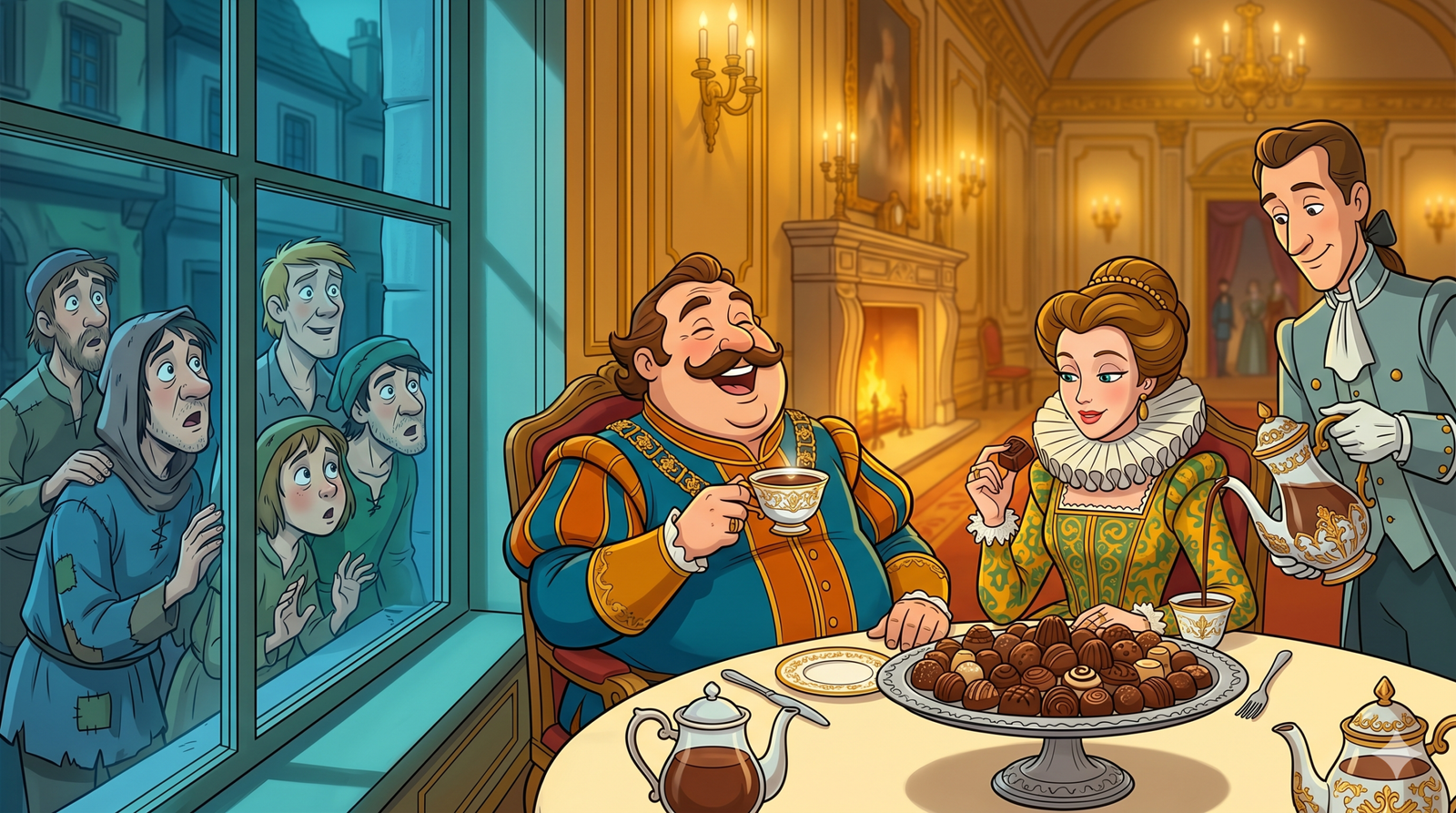
For centuries, chocolate was mainly enjoyed as a drink rather than as a solid bar.
In Europe, it was considered a luxury that not everyone could afford.

The Science That Changed Chocolate Forever
The biggest changes in chocolate came during the Industrial Revolution, when new technology transformed how chocolate was made.
1828: The Cocoa Powder Revolution
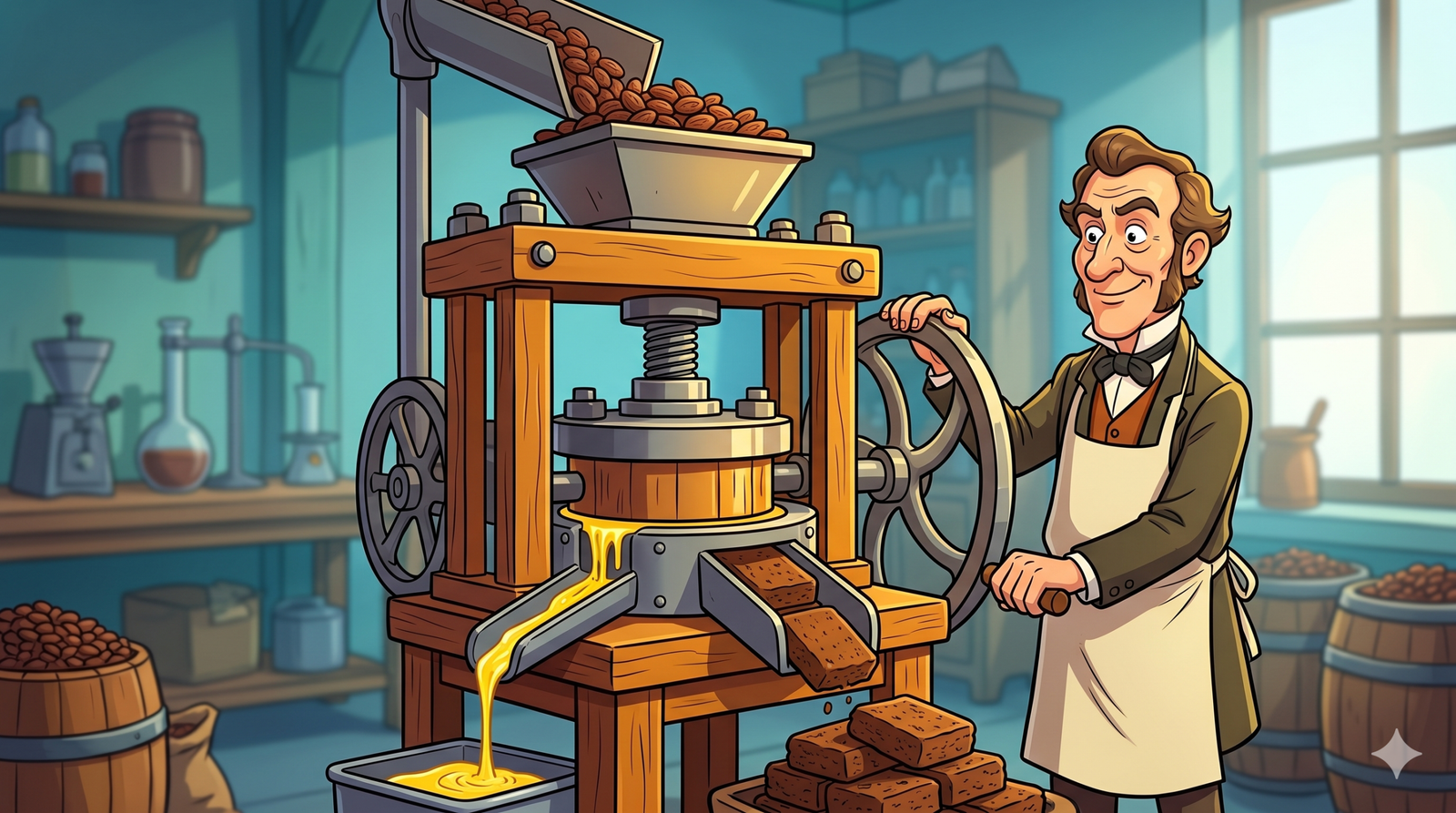
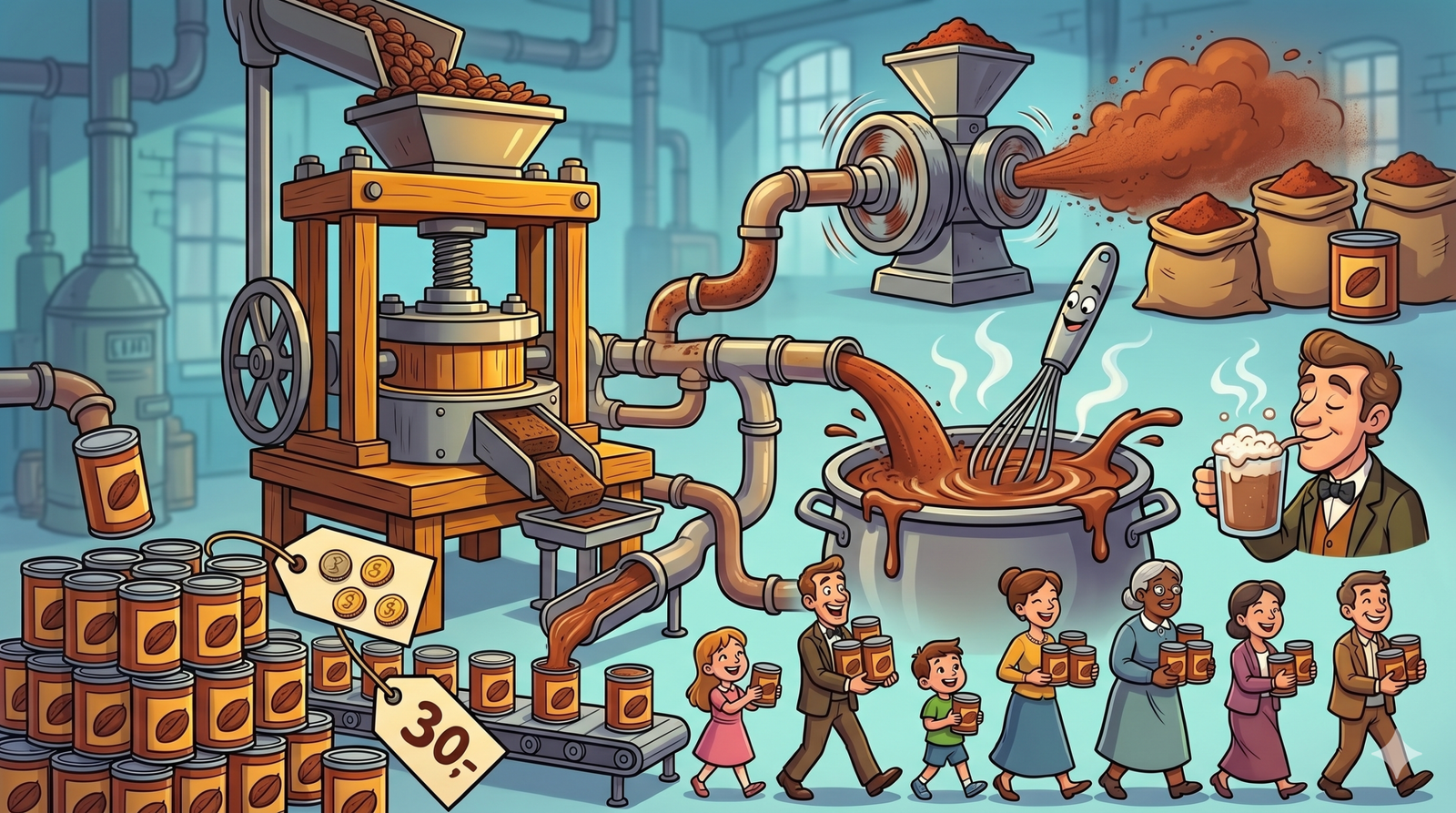
The invention that transformed chocolateA breakthrough in chocolate history came in 1828, when Dutch chemist Coenraad Johannes van Houten changed the way cacao could be processed.
 1828
1828
A machine that changed cacao
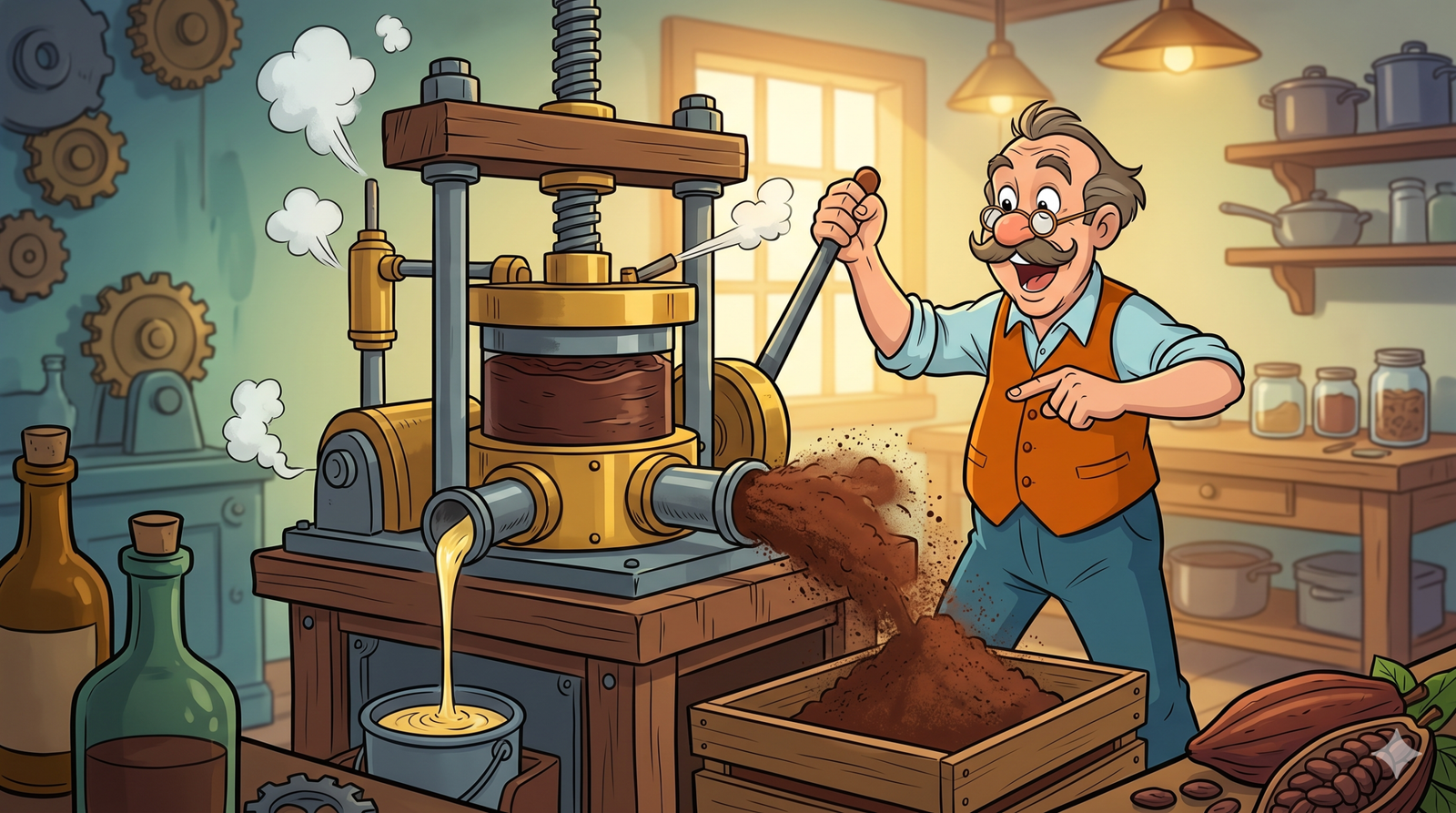
In 1828, Dutch chemist Coenraad Johannes van Houten developed a machine that pressed cacao beans to remove much of their fat, known as cocoa butter.
 PRESSING
Removing the cocoa butter
By removing much of the cocoa butter, the process helped create cocoa powder. It also made it possible to produce a smoother chocolate drink and a more affordable chocolate product.
 DUTCH PROCESSING
The birth of Dutch processing
This revolutionary method became known as Dutch processing, helping shape the smoother and more accessible chocolate products that followed.
1847: The Birth of the First Solid Chocolate Bar
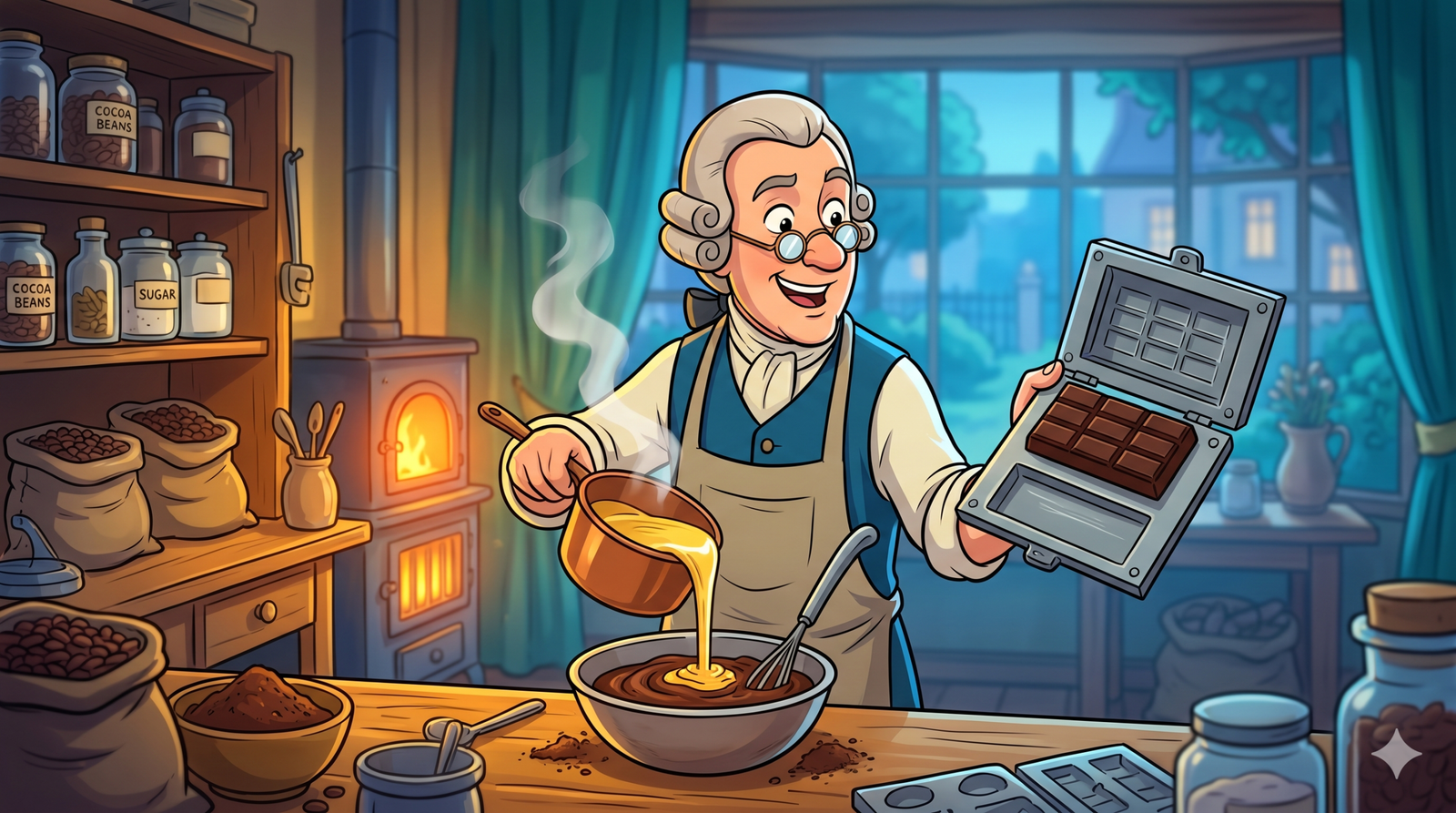
When chocolate became something you could holdIn 1847, English chocolatier Joseph Fry made a discovery that changed chocolate forever.
A new chocolate mixture
Joseph Fry discovered that adding melted cocoa butter back into cocoa powder created a paste that could be shaped and molded.
Chocolate takes solid form
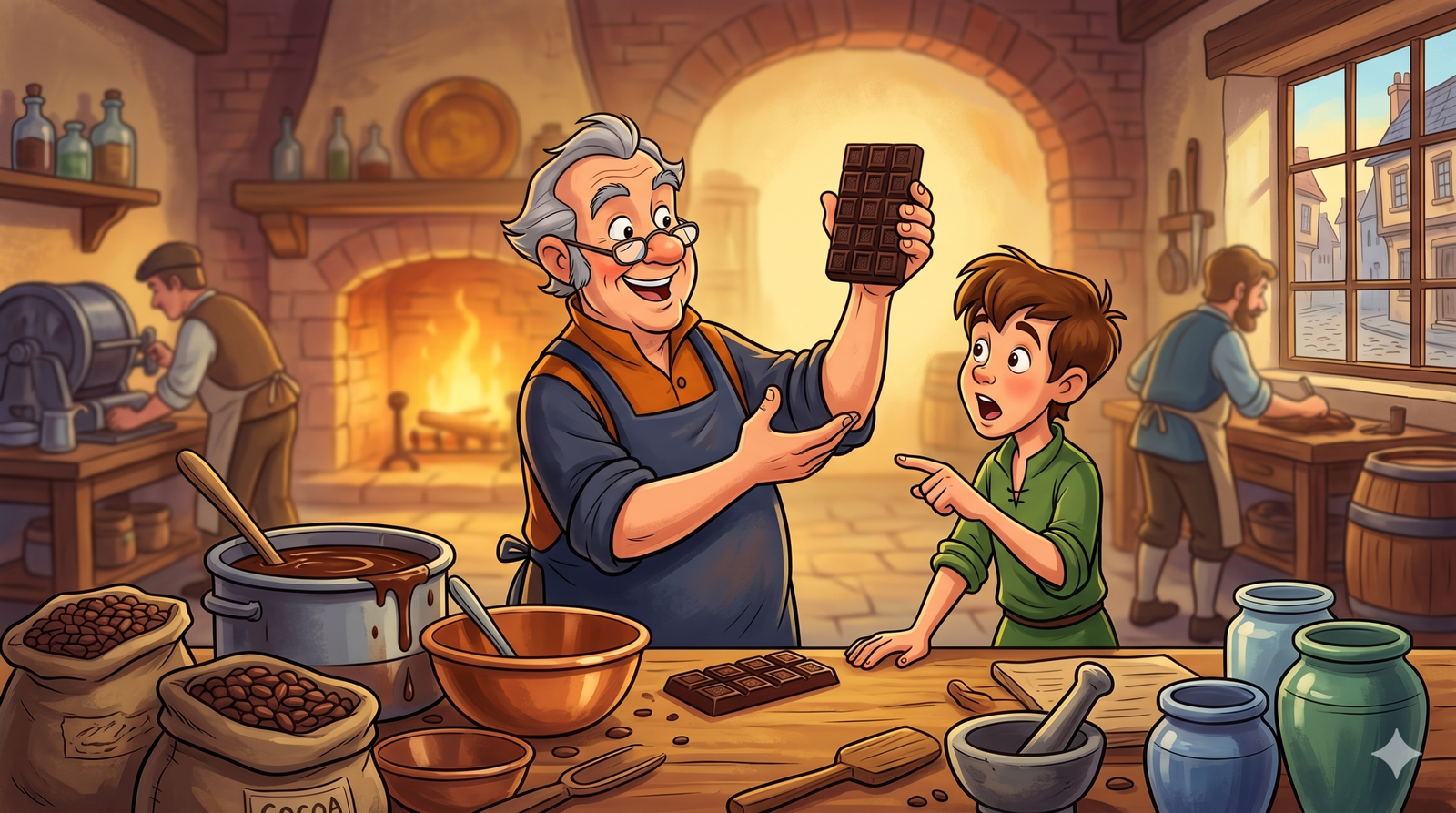
For the first time, chocolate could be produced in a solid form rather than being enjoyed only as a drink.
Chocolate was no longer just something to drink. It had become a solid treat that could be molded, carried, shared, and enjoyed.
1875: The Creation of Milk Chocolate
When chocolate met milk, a whole new era of sweetness began.
Daniel Peter’s sweet discovery
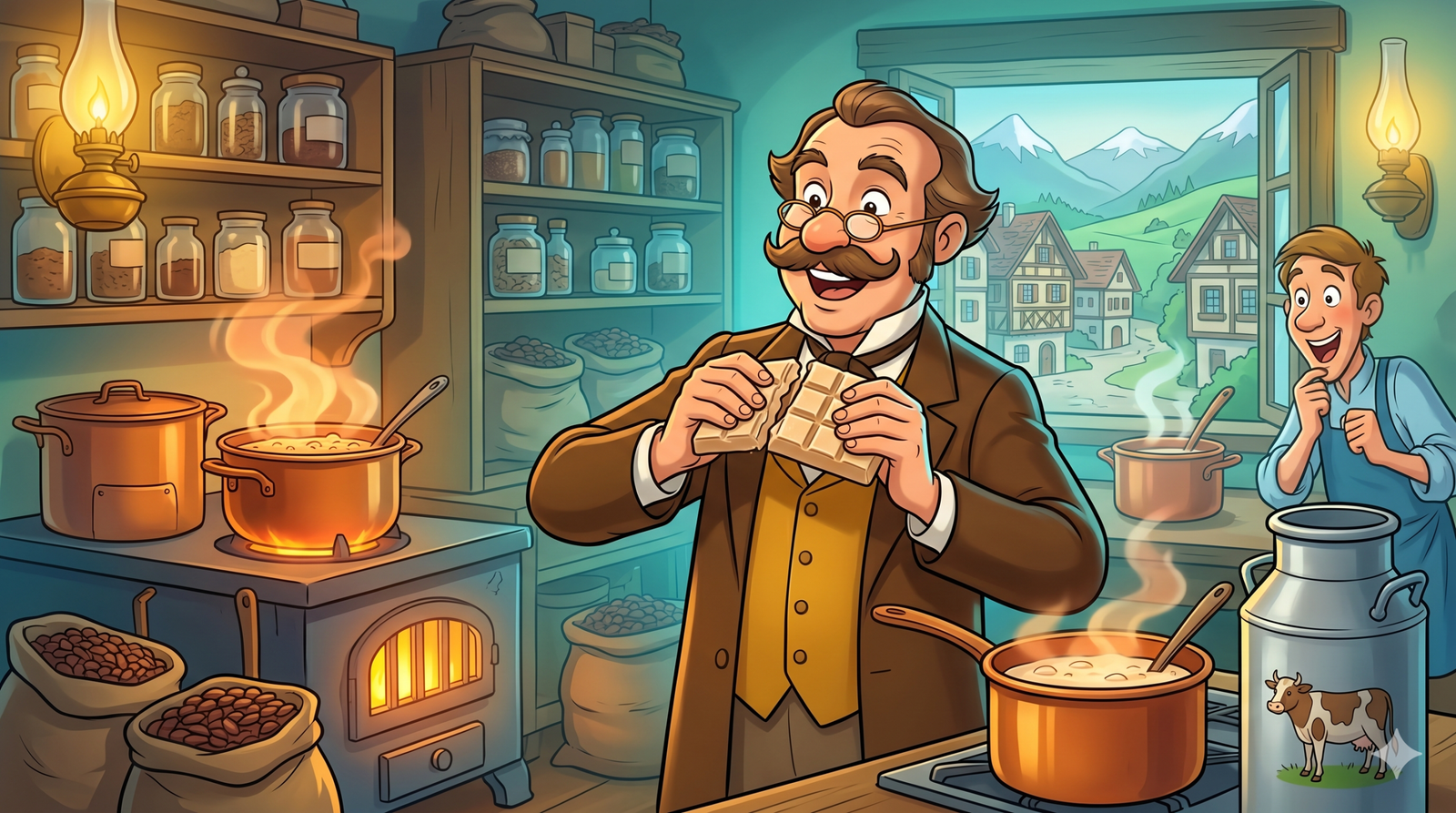
In 1875, Swiss chocolatier Daniel Peter came up with an important new idea: adding condensed milk to chocolate.
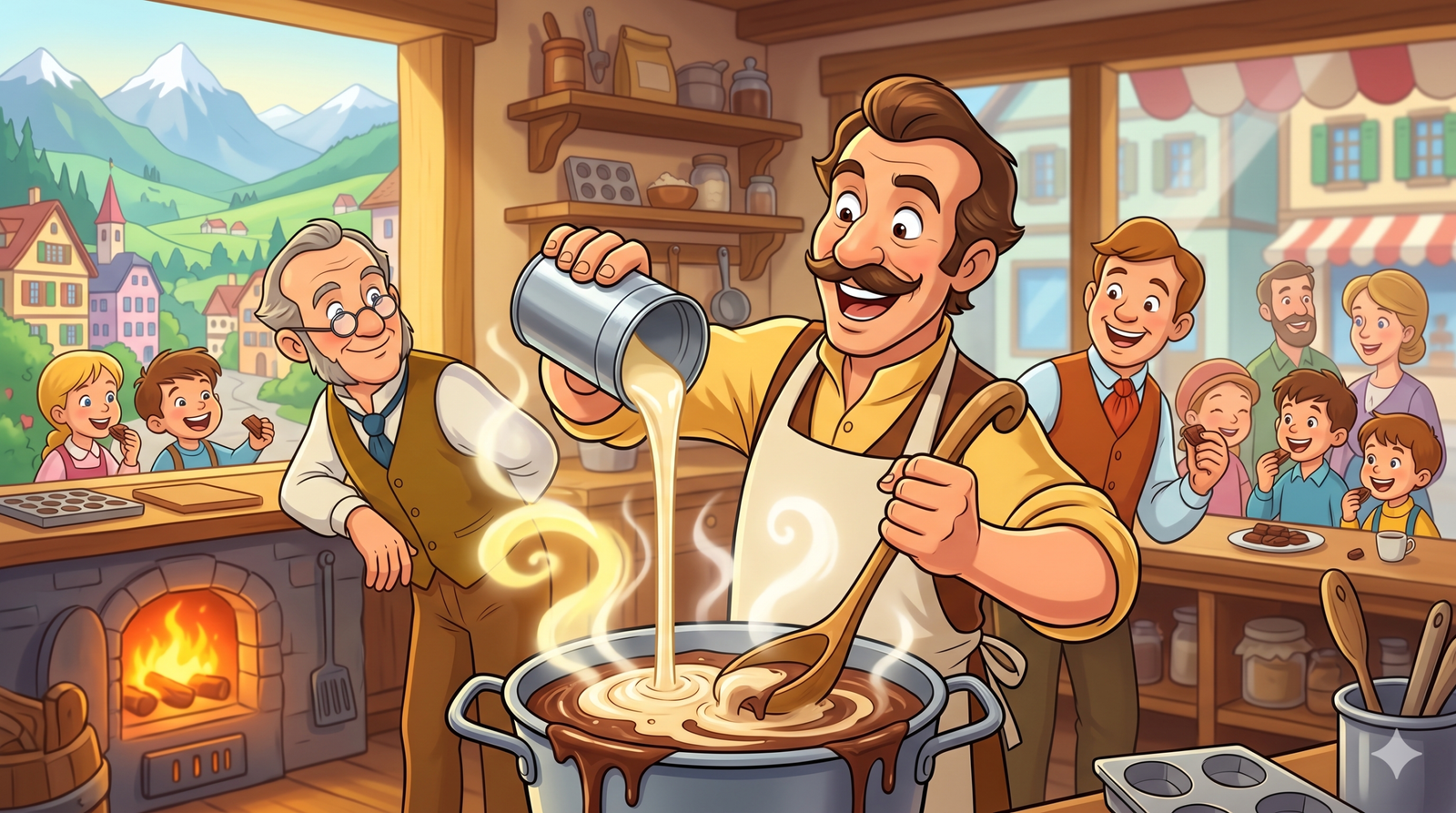
Chocolate became creamier & sweeter
The result was smooth and creamy milk chocolate, making chocolate even more approachable and popular with people around the world.
The addition of condensed milk helped create the smooth, sweet chocolate that would become loved by millions.
1879: The Invention of Conching
In 1879, Swiss chocolatier Rodolphe Lindt developed a machine that stirred chocolate for hours, sometimes even days.
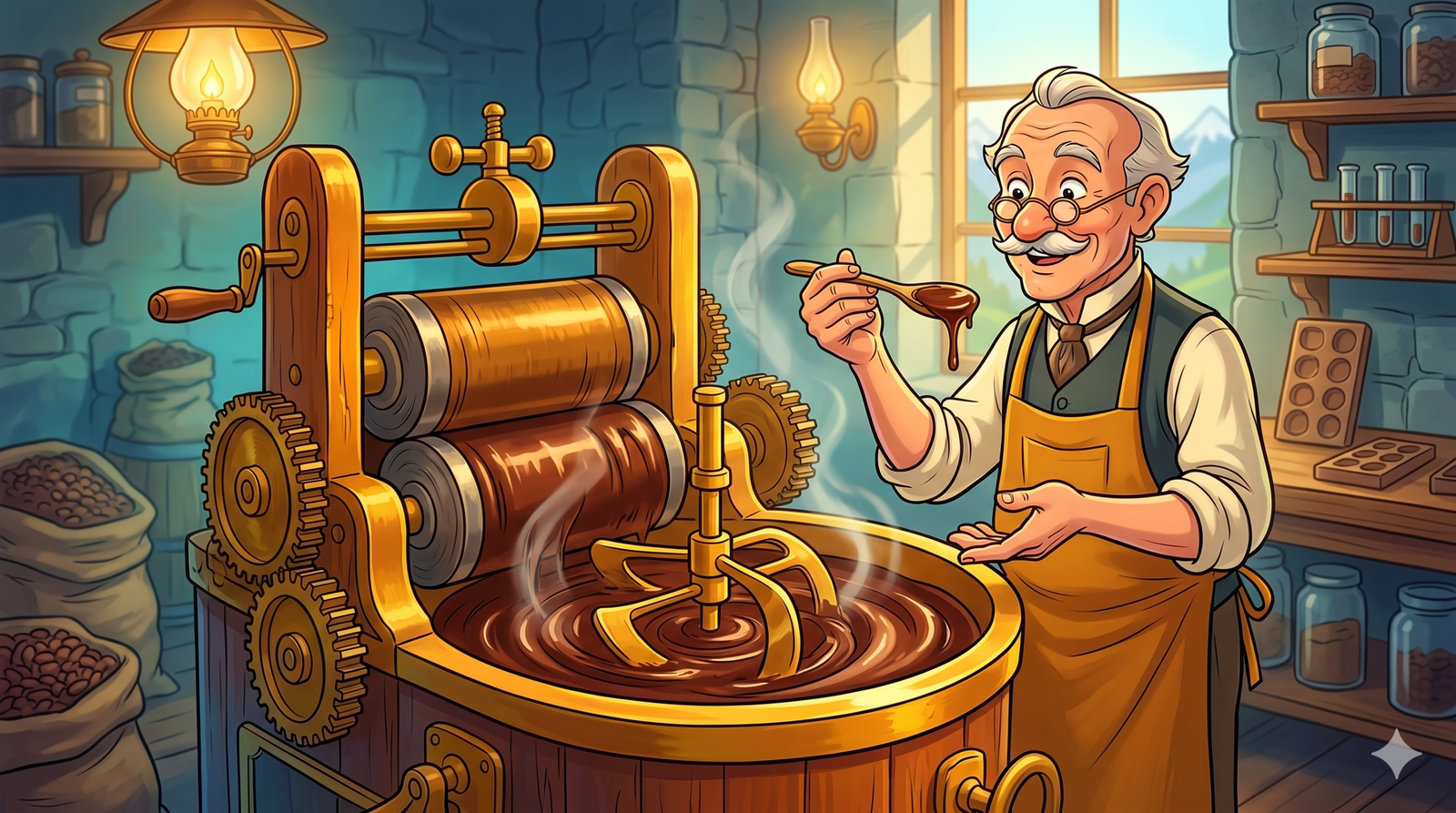 ⚙️ 1879 • CONCHING
Chocolate was stirred for hours and even days.
The process was called conching. The chocolate mixture was continuously stirred and worked, helping improve its texture and consistency.
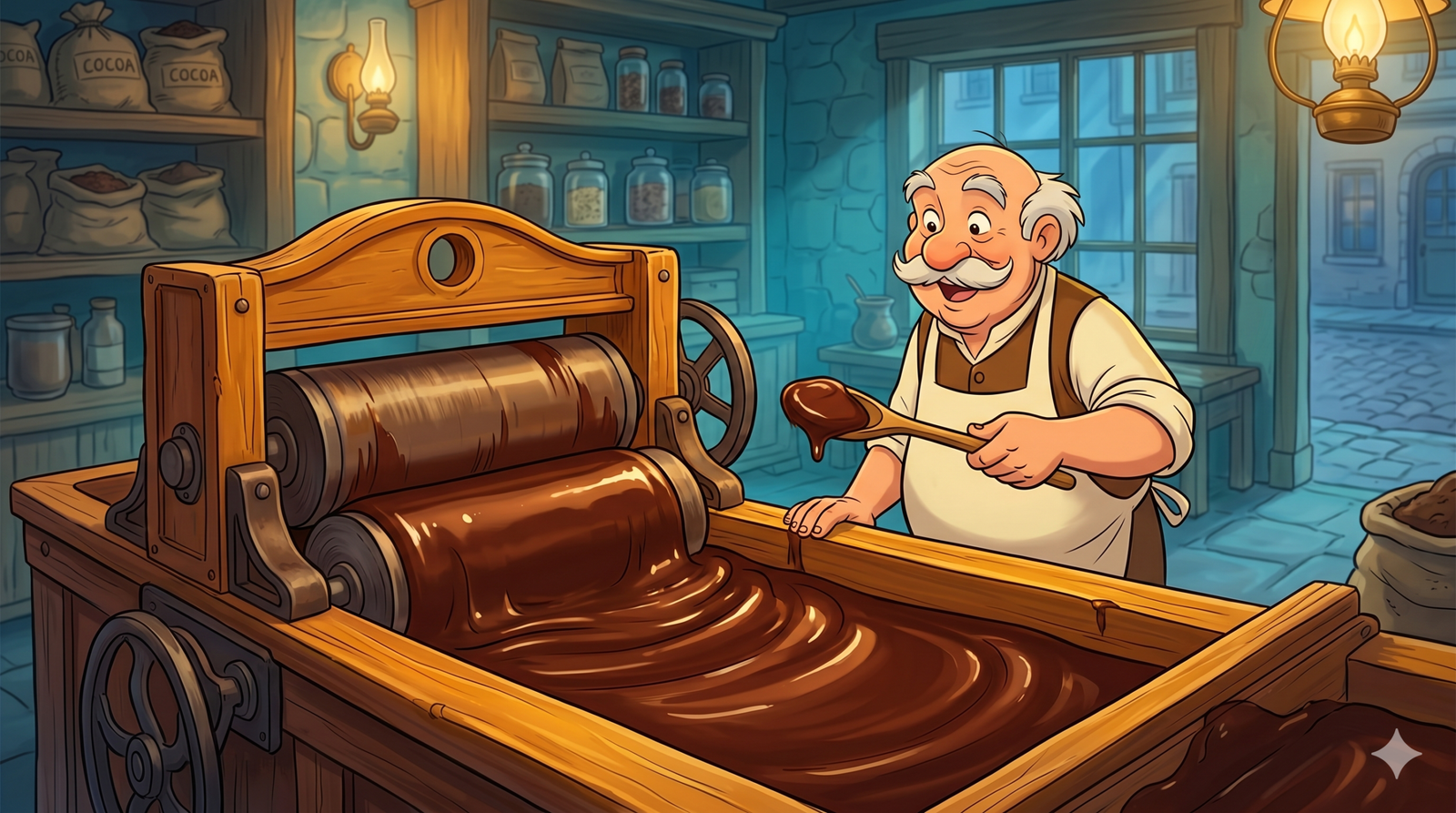 🍫 SMOOTH • CREAMY • MELTING
The result was silky smooth chocolate.
Conching made chocolate smoother, creamier, and easier to melt in the mouth. It helped create the smooth texture we associate with chocolate today.
This breakthrough helped establish the creamy, melt-in-the-mouth texture that became a defining feature of modern chocolate.
The Rise of Famous Chocolate Companies How Chocolate Became a Global Industry
Cadbury and the Era of Packaged Chocolate When Chocolate Became More Affordable and Portable
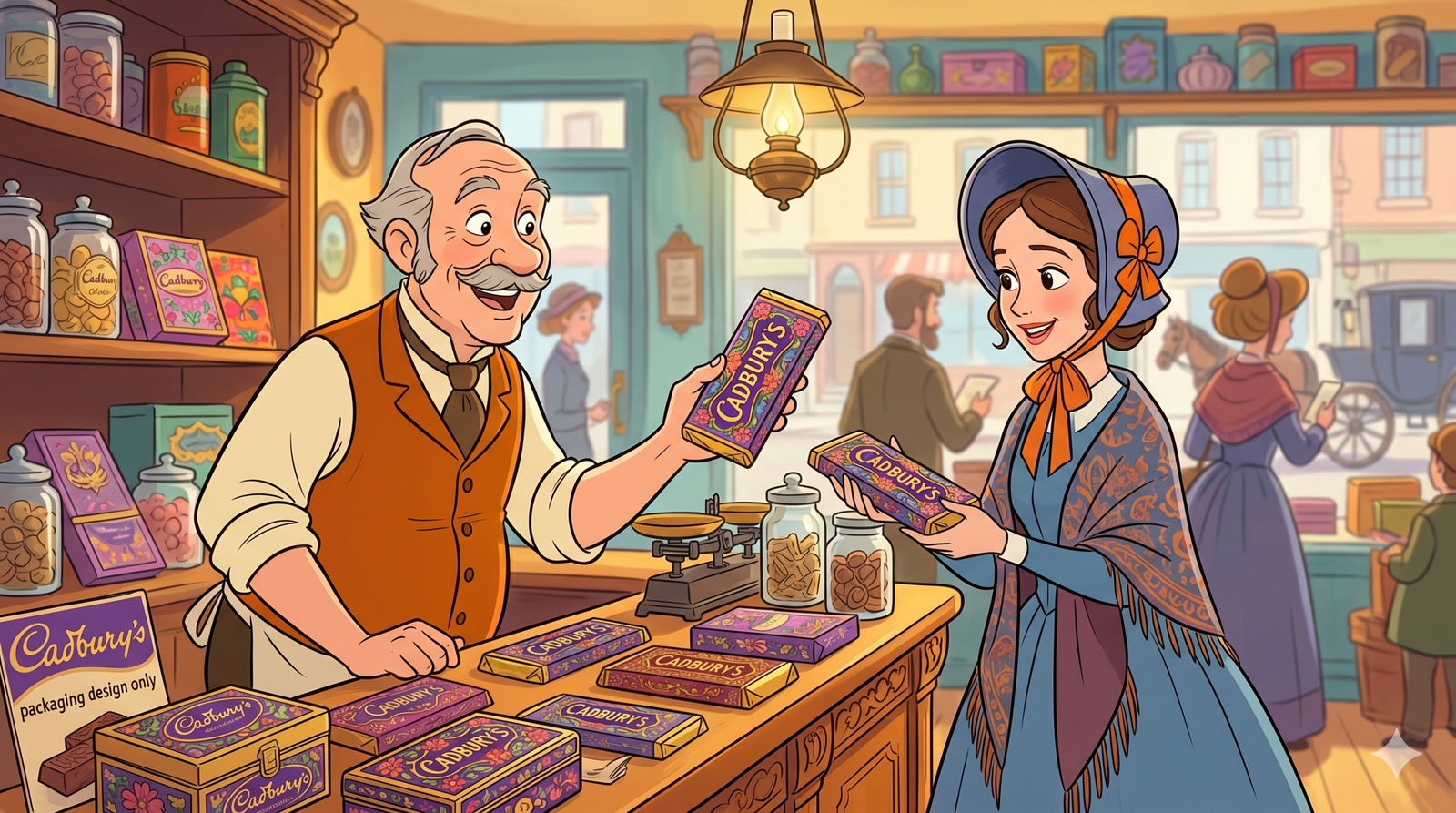
In 1868, the British company Cadbury began selling beautifully packaged chocolate bars.
Chocolate was becoming more affordable, portable, and popular around the world.
Hershey’s and the Popular Chocolate Bar How Chocolate Became an Everyday Treat
At the beginning of the 20th century, chocolate was entering a new era — one where it could be enjoyed by millions of ordinary people.
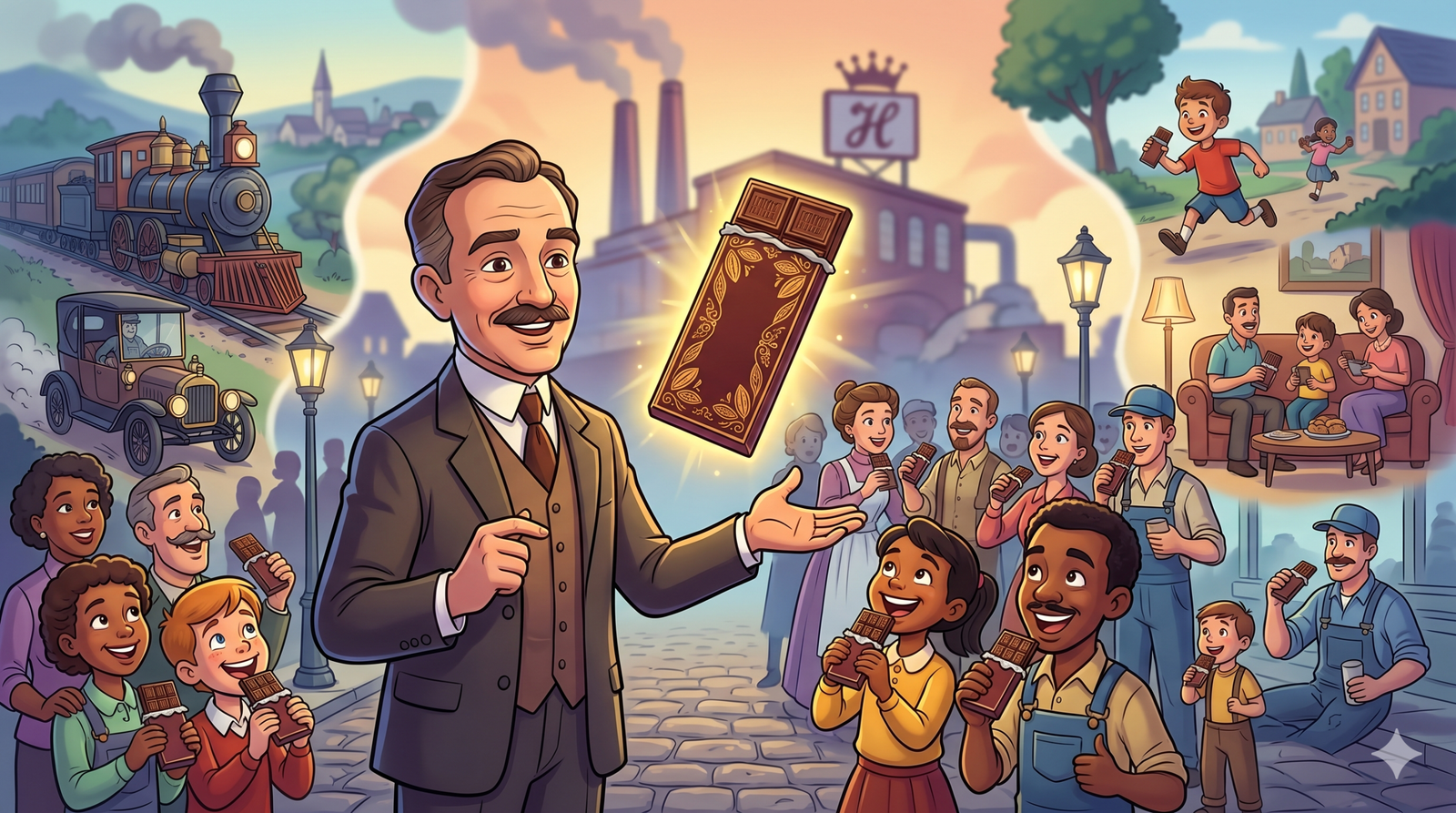
In 1900, Milton S. Hershey introduced the Hershey’s bar in the United States.
It became one of the best-selling chocolate bars in history.
Hershey helped turn chocolate from a special luxury into a daily treat for millions of people.
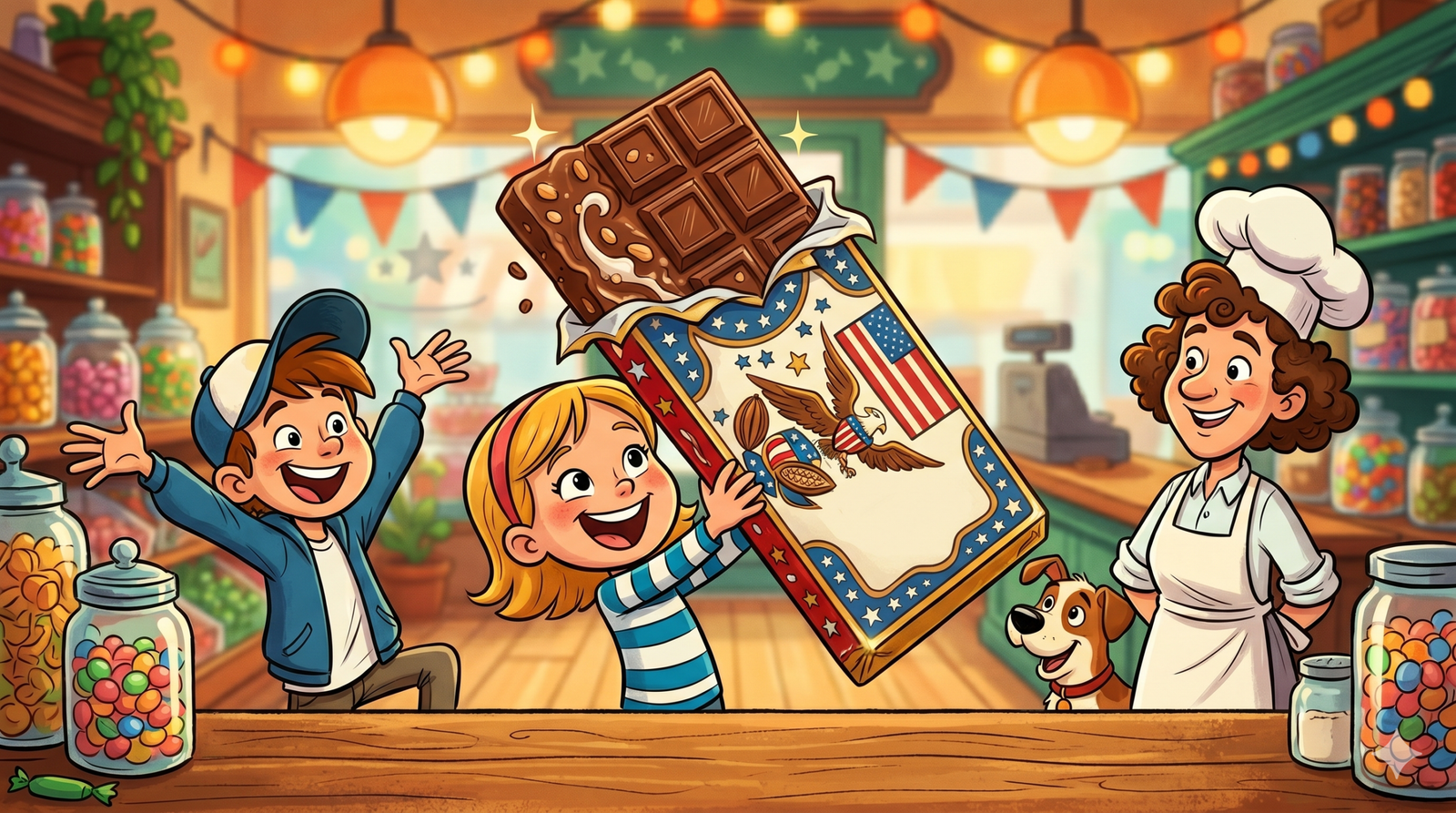
Chocolate Becomes A Global Industry
From local delicacy to a worldwide chocolate phenomenon
The Growth of Cacao Farming
From a regional crop to an important global resource.
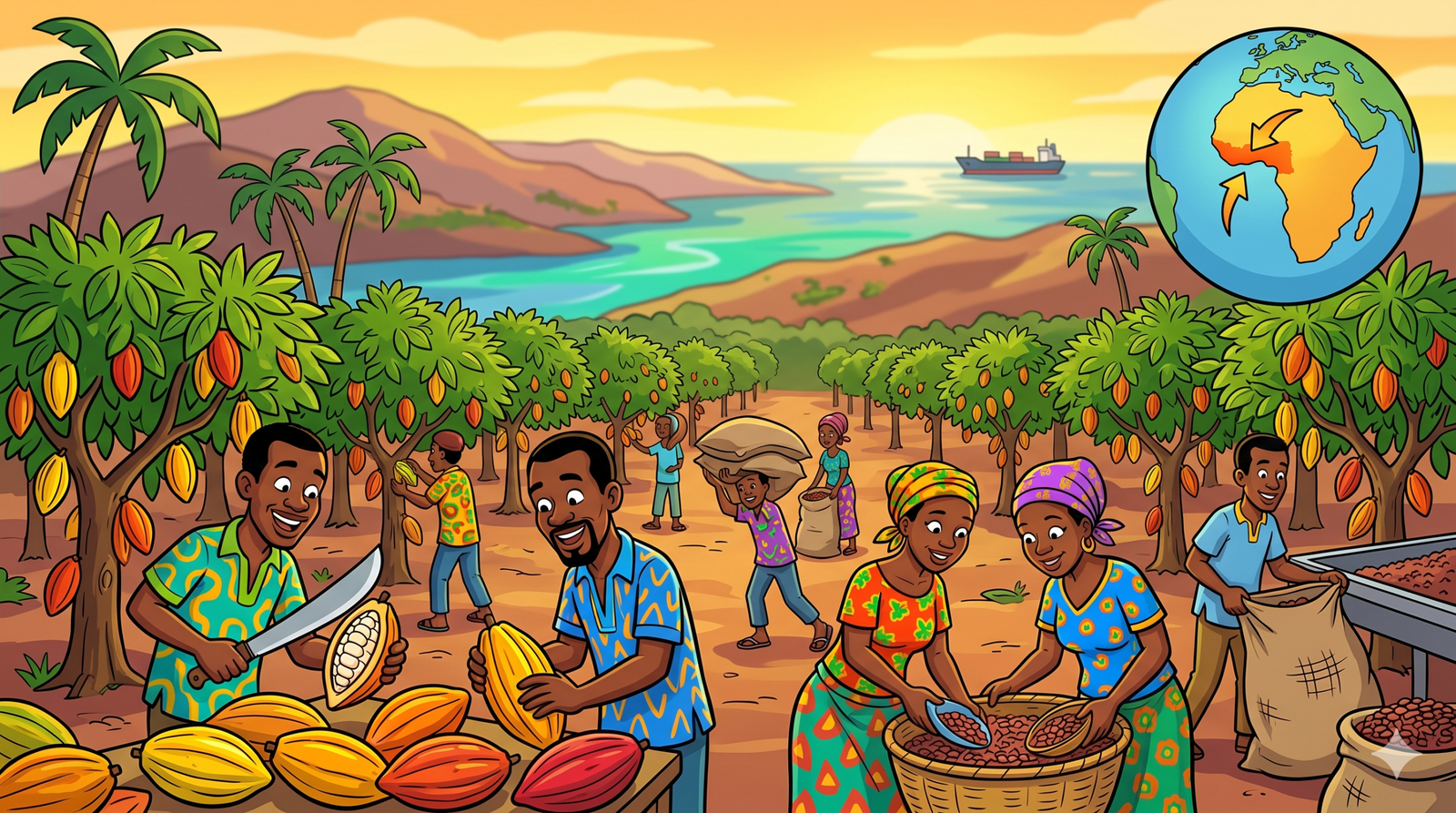
Cacao farming expands around the world
By the 1900s, cacao had become an important global crop.
As demand for chocolate grew, cacao farming expanded into major growing regions around the world.
Global Cocoa Trade
Cocoa enters the world of international commerce.
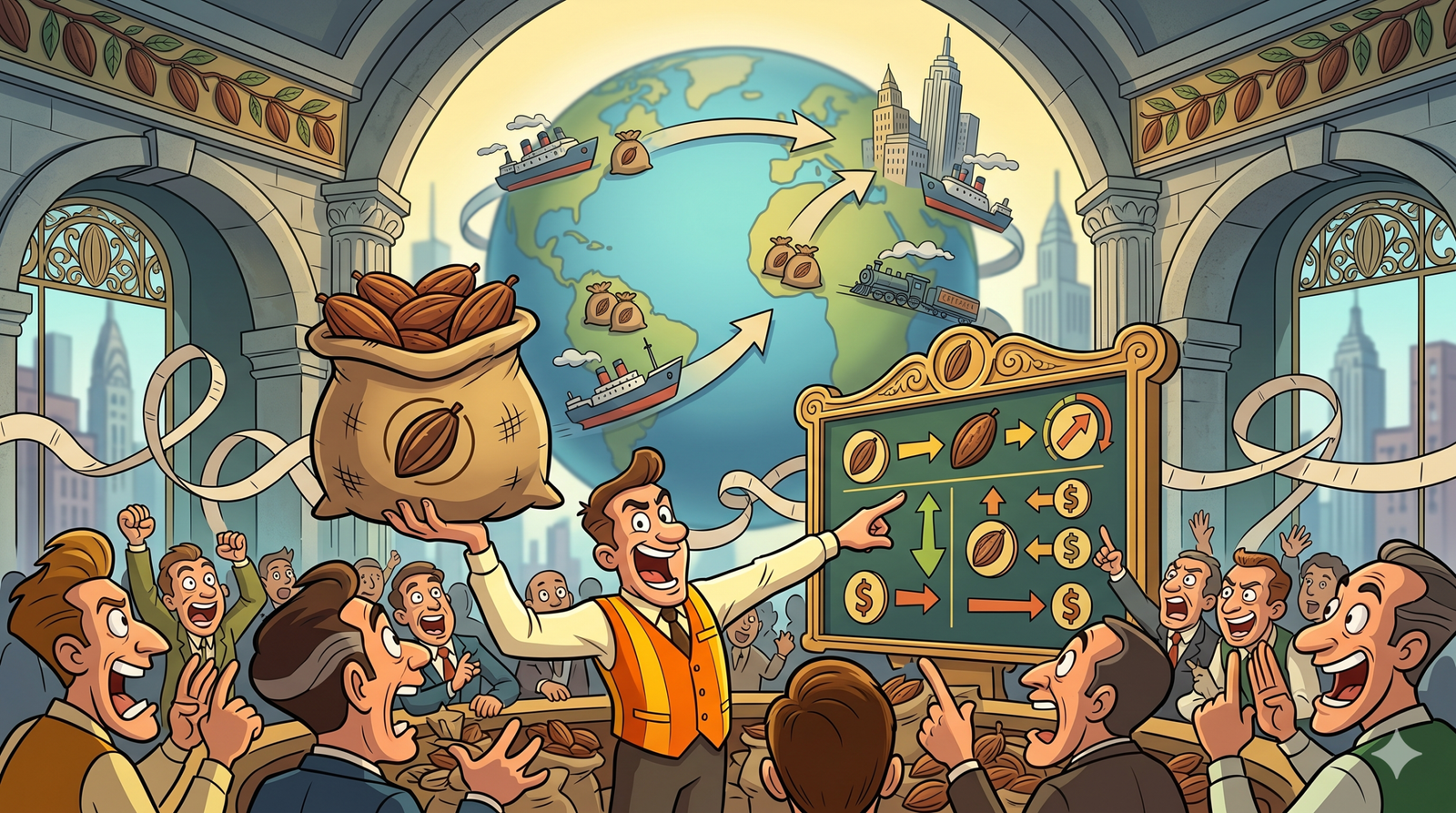
Cocoa goes global
In 1925, the New York Cocoa Exchange was founded.
This allowed cocoa to be bought and sold on global markets, helping cocoa become an internationally traded commodity.
A major step in the globalization of chocolate.Major Cacao-Producing Countries Today
From West African farms to chocolate lovers around the world.
West Africa plays a major role in the world’s cacao supply.
Today, much of the world’s cacao comes from West African countries, particularly Ivory Coast and Ghana.
Two countries at the heart of today’s cacao story.
Ivory Coast
A major cacao-producing country and an important part of the world’s chocolate supply.
Ghana
Another leading cacao-producing country whose beans help supply chocolate makers around the world.
Chocolate has grown from an ancient cacao drink into one of the world’s most loved flavors.
Is Chocolate Good for You? Understanding the Health Effects
Exploring what science tells us about chocolate, cacao, and the human body.
Antioxidants and Flavonoids Inside Dark Chocolate

Dark chocolate contains antioxidants, flavonoids, and minerals such as iron and magnesium.
These natural compounds are some of the reasons scientists have taken an interest in the possible effects of dark chocolate.
Possible Health Benefits What Scientists Are Exploring

Some studies suggest that dark chocolate may have several interesting effects on the body and mind.
Possible benefits do not mean that chocolate should be eaten without limits. Enjoying chocolate in moderation is important.
Why Moderation Matters

Chocolate, especially many sweetened varieties, can contain a significant amount of sugar.
Doctors recommend enjoying chocolate in moderation. The key is to enjoy it responsibly.
From Bitter Brew to Sweet Bar: The Incredible Journey of Chocolate
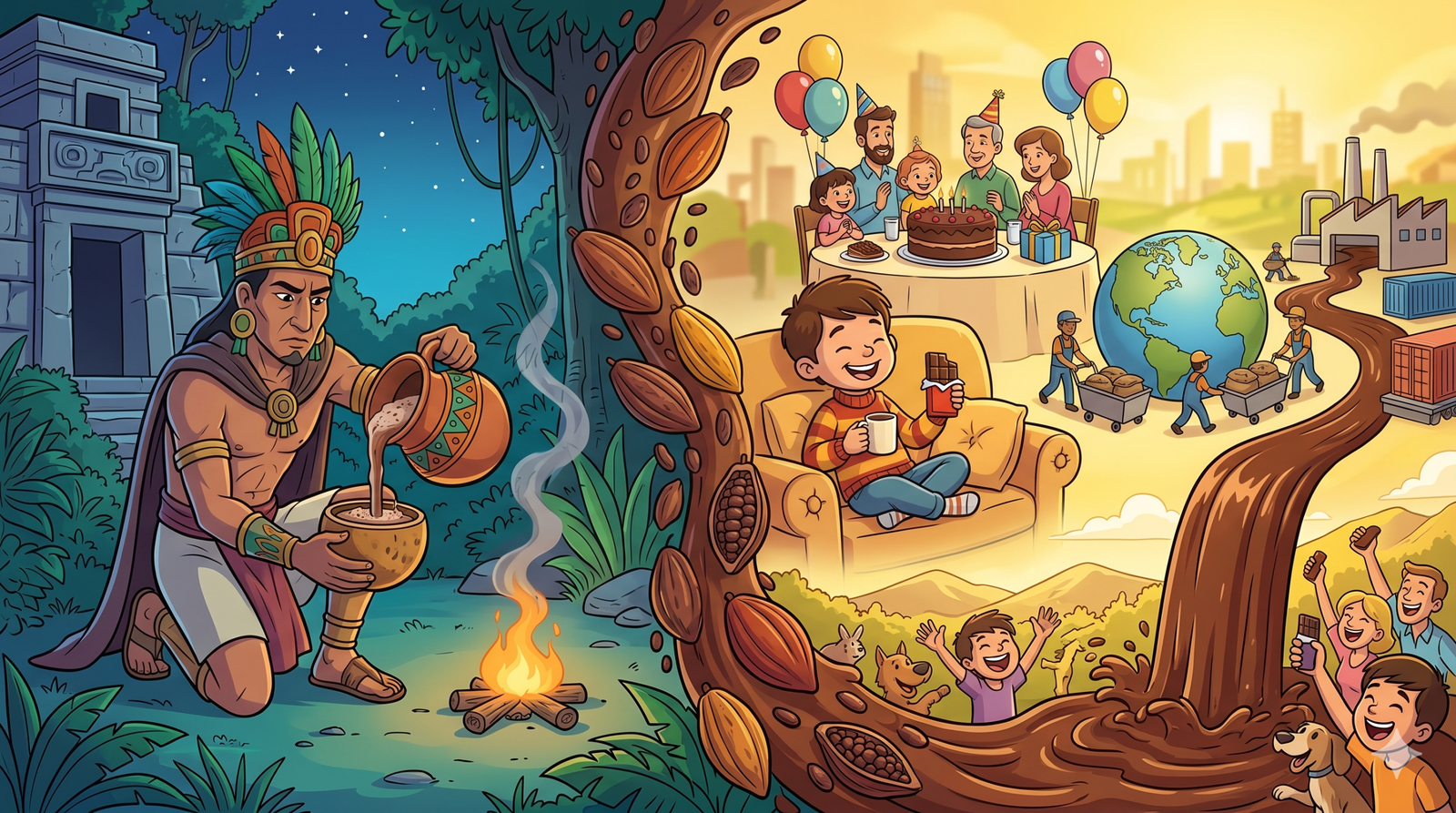
What began as a bitter cacao drink thousands of years ago gradually became one of the world’s most beloved foods.
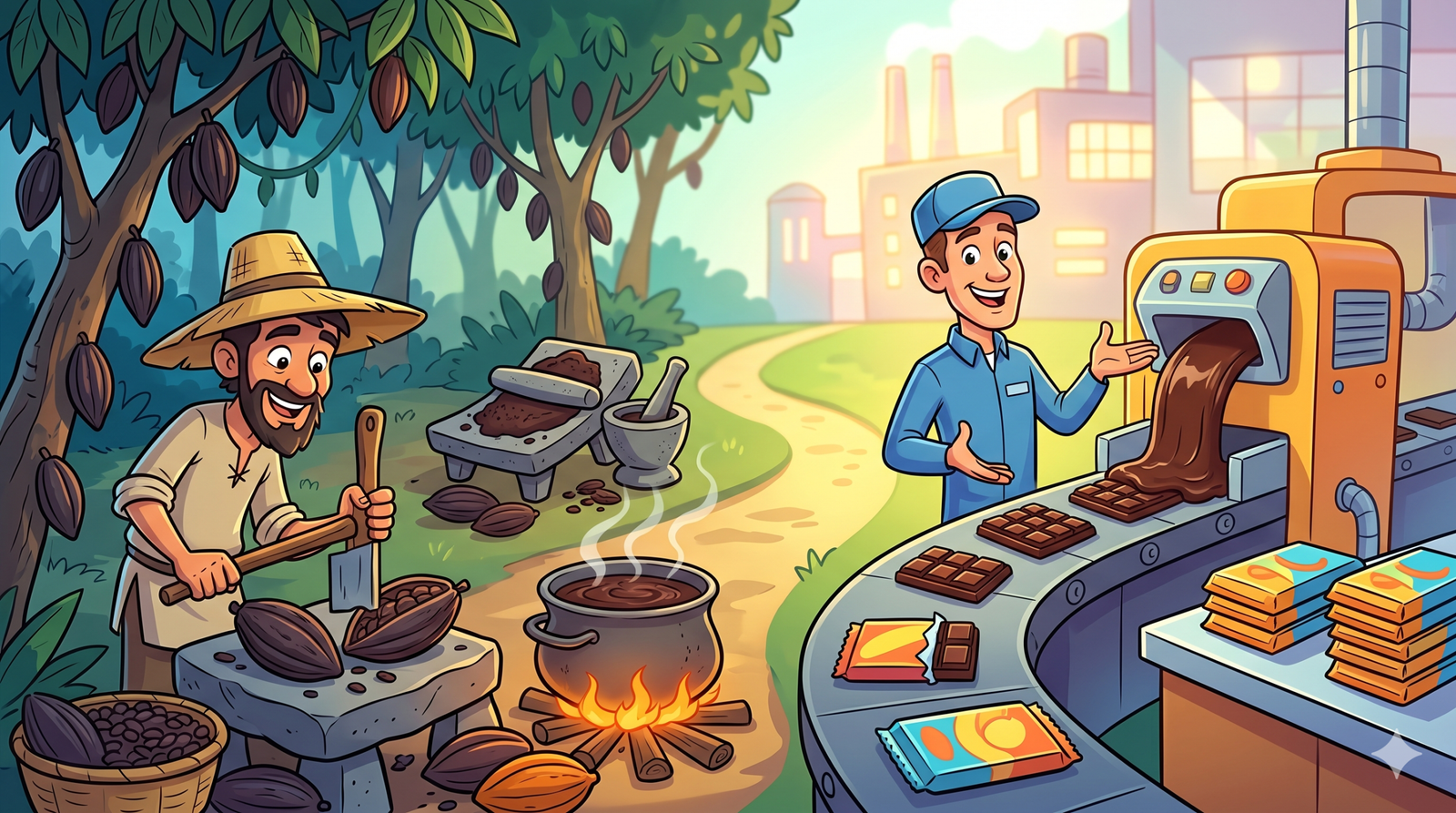
Bitter Cacao
Ancient civilizations prepared cacao as a rich, bitter drink.
Sweet Chocolate
New ingredients, inventions, and technology transformed cacao into the chocolate we know today.
 ANCIENT WORLD
Sacred Cacao
It went from sacred Mayan rituals and royal Aztec courts to becoming an important part of ancient culture and ceremony.
From Houses to Factories
Cacao traveled across the Atlantic and eventually found its way into European chocolate houses, followed by the rise of factory production.
 EUROPEAN ERA
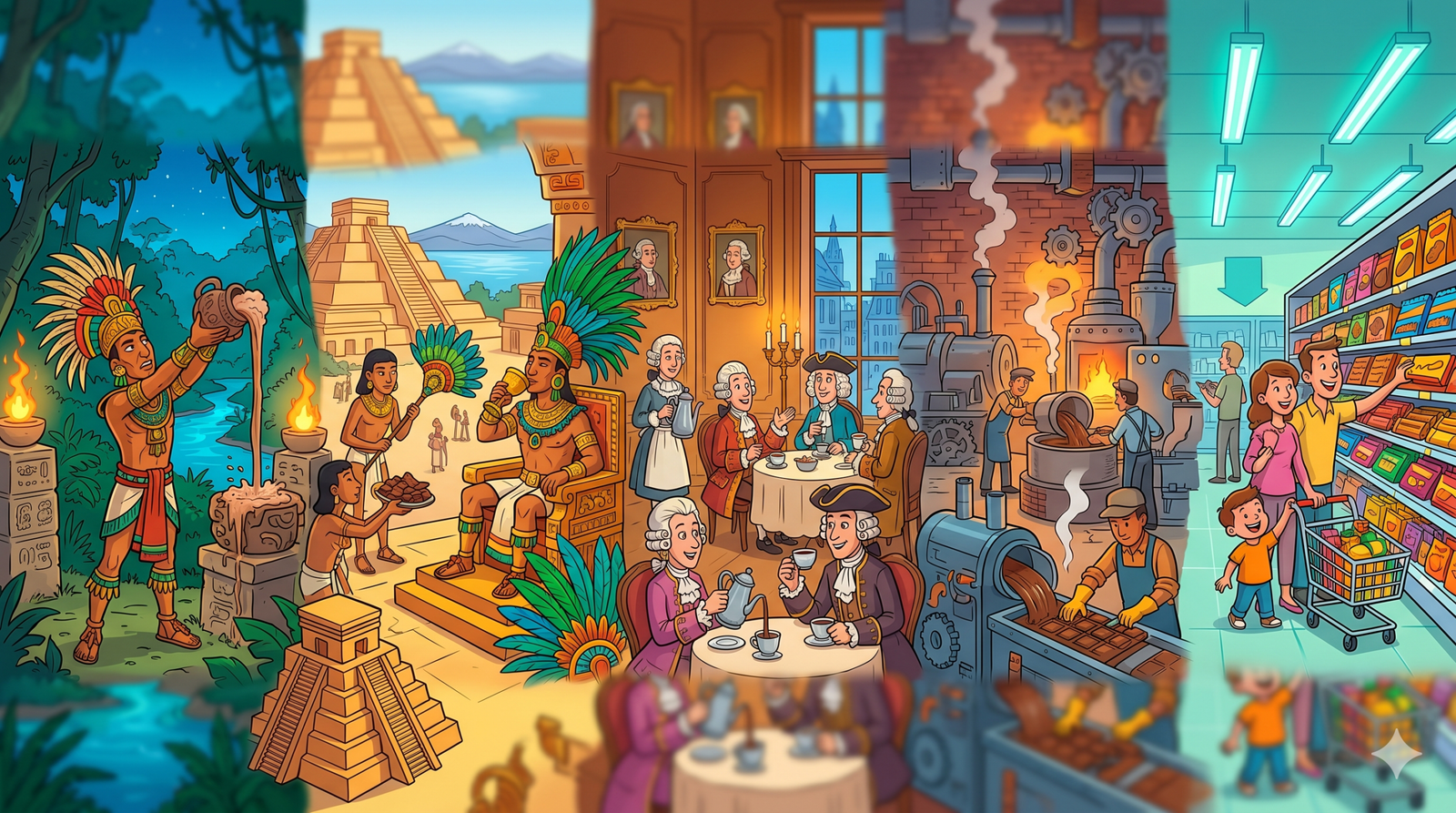 THE WORLD TODAY
A Global Favorite
What began as a bitter ceremonial drink is now a comfort food, a celebration treat, a global industry, and one of the world’s favorite flavors.
Frequently Asked Questions About Chocolate
From ancient cacao rituals to the chocolate bars we know today, here are the answers to some of the biggest questions about chocolate.
When was chocolate invented?
+Chocolate has its roots in the ancient civilizations of Central and South America, where the Maya and Aztecs consumed cacao as a bitter drink long before modern chocolate bars existed.
Why is chocolate called the “Food of the Gods”?
+Chocolate comes from the cacao tree, whose scientific name is Theobroma cacao. The Greek word Theobroma means “food of the gods.”
Who created the first chocolate bar?
+In 1847, English chocolatier Joseph Fry discovered that cocoa powder and melted cocoa butter could be combined into a paste that could be molded, helping create the first solid chocolate bar.
Where does most cacao come from today?
+Today, much of the world’s cacao comes from West Africa, particularly countries such as Ivory Coast and Ghana.
Is dark chocolate healthier than milk chocolate?
+Dark chocolate contains antioxidants and flavonoids, along with minerals such as iron and magnesium. However, chocolate should still be enjoyed in moderation, especially because many chocolate products contain added sugar.
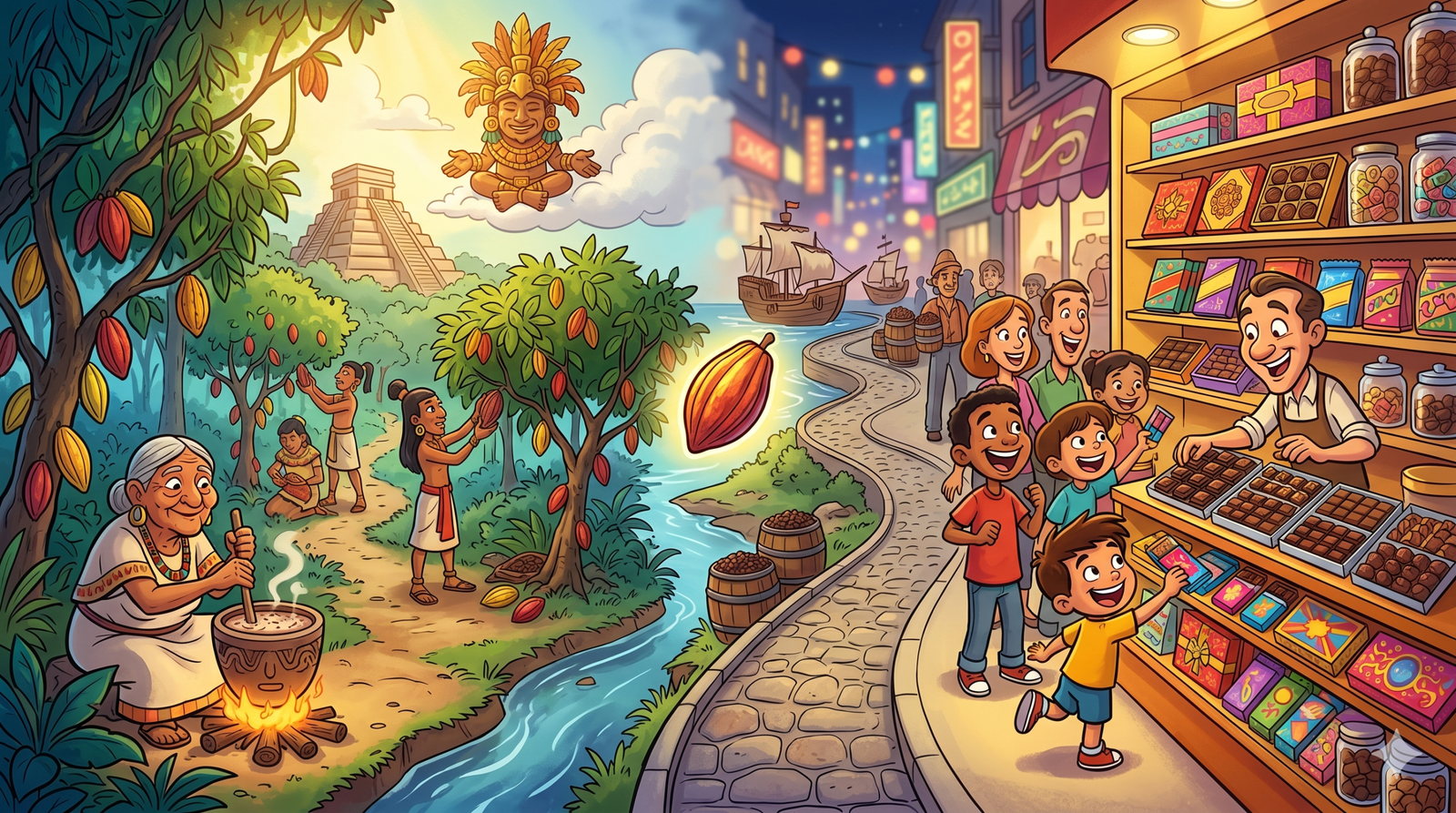
From cacao bean to chocolate bar.
Thousands of years of history, discovery, science, culture, and craftsmanship have shaped the chocolate we enjoy today.
The Sweet Story of Chocolate
Continues
From the rainforests of ancient America to candy stores around the world, chocolate has truly earned its name — The Food of the Gods.
Its journey has taken it from a bitter ceremonial drink to a sweet treat enjoyed by millions of people around the world.
The story isn’t over.
Its story is
still being written.
Watch the Chocolate Story Come to Life
Discover the incredible journey of chocolate through history, culture, science, and discovery.
From Ancient Cacao to the Chocolate We Love Today
Travel through centuries of discovery and explore how cacao became one of the world’s most loved flavors.






Leave a Reply