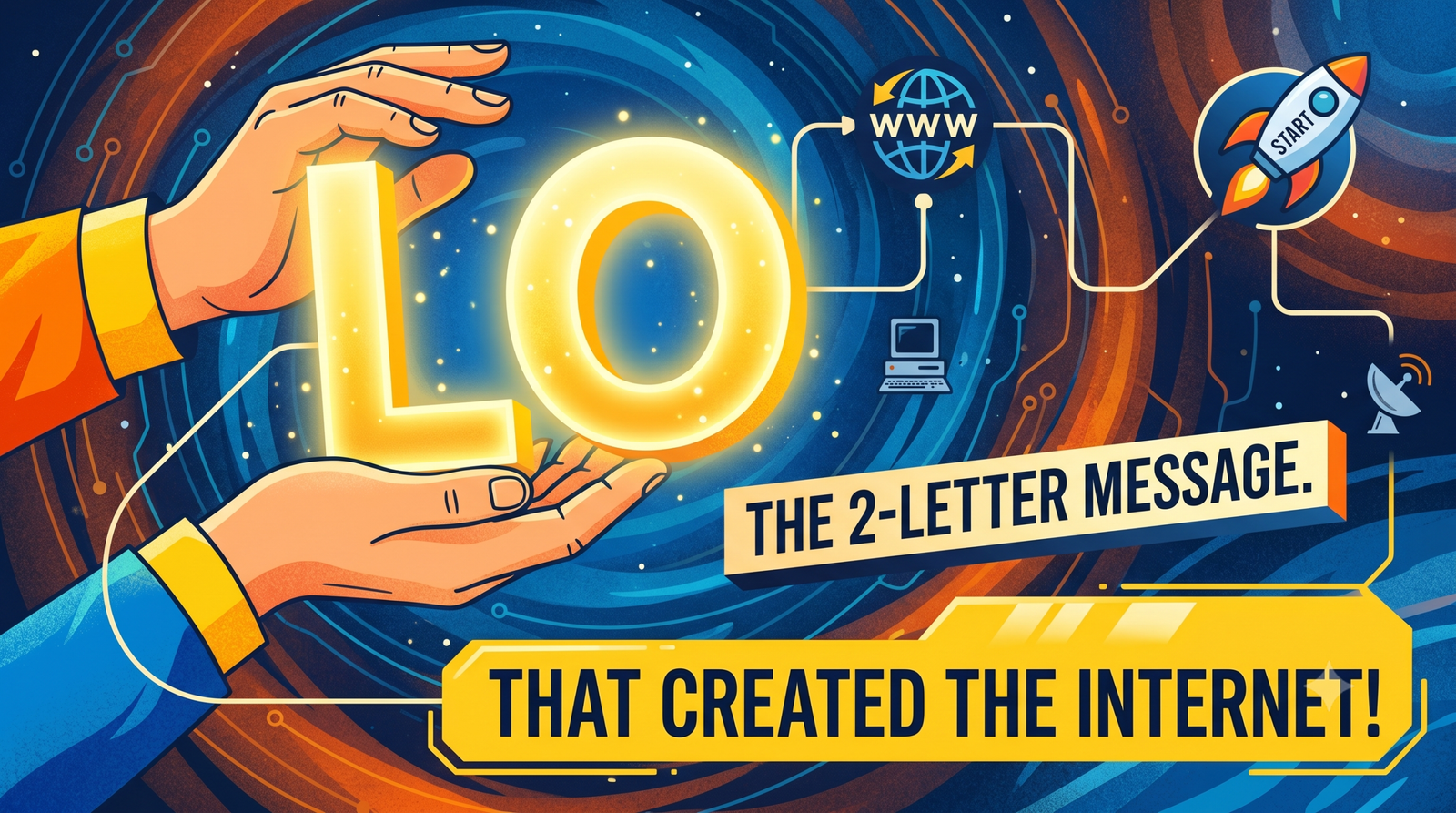
Imagine waking up tomorrow and discovering that the Internet has stopped working.
Within hours, businesses would struggle, online services would stop, and millions of people would suddenly find themselves disconnected from the digital world.
“What happened to the Internet?” 🤔
Today, the Internet is so deeply connected to our lives that it is difficult to imagine the world without it.
But where did it all begin?
How does information travel across the planet in seconds? ⚡ And why are thousands of kilometers of cables sitting beneath our oceans? 🌊
Let’s Begin the Journey
From mysterious cables beneath the oceans 🌊 to satellites in space 🛰️, from early computers 💻 to smartphones 📱 — let’s explore how the Internet transformed our world.
From ARPANET to the World Wide Web 🌐
Discover the early experiments, ideas and technologies that eventually created the Internet we know today.
Start the History 🚀The World Before the Internet
Before the Internet connected billions of people, information traveled at the speed of paper, post, and physical machines.
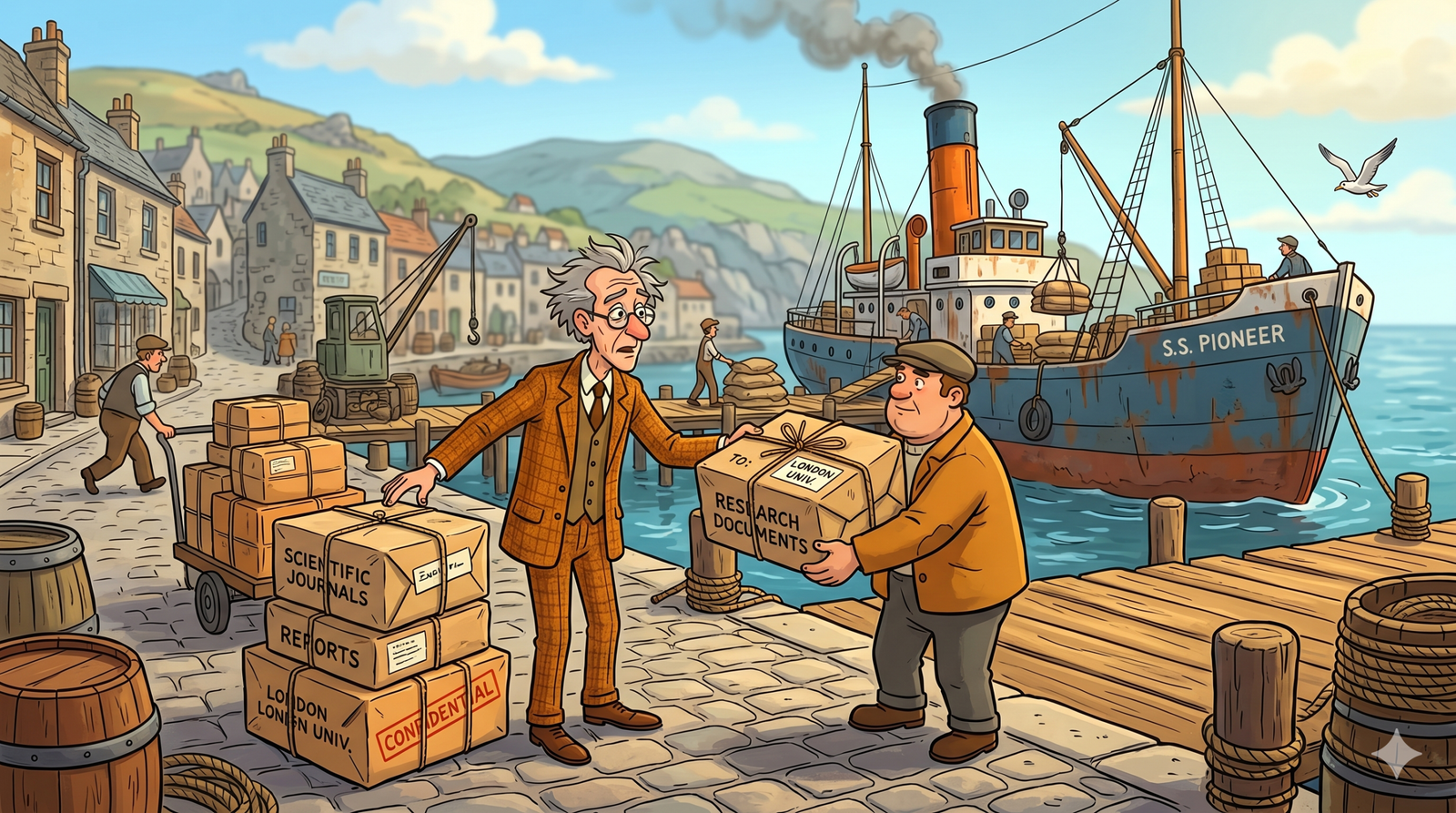
Information Moved Slowly
Before the Internet, information moved slowly.
People used letters to communicate across long distances. Scientists exchanged physical documents, and businesses often waited days or weeks for important information.
Scientists Shared Physical Documents
Research and important information had to travel on paper.
Important News Took Days or Weeks
Communication depended on mail, paper and physical delivery.
Computers Were Massive Machines
Computers were also very different from today’s devices. In the 1960s, many computers were huge, expensive machines that could occupy entire rooms.
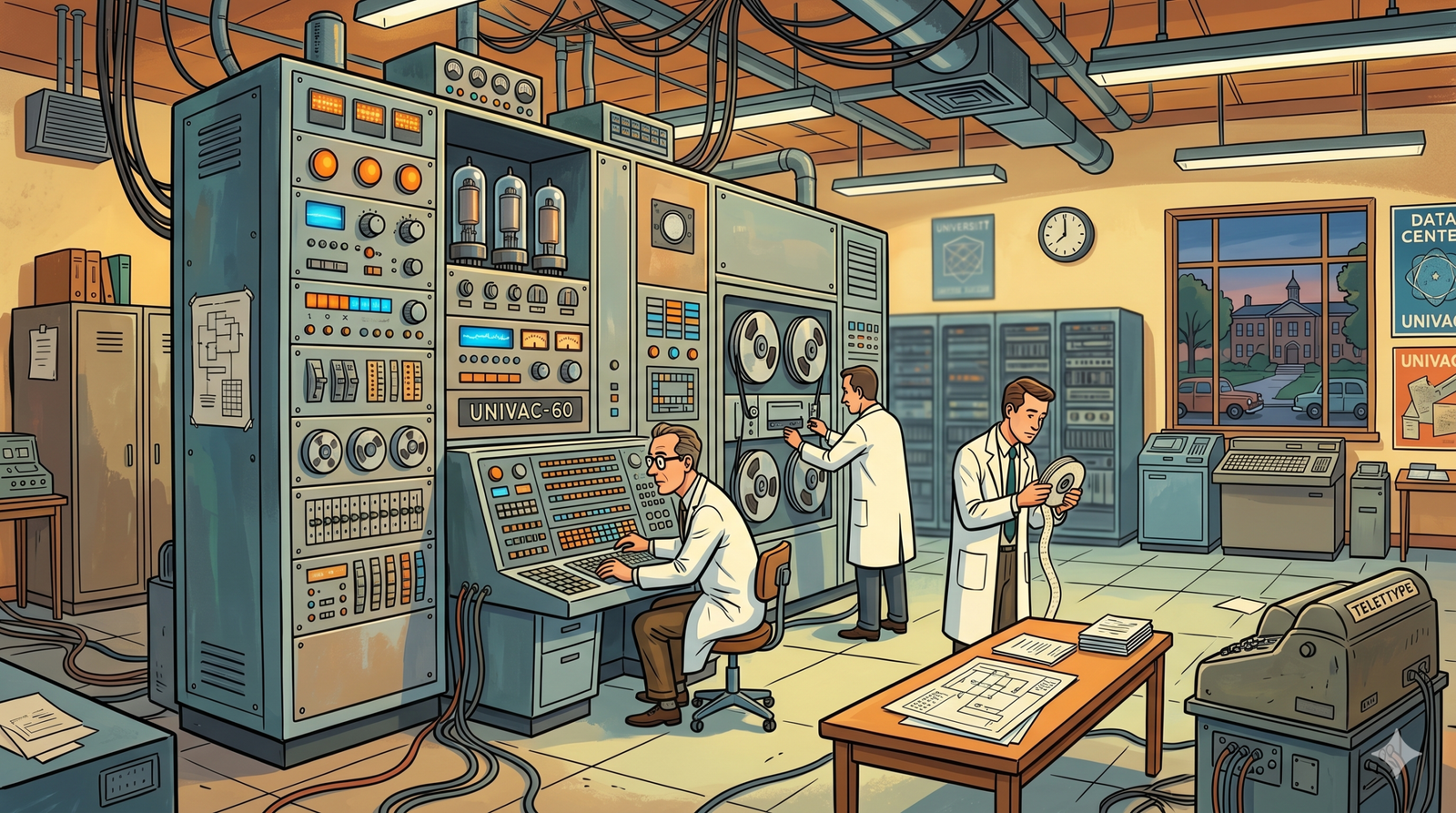
Computers Couldn’t Talk to Each Other
Most importantly, these computers couldn’t easily communicate with one another.
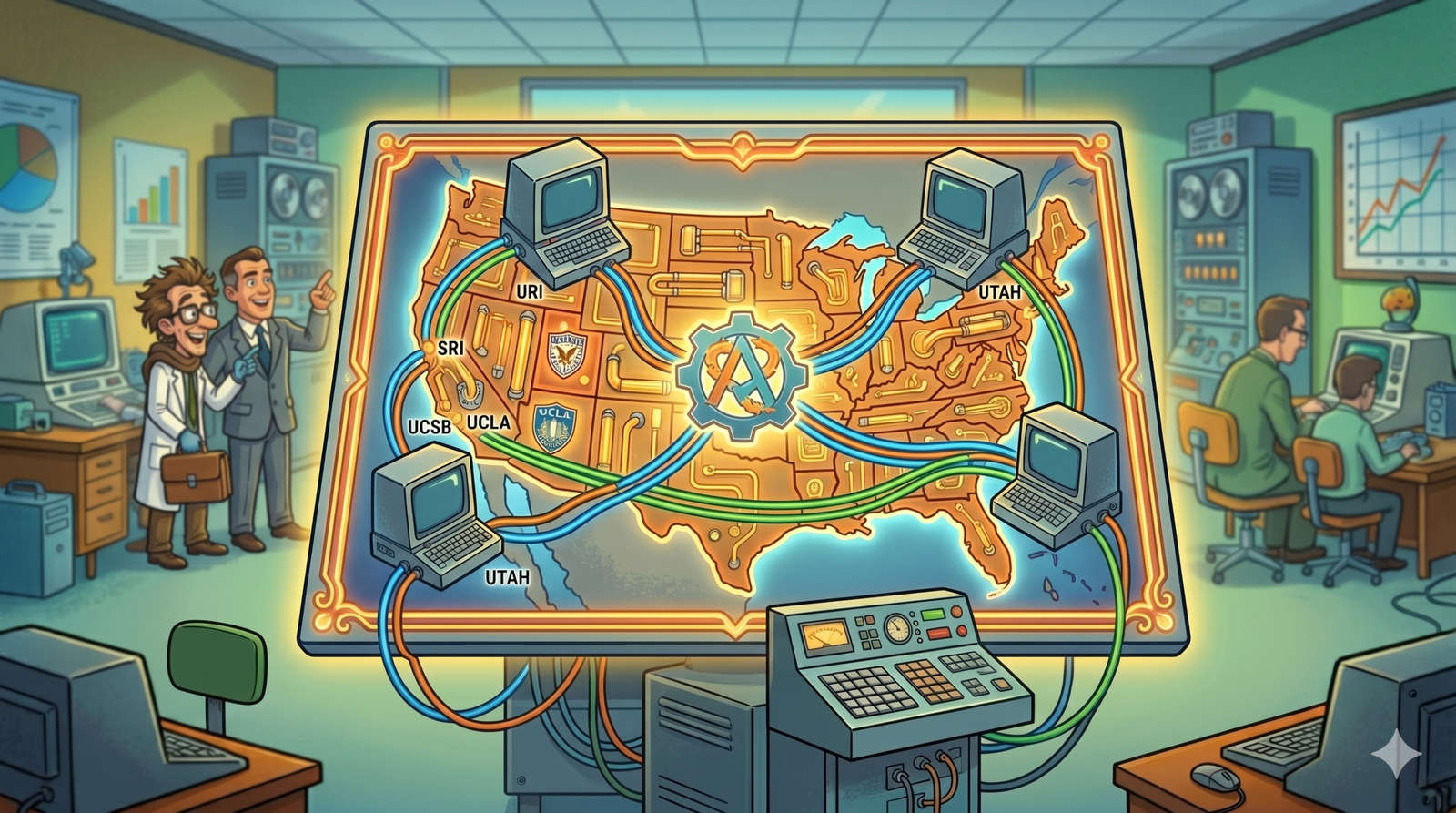
Disconnected Worlds.
The world had enormous amounts of information, but it lacked a simple way to connect it.
ARPANET: The Network That Started It All
Before the Internet connected billions of people, there was a small network connecting just four computers.
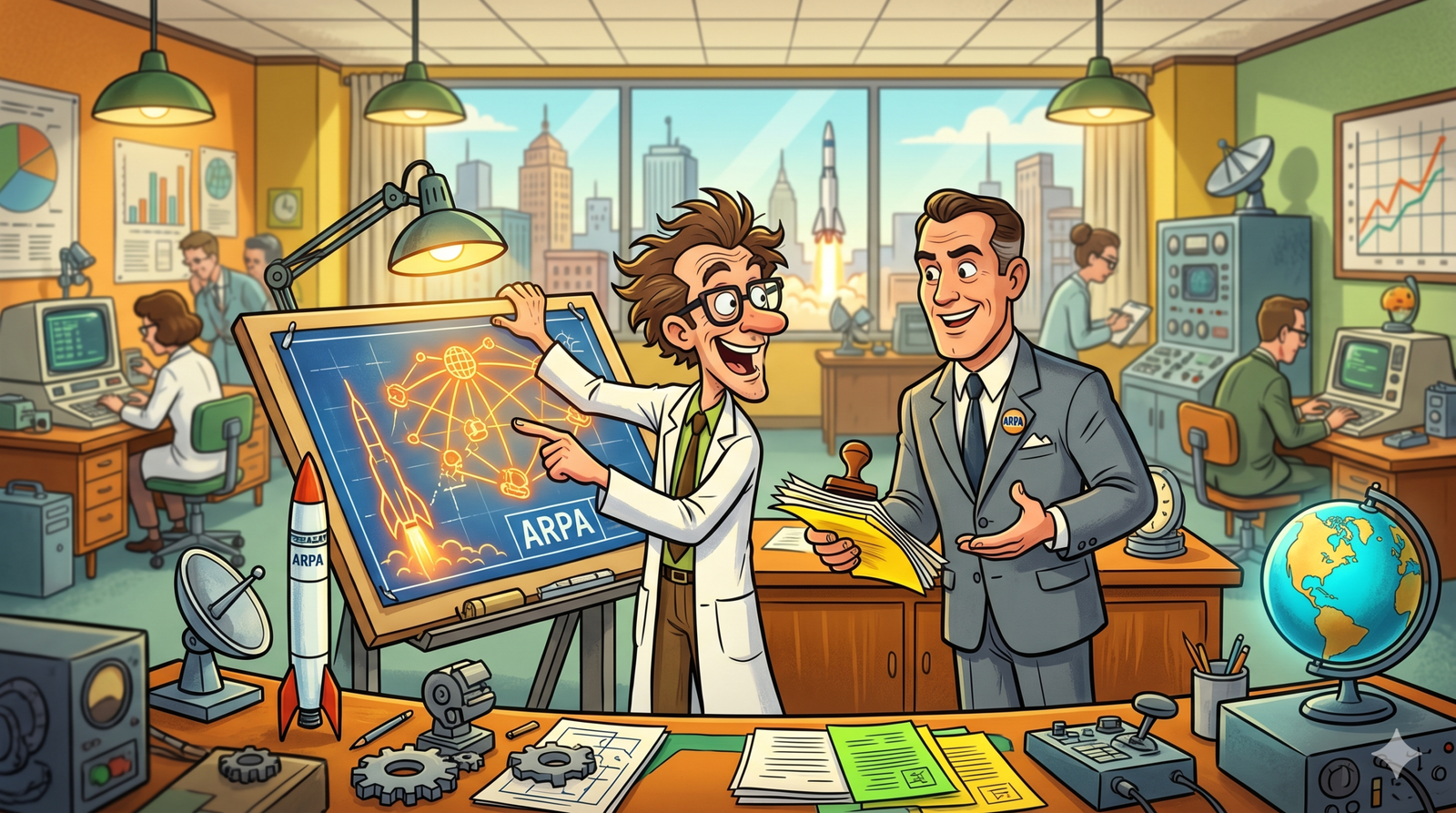
In the 1960s, the United States government created ARPA to support ambitious scientific and technological research.
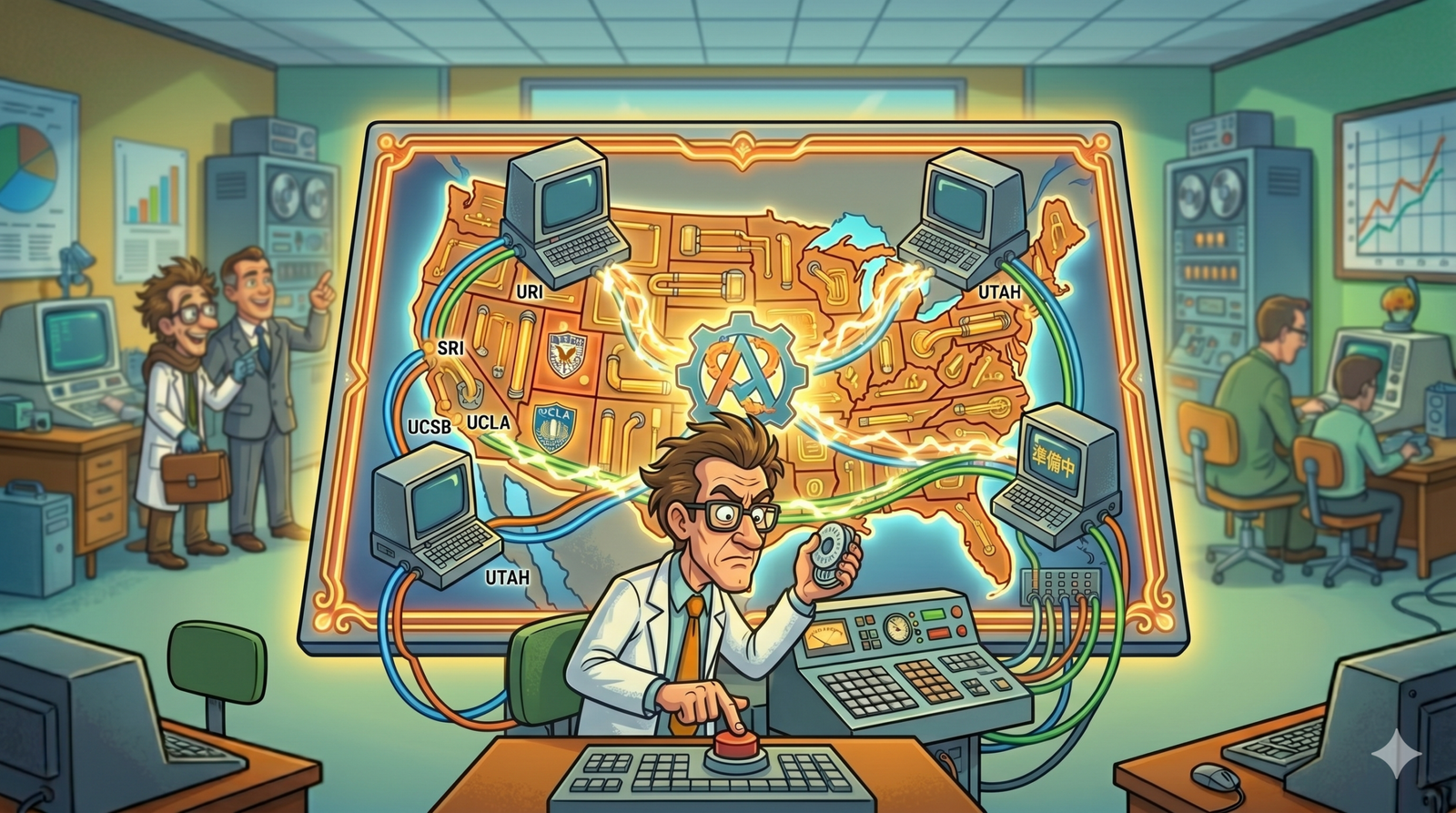
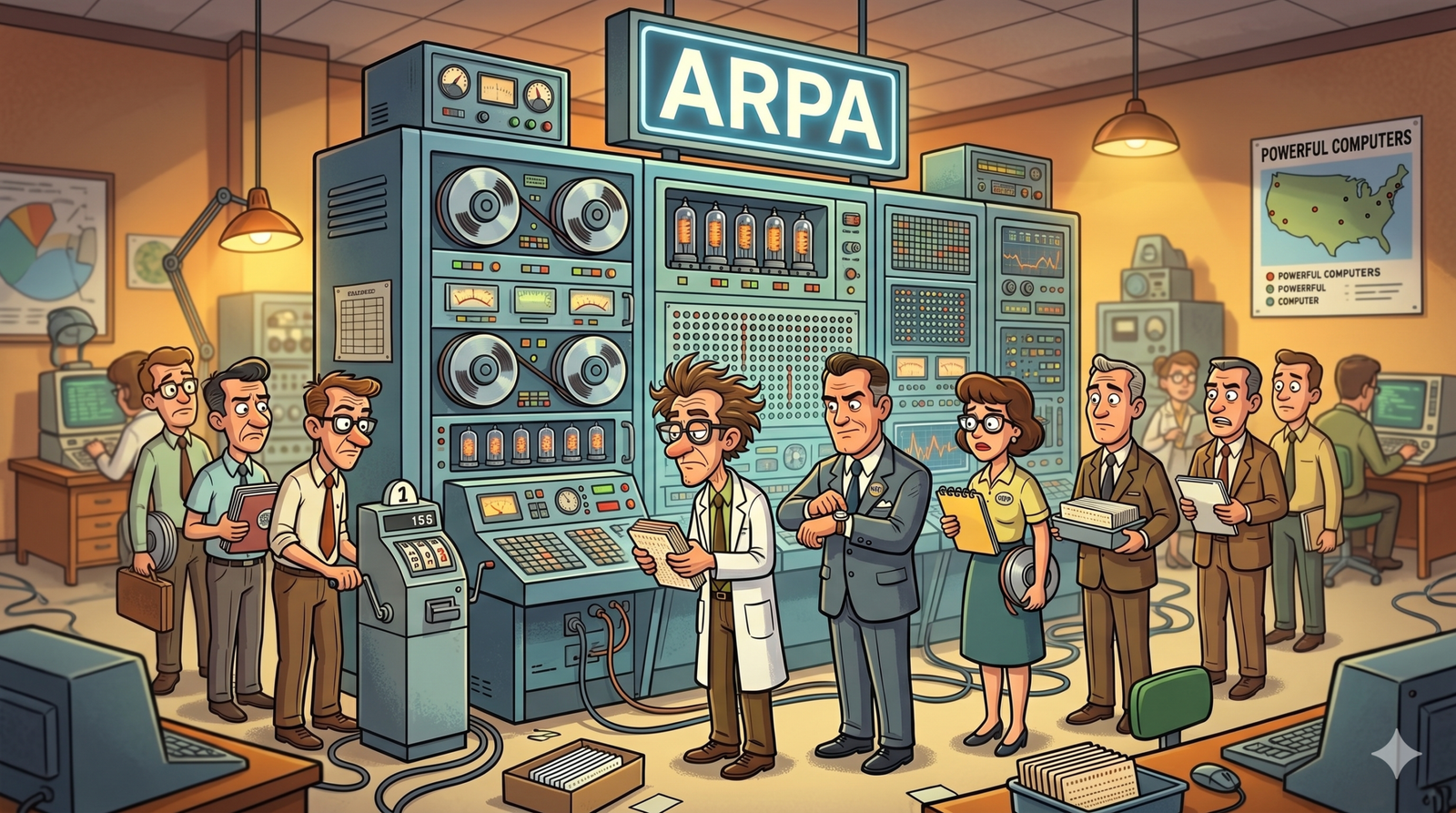
One major challenge was sharing expensive computers. Researchers wanted computers in different locations to communicate with each other.
ARPANET
A network designed to connect computers across distant locations.
In 1969, four computers were connected together, creating one of the earliest computer networks.
Four Computers. One Network.
A tiny network by today’s standards. But it was the beginning of something enormous.
But the idea was enormous.
It was a small beginning—but it would eventually help shape the modern Internet.
The Two Letters That Changed Everything
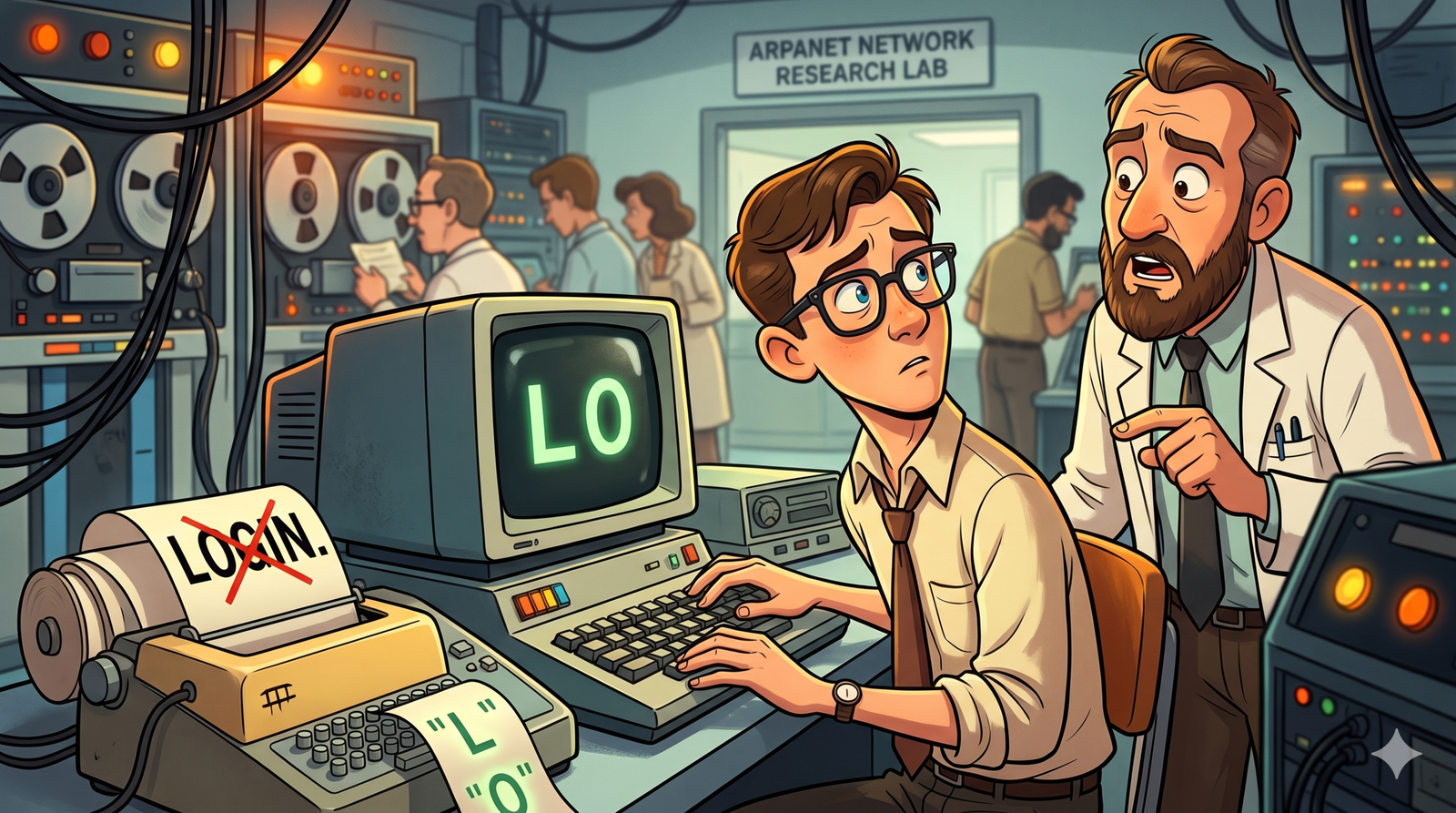
A message that was supposed to say five letters became one of the most important moments in Internet history.
The researchers wanted to send the word “LOGIN” across the network.
First, they sent the letter L.
Then they sent O.
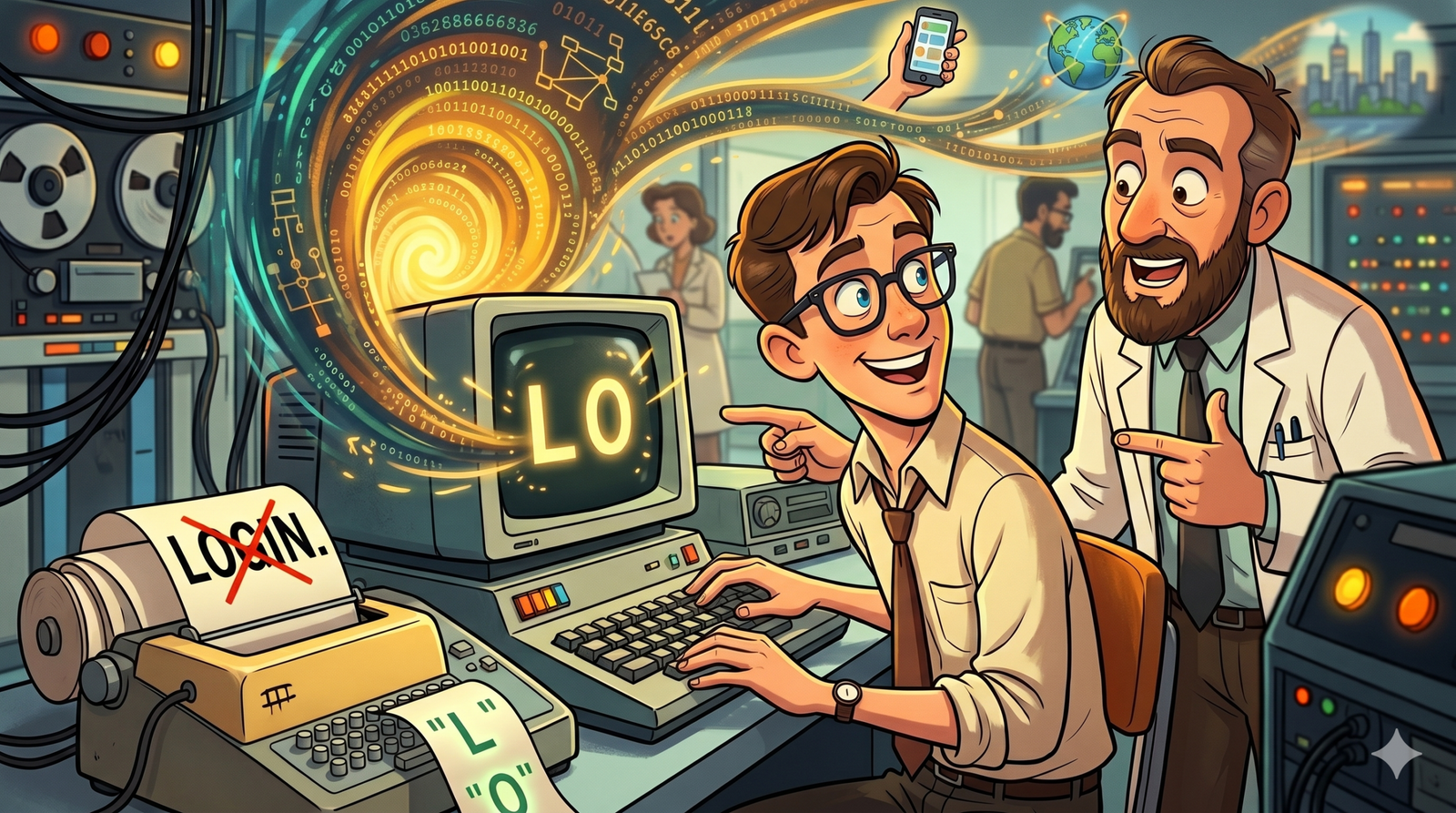
A much bigger beginning.
It may sound like a tiny moment, but those two letters represented the beginning of something much bigger — the connected digital world we know today.
TCP/IP: Creating a Common Language
The Internet needed more than connected computers. It needed a common language that allowed different networks to understand one another.
As computer networks developed, another problem appeared.
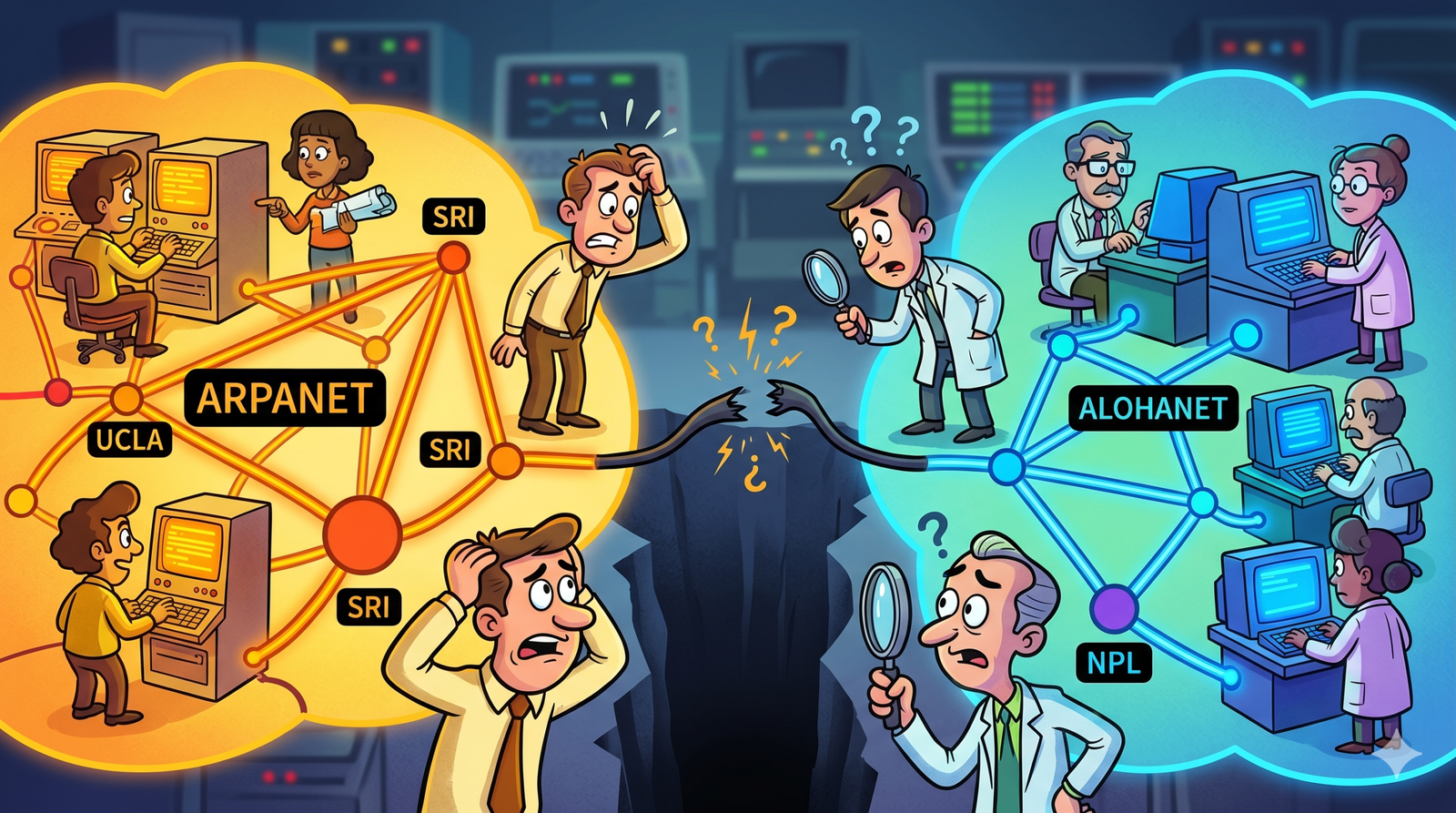
Different networks couldn’t easily communicate with each other.
Different networks. Different rules.
NETWORK A
NETWORK B
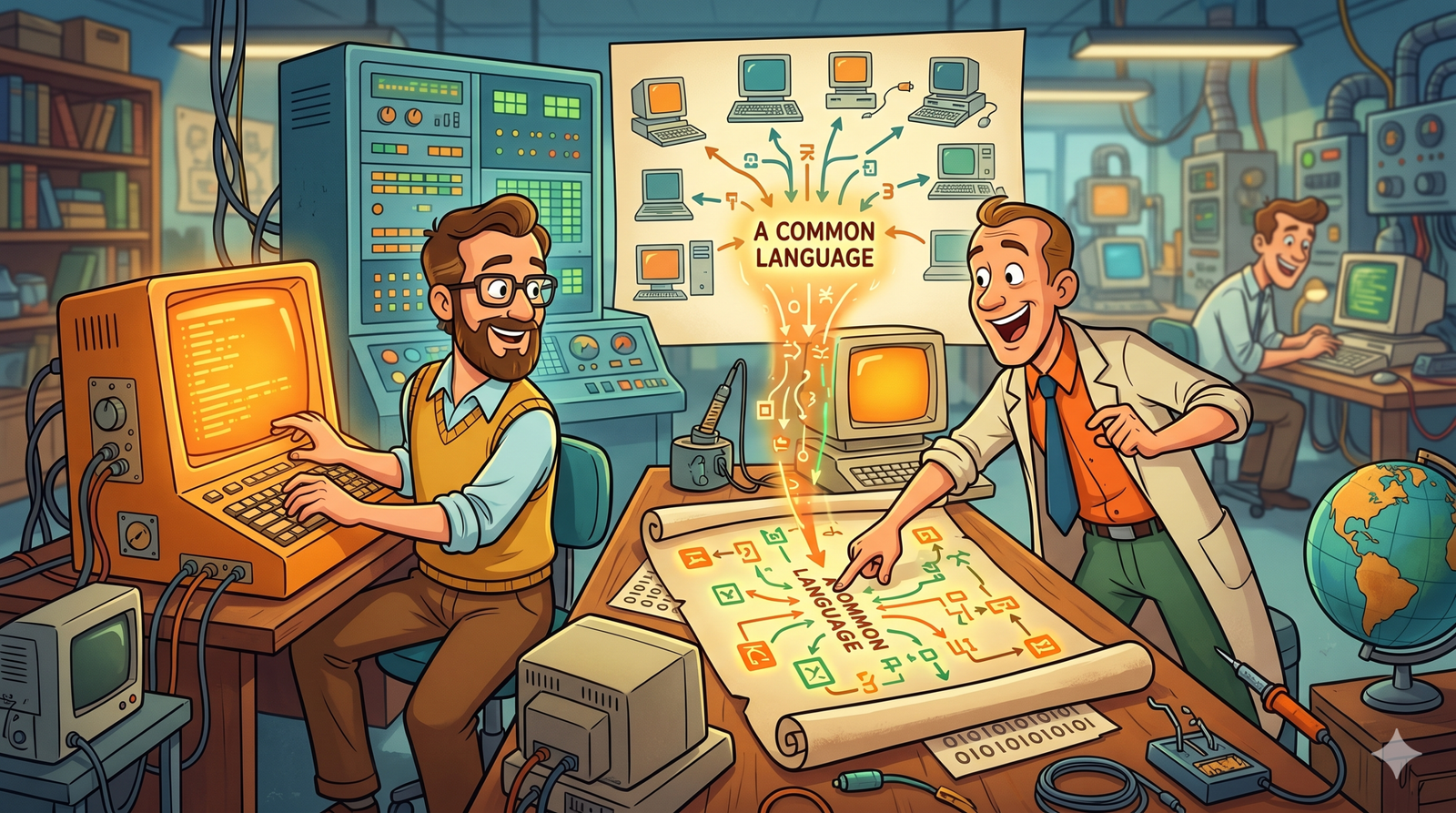
One common language.
Computer scientists Vint Cerf and Bob Kahn worked on a solution: TCP/IP.
Helps organize reliable communication between computers.
Helps data find its way across interconnected networks.
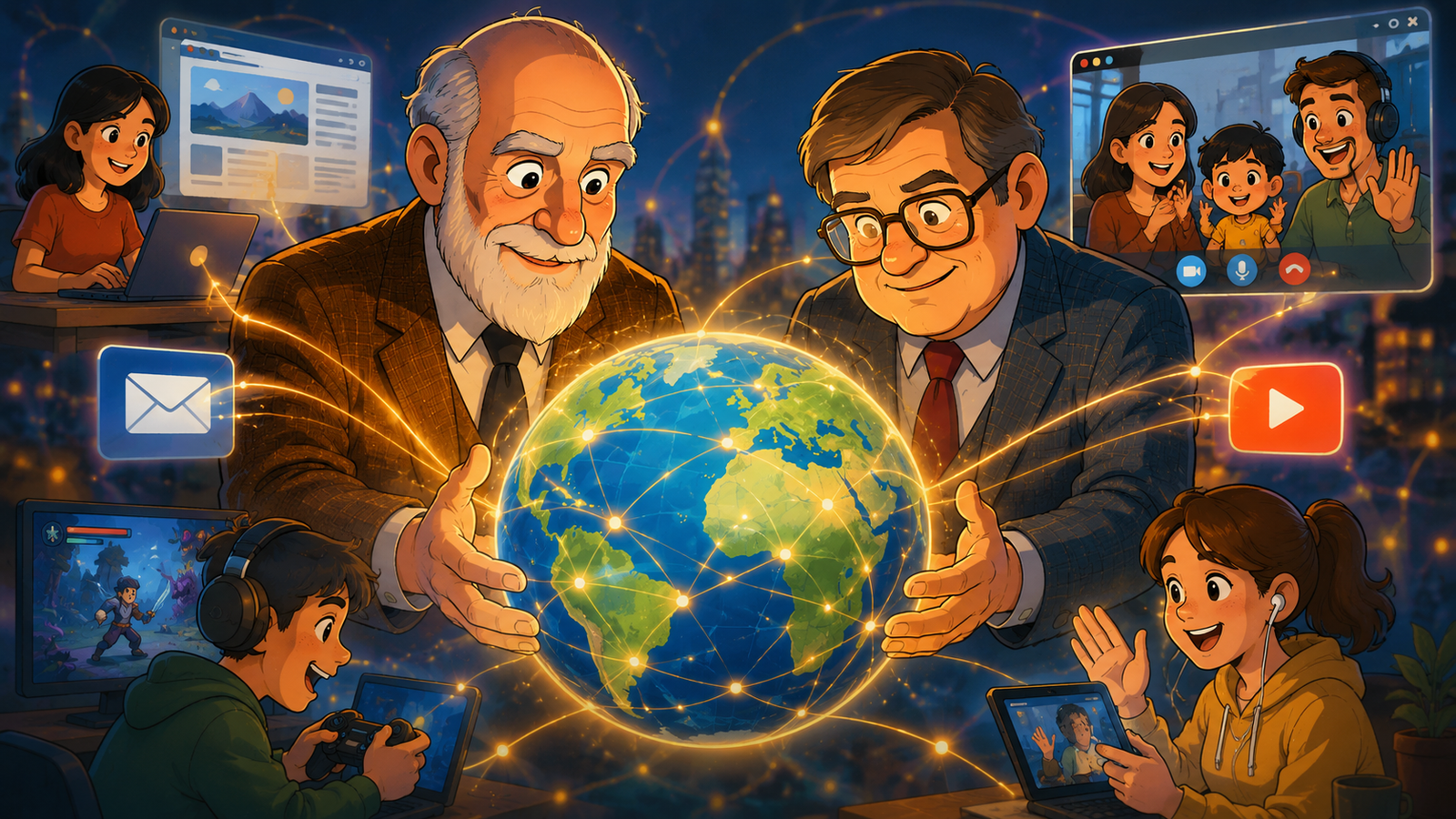
Isolated networks
A global network
From connected computers to a connected world.
TCP/IP provided a common set of communication rules that allowed different networks and computers to exchange information.
Packet Switching: How Internet Data Travels
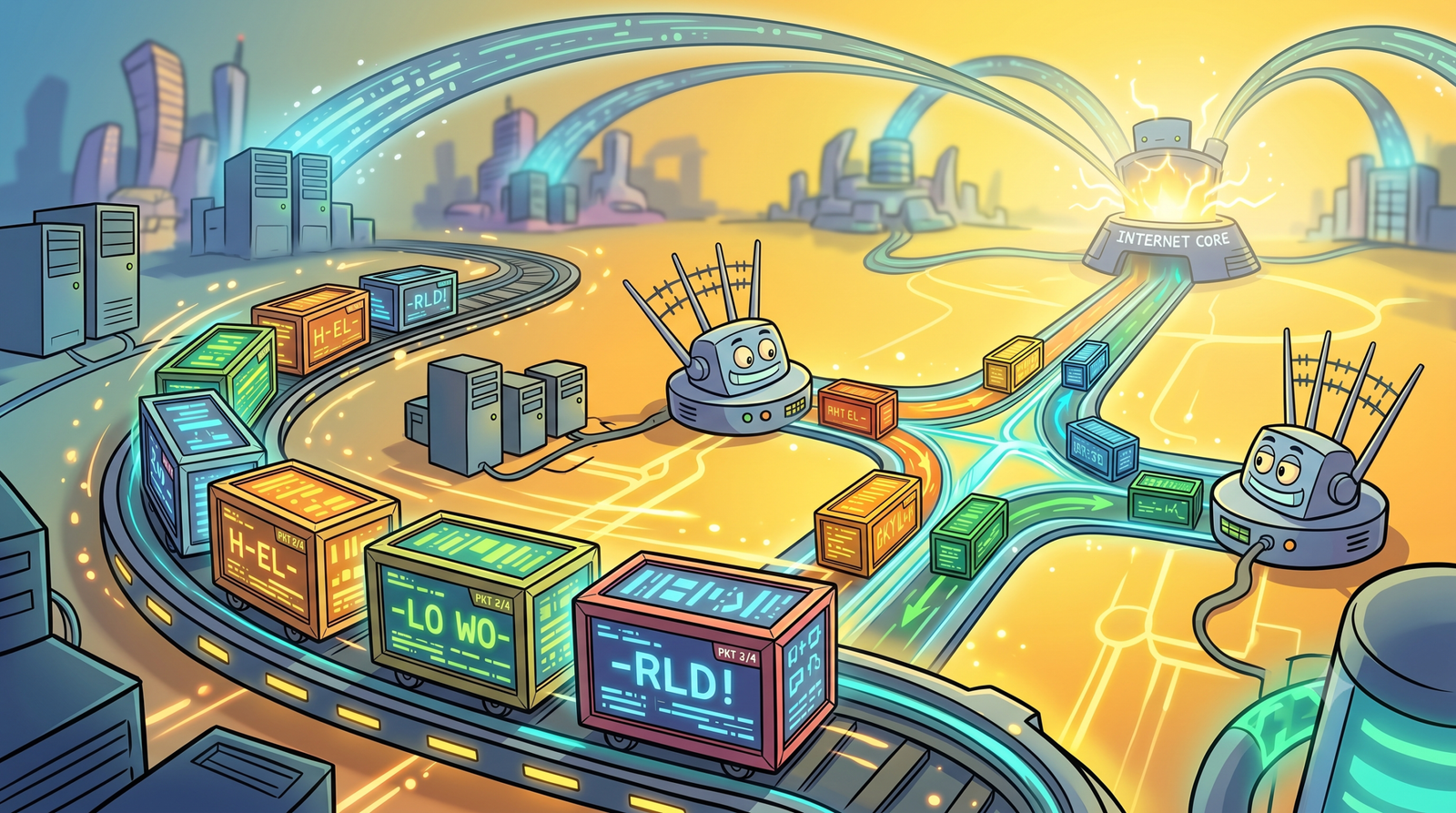
Every photograph, email, message, and video you send is broken into tiny pieces before travelling across the Internet.
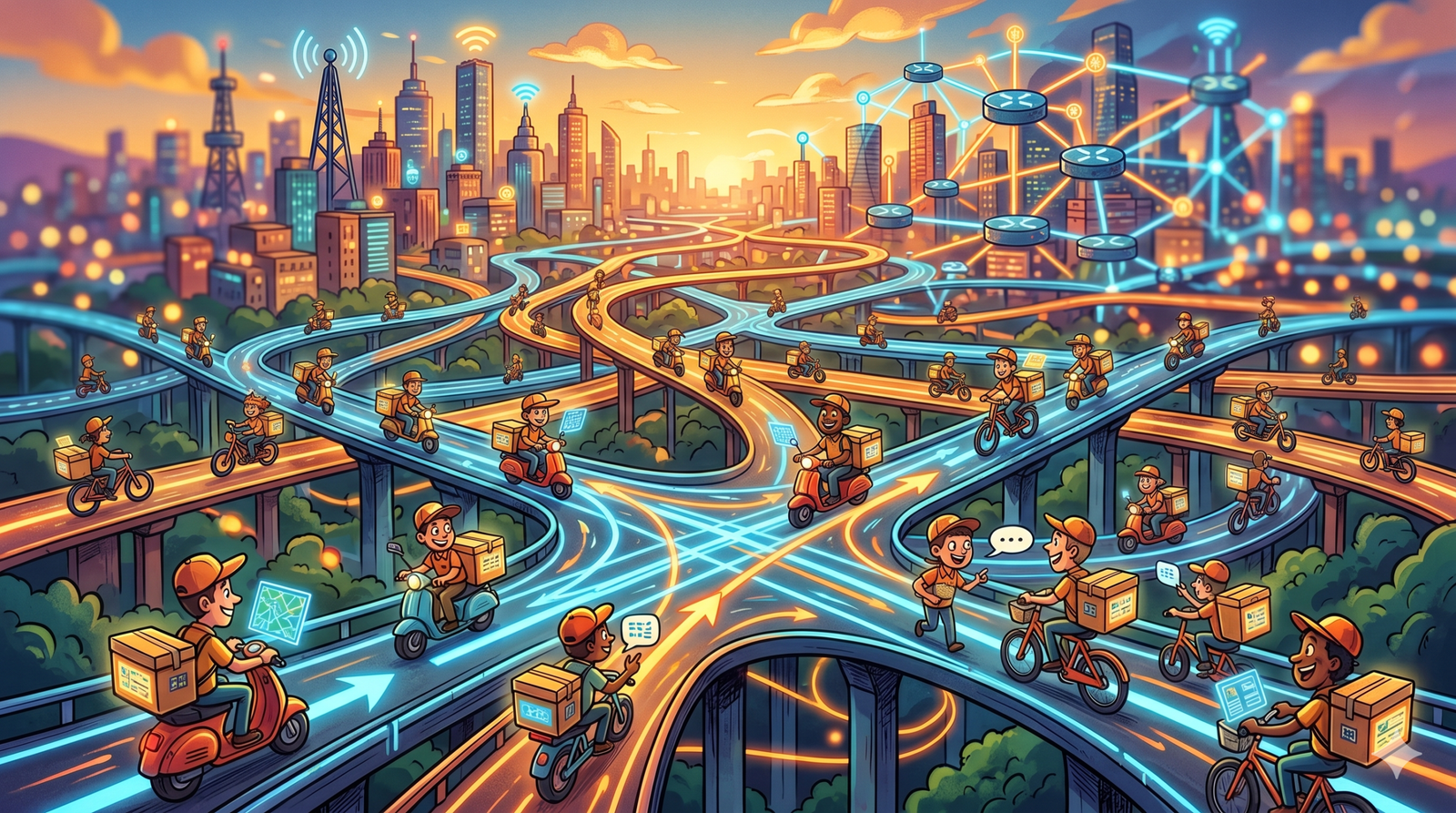
How can a photograph, email, or video travel across the Internet?
One important answer is packet switching.
Don’t send one giant file.
Instead, the data is divided into many smaller packets.
Each packet can take a different route.
Packets don’t necessarily follow the exact same path. They can travel through different routes before reaching their destination.
The packets come back together.
Once the packets reach their destination, they are put back together to recreate the original information.
A smarter way to move information.
Flexible
Packets can take different paths through the network.
Efficient
Network capacity can be shared efficiently between many users.
Resilient
If one route becomes unavailable, data can potentially use another path.
Tiny packets. One enormous Internet.
Instead of moving information as one giant piece, the Internet breaks it into small packets, moves them through the network, and puts them back together at the destination.
How the Internet Reaches Your Home
Every time you watch a video, open a website, or send a message, your data begins a remarkable journey from your device through networks around the world.
When you tap a YouTube video, your phone sends a request through your Wi-Fi router.
The router acts as the first important connection between your home network and the wider Internet.
Your request leaves your device.
Your phone, laptop, tablet, or smart TV sends a request through your local Wi-Fi network.
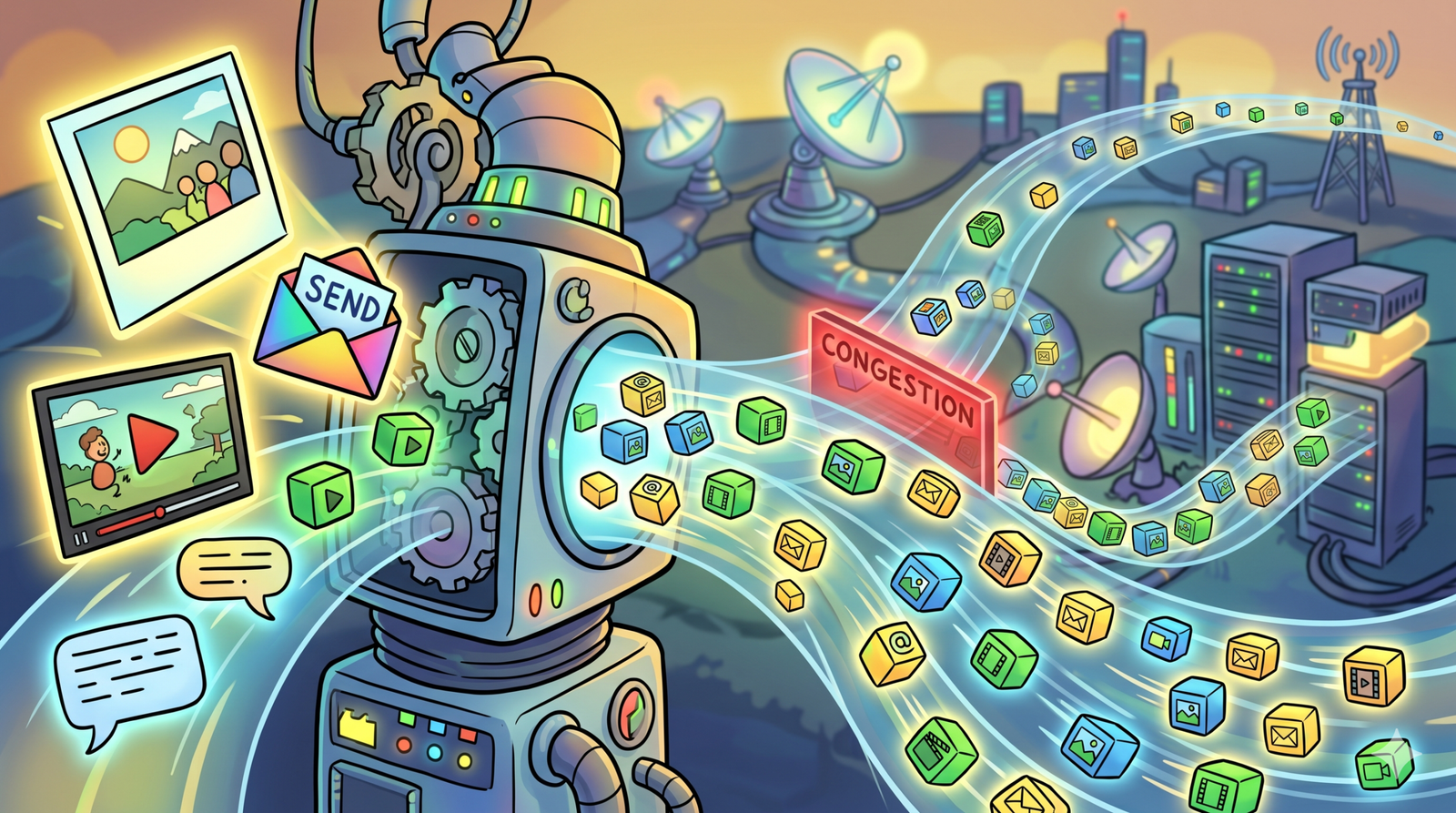
From your router to your ISP.
Your Internet Service Provider connects your home to larger networks that carry data far beyond your neighborhood.
The request travels through interconnected networks.
From your ISP, the request can pass through many routers and networks before reaching the servers that provide the content.
The Internet isn’t mostly travelling through satellites.
Much of the world’s Internet traffic travels through physical infrastructure on and beneath the ground — especially fiber-optic cables.
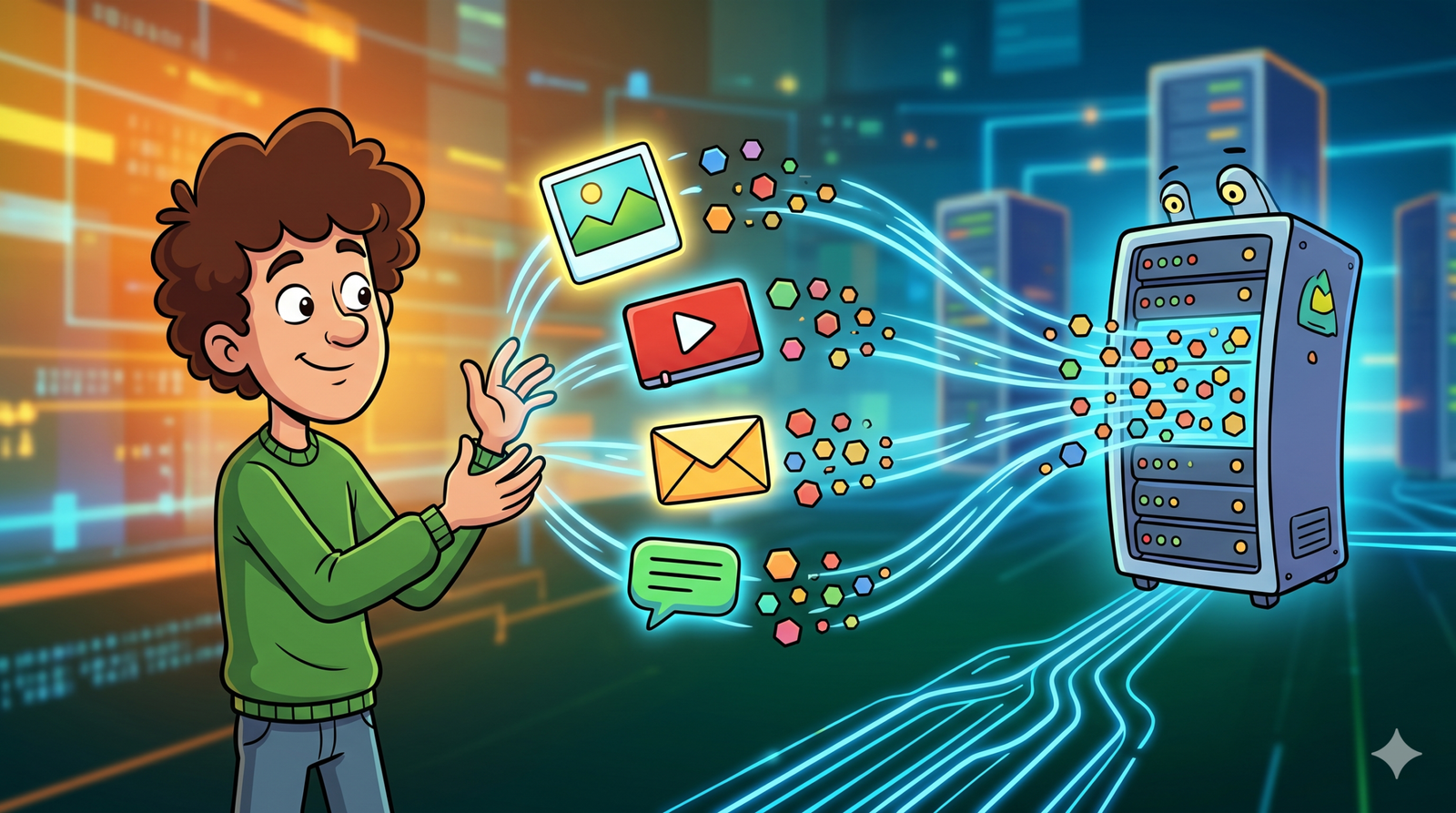
Information travels using pulses of light.
Inside a fiber-optic cable, information can be represented by incredibly fast pulses of light traveling through glass fibers.
From one tap to content on your screen.
Device
Your phone or computer creates a request for the content you want.
Wi-Fi Router
Your router sends the request onward toward your Internet connection.
ISP
Your Internet Service Provider connects your home to larger networks.
Global Network
The request travels through interconnected networks toward its destination.
Fiber
Much of this traffic travels through high-speed fiber-optic infrastructure.
Server
The destination server responds and the requested content begins its journey back.
Your Internet connection is a journey.
A simple tap on your screen can trigger a journey through your home network, your ISP, interconnected networks, and vast fiber-optic systems around the world.
From your home to the world.
The next time you press play, remember: the video isn’t magically appearing on your screen. A request has traveled through an enormous network of routers, cables, providers, and servers to bring it to you.
The Secret Cables Beneath the Oceans
Some of the most important parts of the Internet are hidden far beneath the world’s oceans.
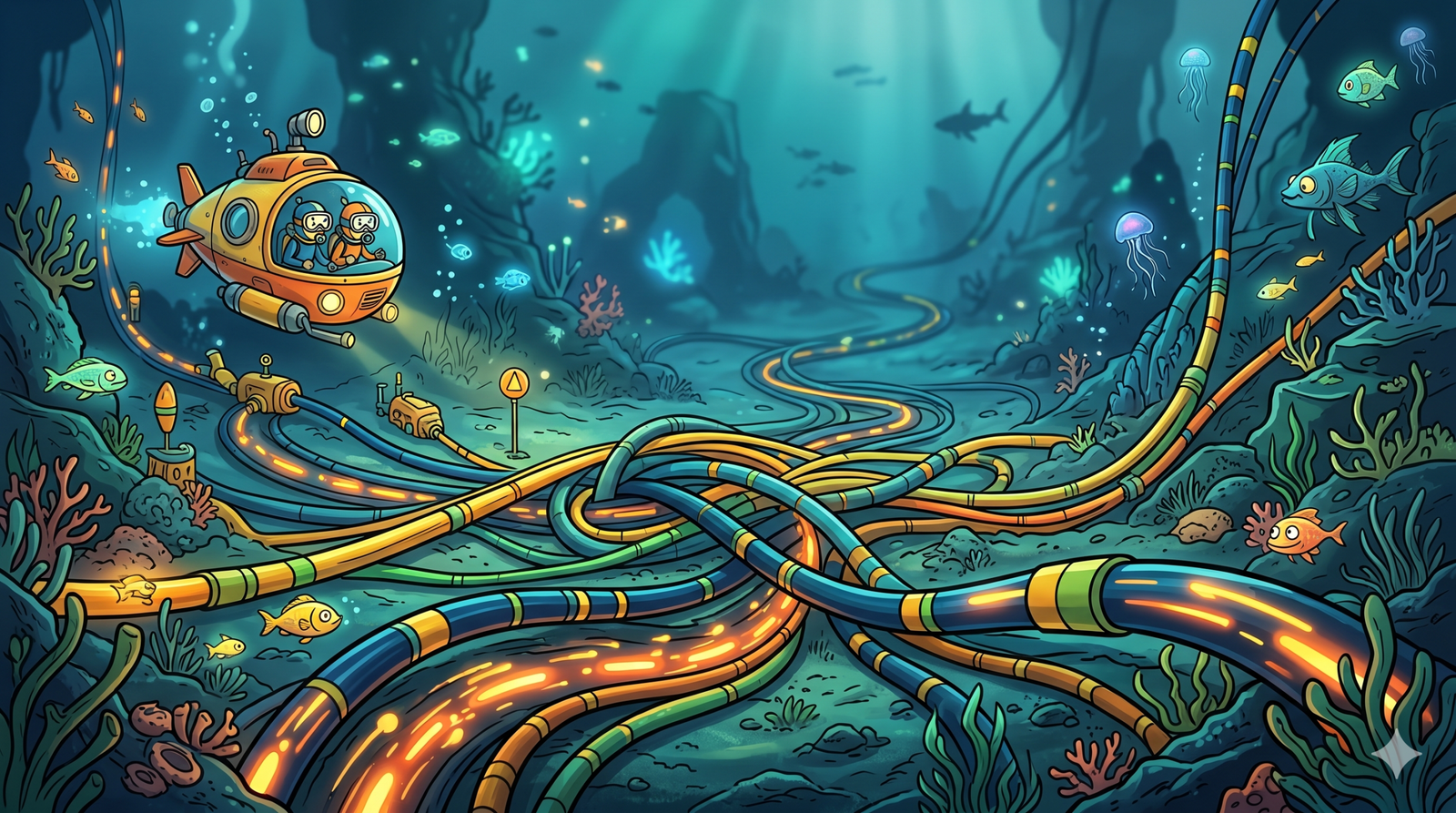
Some of the most important parts of the Internet are hidden beneath the world’s oceans.
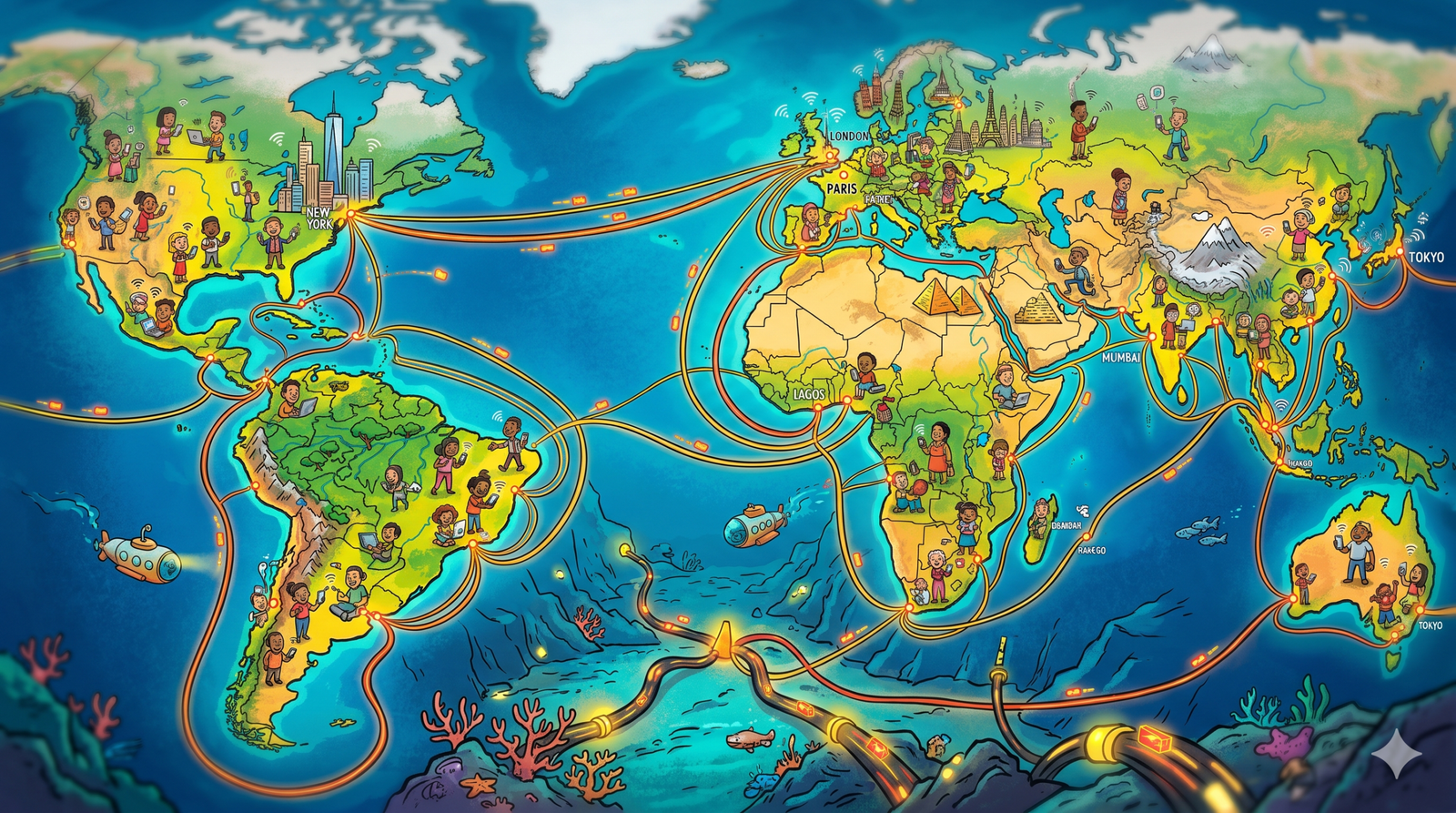
Thousands of kilometers of underwater fiber-optic cables connect continents, countries and people across the planet.
A global network under the sea.
These cables form an enormous hidden infrastructure that carries information between continents every day.
What travels through these cables?
More than you might imagine. These underwater routes carry enormous amounts of international Internet traffic every day.
Video Calls
Conversations between people on different continents can cross oceans in milliseconds.
Emails
Messages and attachments can travel through international underwater cable networks.
Financial Data
Global financial transactions depend on fast connections between countries and markets.
Online Videos
Streaming content from another country may travel across an ocean before reaching you.
Your video could cross an ocean.
A request can begin on one continent, travel through underwater infrastructure, and arrive thousands of kilometers away.
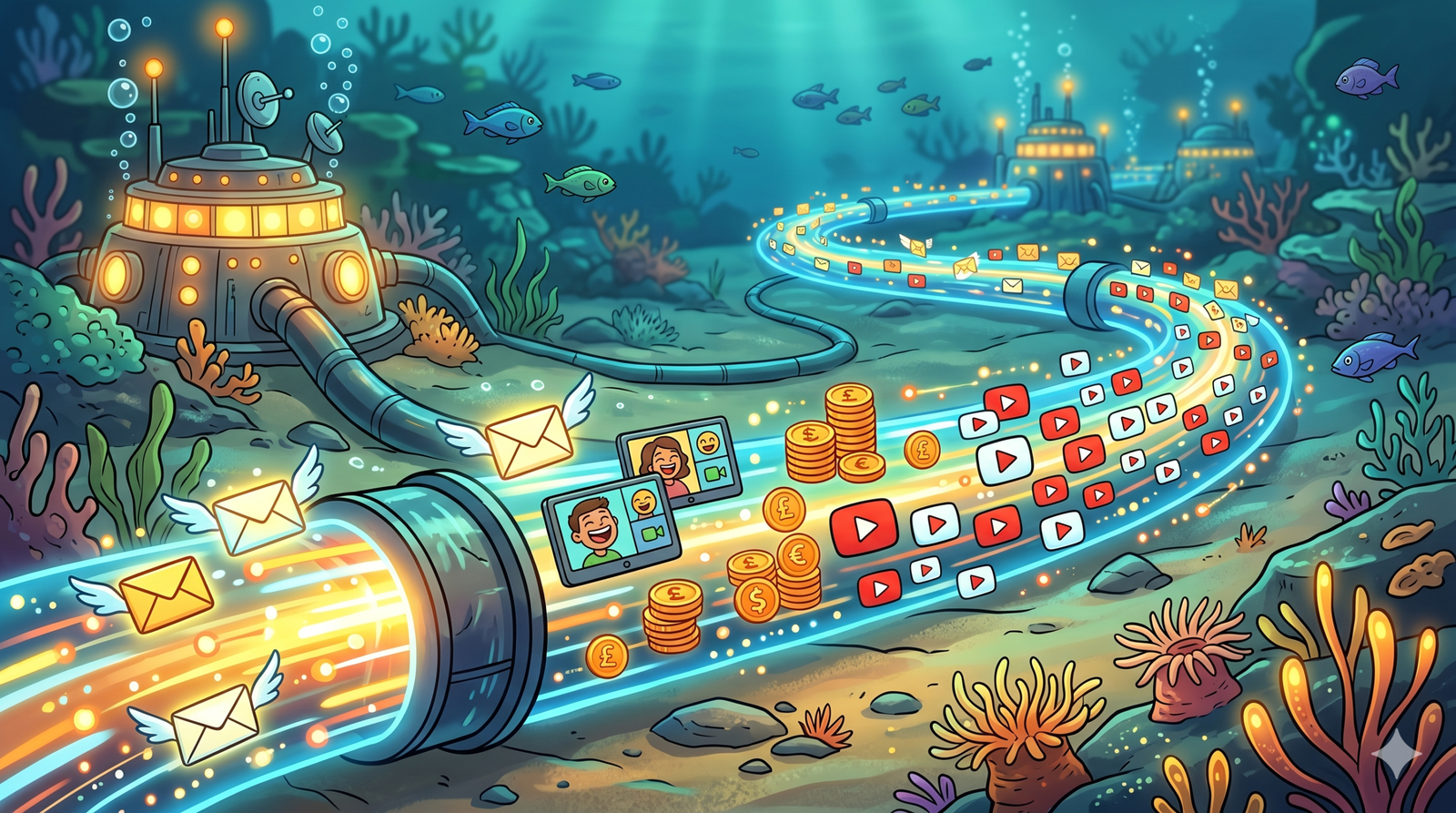
Your next video might cross an ocean.
The next time you watch a video from another country, your data may have travelled across an ocean floor to reach you.
Beneath the waves. Behind the Internet.
The Internet may feel wireless and invisible, but a huge part of its global infrastructure physically exists beneath the world’s oceans.
The Problem That Changed the Internet
By the late 1980s, the Internet was growing rapidly. But finding and connecting information was still surprisingly difficult.
CONNECT?
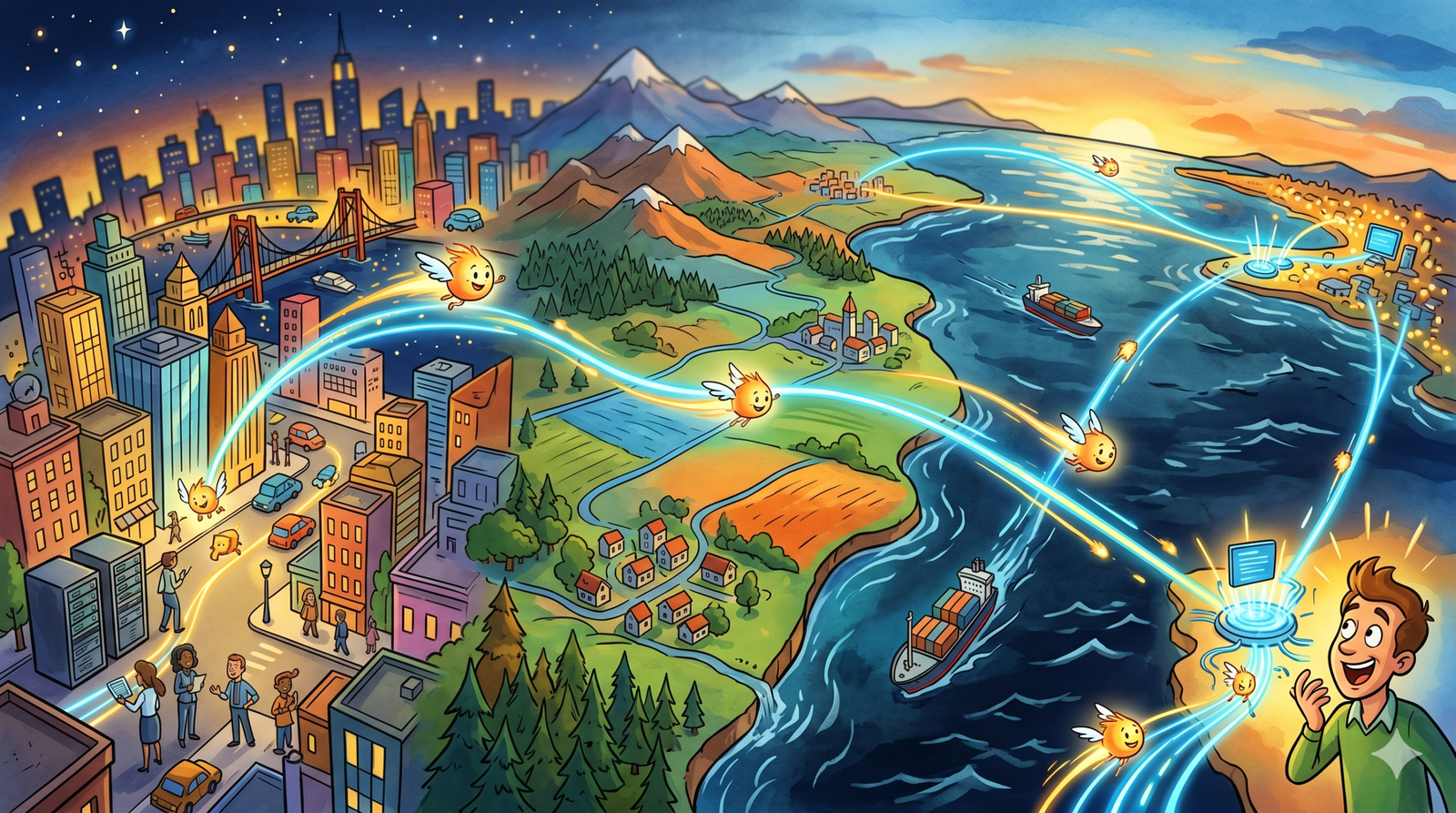
By the late 1980s, the Internet was growing, but finding information was not easy.
Documents lived on different computers, inside different systems, and there was no simple way to jump from one piece of information to another.
Information existed. Connections didn’t.
The Internet could connect computers, but the information stored on those computers was often difficult to discover and navigate.
PATH
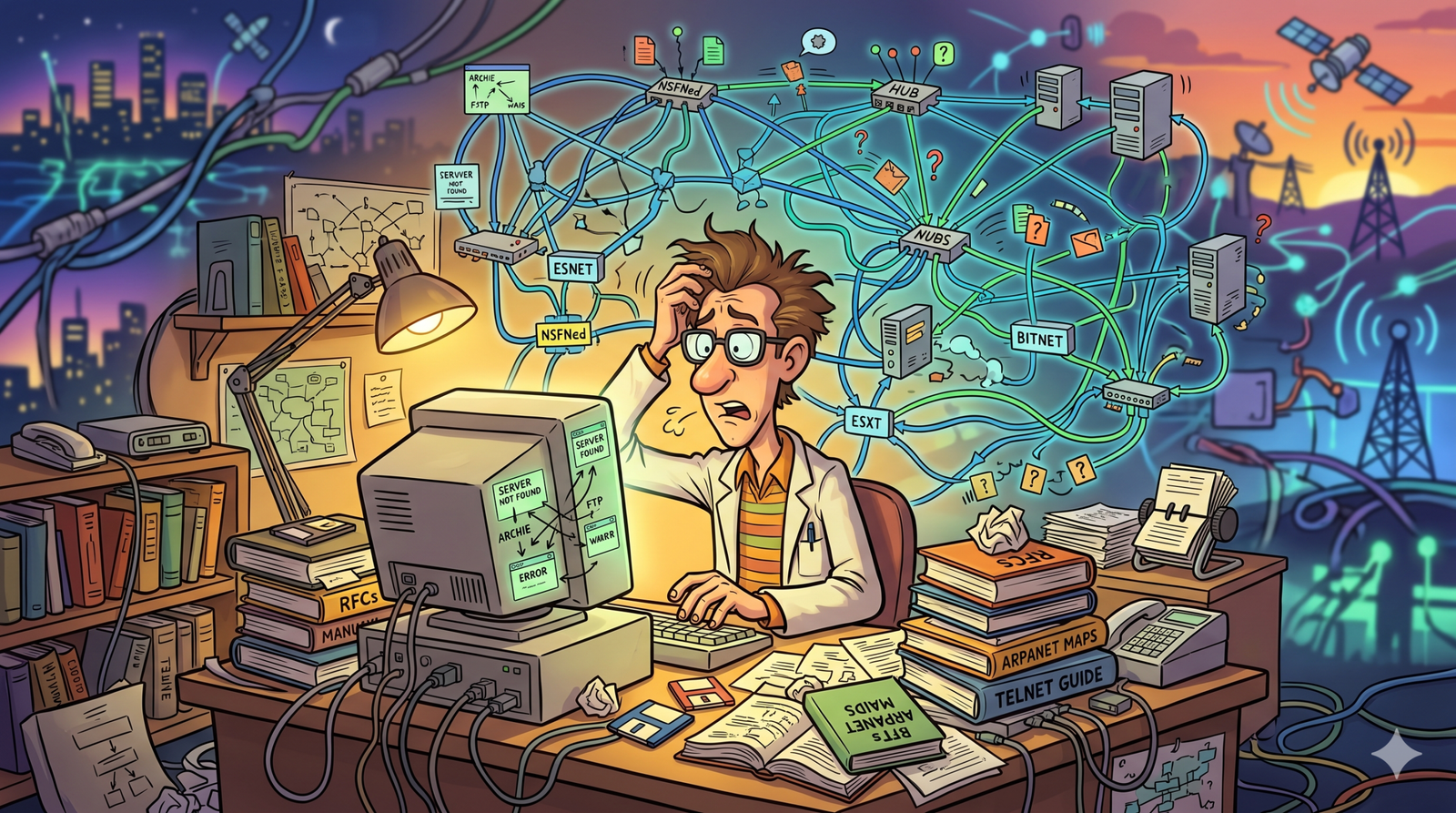
The Internet was powerful. But not simple.
Using networked information often required knowing where information lived and how to access it.
Find the File
You needed to know where a particular document or piece of information was stored.
Know the Path
Moving between different systems wasn’t as natural as clicking a link on a modern webpage.
Understand the System
Different computers could organize and present information in very different ways.
Connect the Pieces
The missing ingredient was an easy way to connect related information together.
Then came a simple idea.
A scientist at CERN imagined a system where documents could reference one another, allowing people to move naturally from one piece of information to the next.
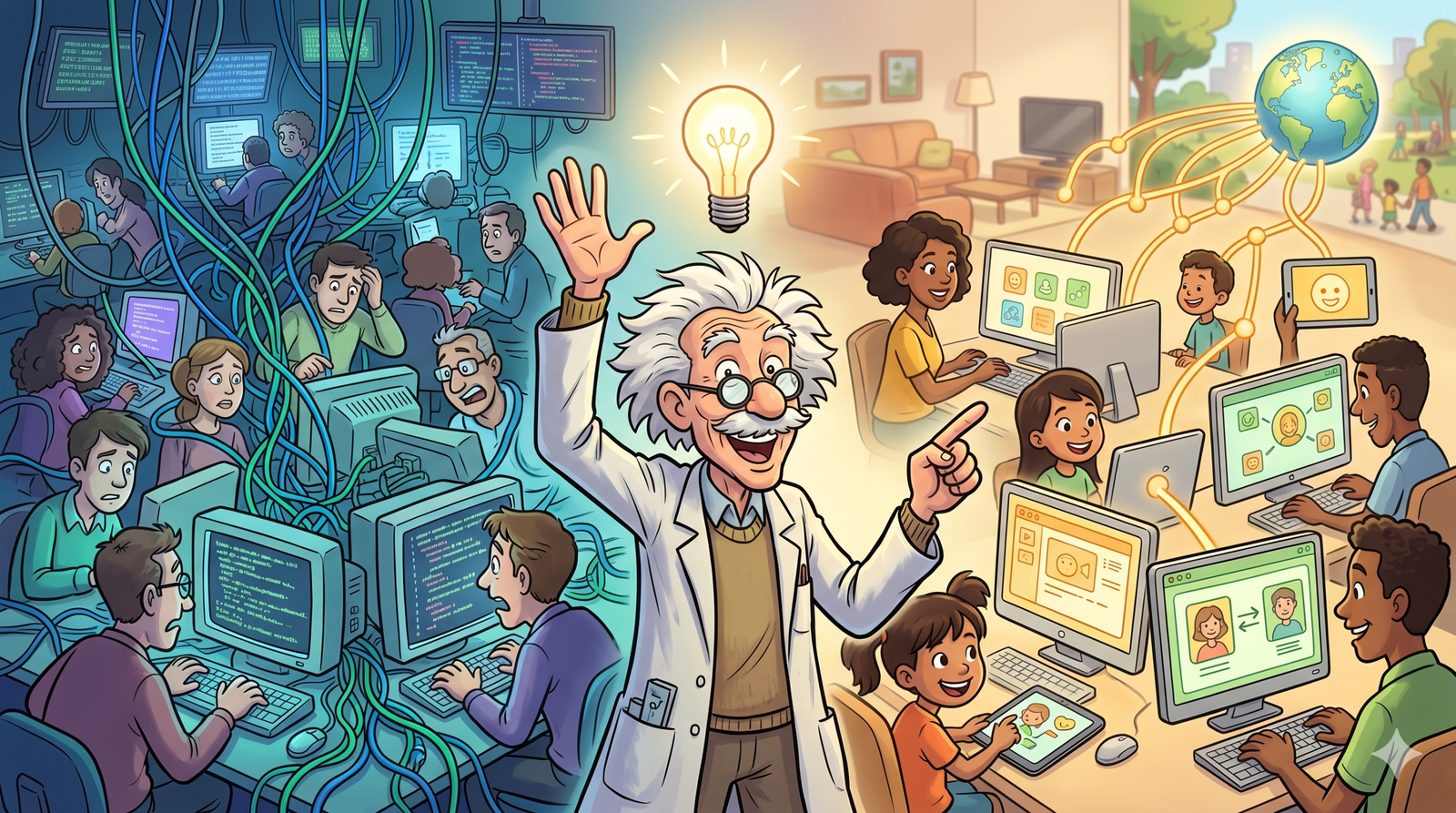
The Internet needed a better way to navigate.
The breakthrough wasn’t simply connecting more computers. It was creating an easier way for humans to connect information.
From scattered information. To a connected web.
The Internet already connected computers. What was missing was a simple way for people to connect information.
Tim Berners-Lee Connects the World
In 1989, a scientist at CERN imagined a new way to connect information — and the World Wide Web was born.
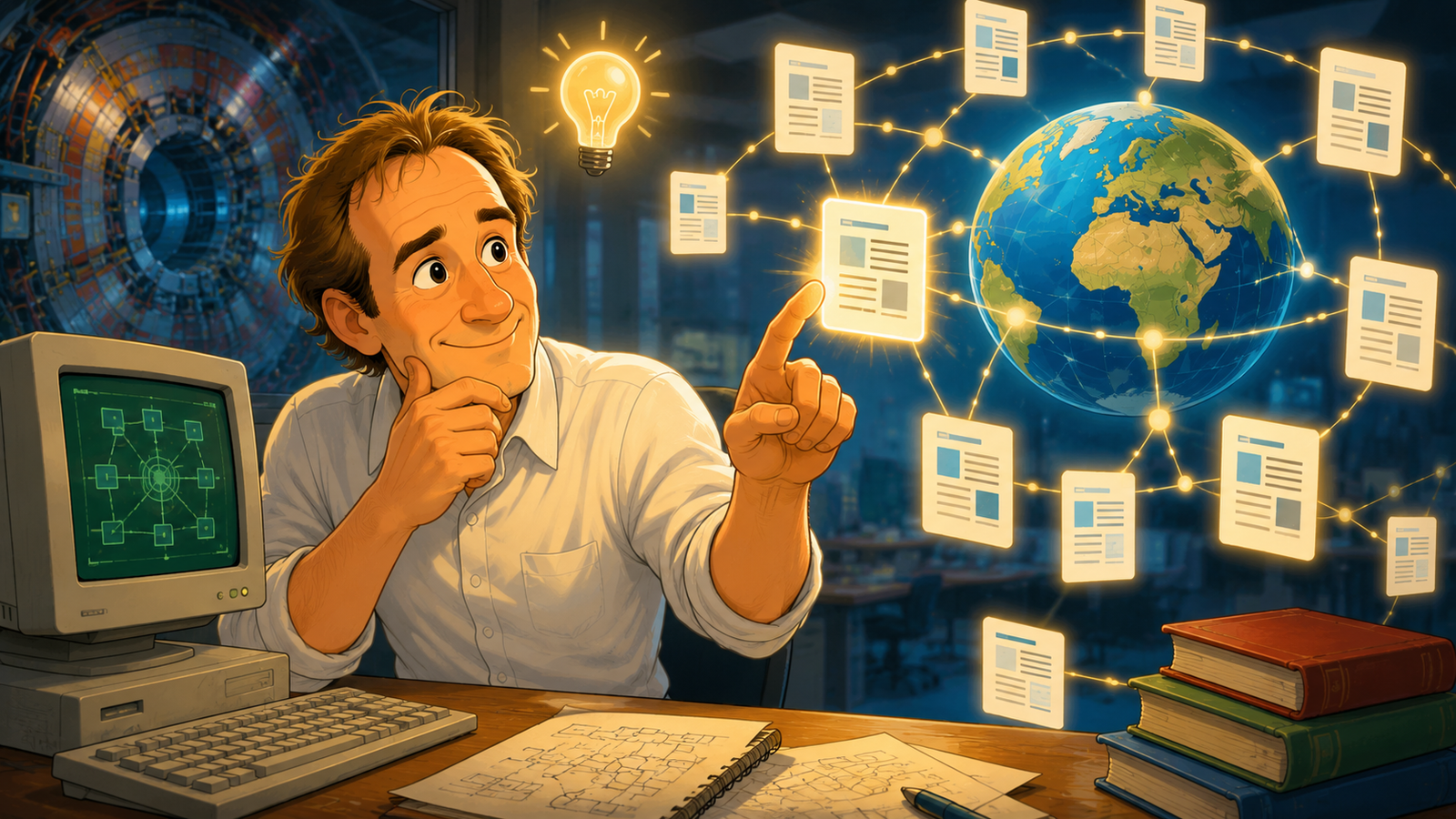
The Internet was powerful. But finding things was hard.
Information existed on many different computers, but there was no simple way to connect one document to another.
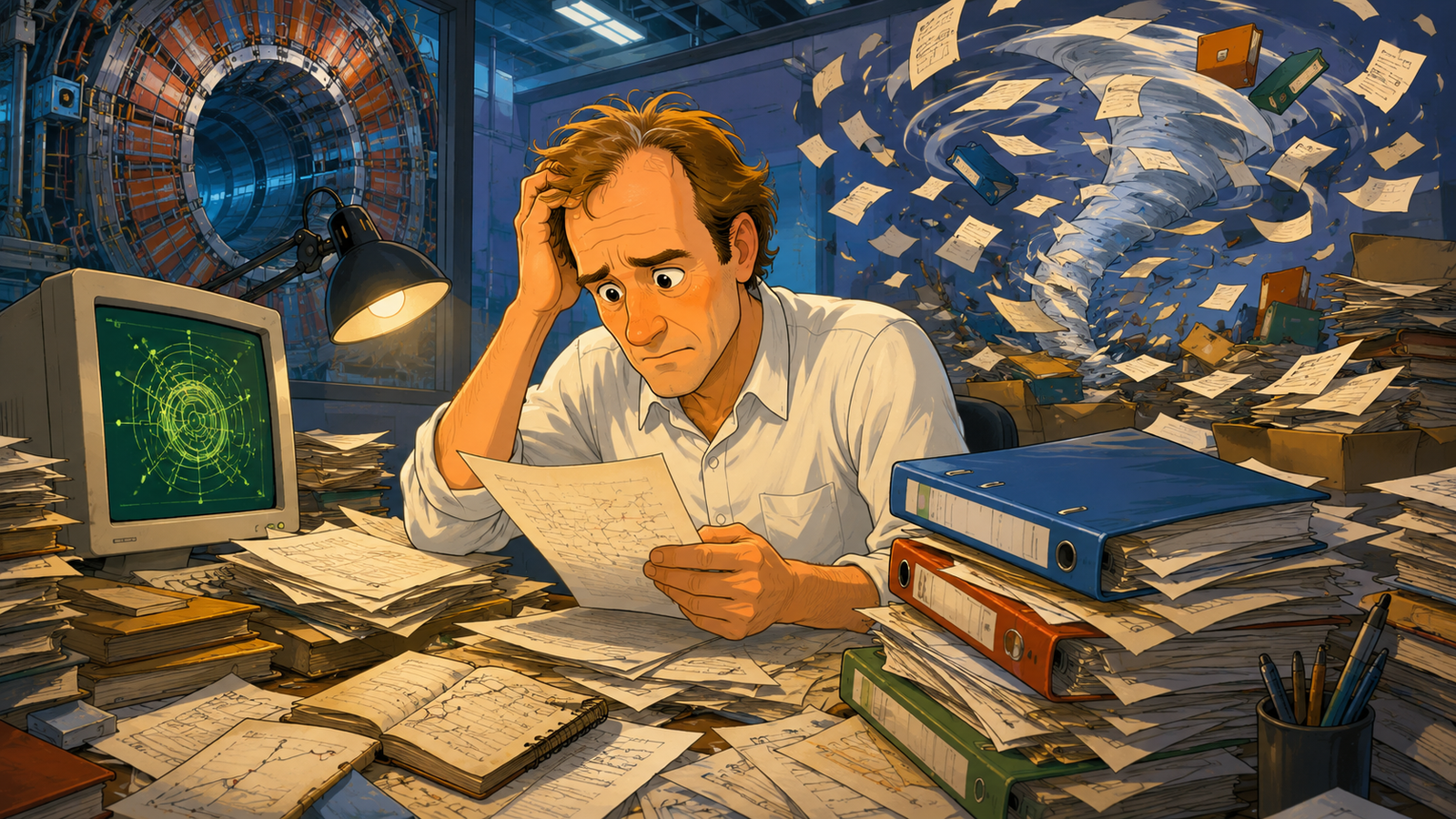
What if information could link to information?
Instead of searching through disconnected systems, Berners-Lee imagined documents that could point directly to other documents.
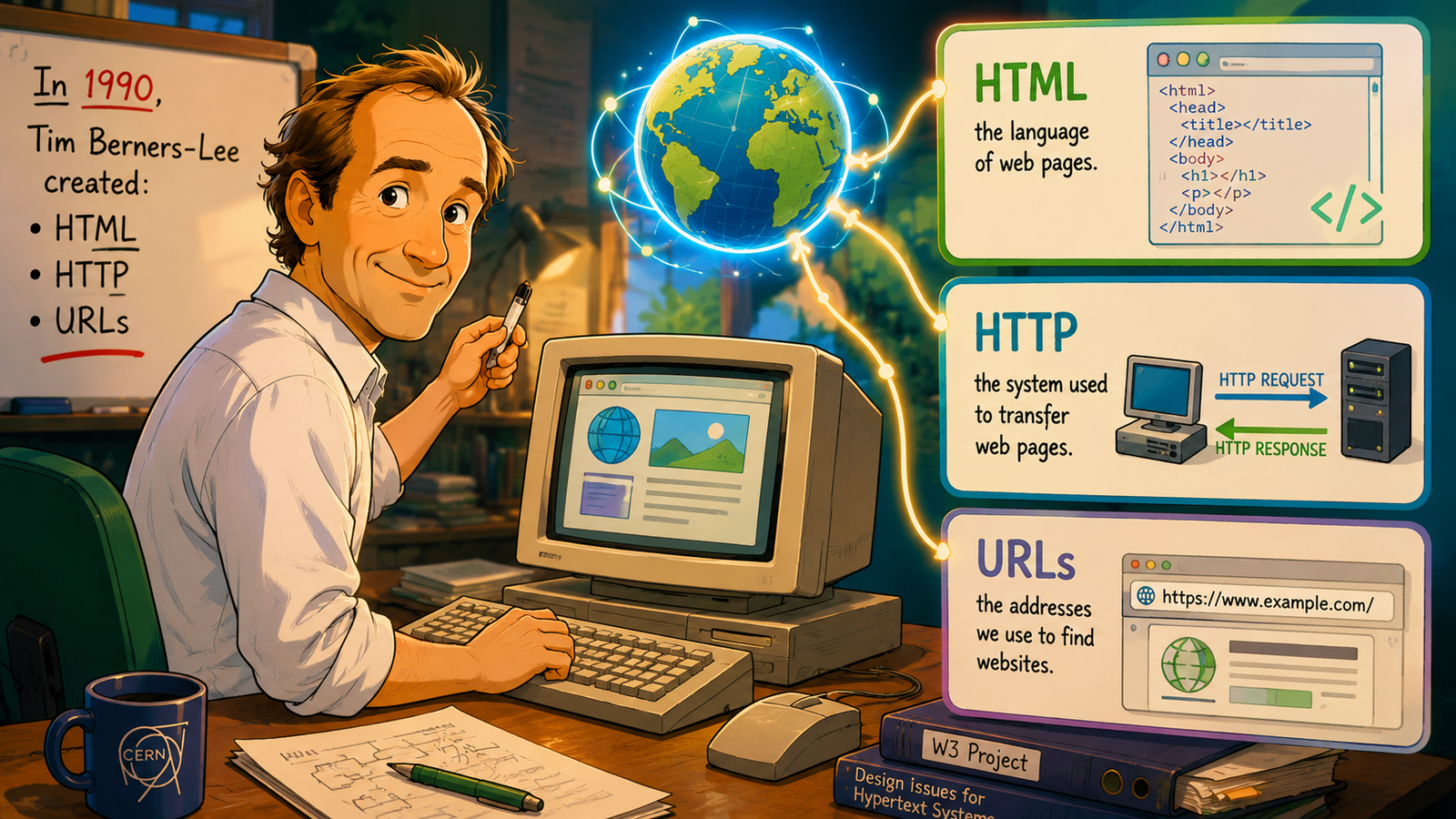
Three technologies made the Web possible.
HTML
Used to create and structure web pages.
HTTP
Used to transfer information between browsers and servers.
URLs
Used to identify and locate resources on the Web.
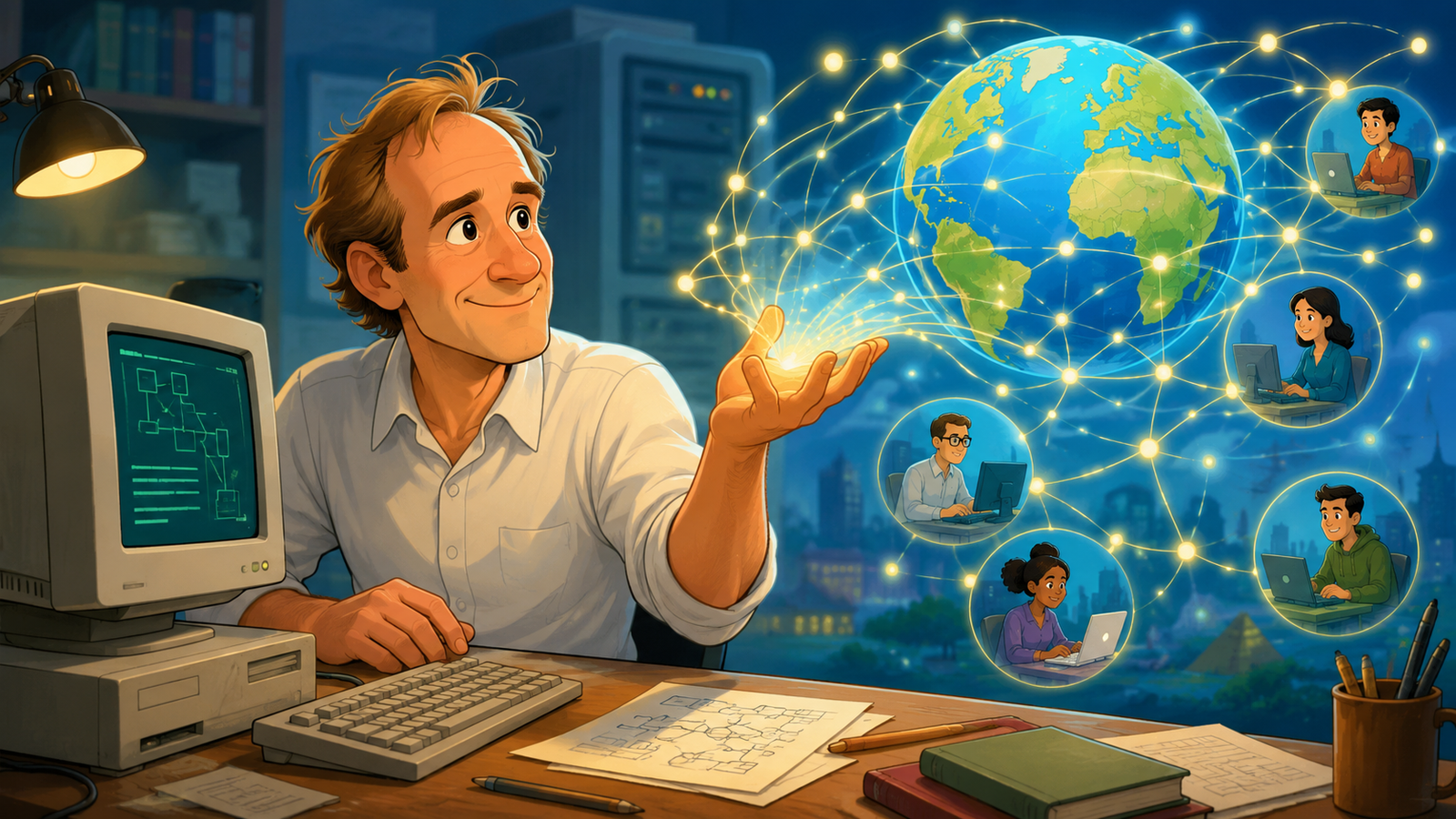
A browser. A website. A new world.
Berners-Lee also created an early web browser and the first website, turning the idea into something people could actually use.
Welcome to the Web.
Information can now be connected through clickable links.
The Web wasn’t the Internet.
The Internet was already there. The Web gave people a simple way to connect, navigate and share information across it.
One idea. A connected world.
Tim Berners-Lee’s idea transformed the Internet from a collection of connected computers into a place where information could be linked, explored and shared.
Why the Web Was Made Free
Tim Berners-Lee and CERN faced a choice: lock the Web behind licenses — or let anyone use it, build on it and share it.
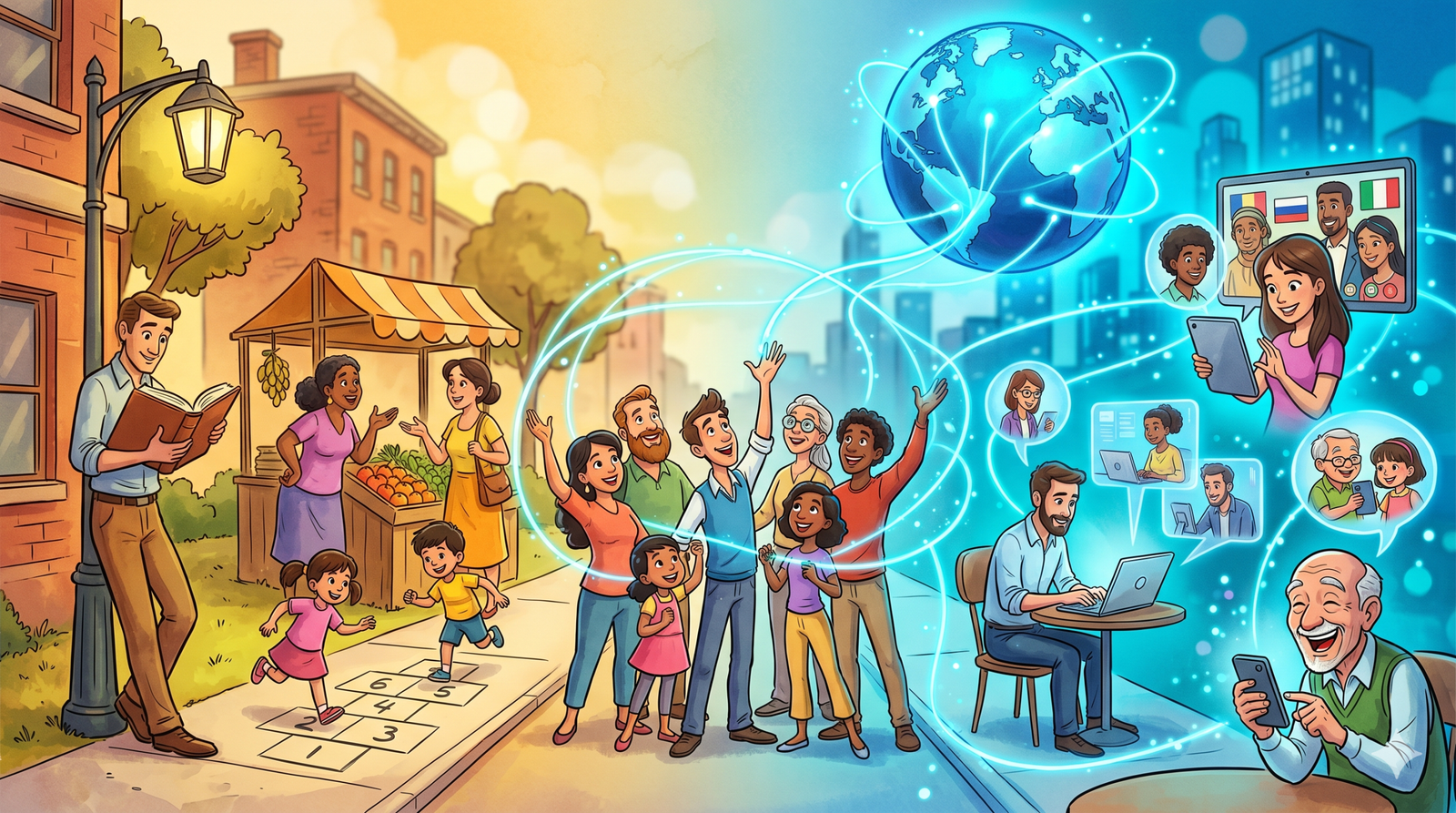
What if the Web belonged to everyone?
A technology this powerful could have been protected behind patents, licensing fees or restrictive rules. Instead, CERN chose a radically different path.
Keep It Closed
- Patent barriers
- Licensing fees
- Limited access
- Slower adoption
Set It Free
- Anyone could use it
- Anyone could build
- Anyone could improve
- Everyone could participate
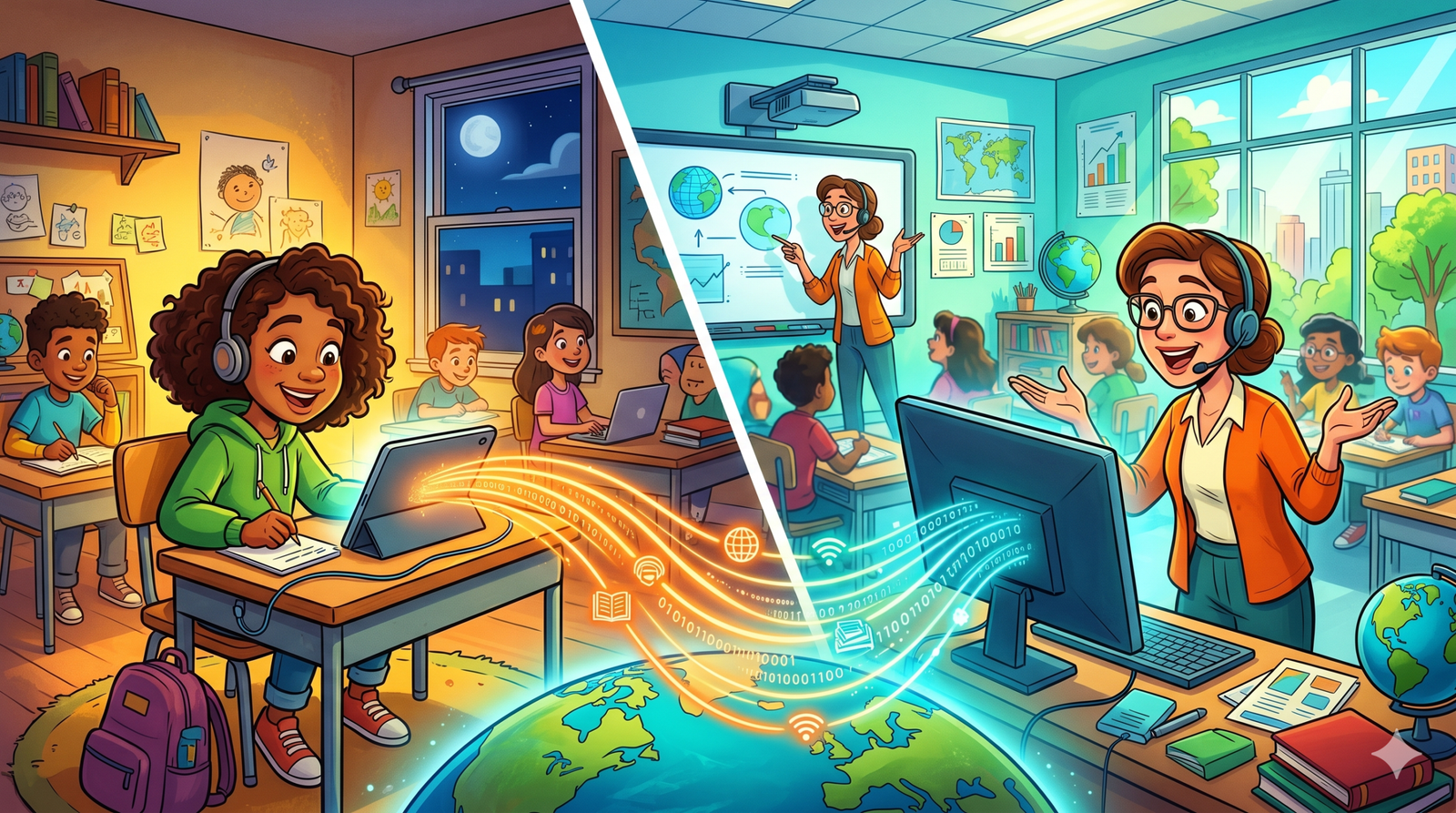
The Web was opened to the world.
CERN released the World Wide Web software into the public domain, allowing people to use, copy, modify and redistribute it.
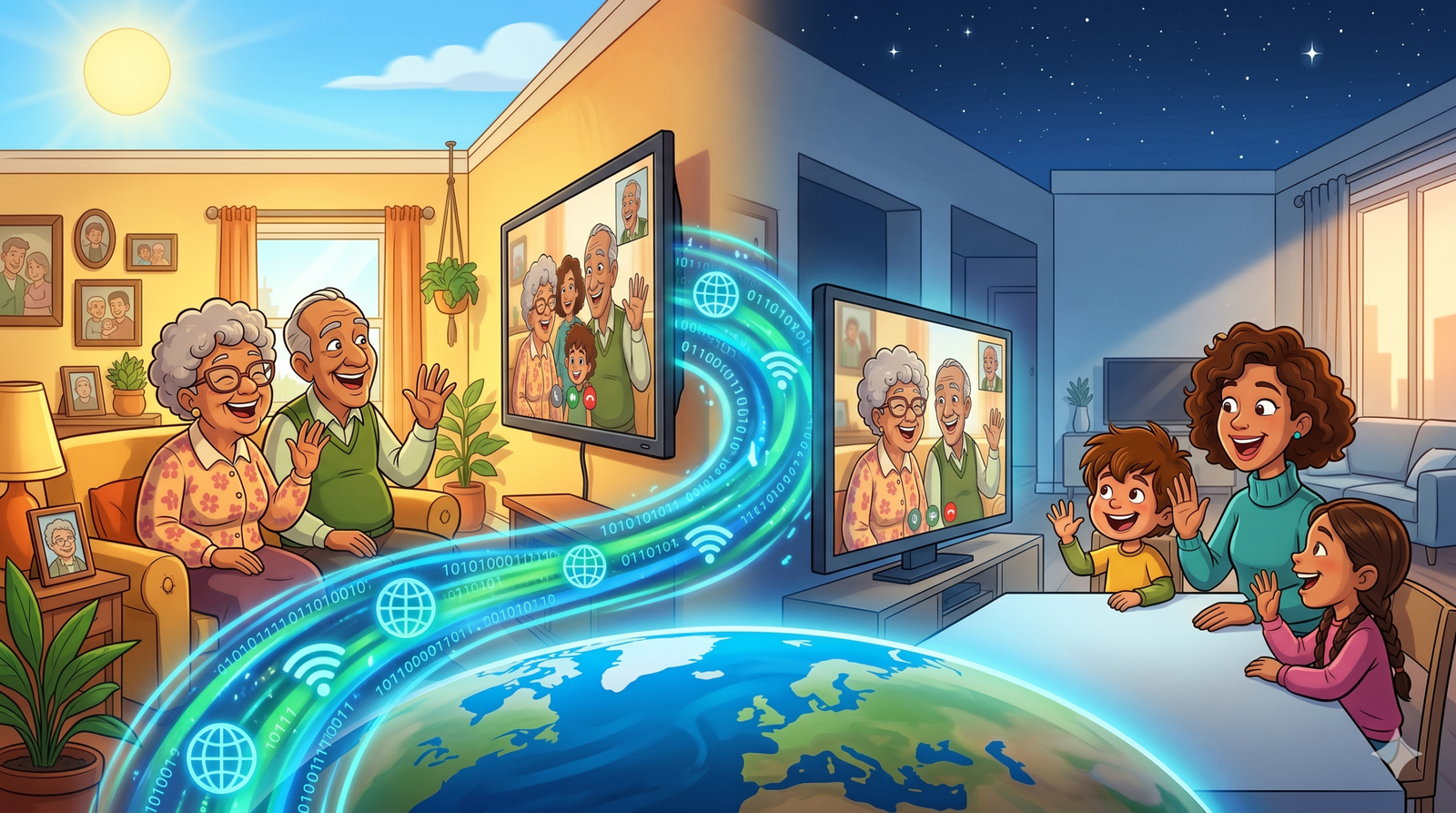
One open decision created millions of possibilities.
When the barriers disappeared, people everywhere could experiment, create websites, publish information and invent entirely new services.
Freedom turned one invention into a platform.
Global Access
People around the world could participate without asking the inventors for permission.
Open Innovation
Developers could experiment, improve ideas and create new tools on top of the Web.
Rapid Growth
Removing licensing barriers helped the Web spread far beyond its original scientific home.
The Web became powerful because nobody owned the doorway.
Instead of deciding who could participate, the creators opened the door and let the world decide what the Web could become.
Don’t lock the Web. Let the world build it.
Making the Web freely available meant that its future would not be controlled by a single company, laboratory or licensing system. People everywhere could contribute, create and connect.
The Internet Changed Everything
What began as a network for sharing information became a technology that transformed how humanity learns, communicates, works and creates.
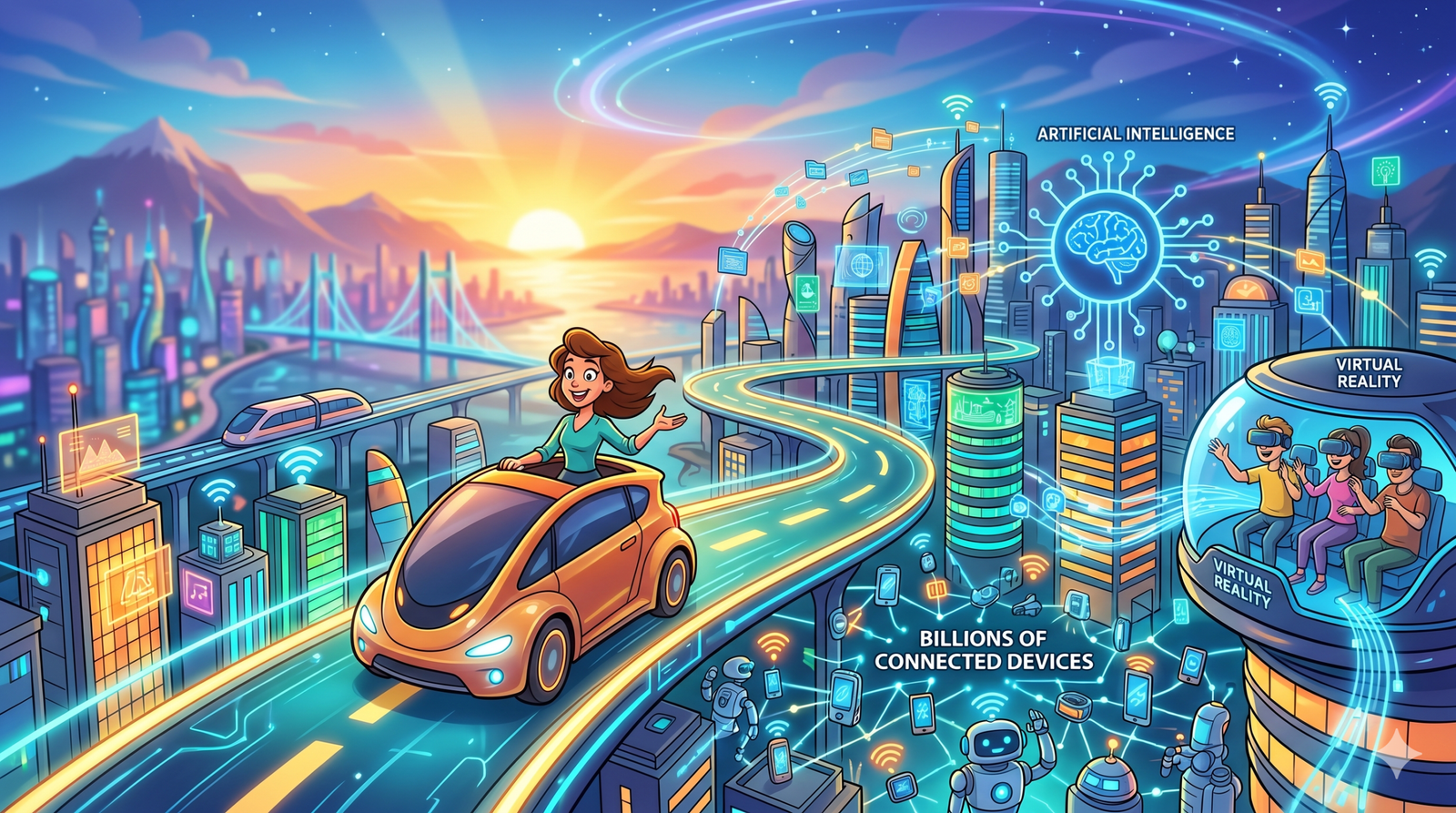
The Internet moved into everyday life.
Communication, education, business and entertainment were no longer limited by physical distance.
Communication
Families and friends could stay connected across countries and continents.
Education
Students could access knowledge, courses and teachers from almost anywhere.
Global Business
Businesses could reach customers and markets far beyond their physical location.
Collaboration
Scientists and researchers could share ideas and work together across borders.
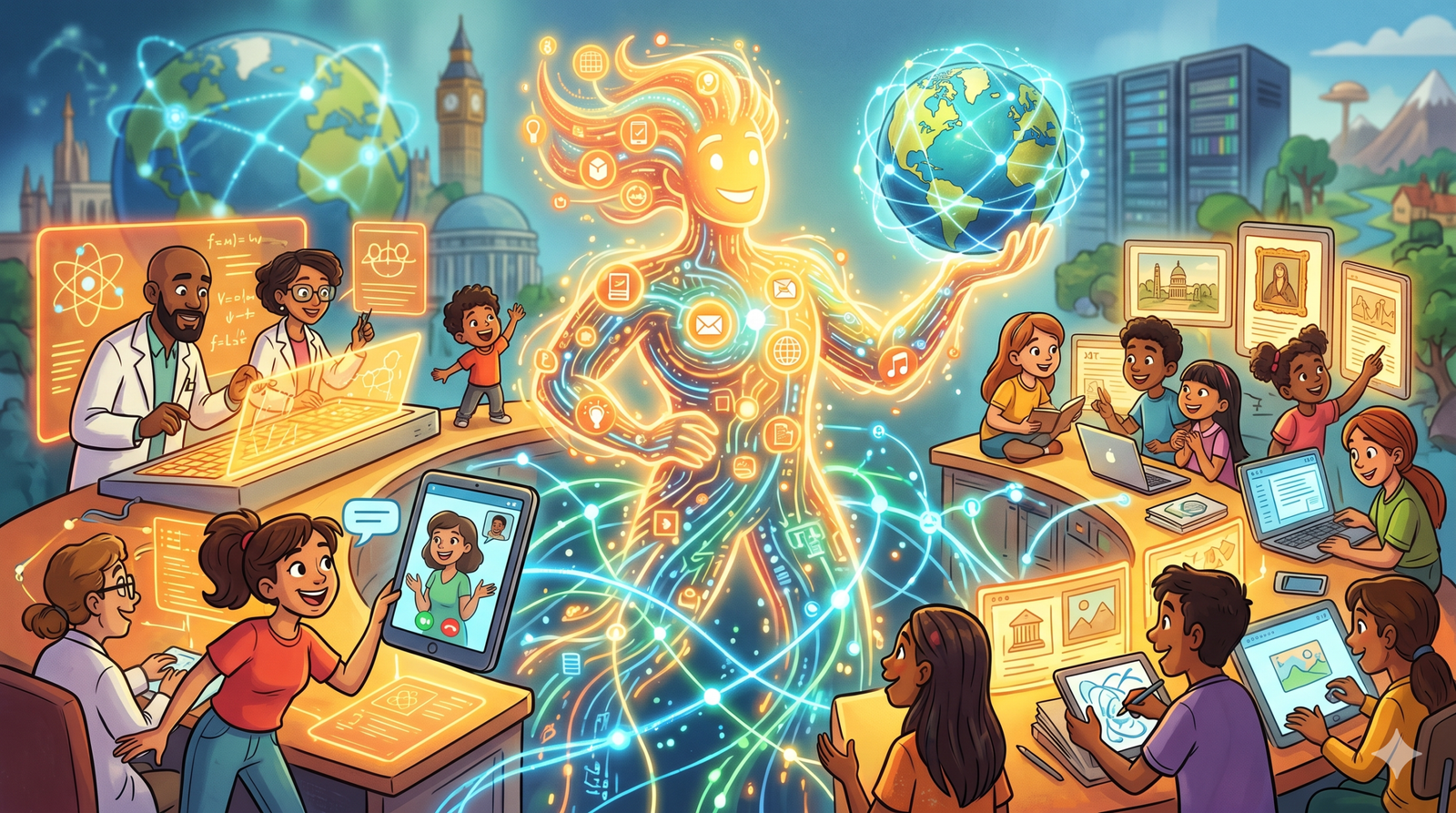
Entire industries grew around the Internet.
Once billions of people began connecting online, entirely new services and industries emerged.
A network of computers became a network of humanity.
The Internet didn’t simply make computers more useful. It changed how people interact with knowledge, each other and the world around them.
The Internet became part of humanity.
From learning and communication to business, entertainment and artificial intelligence, the Internet became one of the most influential technologies in human history.
The Internet Has Secrets.
Behind the technology we use every day are strange, surprising and fascinating moments that helped shape the connected world.
The Internet almost said “LOGIN”.
The first ARPANET message was intended to be “LOGIN”. But the system crashed after only the letters L and O were successfully transmitted.
The Web isn’t the Internet.
The Internet is the global network of connected computers. The Web is a service that runs on top of that network, using technologies such as browsers, URLs and HTTP.
The Internet runs under the sea.
A huge amount of international Internet traffic travels through undersea fiber-optic cables, carrying enormous volumes of data between continents.
TCP/IP helps the Internet talk.
TCP/IP provides fundamental communication rules that allow devices and networks to exchange information across the Internet.
The Internet wasn’t built by one person.
The modern Internet developed through the contributions of countless scientists, engineers and researchers working across several decades.
The Internet is bigger than you think.
What looks like a simple screen is actually the result of decades of research, communication protocols, physical infrastructure and human collaboration.
Every click travels through history.
The next time you open a website, send a message or stream a video, remember that you’re using technology shaped by decades of ideas, experiments and discoveries.
THE STORY OF THE INTERNET CONTINUES
✦The Future Is Still Loading.
The Internet is not finished. It continues to evolve into something far beyond what its creators could have imagined.
We are building the Internet of tomorrow.
Artificial intelligence, virtual reality, smart cities, autonomous vehicles and billions of connected devices are changing what connectivity means.
What comes after the Web?
Artificial Intelligence
Systems that can learn, reason, create and interact with people in increasingly natural ways.
Virtual Reality
The Internet could become something we don’t simply look at, but something we experience.
Smart Cities
Connected infrastructure could help cities respond to people, traffic, energy and the environment.
Autonomous Vehicles
Vehicles are becoming connected systems capable of sensing, communicating and making decisions.
Billions of Devices
Sensors, machines and everyday objects are becoming part of an enormous connected ecosystem.
What We Haven’t Imagined
The most important technologies of the future may not even have names yet.
Every generation imagines further.
Four computers connected.
A network linking a handful of machines seemed revolutionary.
Information became connected.
The World Wide Web transformed how people accessed and shared information.
Billions are online.
People, businesses, machines and services communicate across a global network.
What happens next?
The next generation may experience forms of communication that seem impossible today.
The future often looks impossible.
In 1969, connecting computers across a network was an extraordinary experiment.
We don’t know what comes next.
And that may be the most exciting part. Just as the Internet itself once seemed impossible in 1969, the next generation may experience forms of communication that seem impossible today.
How Humanity Connected the Planet
What began with a few machines exchanging data became one of the greatest communication networks humanity has ever created.
Every second, humanity is connected.
Learning
Knowledge can travel across borders, classrooms and continents instantly.
Working
People can build companies, collaborate and create from almost anywhere.
Communicating
A message can cross oceans and reach another person in moments.
Discovering
Ideas, research and discoveries can spread around the world almost instantly.
It all started with four computers.
Decades of research, ambitious ideas and countless experiments eventually grew into something that would reshape civilization.
A tiny beginning. An enormous future.
From L. to O. to the entire world.
The first message wasn’t a sentence. It wasn’t even a complete word. It was simply two letters that became part of the story of how humanity connected the planet.
And the signal is still traveling.
Keep Exploring. Keep Discovering.
If you enjoyed this journey through the history of the Internet, there is much more waiting for you.


Leave a Reply