
Introduction
Imagine a World Without Modern Household Machines
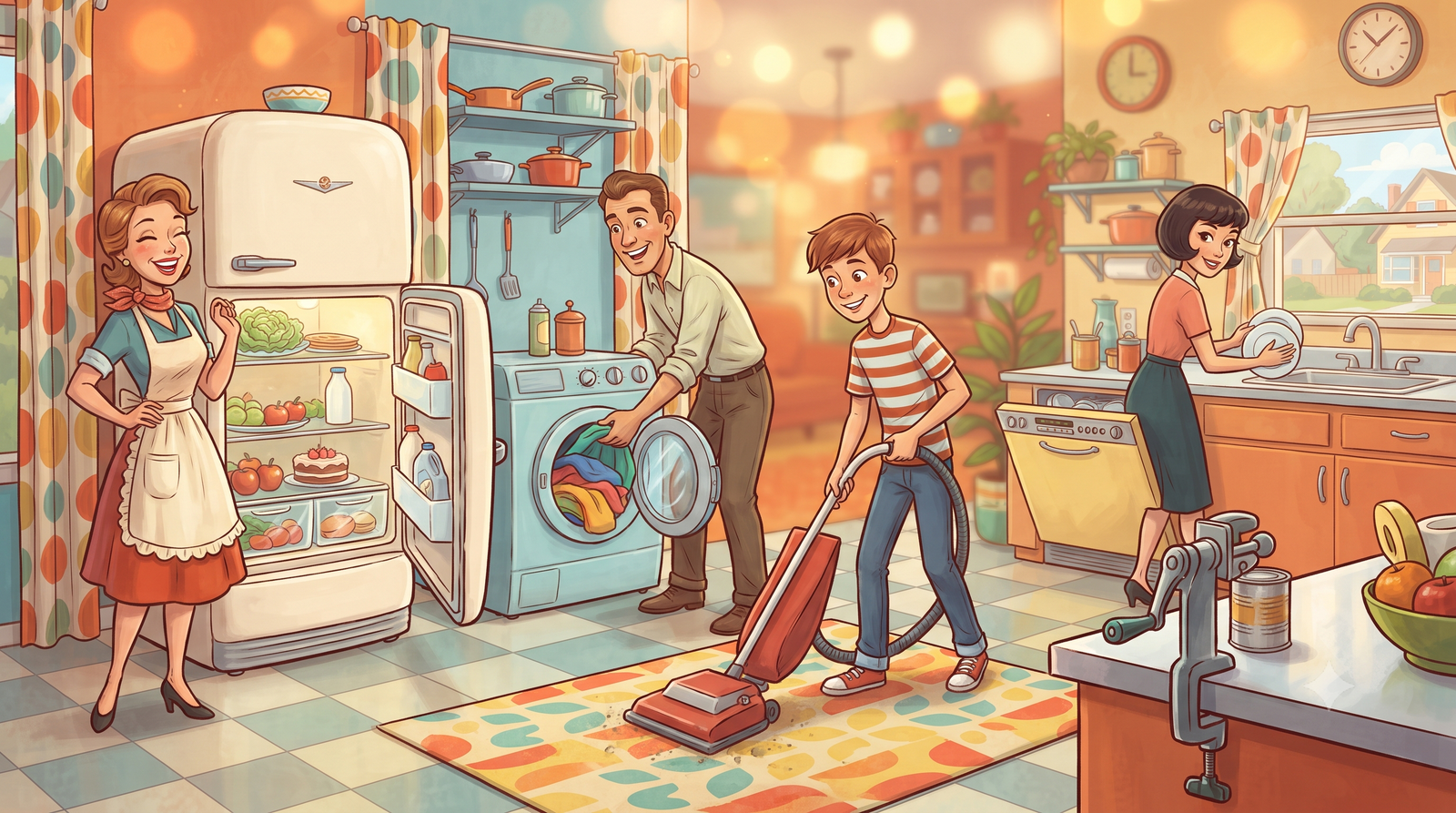
Imagine waking up in a world without refrigerators, washing machines, microwaves, vacuum cleaners, or dishwashers.
Today, these machines are so deeply woven into our routines that it’s easy to forget just how much work everyday life once required.
Tasks that take minutes today could once consume hours. Washing clothes, preserving food, cleaning floors, preparing meals, and washing dishes demanded constant physical effort and valuable time.
These machines gave humanity something far more valuable than convenience: time.
The arrival of household appliances didn’t simply make chores easier. They changed the rhythm of everyday life. They reduced repetitive labor, freed up hours, and gave people opportunities to spend their time elsewhere.
Time that once disappeared into household chores could now be spent with family, pursuing education, building careers, resting, creating, or simply enjoying life. ❤️
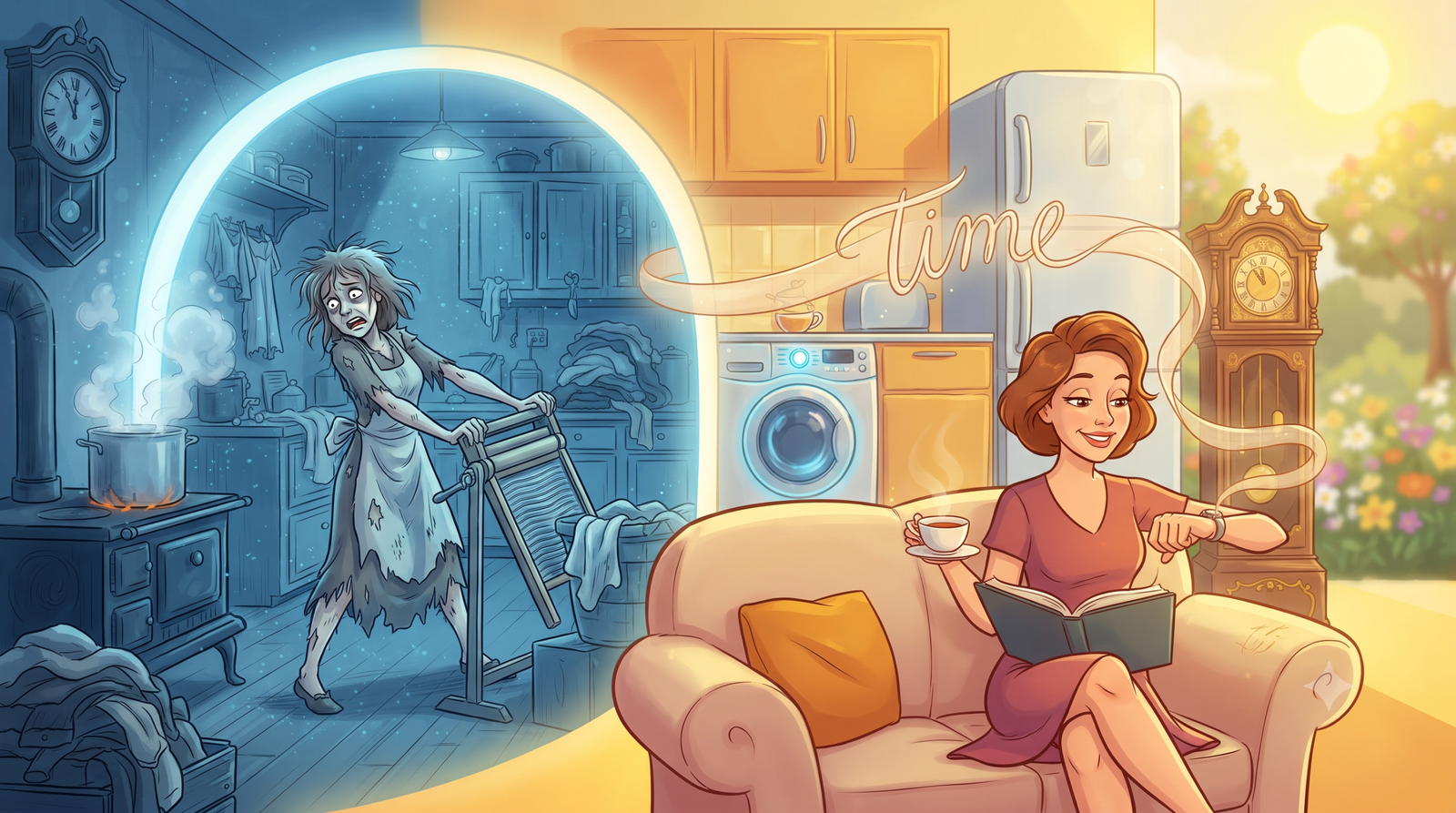
Technology didn’t just save effort. It helped give us our time back.
Every hour saved from repetitive household work created an opportunity to do something else.
Convenience Was Only the Beginning
The machines around us may seem ordinary today, but their impact is anything but ordinary. They quietly changed how we live, work, rest, and spend our days.
Because sometimes, the most valuable thing technology can give us isn’t a new capability—it’s more time to be human. ❤️
The Washing Machine
Before clean clothes came at the push of a button, laundry was a long, physical and exhausting task. 🧺
Before Electricity
When Laundry Was Hard Work
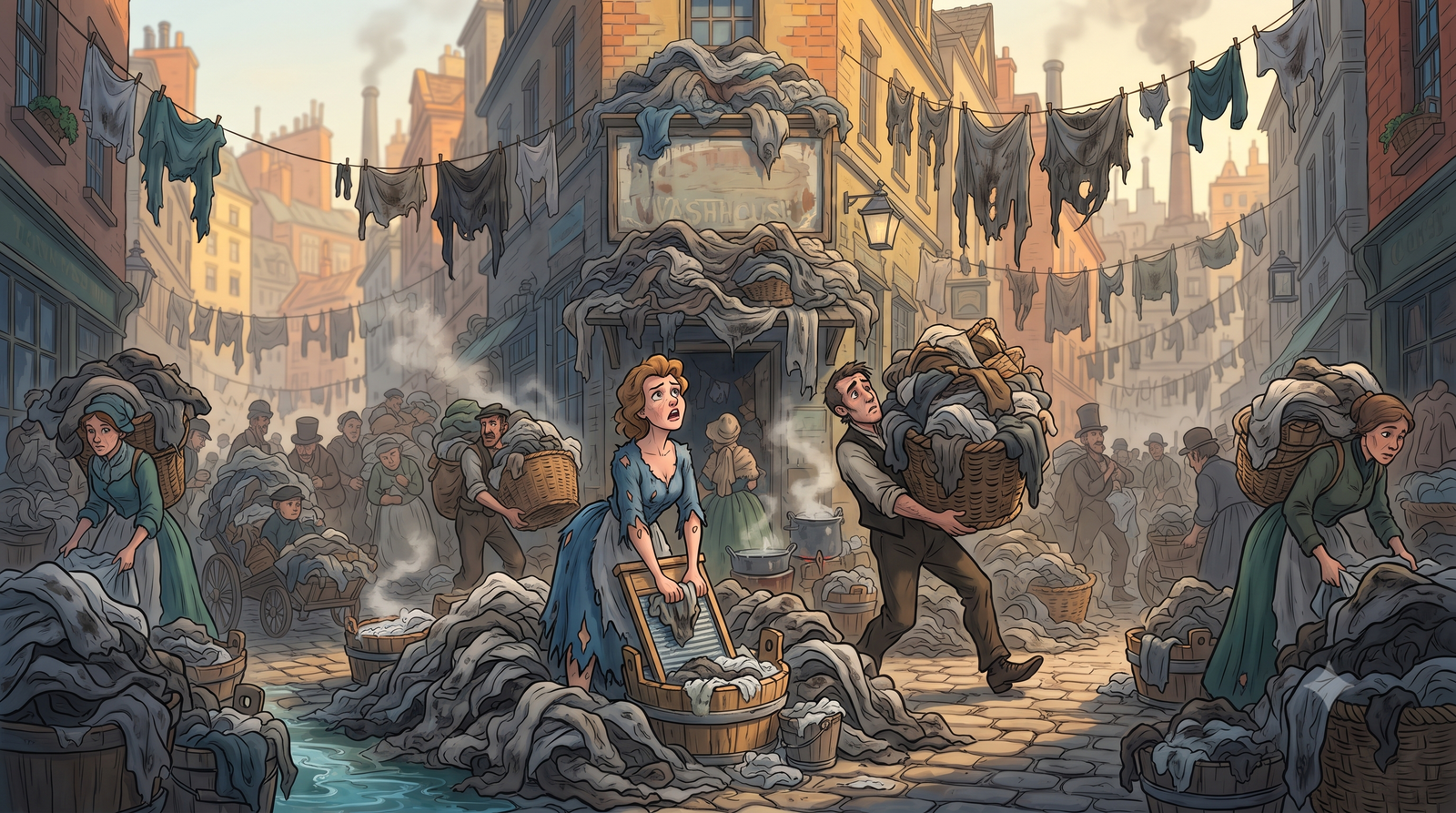
Imagine spending an entire day washing clothes without electricity, running water or a machine to do the hard work.
For generations, washing clothes was one of the most demanding household chores. Water had to be collected, clothes had to be soaked and scrubbed, and every piece had to be rinsed and wrung out by hand.
Families relied on rivers, wells, tubs and wash basins. Cleaning clothes was not something that could simply be squeezed between other activities. It required planning, physical strength and a significant amount of time.
The process was repetitive and tiring. Heavy wet clothes became even harder to handle, while larger items such as sheets and blankets could turn laundry into an exhausting physical task.
Before the washing machine, clean clothes came at a physical cost.
The invention of mechanical washing devices began to change this relationship with laundry. Instead of relying entirely on human hands, people could begin asking a different question:
What if a machine could do the hard part for us? ⚙️
Four Steps Behind Every Clean Shirt
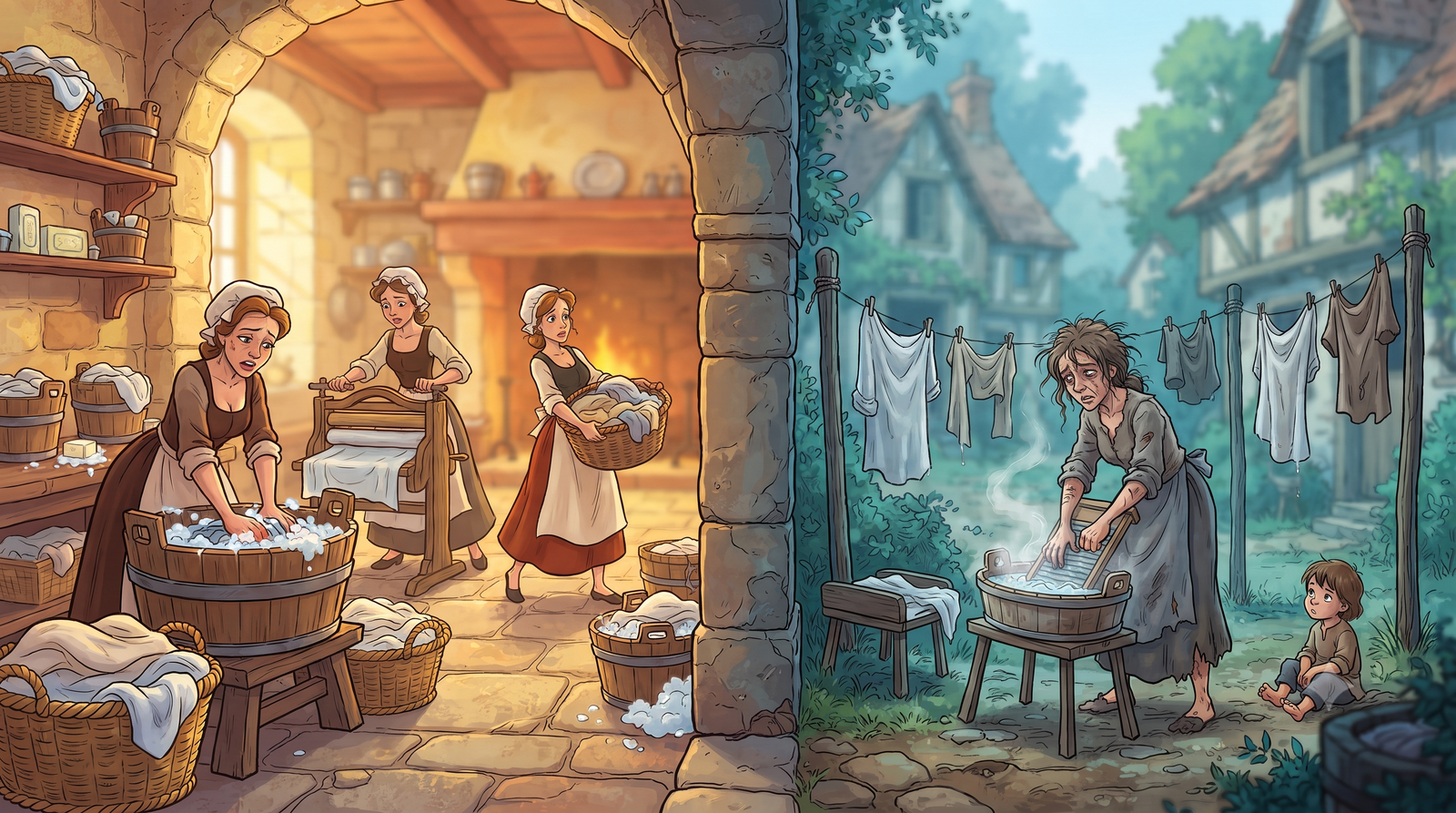
Before automation, even an ordinary load of laundry involved several demanding stages.
Find the Water
Water had to be collected and carried before washing could even begin.
Scrub the Clothes
Dirt and stains were removed through repeated soaking, rubbing and scrubbing.
Wring Them Out
Wet clothes had to be twisted and squeezed to remove as much water as possible.
Dry Everything
Finally, clothes were hung outside or near a heat source and left to dry.
The washing machine wasn’t just about cleaner clothes.
It was about removing hours of repetitive physical work from everyday life.
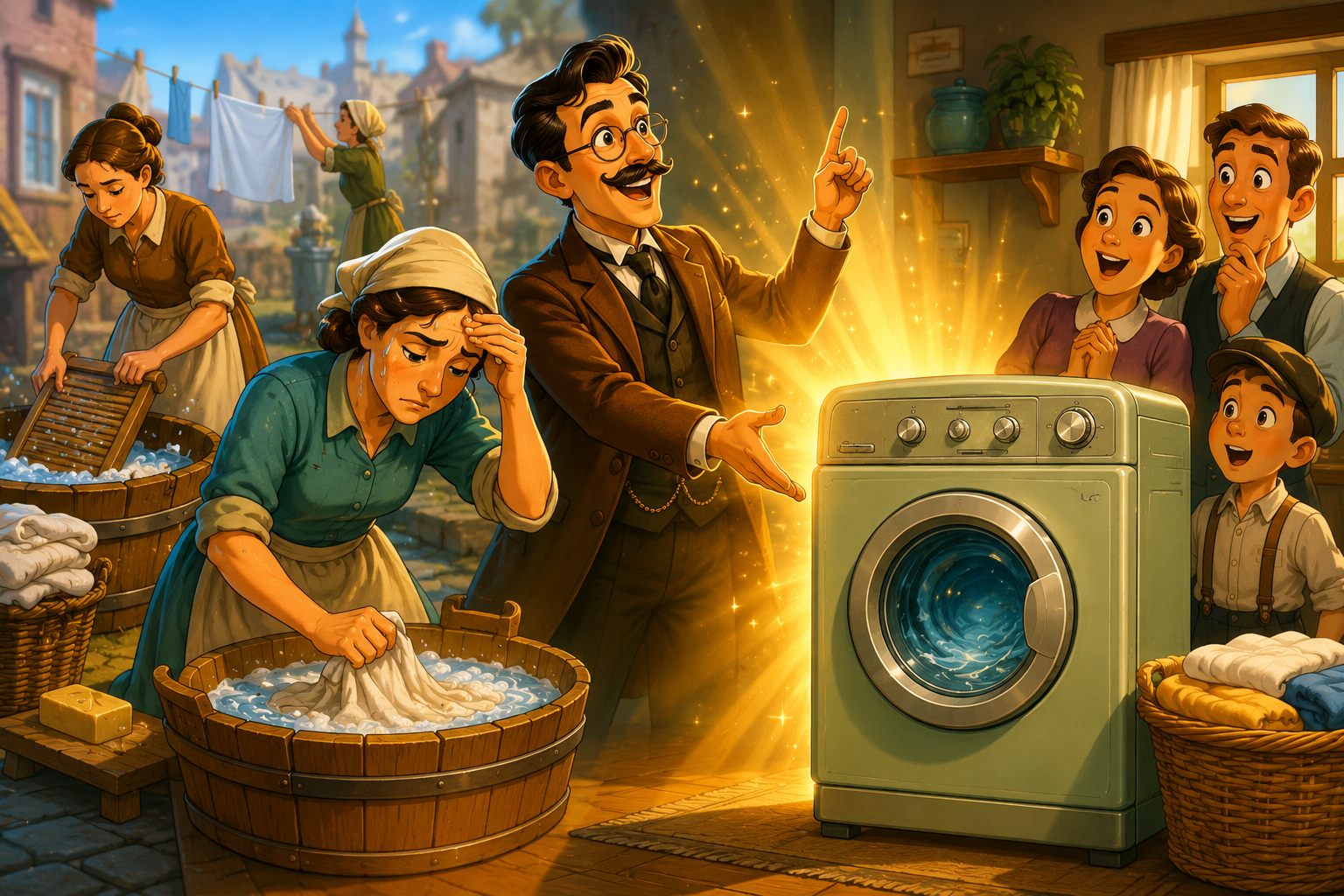
Enter the Thor
The development of electric washing machines marked a major step toward the automated laundry appliances we know today.
Alva J. Fisher is associated with the Thor washing machine, an early commercially successful electric washing machine. Electricity could now provide the mechanical movement needed to handle much of the washing process.
The idea was revolutionary in its simplicity: instead of asking people to perform every movement themselves, let a machine perform the repetitive work.
Machines could perform repetitive washing movements automatically.
Electric motors opened the door to increasingly automated laundry.
People no longer had to perform every repetitive movement by hand.
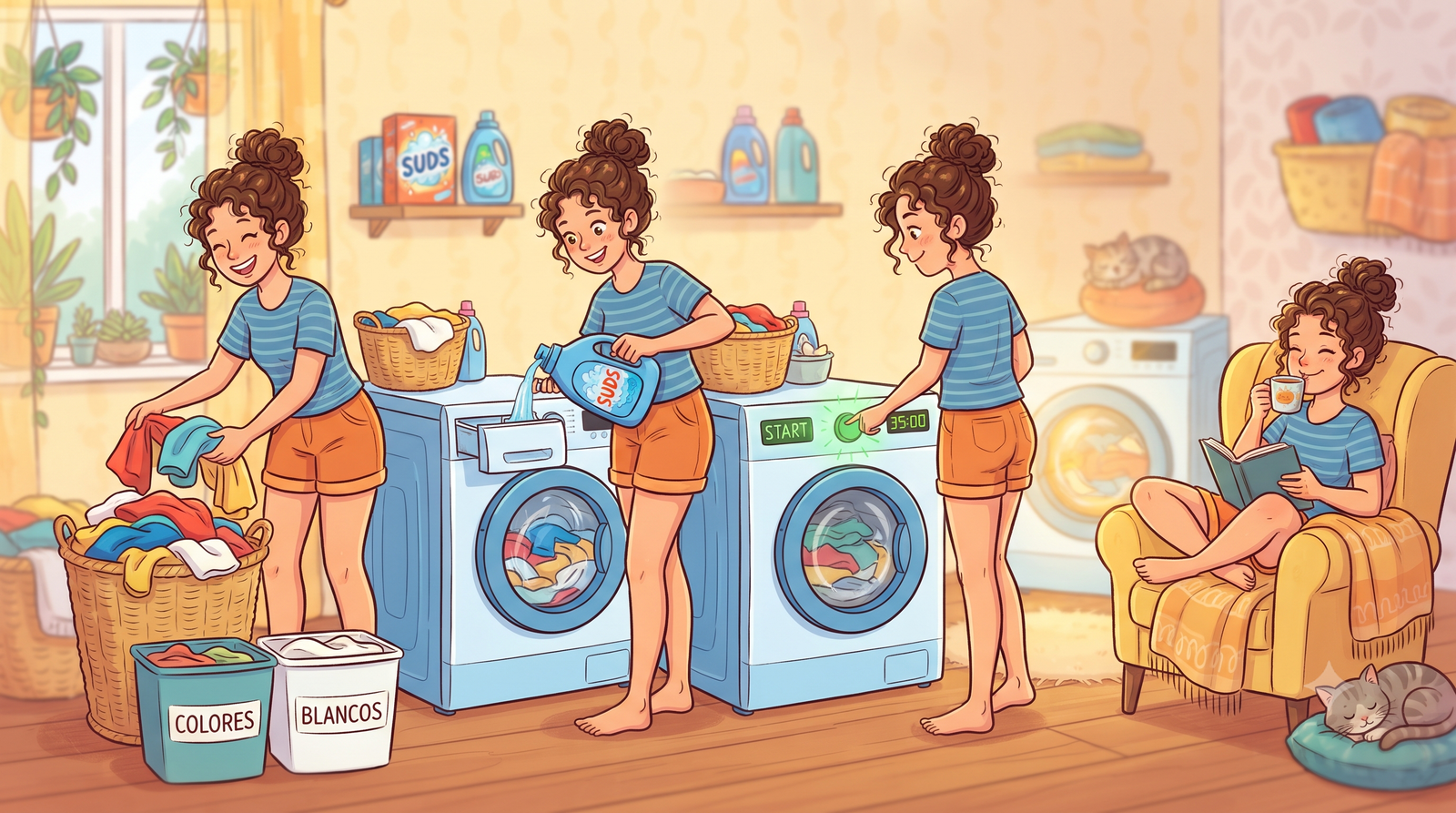
From an Entire Day to a Push of a Button
The washing machine transformed one of the most repetitive household chores in history.
It didn’t simply make laundry easier. It helped give people something far more valuable: time. ❤️
The Vacuum Cleaner
Before the vacuum cleaner, dust was more than a household nuisance. It was everywhere — and removing it was a serious challenge. 🏭
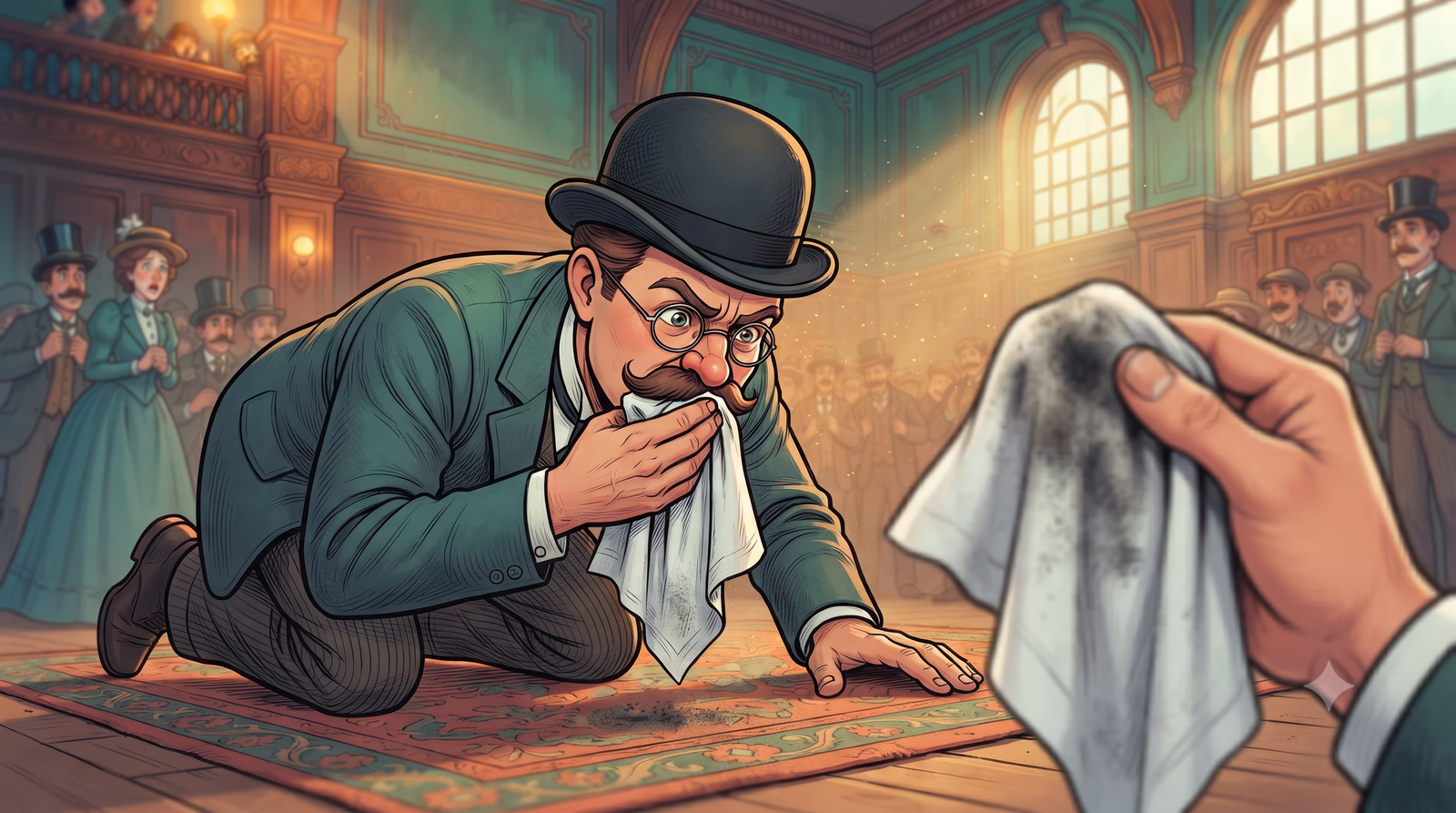
The Dust Problem
A World Filled With Dust
In the nineteenth century, keeping a home clean was not simply about appearance. Dust was a constant part of everyday life.
Rapid industrialisation changed the environment around homes and cities. Coal was widely used for heating, transportation and industry, while factories filled the air with smoke and particles.
Inside homes, another problem was waiting on the floor. Large carpets were fashionable, but their thick fibres could trap enormous amounts of dust and dirt.
Without a modern vacuum cleaner, cleaning meant beating, brushing and sweeping carpets by hand. Dust could simply be moved from one place to another rather than actually removed.
The problem wasn’t simply getting rid of dirt. It was finding a way to remove the dust completely.
Then an unusual idea changed the way people thought about cleaning:
What if instead of sweeping dust away, you could simply suck it up?
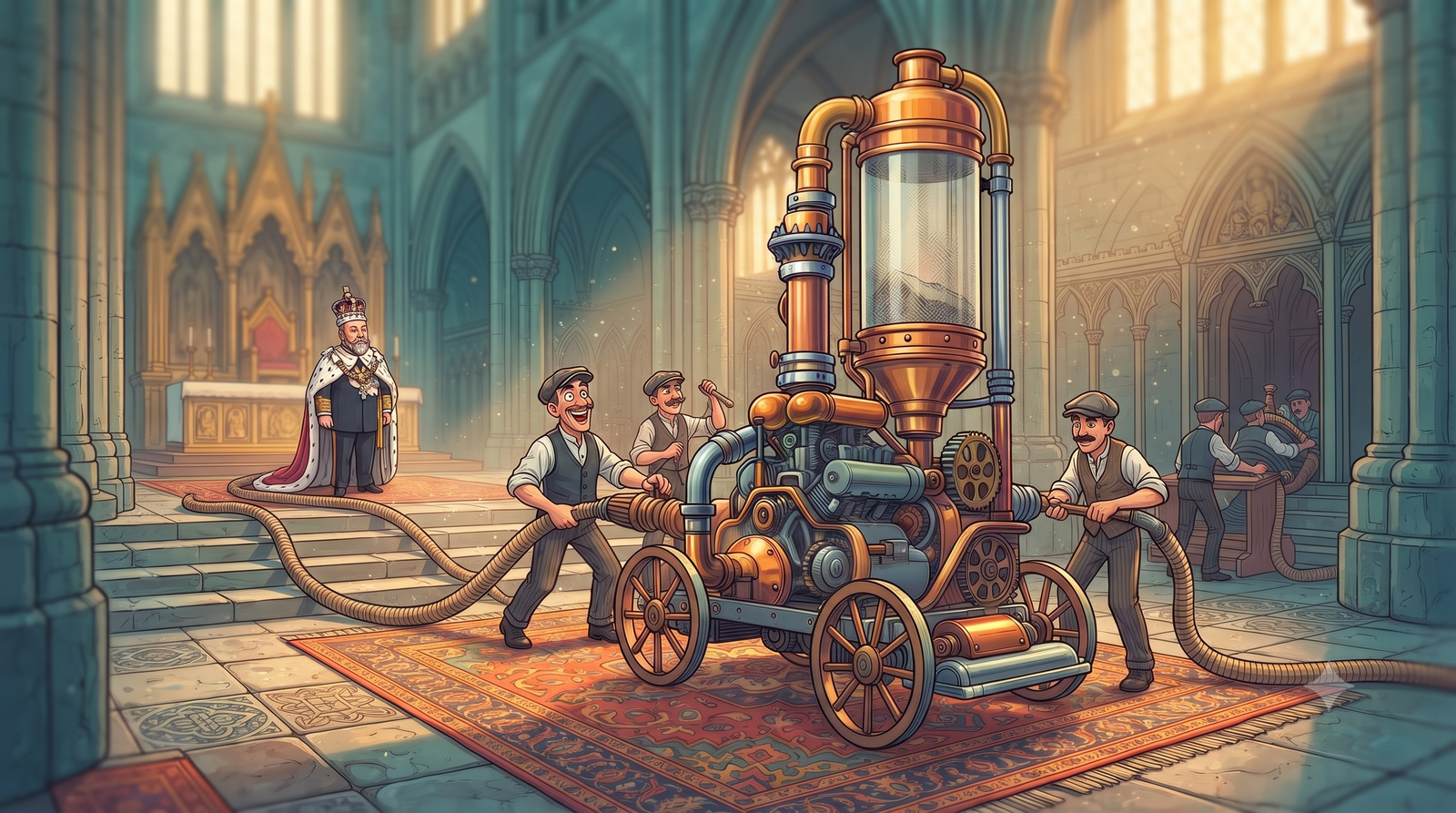
Hubert Cecil Booth Changes the Question
In 1901, British engineer Hubert Cecil Booth demonstrated a radically different approach to cleaning carpets.
Booth became fascinated by the idea of removing dust through suction rather than simply beating or brushing it away.
His solution was anything but small. Instead of carrying a compact machine from room to room, his early vacuum system used a powerful petrol-driven engine and large hoses.
The machine became famously known as “Puffing Billy.”
Dust could be removed through suction instead of simply being swept away.
The enormous machine earned its nickname from the noise and scale of its operation.
Large hoses could be connected to buildings while the main machine remained outside.
Don’t move the dust. Remove it.
Suction changed the fundamental idea behind carpet cleaning — and opened the door to an entirely new type of household machine.
James Murray Spangler
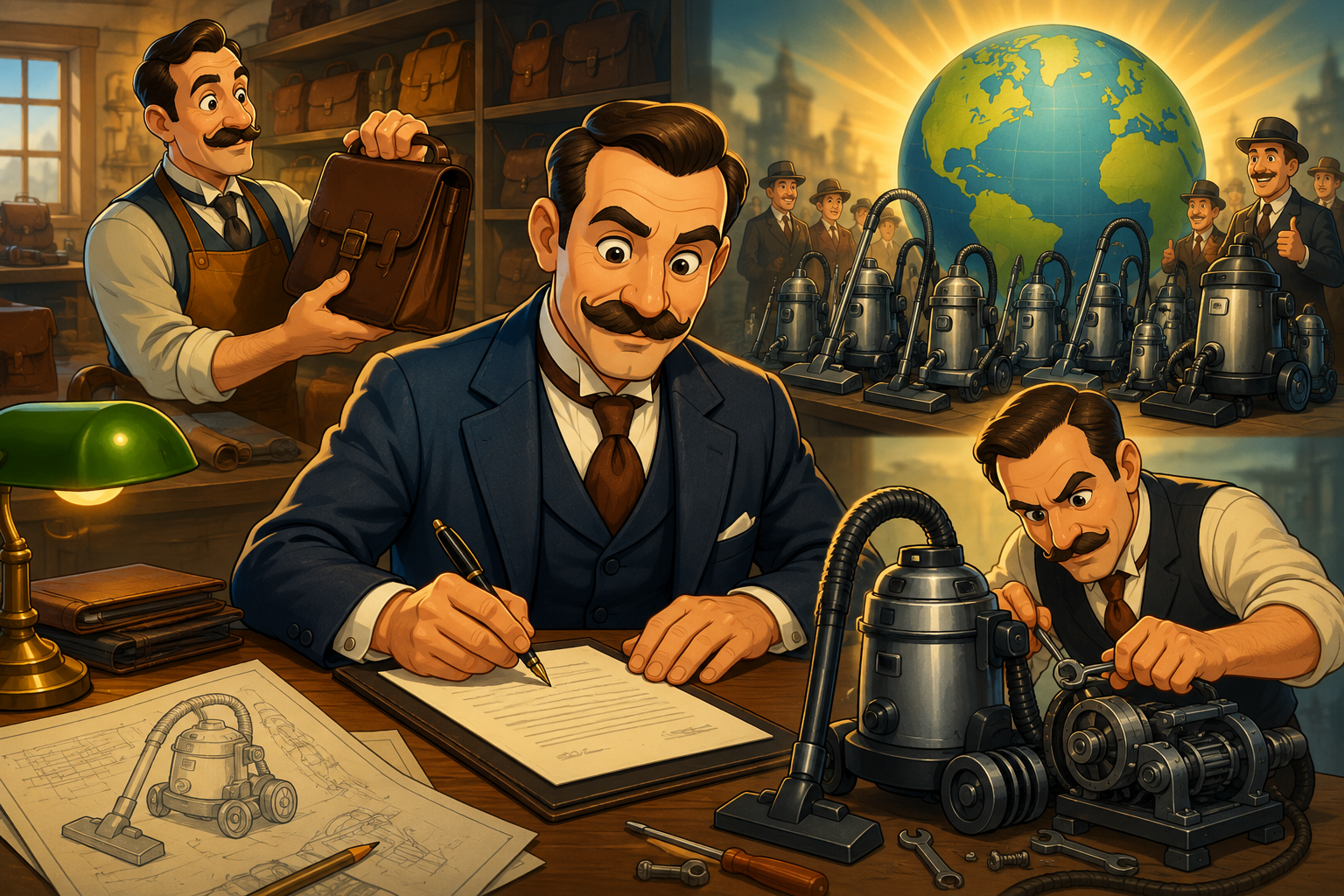
The next major breakthrough came from an unexpected place: a janitor who needed a better way to deal with dust.
James Murray Spangler worked as a janitor and suffered from asthma. Cleaning dusty carpets was particularly difficult for him.
Instead of accepting the problem, Spangler developed his own solution. He created a lightweight electric vacuum cleaner that used suction while also helping collect dust.
His invention was considerably more practical for everyday use than the enormous machines that had come before it.
Lightweight
Designed to be moved and operated by a person rather than functioning as a giant building-sized cleaning system.
Electric
An electric motor powered the suction mechanism, making the machine more suitable for indoor use.
Dust Collection
The design incorporated a collection system that helped capture the dust being removed.

The Beginning of Hoover
Spangler’s invention eventually found its way to William Hoover, whose company became involved in manufacturing and marketing the machine.
What began as an invention created to solve one person’s practical problem would eventually become associated with one of the world’s most recognisable vacuum-cleaner brands.
Proved that powerful suction could remove dust from carpets.
Created a more practical lightweight electric design.
Helped turn the invention into a commercially successful household product.
The Day We Stopped Chasing Dust
The vacuum cleaner transformed cleaning from a repetitive battle against dust into a task that could be largely automated.
From a giant machine called “Puffing Billy” to a lightweight electric cleaner, the journey was ultimately about one simple idea: remove the dust instead of moving it.
The Can Nobody Could Open
Before the easy-open lid, canned food had a surprisingly difficult problem: how do you actually get inside?

THE PRESERVATION PROBLEM
An Army Needs Food
In the early nineteenth century, feeding an army was a logistical nightmare.
Napoleon Bonaparte’s military campaigns required enormous quantities of food. Soldiers could not rely on fresh meat, vegetables and other supplies reaching them every day.
Long journeys created an even bigger problem. Food spoiled quickly, especially when armies travelled far from established supply centres.
The solution was not simply to find more food. Humanity needed a better way to make food last longer.
The challenge was simple to describe, but incredibly difficult to solve: How do you preserve food for months?
One answer would eventually change the way the entire world stored and transported food.

Nicolas Appert Traps Freshness
In France, confectioner and inventor Nicolas Appert began experimenting with a remarkably simple idea.
Appert placed food inside glass containers, sealed them tightly and heated them.
He discovered that this process could preserve food for surprisingly long periods.
His experiments eventually led to a method of food preservation that was recognised by the French government.
Food was enclosed inside containers designed to prevent outside exposure.
Heating the sealed food became a crucial part of the preservation process.
Foods could survive far longer than they normally would when fresh.
Preserve the food. Seal it away.
Appert’s work demonstrated that food could be preserved inside sealed containers — but the container itself was about to evolve.
Peter Durand Changes the Container
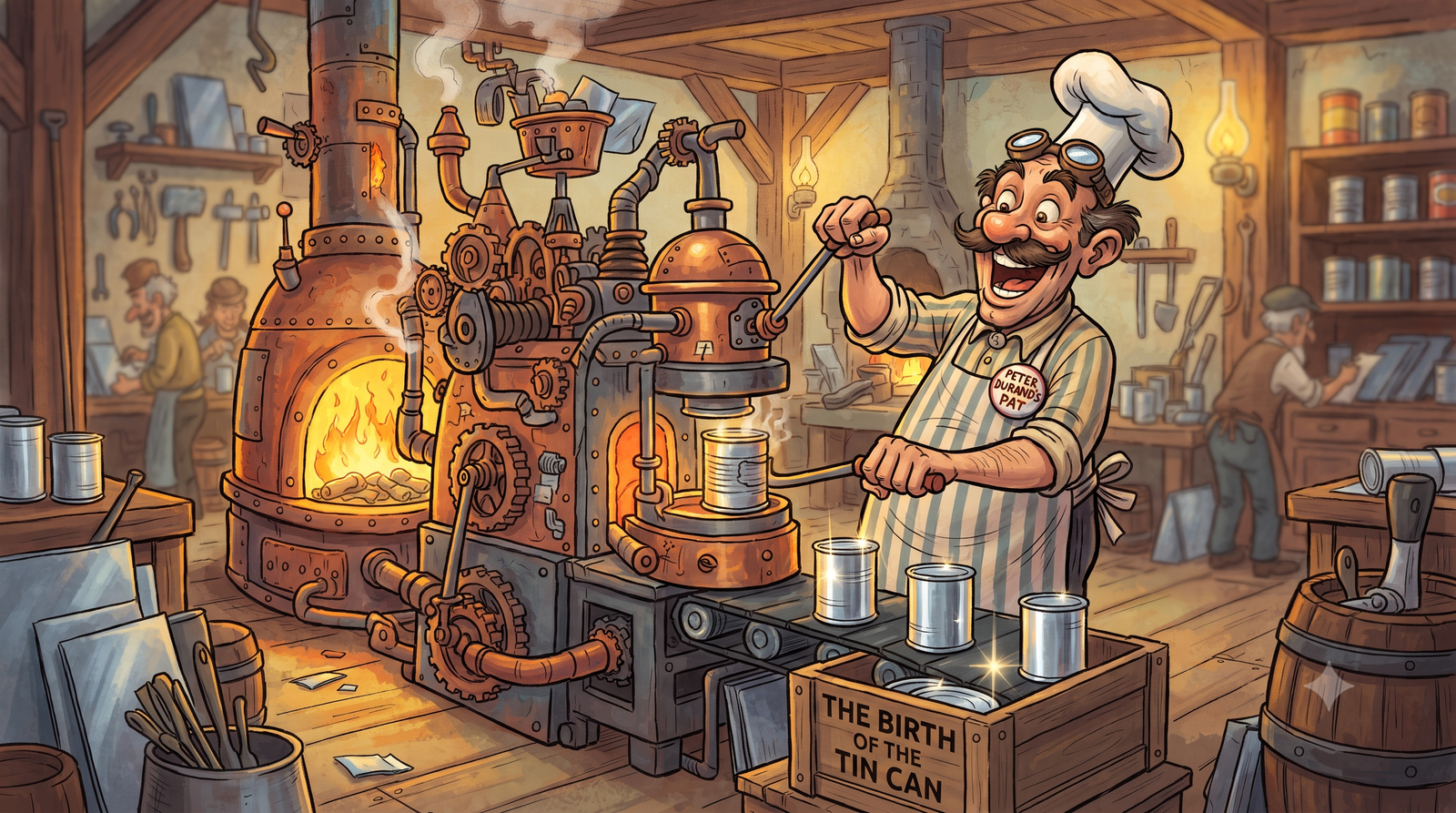
Glass containers had demonstrated that food could be preserved, but they were fragile and difficult to transport.
In 1810, British merchant Peter Durand received a patent for preserving food in tin-coated iron cans.
The new containers were much stronger than glass. They could survive the rough conditions of military transport, long journeys and expanding trade networks.
There was only one rather inconvenient problem.
Perhaps a little too strong.
Because the early cans were not designed with today’s easy-opening lids, getting the food out could be a serious task.
The Can Nobody Could Open
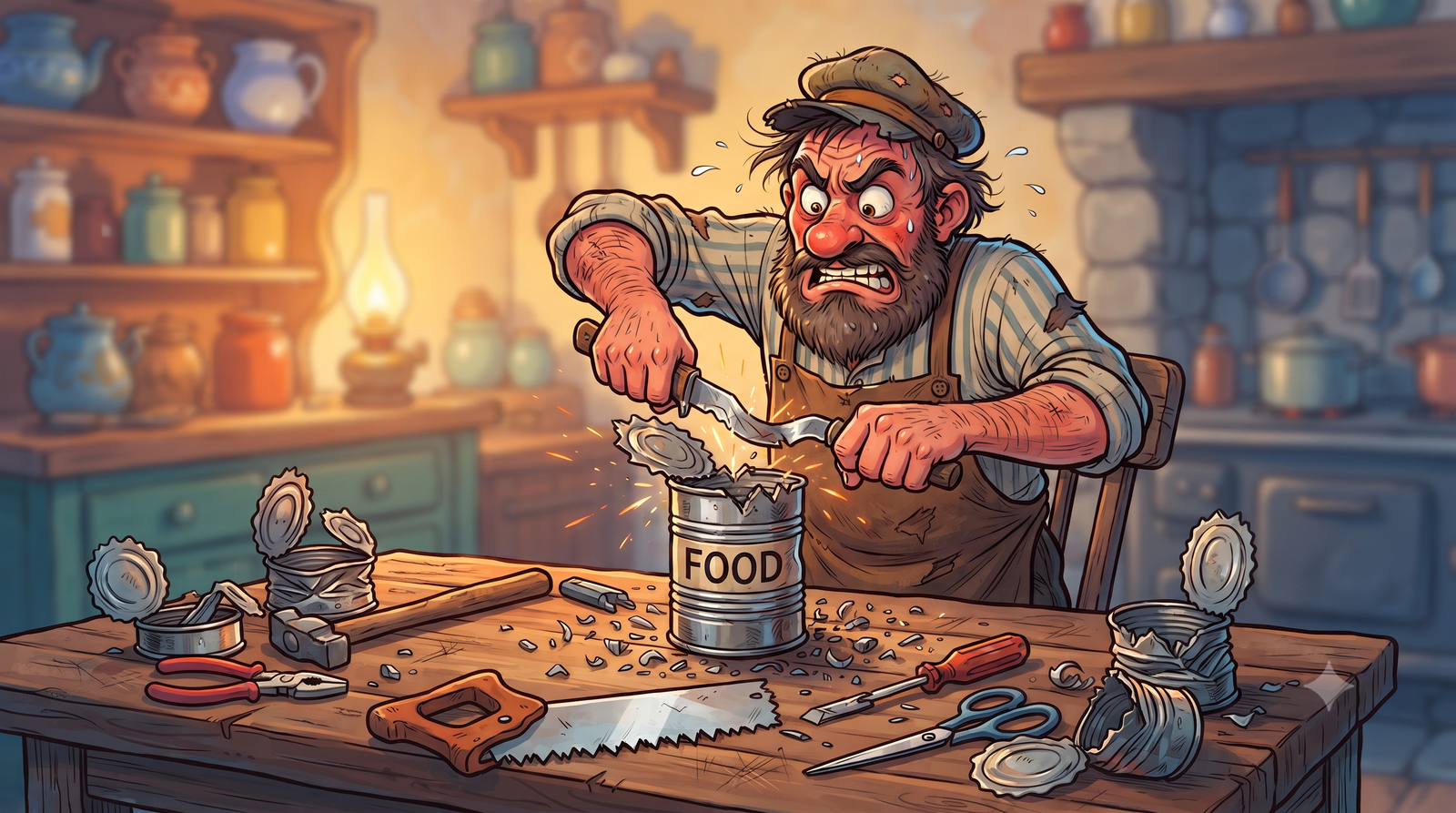
Modern cans are designed around the person opening them. Early cans were designed primarily around protecting the food.
Some early tins were thick and difficult to cut. Instructions associated with early canned food could even recommend using a hammer and chisel to break into them.
For soldiers and travellers, this created an amusing contradiction:
The food was preserved perfectly. Getting to it was another story.
Hammer
Heavy tools could be used to break through particularly stubborn containers.
Chisel
A sharp metal tool could help force an opening into thick early cans.
Improvised Tools
Soldiers and travellers sometimes relied on whatever suitable tool was available.
William Lyman Turns the Wheel
The solution to the problem did not require another enormous invention.
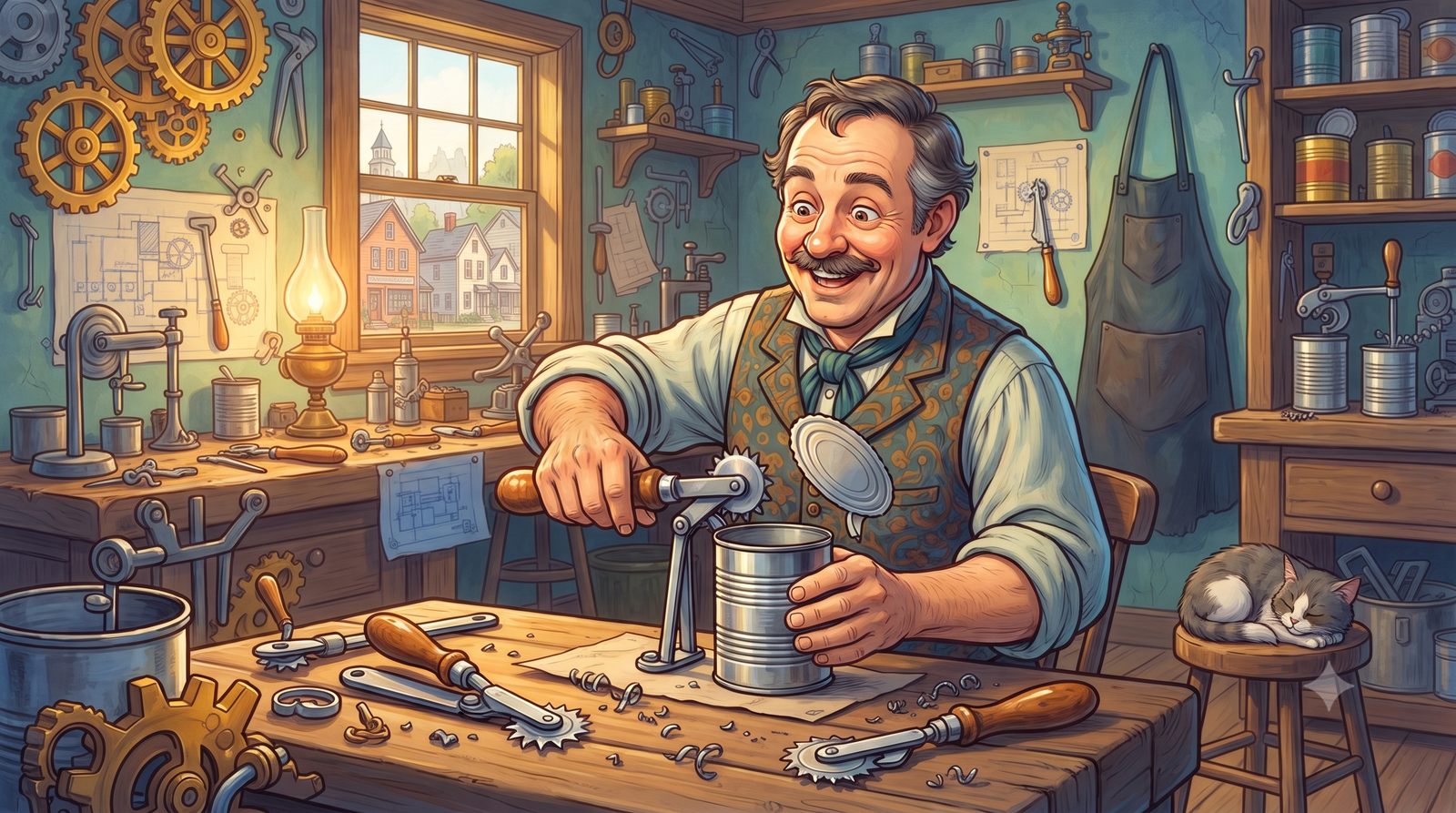
In 1870, American inventor William Lyman patented a can opener using a rotating cutting wheel.
Instead of attacking the can with a hammer or chisel, the user could position the cutting wheel against the lid and rotate the mechanism around the edge.
It was a simple idea, but it changed the relationship between people and canned food.
Rotating Wheel
A cutting wheel travelled around the edge of the can to create a controlled opening.
Easier to Use
Opening a can became a deliberate household task instead of a battle with heavy tools.
The Dishwasher
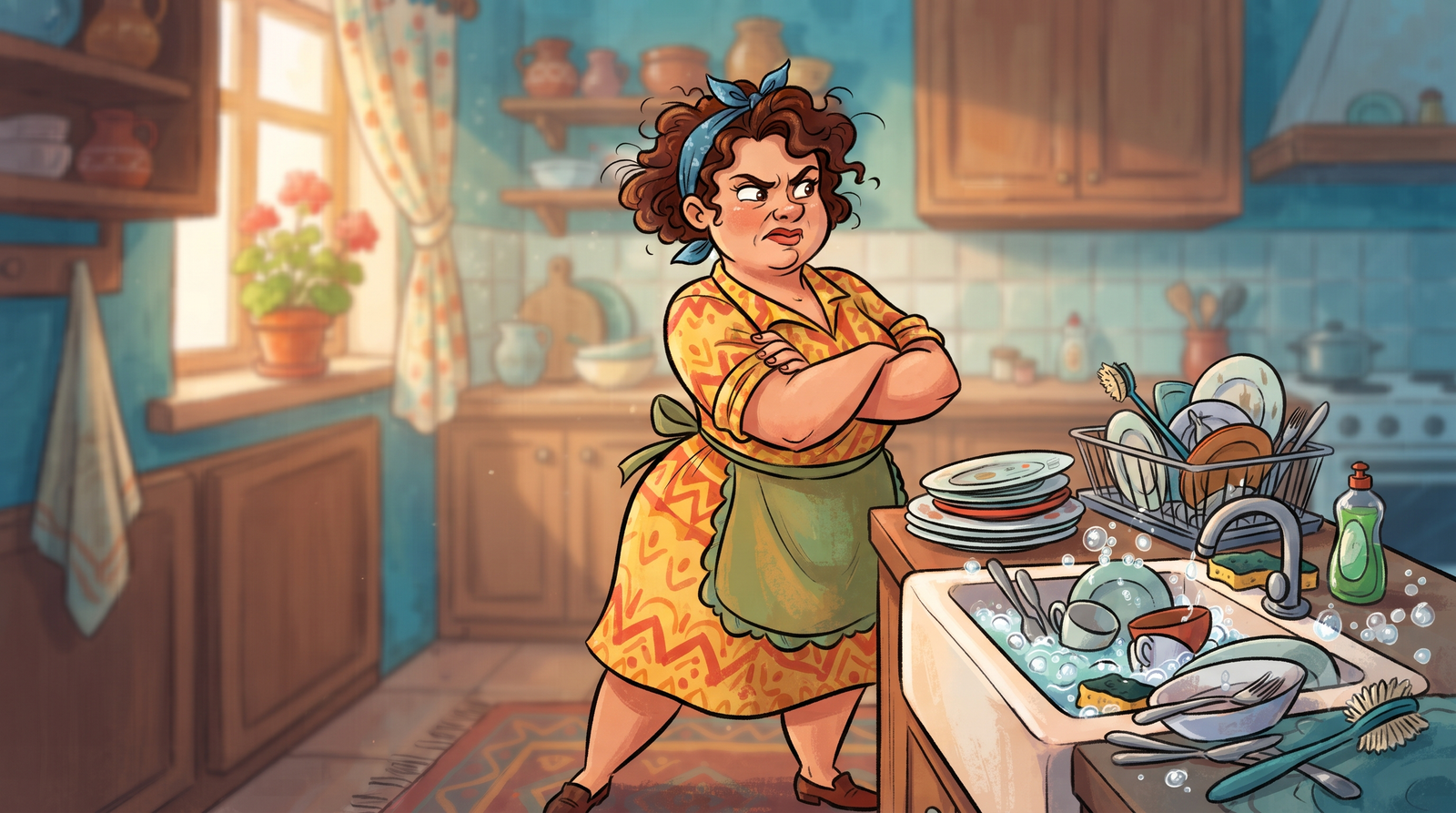
What started as one woman’s frustration with broken china became a machine that would completely change the modern kitchen.
THE PROBLEM
When Washing Dishes Was a Risk
Before automatic dishwashers, washing delicate dishes was a slow and surprisingly risky household task.
For wealthy households in the nineteenth century, expensive china was often handled by domestic servants. Plates, cups and elaborate dishes had to be washed carefully by hand.
But even careful washing could result in accidents. Valuable pieces could slip, crack or break during the process.
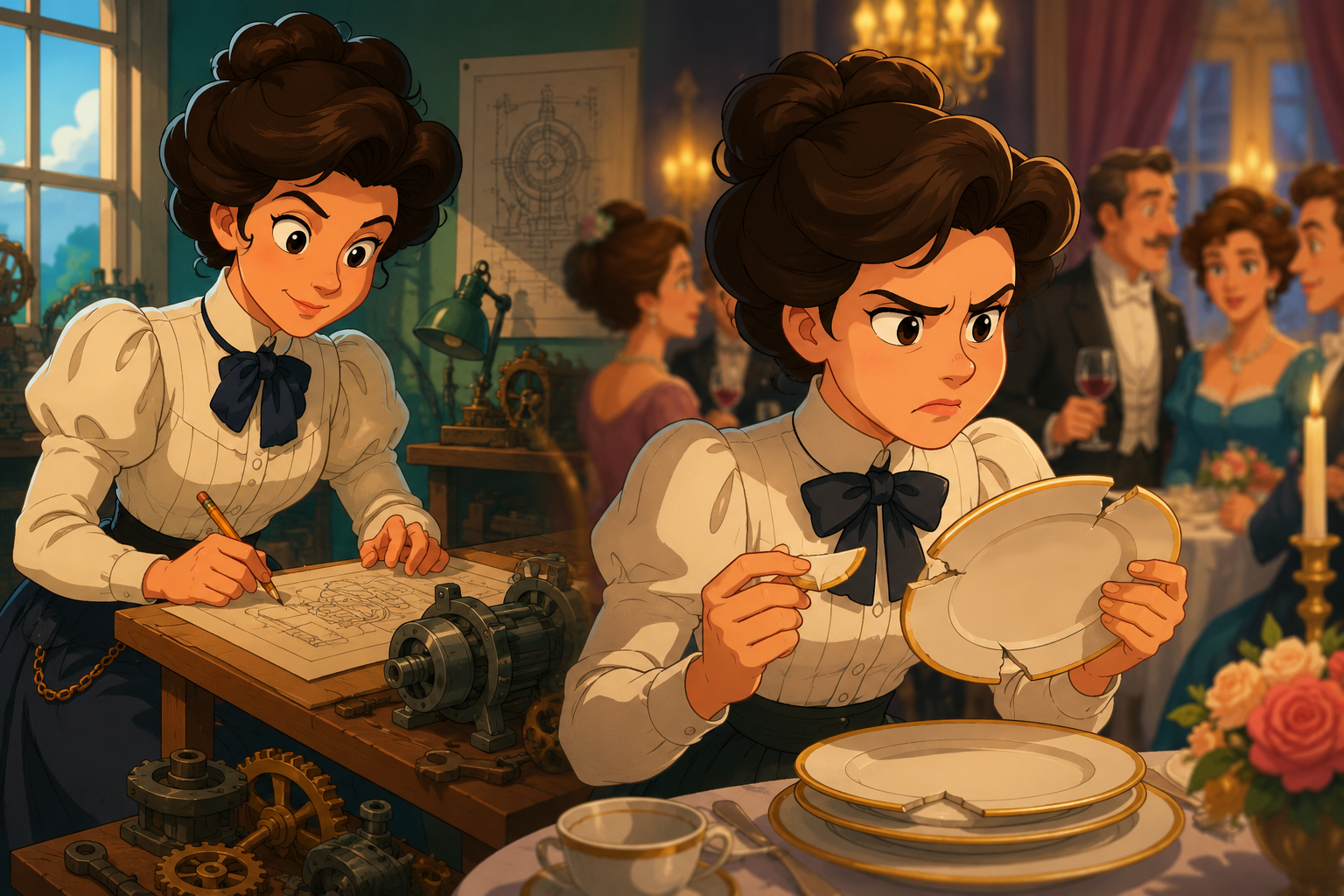
Josephine Cochrane had experienced exactly this frustration with her own expensive china.
Instead of accepting that broken dishes were simply part of household life, Josephine decided to build a machine.
The question was no longer “How carefully can we wash dishes?” but rather: “Can a machine wash them better?”
Meet Josephine Cochrane
Josephine Cochrane was not a factory engineer looking for a problem to solve.
She was a wealthy American woman who hosted dinners and owned valuable pieces of china. She became increasingly frustrated when servants accidentally damaged the dishes while washing them.
Rather than simply replacing the broken pieces, Cochrane began thinking about whether a machine could perform the job without allowing the dishes to rub against one another.
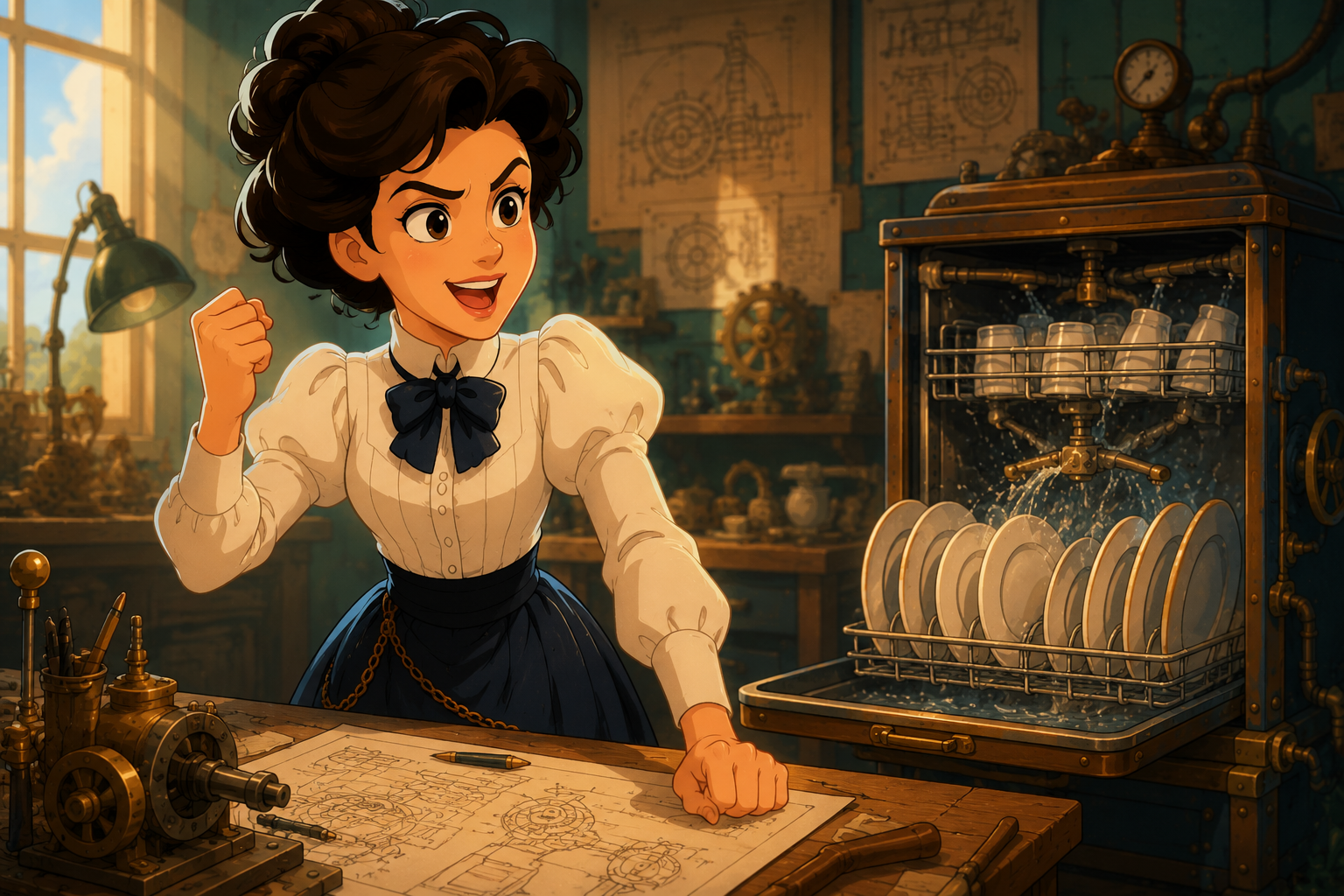
Her idea combined two important principles: carefully holding each piece in place and using water pressure to clean them.
Each piece needed to remain securely separated during washing.
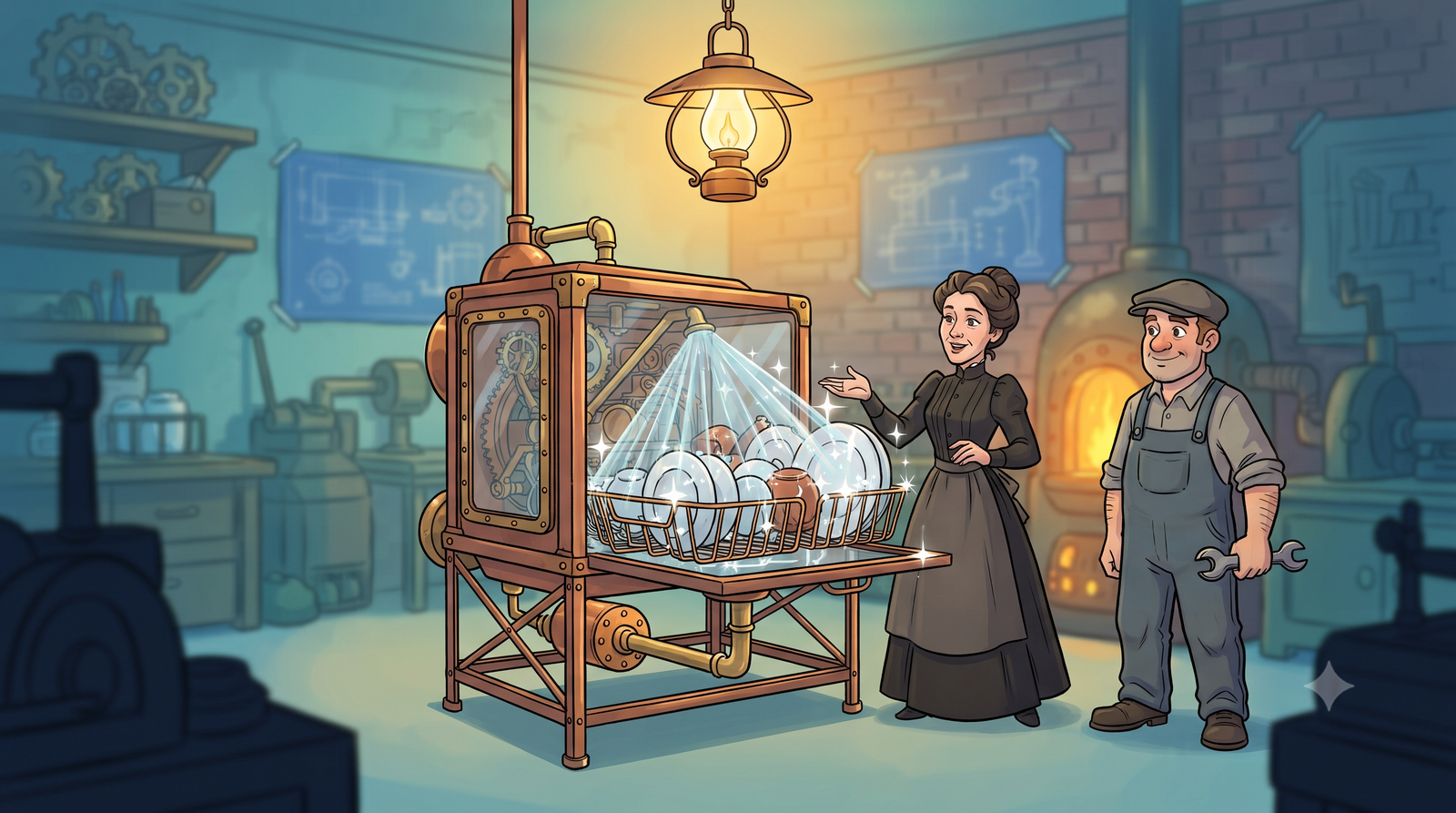
Powerful jets of water could clean dishes without scrubbing them by hand.
A machine could perform the same cleaning process again and again.
Don’t Let the Dishes Touch
One of the most important ideas in Cochrane’s machine was surprisingly simple: keep every dish in its own place.
Cochrane designed a system of wire compartments that could hold plates, cups and other pieces securely while the machine operated.
Instead of placing dishes into a basin and scrubbing them by hand, the china could be positioned inside the machine and exposed to streams of water.
Let the Water Do the Work
Hot Water
Heated water helped loosen food and grease from the dishes.
Pressure
Jets of water provided the force needed to clean the surfaces.
Movement
The mechanical system directed water around the dishes held inside the racks.
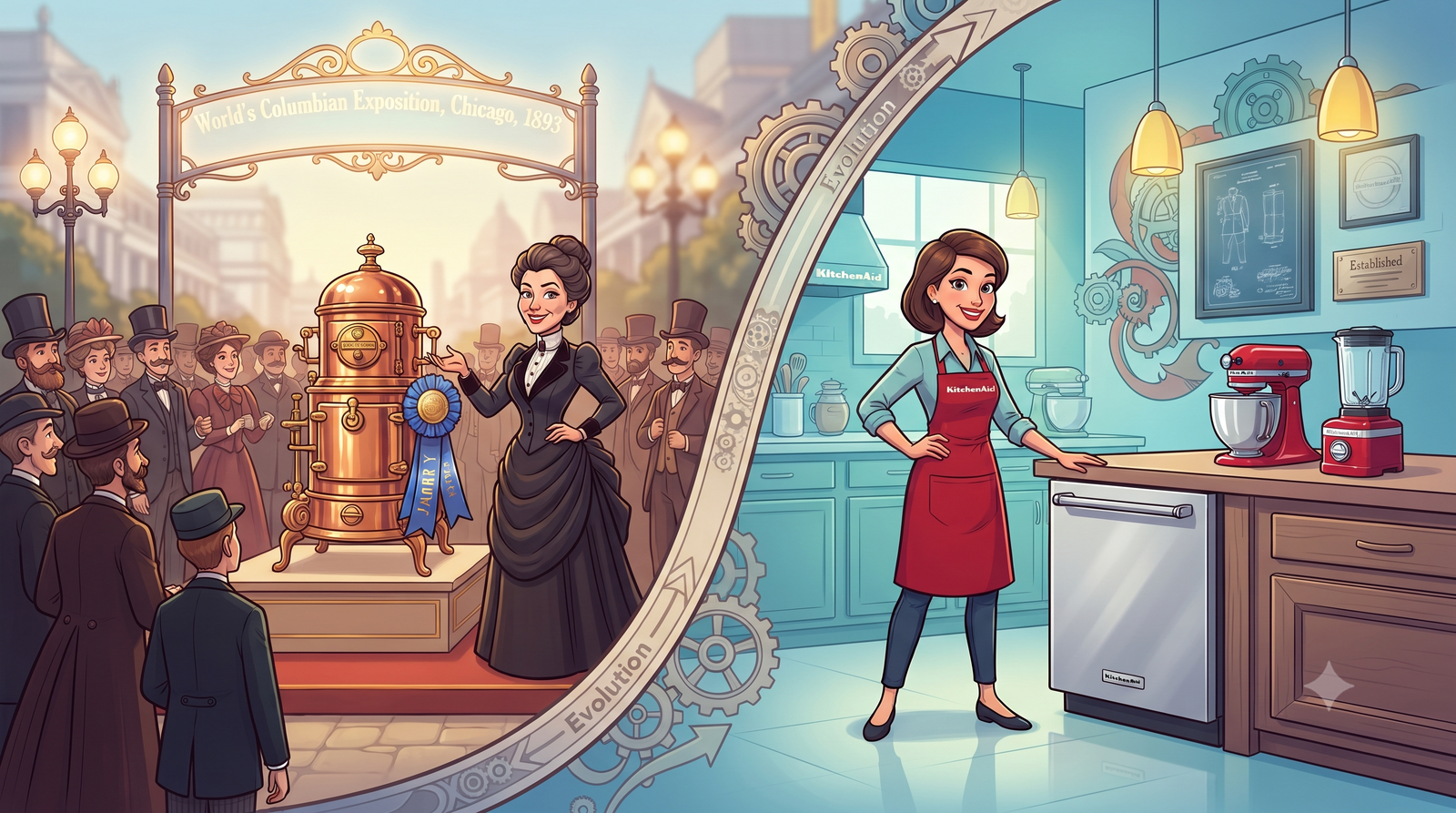
From Kitchen Experiment to Recognition
Cochrane’s machine was more than a clever household invention. It was becoming a serious piece of mechanical engineering.
In 1893, the World’s Columbian Exposition was held in Chicago, bringing inventions, technology and industrial achievements together for millions of visitors.
Cochrane’s dishwasher attracted attention and received recognition at the exposition.
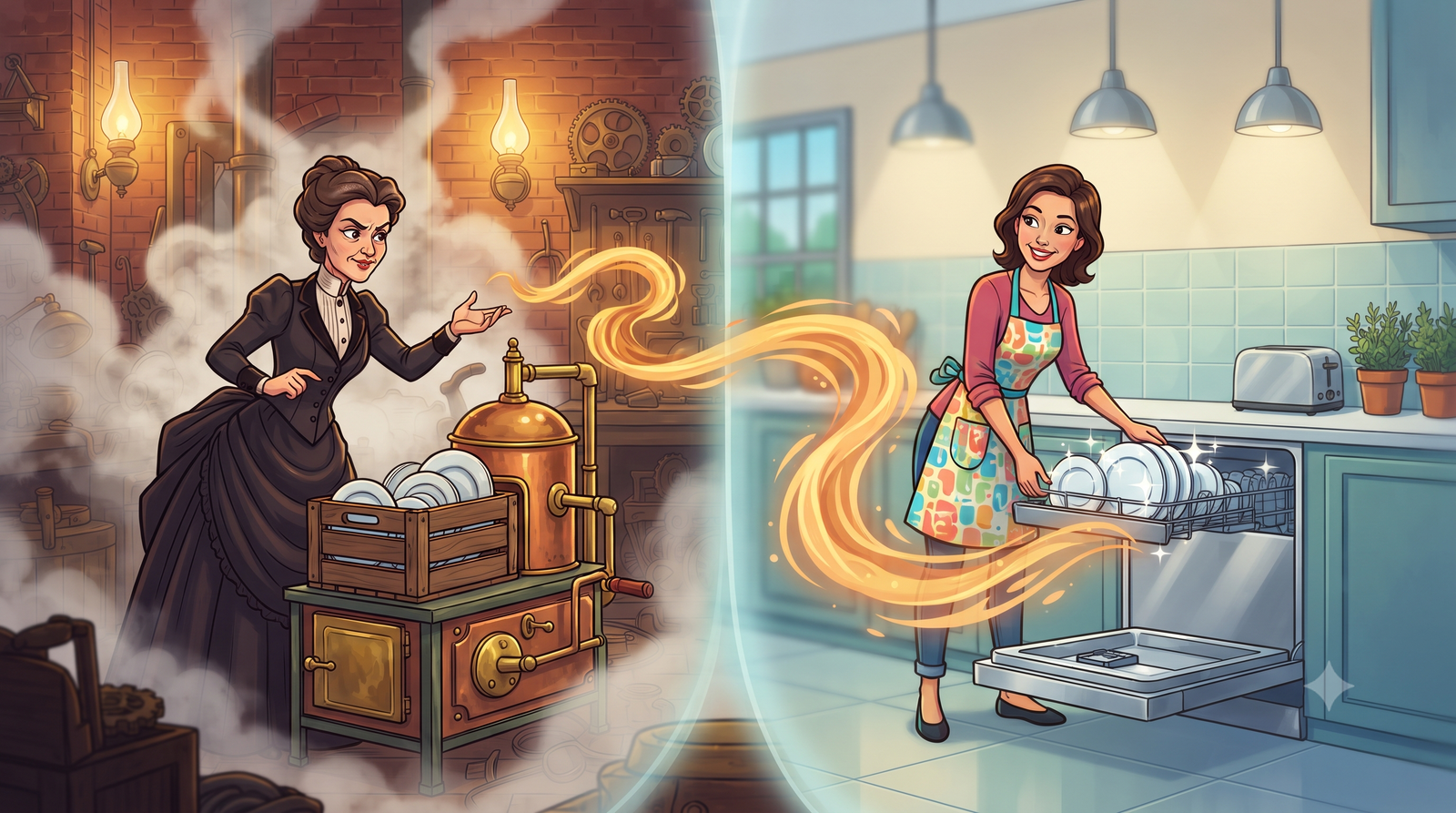
One Idea. Many Kitchens.
A Household Frustration
Josephine Cochrane becomes determined to protect her valuable china from repeated damage.
The Machine Takes Shape
Cochrane works with mechanic George Butters to develop the practical mechanical system.
World’s Columbian Exposition
The invention receives recognition at the major Chicago exposition.
A Kitchen Essential
Dishwashers have become an everyday appliance in kitchens around the world.
The Day the Dishes Fought Back
Josephine Cochrane did not simply invent a faster way to wash dishes.
She changed the relationship between people, household work and machines.
What began with broken china eventually became one of the most useful machines in the modern kitchen: a machine that lets water do the work.
The Microwave
A melted chocolate bar, a bag of popcorn and an exploding egg helped reveal a completely unexpected use for radar technology.
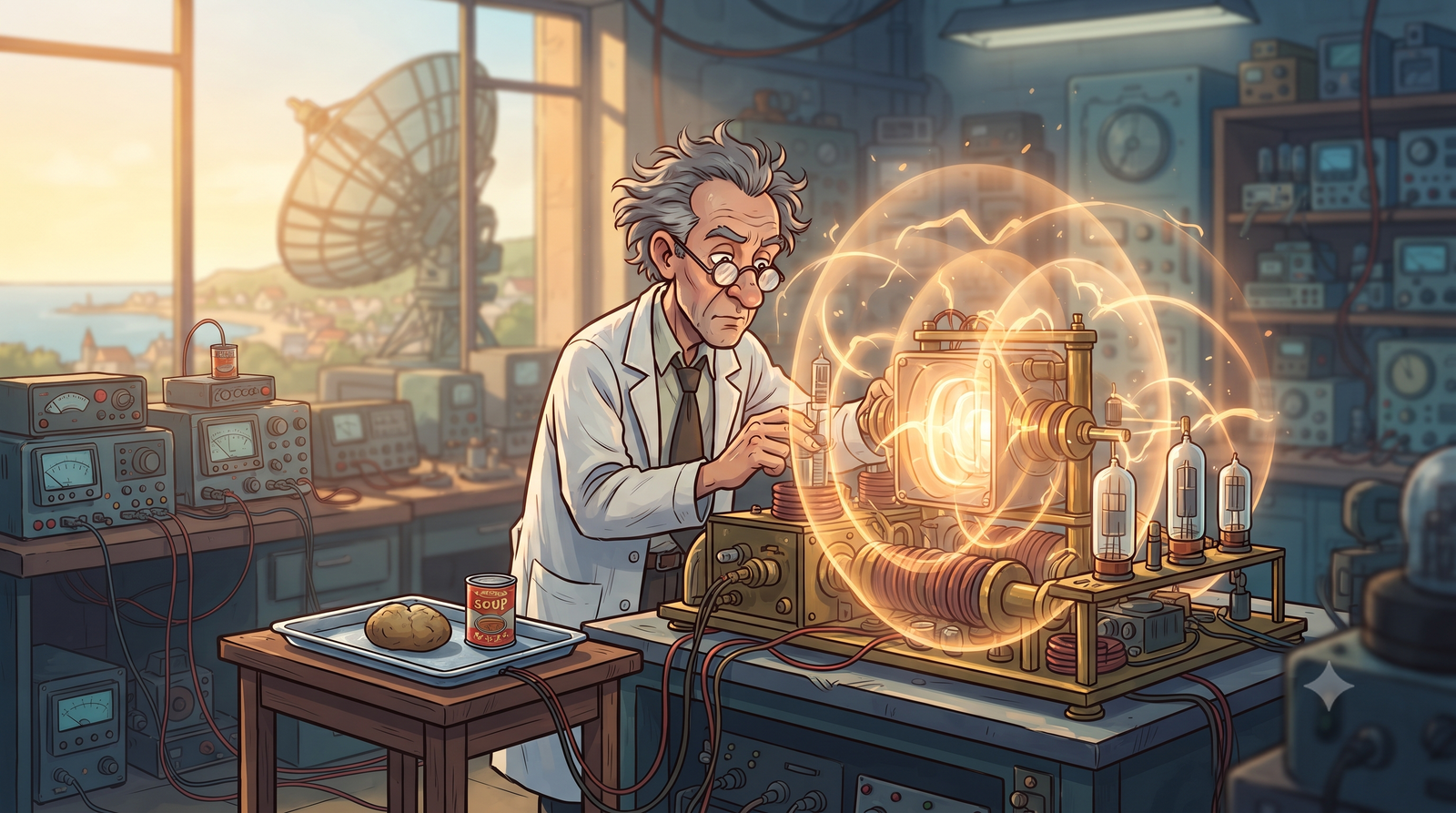
BEFORE THE MICROWAVE
The Kitchen Wasn’t Where This Story Began
The microwave oven did not begin as a kitchen invention. Its story started with radar, electronics and military technology.
During the Second World War, scientists and engineers were working intensely on radar systems that could detect aircraft and other objects from a distance.
One of the most important components in these systems was the magnetron — a device capable of producing powerful microwave radiation.
At the time, nobody was trying to use these waves to heat lunch. The technology had been developed for a very different purpose.
Sometimes an invention becomes important because someone discovers what it can do beyond its original purpose.
But what happens when powerful microwave energy gets close to something you can eat?
Percy Spencer Wasn’t Supposed to Be Here
Percy Spencer left school at the age of twelve. Yet decades later, he would become one of the key figures in the development of microwave cooking.
Spencer was largely self-taught and developed an extraordinary understanding of electronics and engineering.
He eventually joined the Raytheon company, where he worked with magnetrons and radar technology during the Second World War.
His practical experience with the technology placed him in exactly the right environment for one of the most famous accidental discoveries in kitchen history.
Spencer left formal education at just twelve years old.
He developed his technical knowledge through practical learning and experience.
His work with radar equipment brought him directly into contact with magnetron technology.
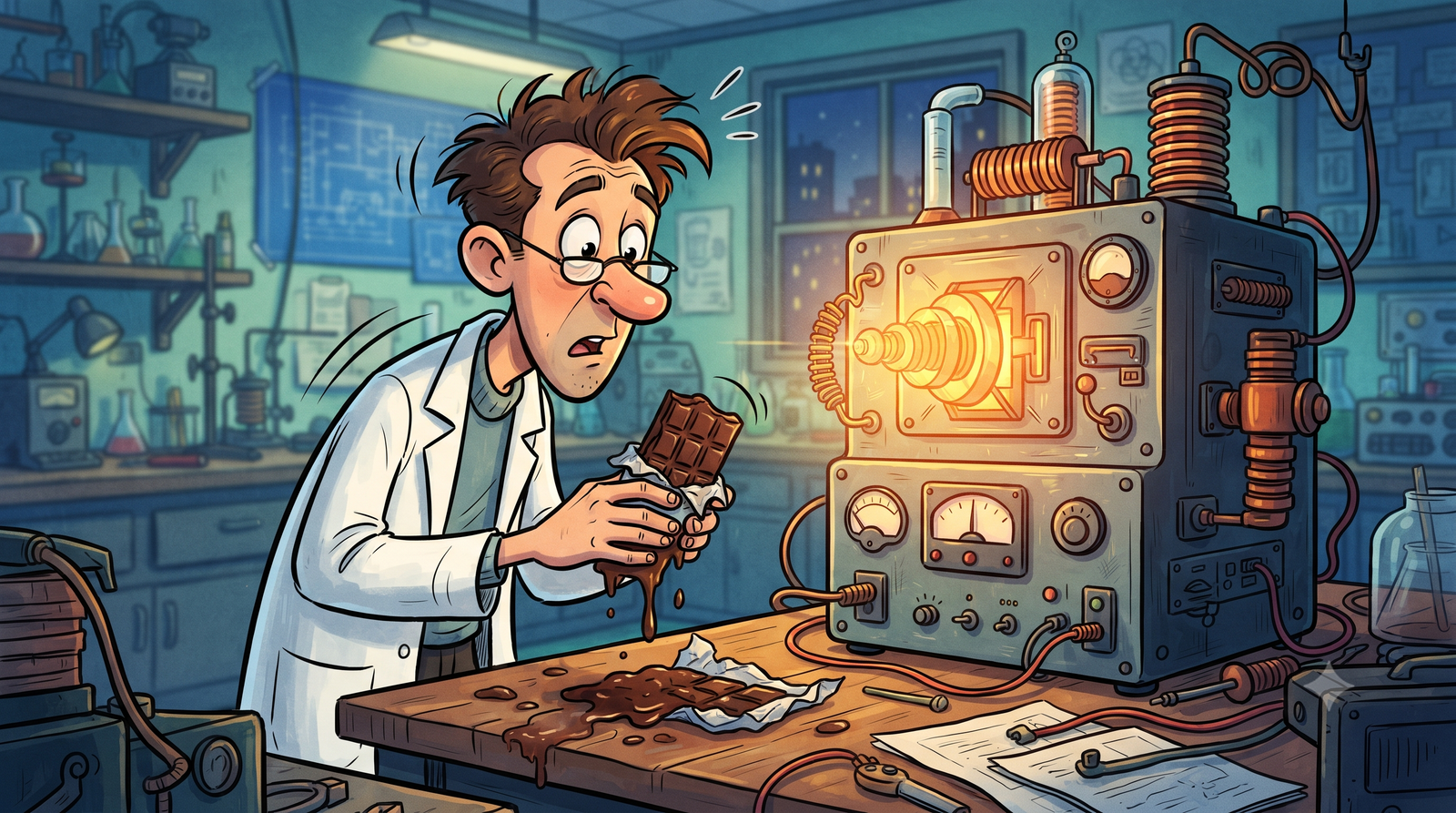
The Chocolate Bar Melted
Then something strange happened while Spencer was working near an active magnetron.
Spencer noticed that a chocolate bar he had been carrying in his pocket had melted.
The temperature around the equipment had not changed enough to explain what he was seeing. Spencer suspected that the microwave radiation from the magnetron might be responsible.
Instead of dismissing the incident, he decided to investigate.
A melted chocolate bar suggested that microwave energy could transfer heat into food.
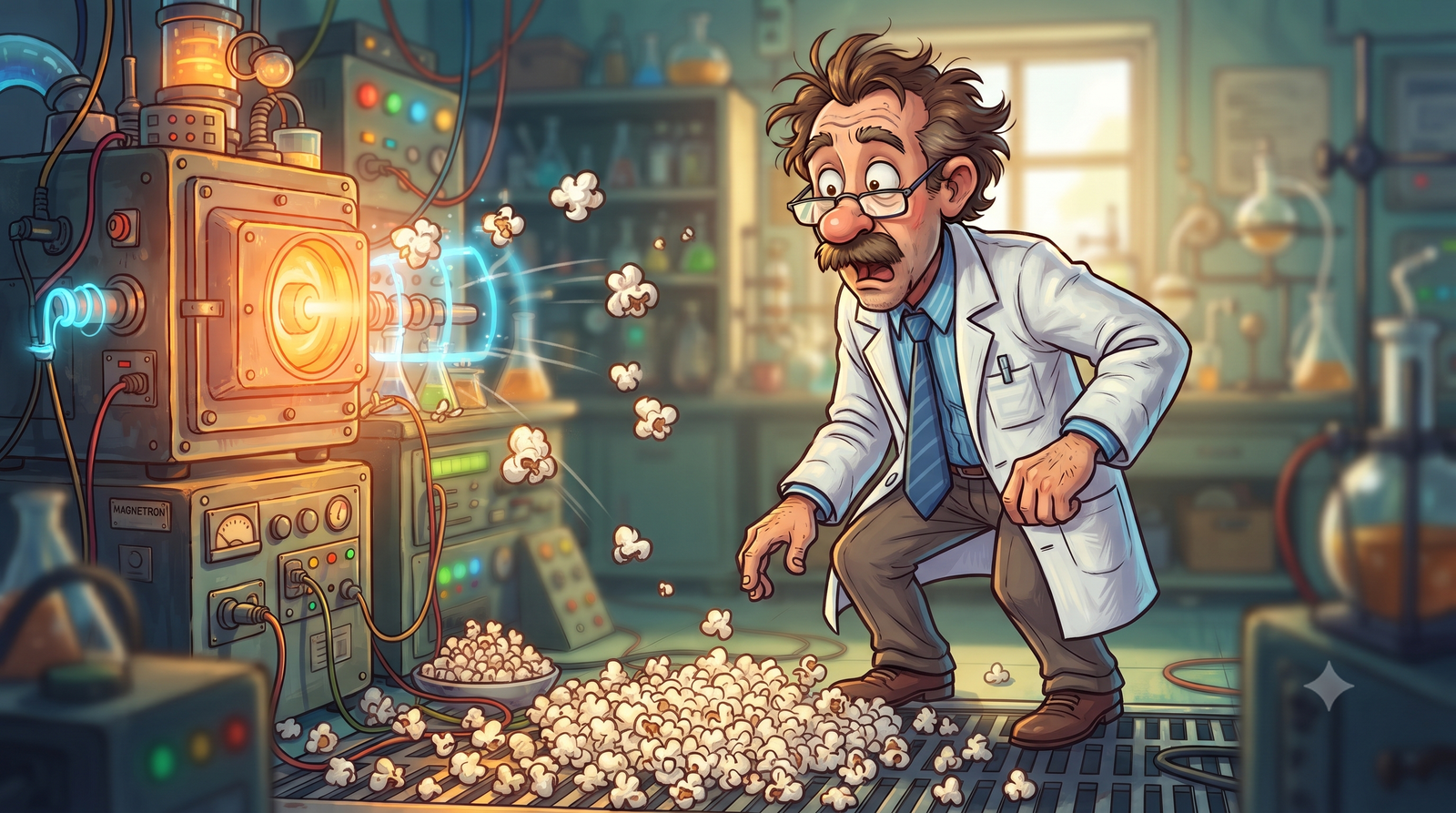
If Chocolate Melts… What Else?
Popcorn
Spencer tested the effect on popcorn and watched the kernels respond to the microwave energy.
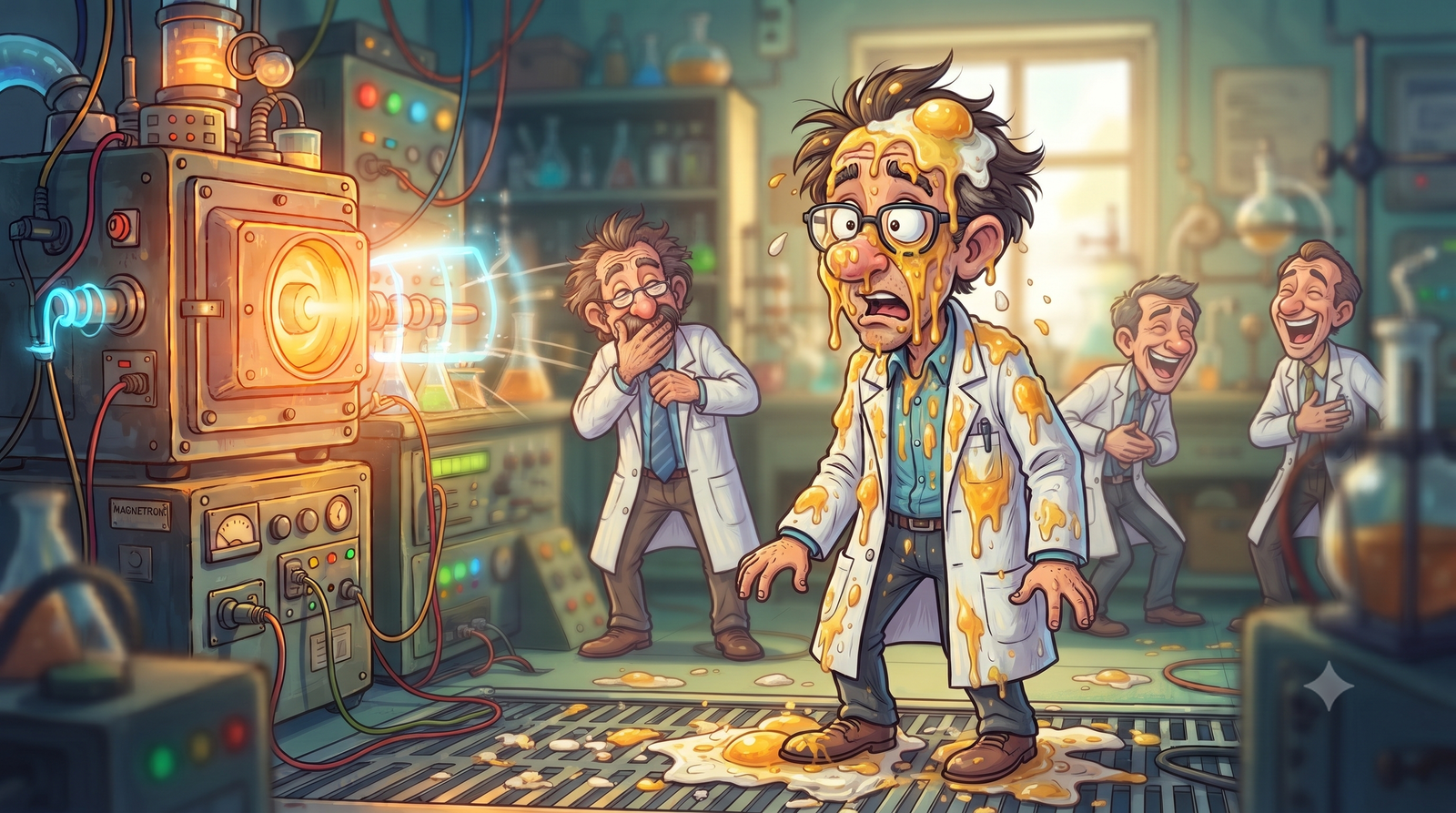
An Egg
Another experiment involved an egg placed inside a container exposed to microwave energy.
The Explosion
The egg eventually exploded, demonstrating just how dramatically microwave energy could heat food.
From Radar to Food
Spencer’s experiments demonstrated that microwave energy could be used to heat food quickly.
The principle was fundamentally different from conventional cooking methods that heated food through a hot surface or surrounding air.
Instead, microwave energy could interact with molecules within the food and generate heat.
What had originally been developed as a crucial radar technology now had a completely different possibility.
Military detection technology
Generates microwave energy
Microwave energy produces heat
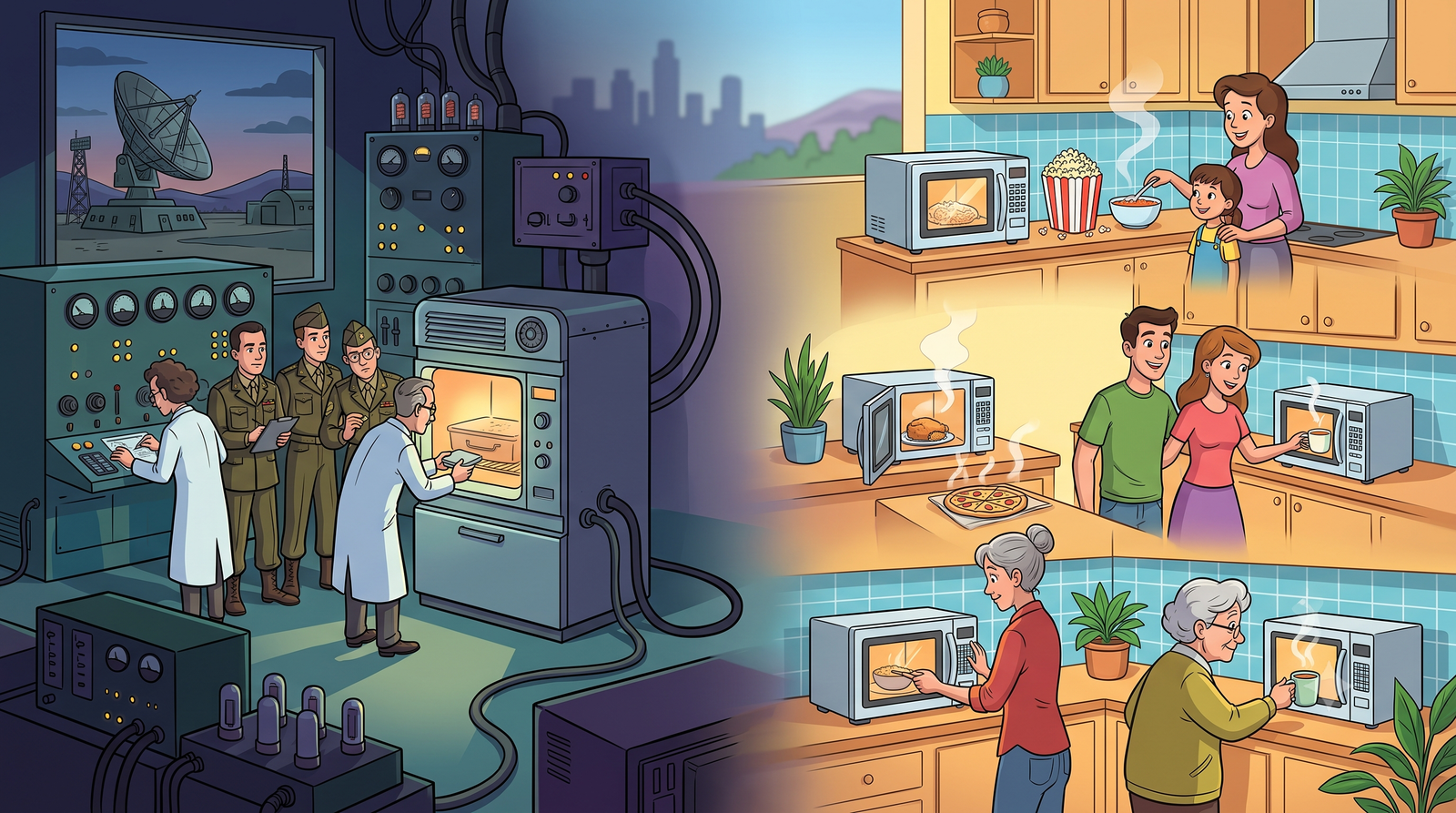
An Accidental Discovery Becomes Everyday Technology
Radar Technology
Magnetrons are developed as powerful components of radar systems.
Spencer’s Discovery
A melted chocolate bar leads Percy Spencer to investigate the heating effect of microwaves.
Popcorn and Eggs
Experiments with food demonstrate the surprising power of microwave energy.
The Modern Microwave
Microwave ovens become one of the most familiar appliances in kitchens worldwide.
The Day Radar Entered the Kitchen
Percy Spencer wasn’t trying to reinvent cooking.
He was working with radar technology when a melted chocolate bar made him stop and ask a different question.
Sometimes the most useful inventions begin when someone notices something that shouldn’t have happened.
The Battle Against Time
Before refrigeration, keeping food fresh meant fighting nature itself — and one man believed frozen lakes could become the answer.

The Enemy Was Time
Long before refrigerators hummed inside kitchens, people had a much simpler problem: food did not stay fresh for very long.
Meat, milk, fish, fruit and vegetables could spoil quickly, especially during warm weather.
People developed many ways to slow the process. They dried food, salted it, smoked it, fermented it and stored it in cool underground spaces.
But one of the most powerful natural solutions was something that appeared every winter — ice.
Without refrigeration, preserving food was essentially a race against time.
Turning a Frozen Lake Into a Warehouse
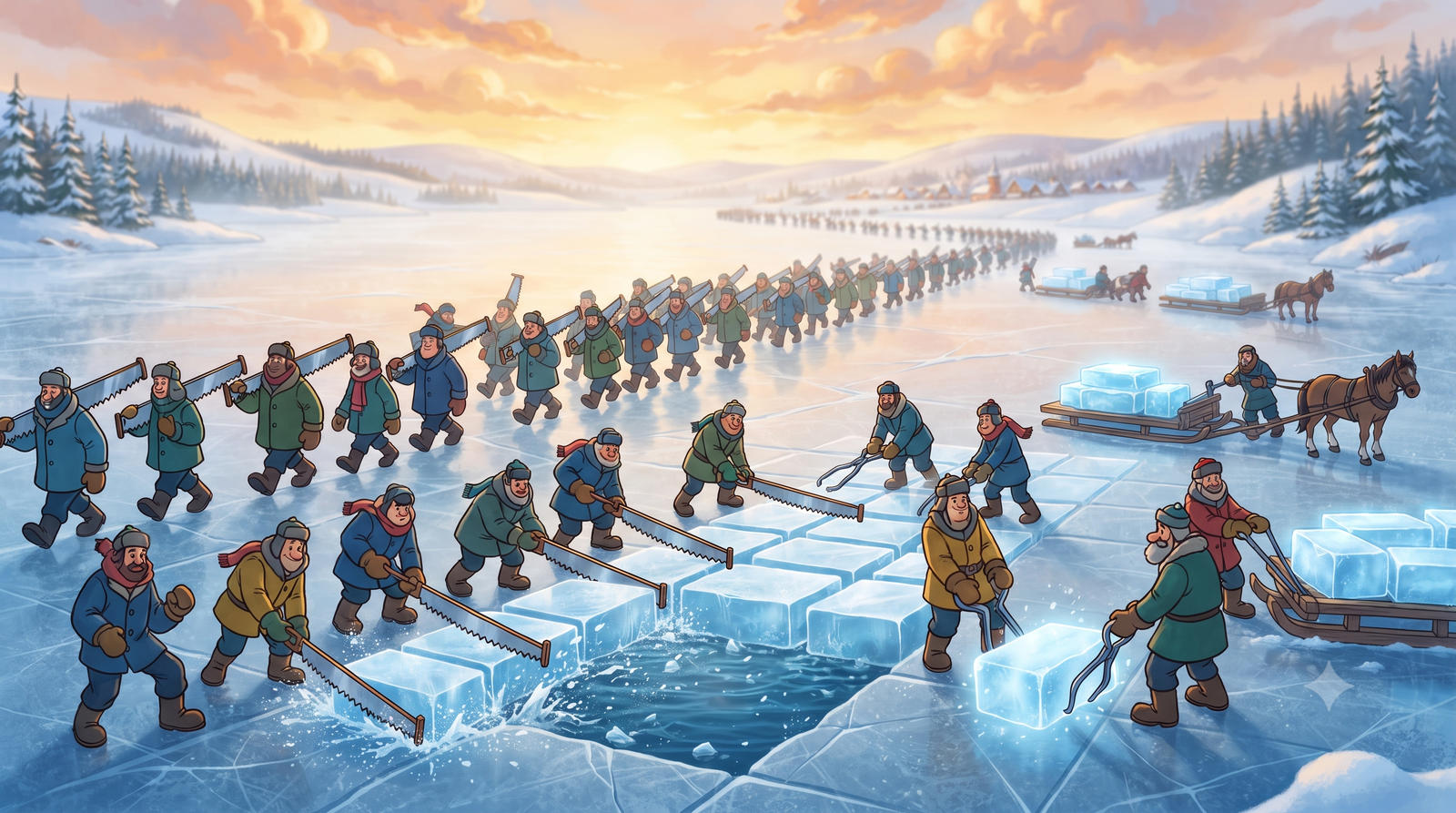
Ice was not simply collected. It had to be harvested on a massive scale.
Freeze
Lakes and ponds froze during the winter, creating enormous natural sheets of ice.
Cut
Workers marked the frozen surface and cut the ice into large blocks.
Store
The blocks were packed into insulated ice houses to slow melting.
Ship
The frozen cargo could then be transported to places where natural ice was scarce.
Frederic Tudor Had a Very Cold Idea
Frederic Tudor looked at the frozen lakes of New England and saw something most people never considered: a product that could be sold around the world.
His idea was simple in theory.
Cut natural ice during the winter, store it, transport it by ship and sell it in warmer climates where people had never had easy access to ice.
In practice, almost everything that could go wrong did.
What looked like frozen water was becoming a completely new kind of commodity.
Entrepreneur
The Ice Didn’t Cooperate
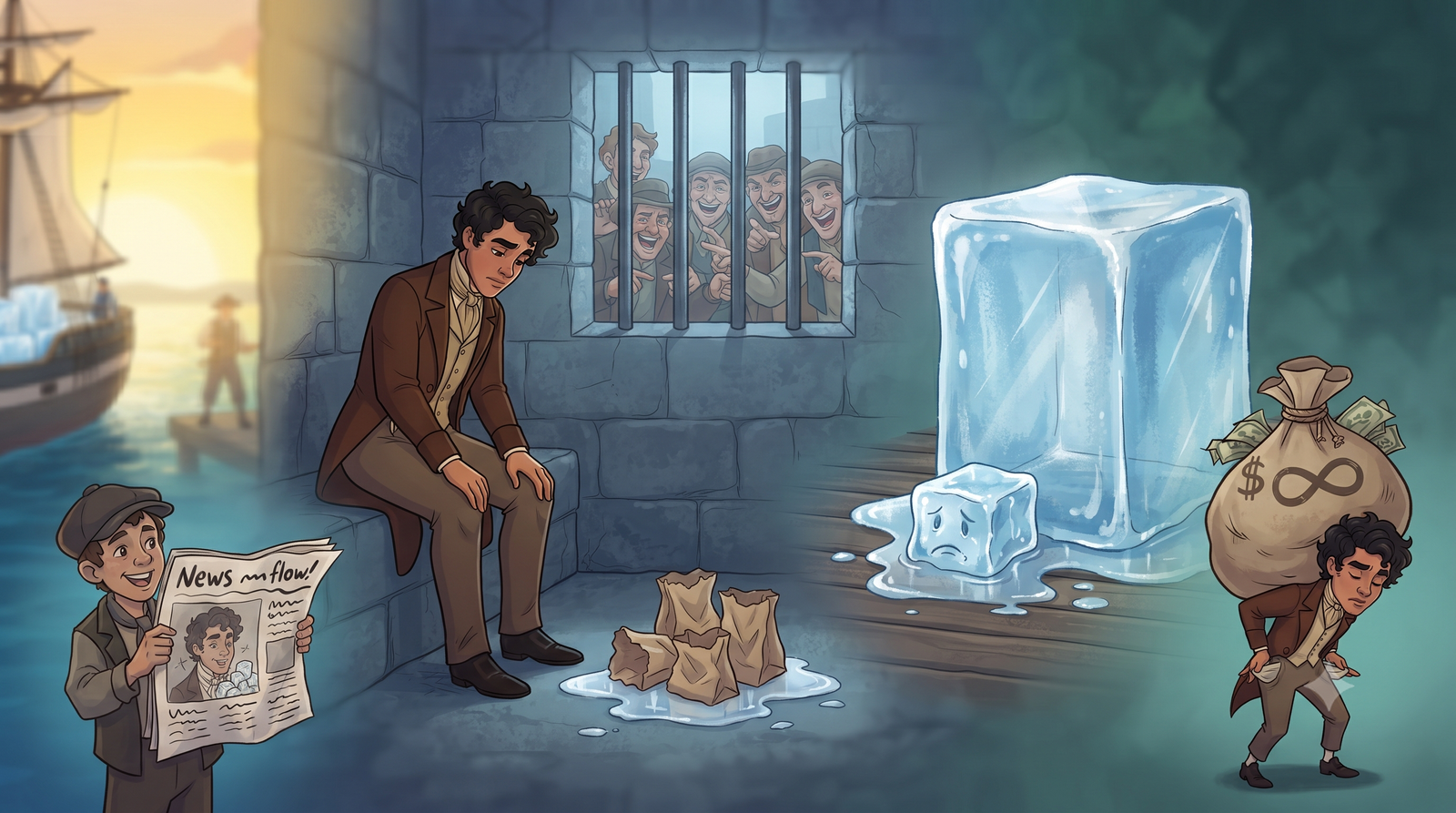
Tudor’s first experiments with shipping ice were far from successful.
He attempted to send natural ice to warmer destinations, believing customers would pay for something they could not produce locally.
But transporting frozen water over long distances was an enormous logistical challenge.
Ice melted. Storage systems failed. Customers were unfamiliar with the product. And the business began accumulating losses.

Failure Wasn’t The End
Better Storage
Tudor and his partners improved the way ice was packed and stored so that less of it disappeared before reaching customers.
Sawdust
Insulating materials such as sawdust helped protect blocks of ice from the surrounding heat.
New Markets
Tudor continued searching for places where people would value a reliable supply of ice.
Selling Ice in Hot Countries
Tudor’s greatest achievement was not simply cutting ice. It was convincing people thousands of miles away that they actually wanted to buy it.
His frozen cargo travelled by ship to warmer parts of the world, including tropical markets.
In places where natural ice was rare or completely unavailable, blocks of frozen water became valuable.

From Failed Shipments to the “Ice King”
Tudor’s journey was anything but straightforward. He faced failed experiments, financial problems and skepticism.
Natural ice could become a product.
Early shipments lost money.
Storage and transportation improved.
Ice became an international business.

The Road From Ice to Industry
Nature Was the Refrigerator
People depended on winter ice, cool cellars and traditional preservation methods to slow food spoilage.
The Ice Trade Begins
Frederic Tudor attempted to turn frozen lake ice into a commercial product.
Debt and Melting Ice
Early shipments failed and Tudor struggled financially.
The Ice King
Improved storage, insulation and distribution helped Tudor build a successful international ice trade.
The Battle Against Time Was Only Beginning
Humanity had spent centuries trying to slow the clock of food spoilage.
Frederic Tudor discovered that the answer could be harvested from a frozen lake and carried across the world.
Before refrigerators gave us cold on demand, people learned how to move winter itself.
The Invention of Refrigeration
For thousands of years, humans depended on natural cold. Then inventors learned how to create it on demand.
COOLING SYSTEM
18TH—19TH C.

What If We Could Make Cold?
Natural ice had always been useful, but it had one enormous limitation: you had to wait for nature to make it.
Ice could be harvested from frozen lakes and stored in insulated buildings, but it depended on climate, seasons and geography.
If people could somehow produce cold whenever they wanted, food preservation, medicine and industry could change completely.
Could cooling become a machine — rather than something supplied by winter?
The Laboratory Creates Cold
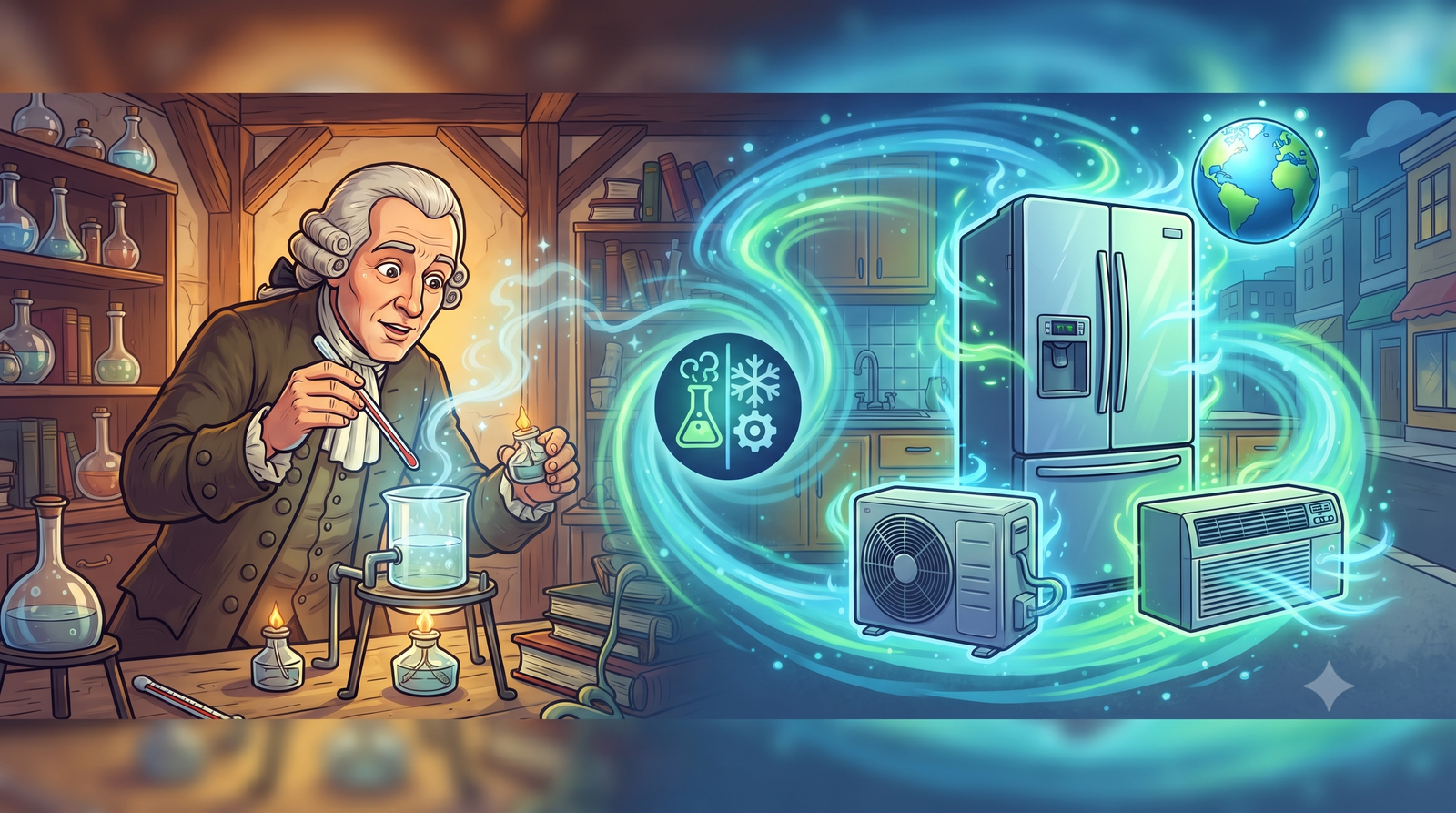
In the 18th century, Scottish professor William Cullen demonstrated something remarkable: artificial cooling could be produced in a laboratory.
Cullen used a vacuum to encourage a liquid to evaporate rapidly.
As the liquid evaporated, it absorbed heat from its surroundings and produced a cooling effect.
It was an important scientific demonstration, but it was not yet a practical refrigerator.
The experiment proved that cooling could be produced artificially.
Jacob Perkins Builds on the Idea
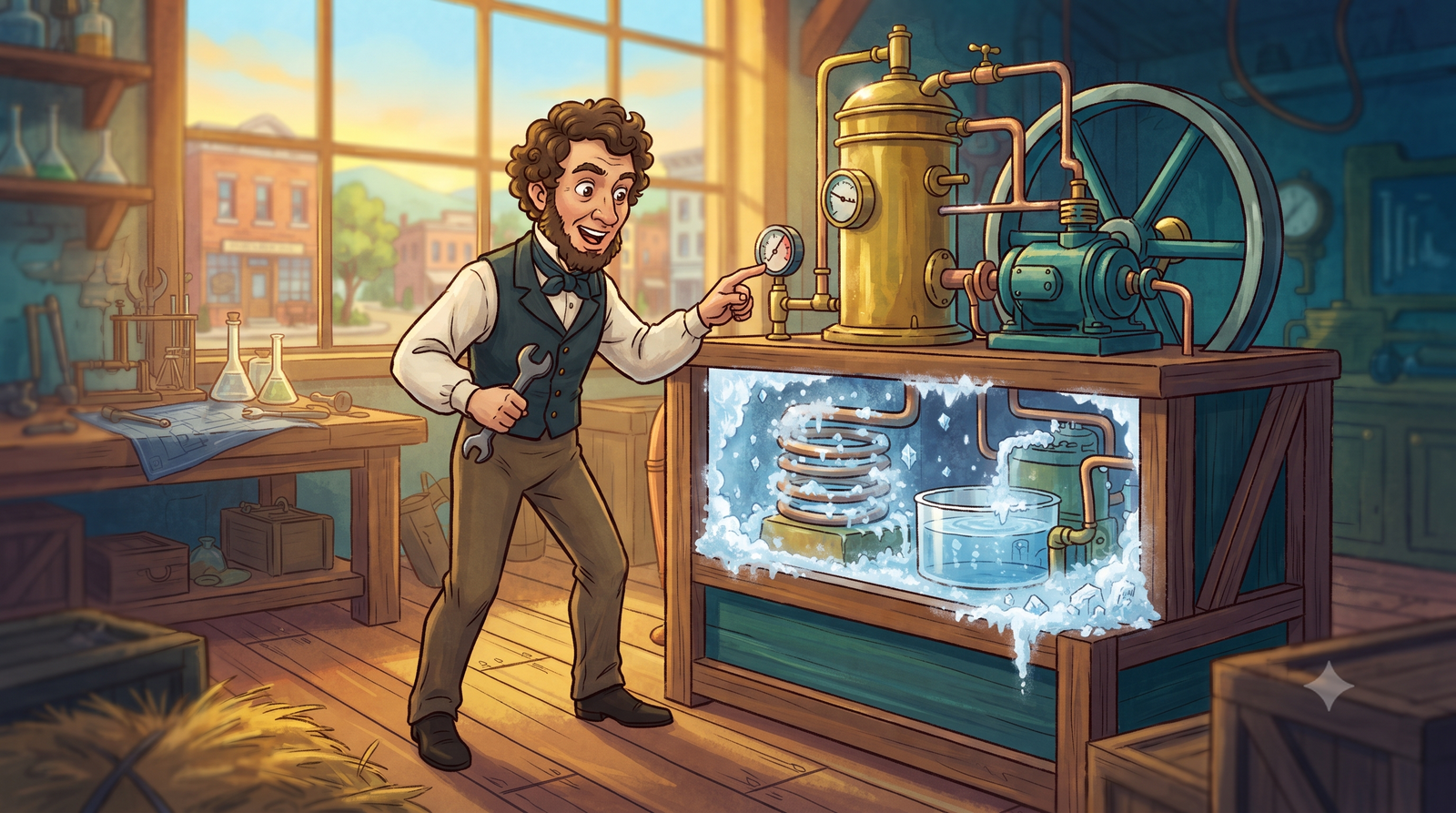
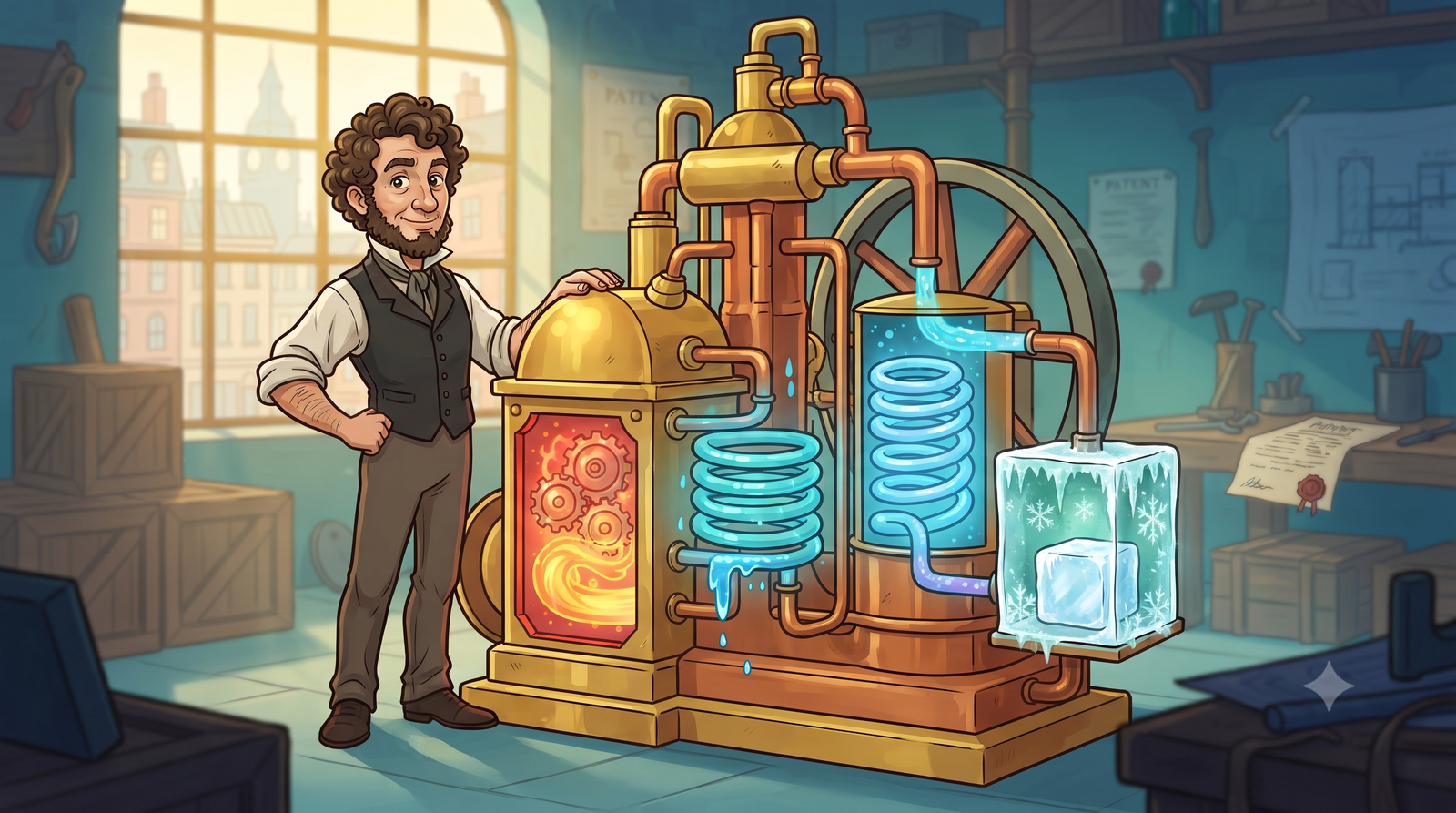
Cullen had demonstrated the science. Jacob Perkins helped move the concept toward a practical mechanical refrigeration system.
Perkins developed a vapor-compression refrigeration machine that used a closed cycle involving a refrigerant.
Instead of simply creating a cooling effect in a laboratory, the system was designed to repeatedly circulate the working fluid through the machine.
John Gorrie Wanted to Make Ice
For physician John Gorrie, artificial cooling was not simply an engineering curiosity. It had a medical purpose.
Working in the hot climate of Florida, Gorrie was concerned about patients suffering from illnesses associated with fever and heat.
He experimented with machines designed to cool air and eventually pursued the idea of producing artificial ice.
His work represented a major shift in thinking: instead of harvesting ice from nature, people could potentially manufacture it.
Create cold wherever it was needed — even in places where natural ice was unavailable.
The Machines Worked. The Refrigerants Could Be Dangerous.
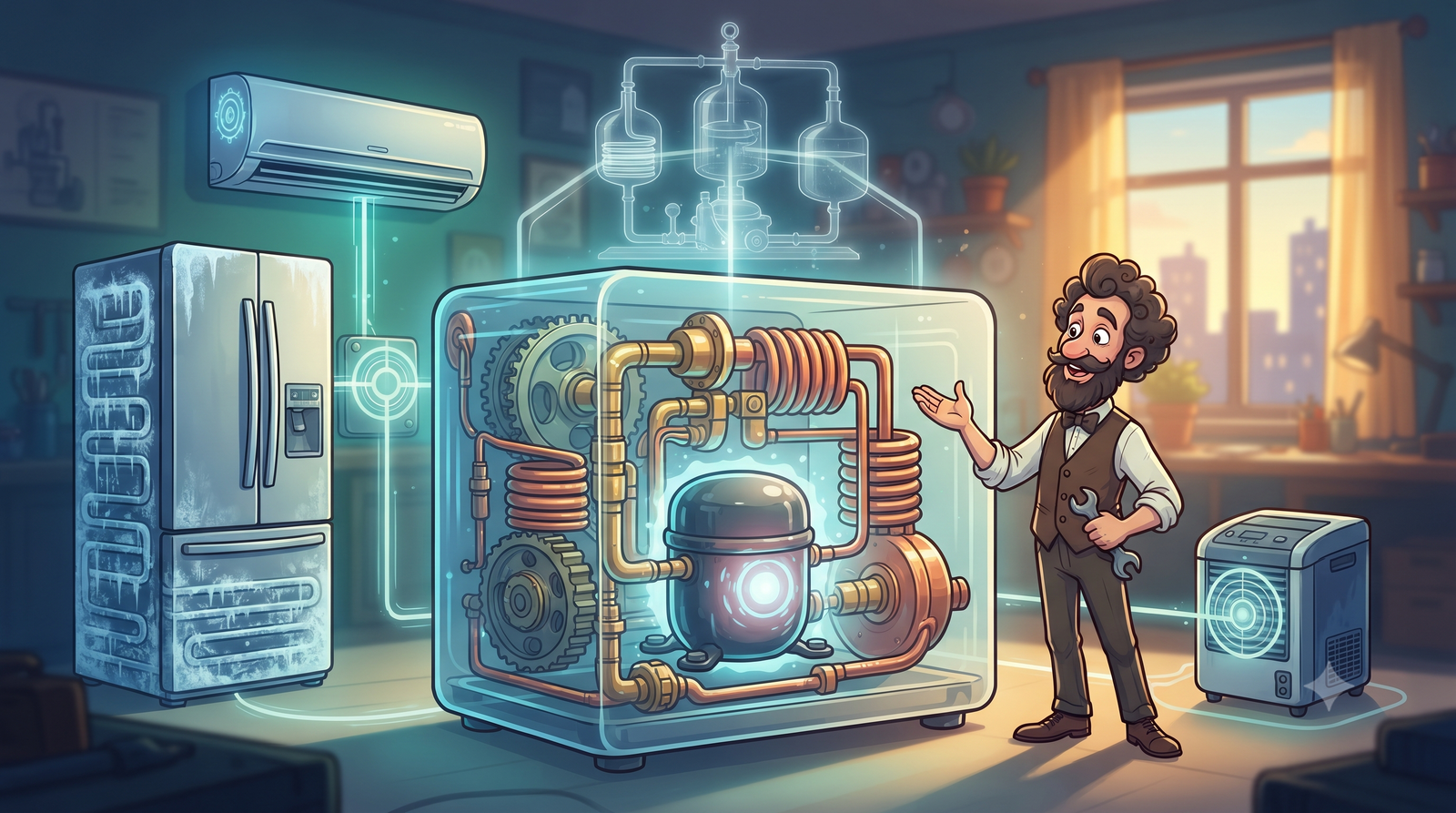
Early refrigeration technology faced another major challenge: the chemicals used inside some machines could be toxic, flammable or otherwise hazardous.
Engineers experimented with different refrigerants as they searched for substances that could efficiently absorb and release heat.
Some early systems used substances such as ammonia, sulfur dioxide and methyl chloride.
These chemicals could make refrigeration possible, but leaks created serious safety risks.
Refrigeration Wasn’t One Invention
It was a chain of discoveries, experiments and engineering improvements.
Cullen
Demonstrated that artificial cooling could be produced through evaporation.
Perkins
Developed a practical vapor-compression refrigeration concept.
Gorrie
Pursued artificial ice and cooling for medical purposes.
Refrigeration
Artificial cold gradually became practical technology.
From Laboratory to Everyday Life
William Cullen
Demonstrates artificial cooling through evaporation.
Jacob Perkins
Develops an early practical vapor-compression refrigeration machine.
John Gorrie
Experiments with artificial cooling and ice production for medical use.
Refrigeration Evolves
Improved machines and safer technologies eventually make artificial cooling practical on a much larger scale.
We Stopped Waiting for Winter
For centuries, cold had been something nature provided only at the right time and in the right place.
Cullen showed that cooling could be created artificially. Perkins moved the principle toward mechanical refrigeration. Gorrie imagined artificial ice as a tool for medicine.
Refrigeration transformed cold from a seasonal resource into a technology that could be created whenever we needed it.
How Refrigeration Changed Civilization
Refrigeration did more than keep food cold. It changed where people lived, what they ate, how hospitals worked and how medicine travelled.
MORE THAN A KITCHEN APPLIANCE
Cold Became Infrastructure
Once artificial refrigeration became practical, its effects spread far beyond the refrigerator in the kitchen.
Food could travel farther without spoiling. Hospitals could store temperature-sensitive materials. Supermarkets could offer foods throughout the year.
Entire industries began depending on controlled temperatures — from agriculture and shipping to medicine and pharmaceuticals.
Einstein Wanted A Safer Refrigerator
Refrigeration solved one problem but created another: some early refrigerators relied on refrigerants that could be dangerous.
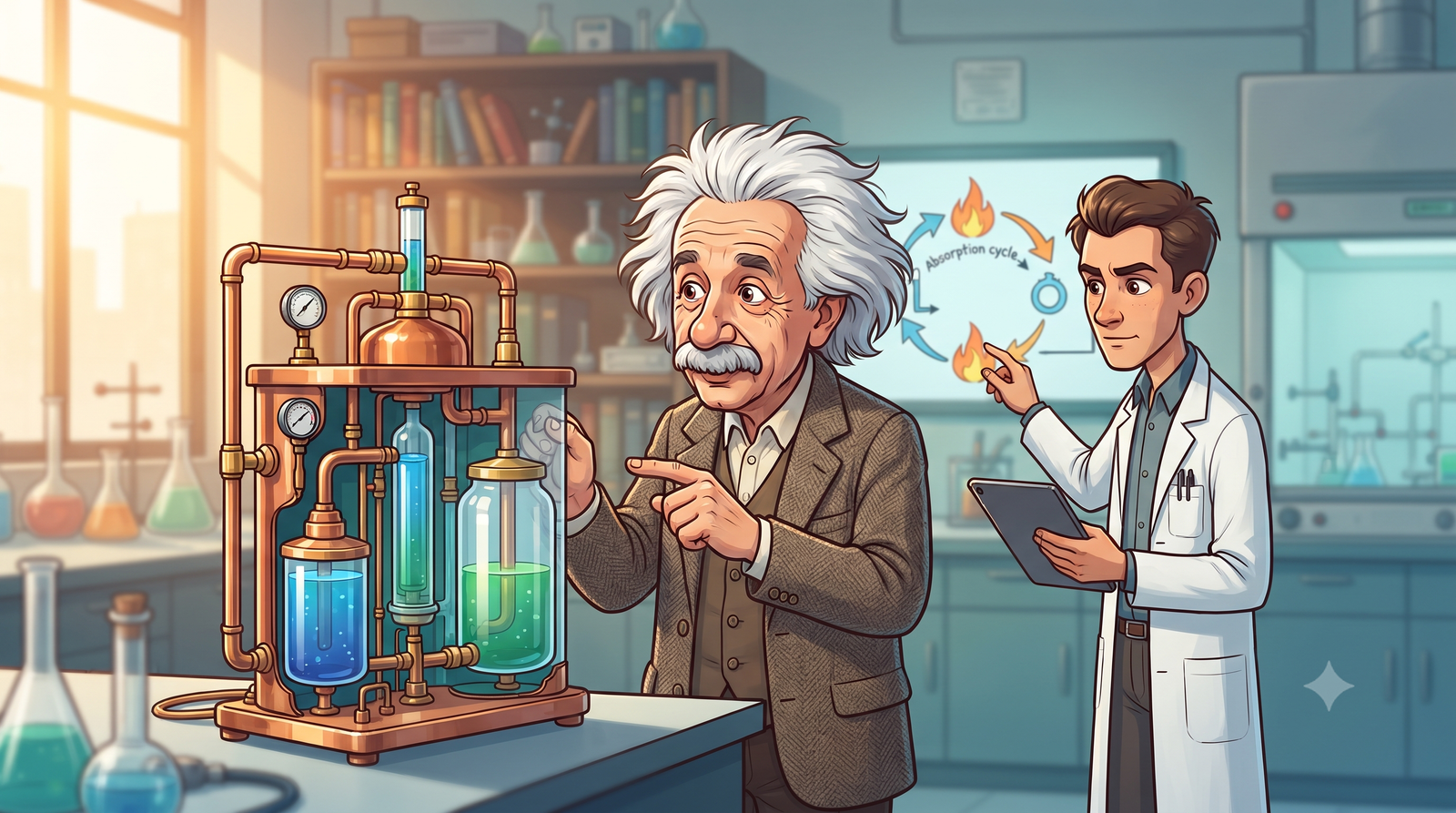
Albert Einstein and physicist Leo Szilard became interested in developing a refrigerator that could operate without the toxic and hazardous refrigerants used in some earlier systems.
Their design was based on a different approach to refrigeration, using pressure and electromagnetic effects rather than relying on a conventional mechanically driven compressor.
Although their refrigerator was never widely adopted commercially, the project demonstrated how seriously engineers and scientists were thinking about refrigeration safety.
Physics and engineering came together to tackle a practical household problem.
Refrigeration Changed Everyday Life
Once reliable cooling became widely available, its impact reached almost every part of modern society.
Homes
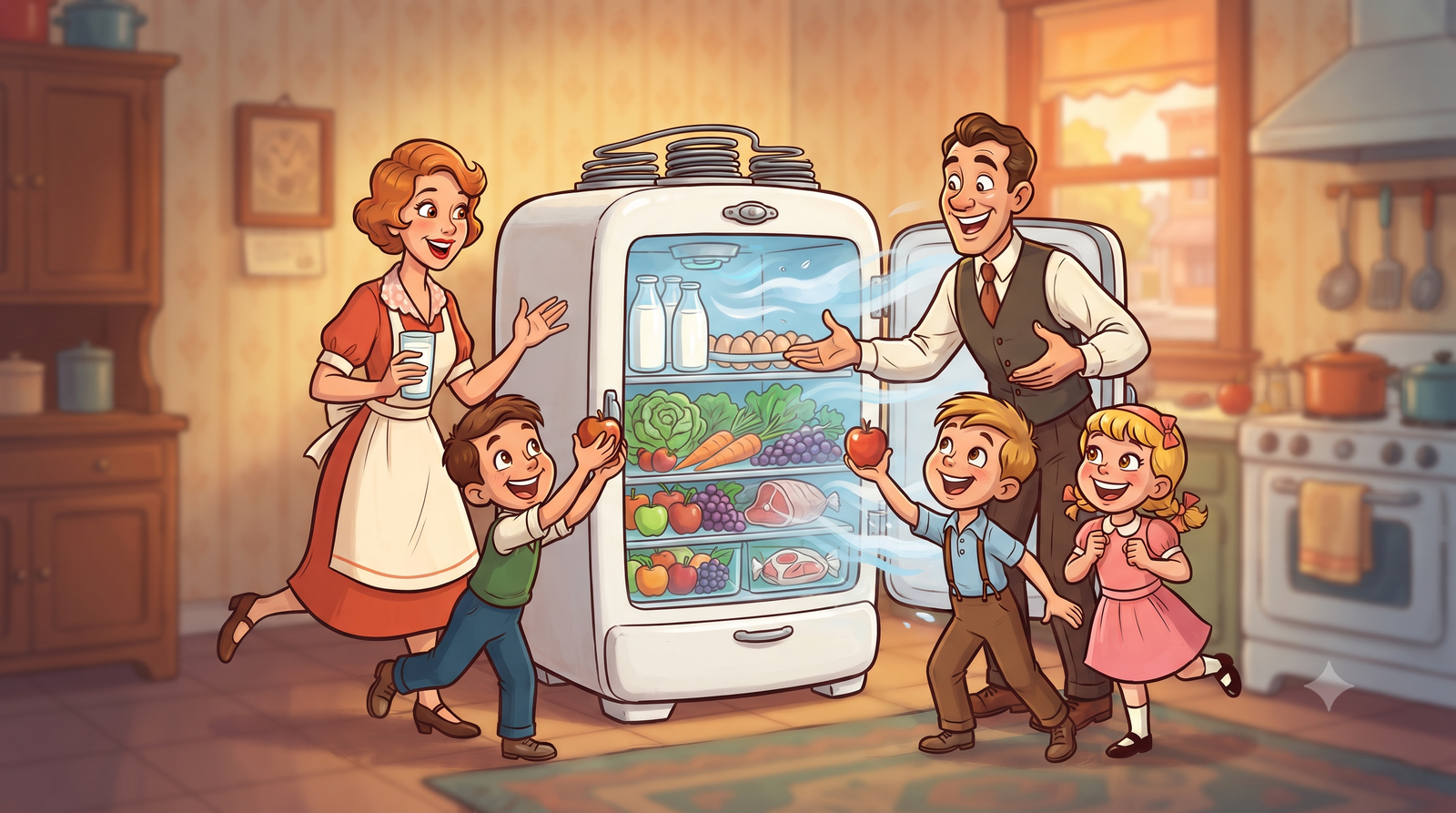
Refrigerators gave households a dependable way to preserve fresh food for longer periods.
Supermarkets
Stores could stock perishable products and offer consumers a much wider selection.
Hospitals
Controlled temperatures became increasingly important for medical supplies and biological materials.
Medicine
Temperature-sensitive medicines and vaccines could be stored and transported more reliably.
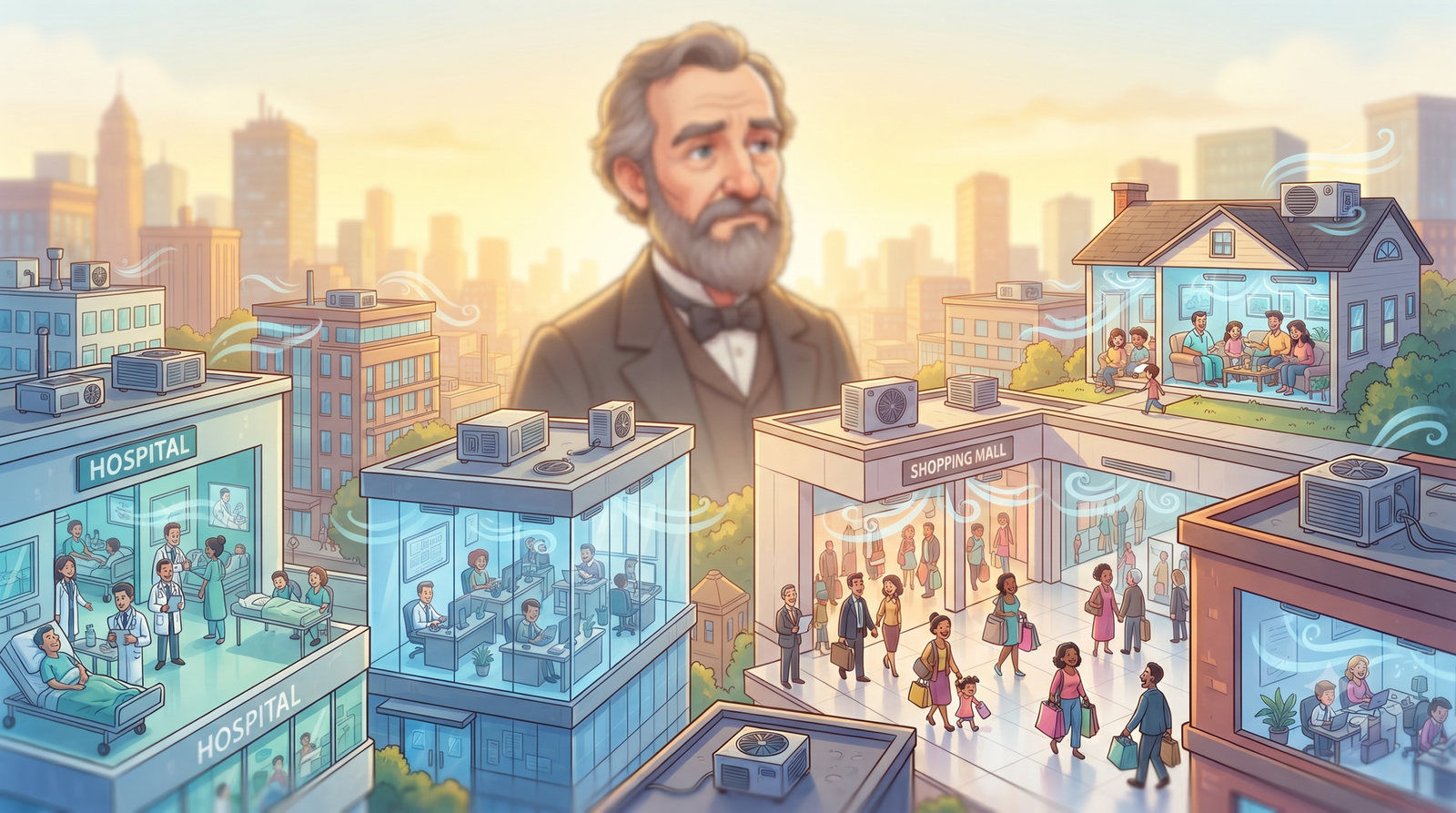
Clarence Birdseye Changes Frozen Food
Refrigeration kept food cold. Clarence Birdseye helped change what freezing could do to the food itself.
While working in Labrador, Birdseye observed how fish exposed to the intense cold could freeze extremely quickly.
When thawed, the rapidly frozen fish could retain much more of its original texture than food that had been frozen slowly.
Birdseye recognized the commercial potential of rapid freezing and developed techniques that helped make frozen foods practical for consumers.

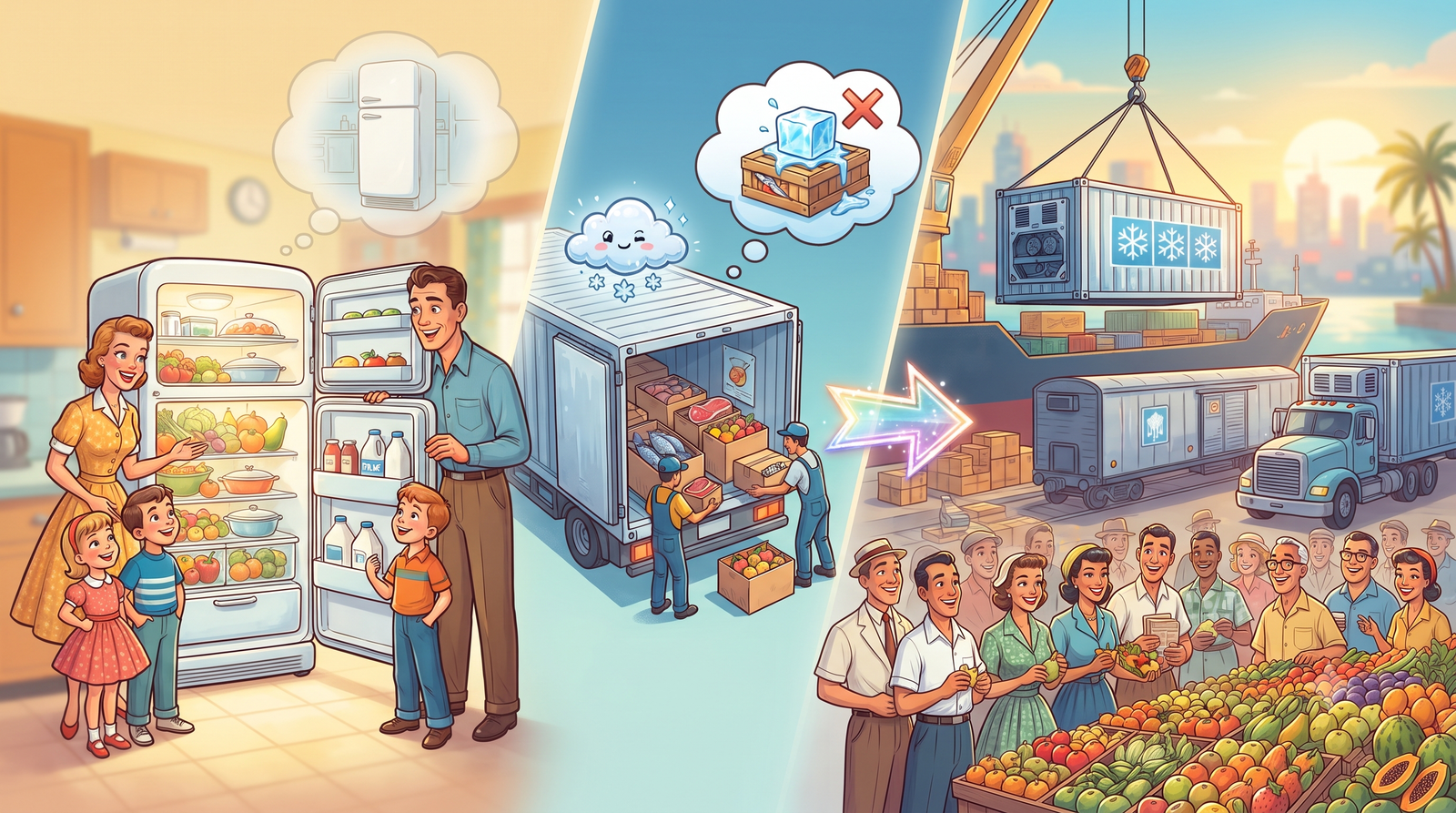
Cold Doesn’t Stop at the Refrigerator
Today, temperature-controlled logistics connect farms, factories, warehouses, stores, hospitals and homes across enormous distances.
Refrigeration Protects Medicine Too
The cold chain is not simply about keeping food fresh. It is also critical to modern healthcare.
Many vaccines, biological products and medicines require carefully controlled temperatures during storage and transportation.
A break in the required temperature range can reduce the effectiveness or safety of certain temperature-sensitive products.

Refrigeration Collapsed Distance
A food producer in one country can now supply consumers thousands of kilometres away.

From Ice to a Global Cold Chain
Einstein & Szilard
Explore alternative refrigeration technology designed with safety in mind.
Birdseye
Rapid freezing techniques help transform frozen food into a commercial industry.
Refrigerated Distribution
Refrigerated trucks, warehouses and stores expand the reach of perishable food.
The Cold Chain
Food, vaccines and medicines travel through temperature-controlled networks around the world.
We Didn’t Just Invent Refrigeration
We built an entirely new relationship with distance, seasons and food.
Refrigeration allowed food to travel farther, medicine to remain protected and people to depend less on the climate around them.
The refrigerator may sit quietly in a kitchen, but behind it is a global network of machines, trucks, warehouses, hospitals and people keeping the world cold.
The Machines That Changed Civilization
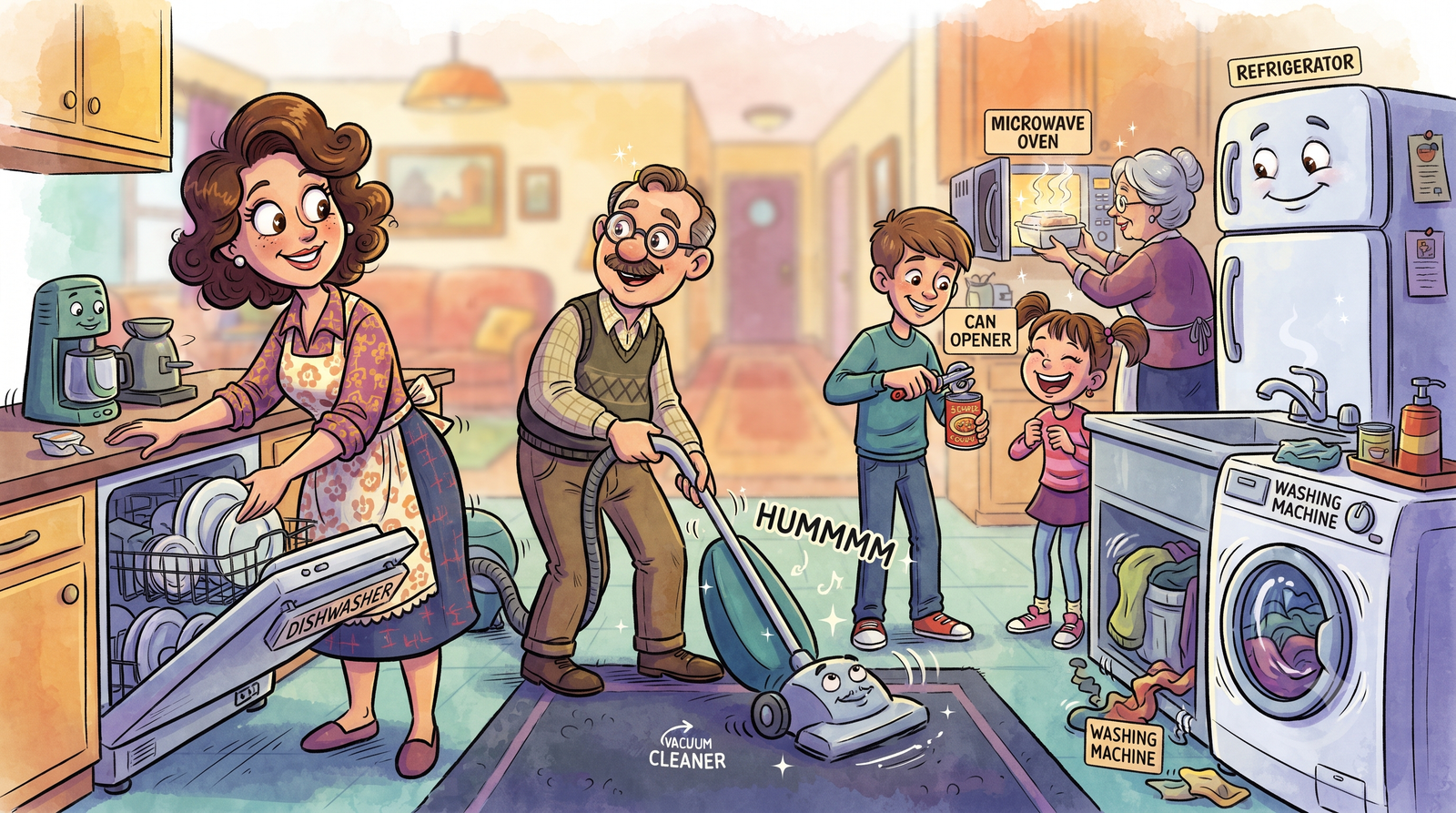
The washing machine, vacuum cleaner, can opener, dishwasher, microwave, and refrigerator may look like ordinary household appliances. Together, they changed something extraordinary: how humanity spends its time, energy, health, and attention.

Civilization did not change only through grand inventions.
Some of the most important changes in human history happened quietly, inside ordinary homes.
A machine that washed clothes. A machine that removed dust. A simple device that opened a can. A dishwasher that cleaned plates. A microwave that heated food in minutes. A refrigerator that kept food from spoiling.
None of these inventions looked like they were changing civilization. But together, they removed thousands of hours of repetitive work and changed what families could do with their time.
Ordinary objects. Extraordinary consequences.
Each machine solved a different problem. Together, they reshaped the daily rhythm of modern life.
Washing Machine
Turned hours of exhausting manual laundry work into a task that could increasingly be handled by a machine.
Vacuum Cleaner
Replaced much of the physical effort required to beat, sweep, and carry dust away from carpets and floors.
Can Opener
A deceptively simple tool that transformed preserved food from something difficult to access into an everyday convenience.
Dishwasher
Reduced repetitive dishwashing and turned another daily household chore into an automated process.
Microwave
Changed the relationship between cooking and time, allowing food to be heated and prepared remarkably quickly.
Refrigerator
Made reliable cold storage part of everyday life, helping preserve food and changing how households bought, stored, and consumed it.
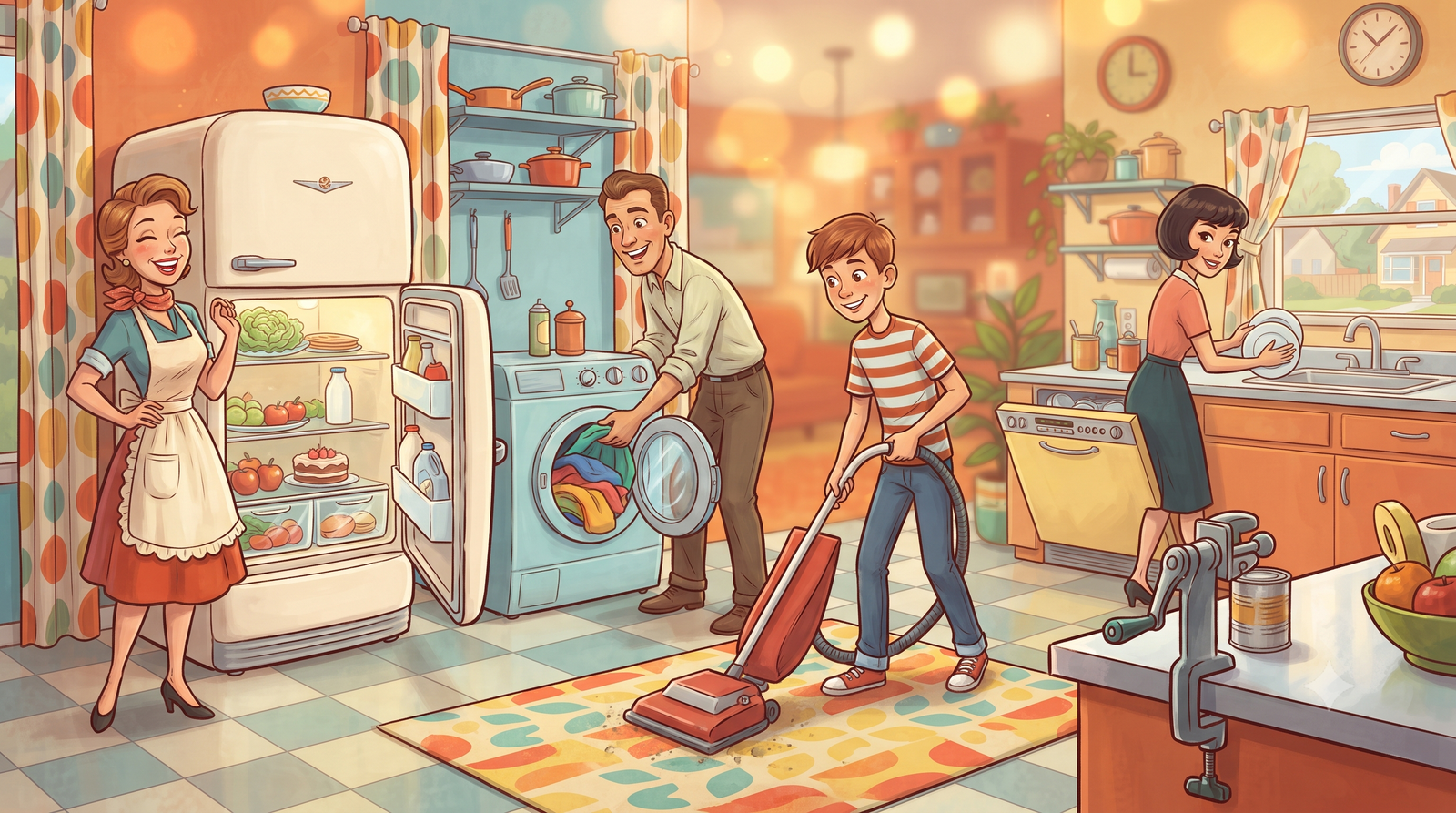
Before machines, everyday life demanded muscle.
Household work once consumed enormous amounts of physical energy. Washing clothes meant scrubbing, lifting, wringing, and drying. Cleaning meant sweeping and beating carpets. Dishes had to be washed by hand. Food had to be prepared and preserved through slower methods.
These tasks were repeated again and again, often every day, every week, and every season.
ENERGY
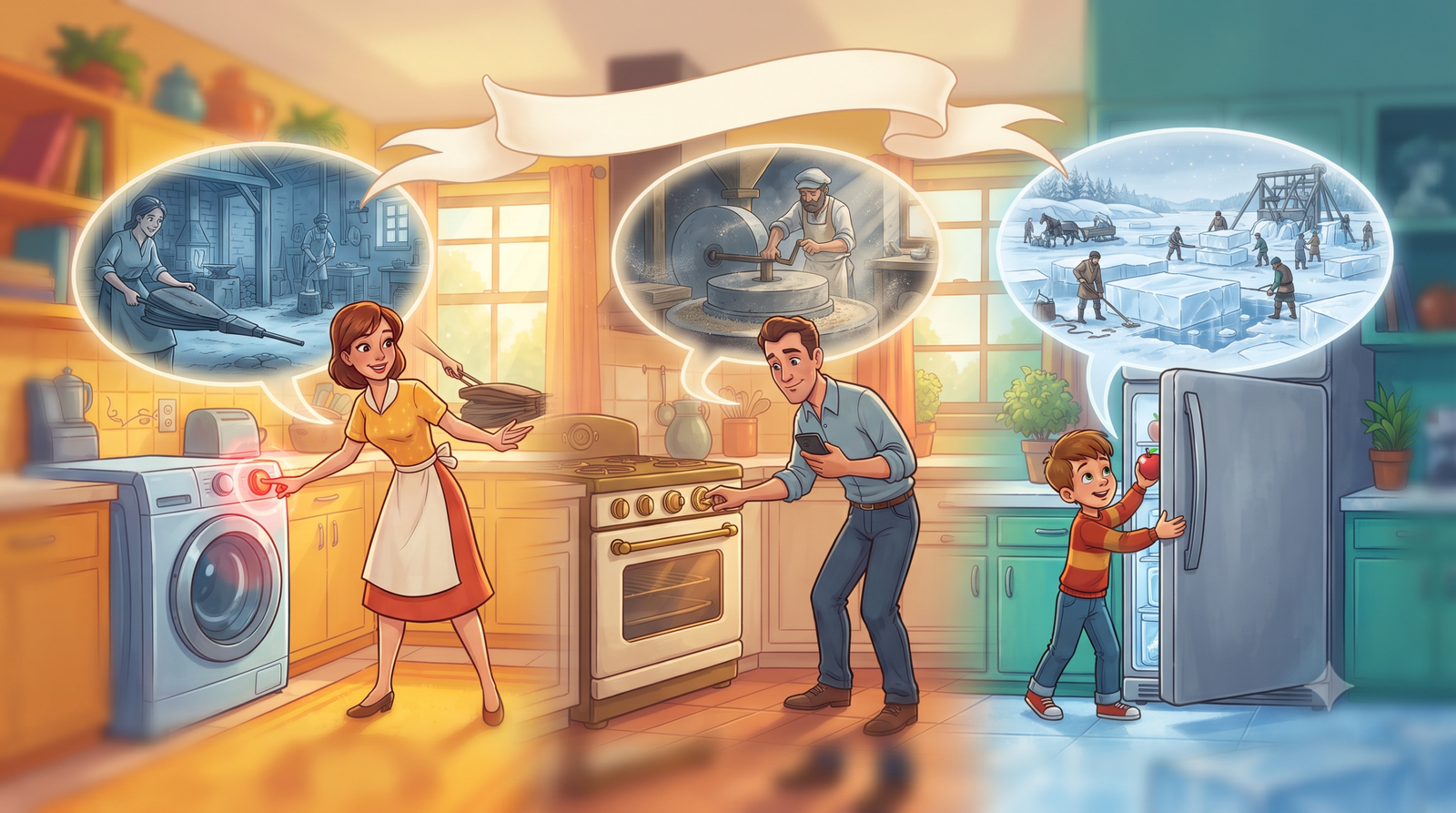
The impact went far beyond saving time.
These machines changed health, hygiene, food storage, and the everyday environment in which families lived.
Better Hygiene
Easier washing and cleaning made regular household hygiene more practical and consistent.
Preserved Food
Better food preservation and refrigeration reduced dependence on immediate consumption.
Health & Safety
Cleaner environments and better food storage contributed to safer everyday living.
More Time
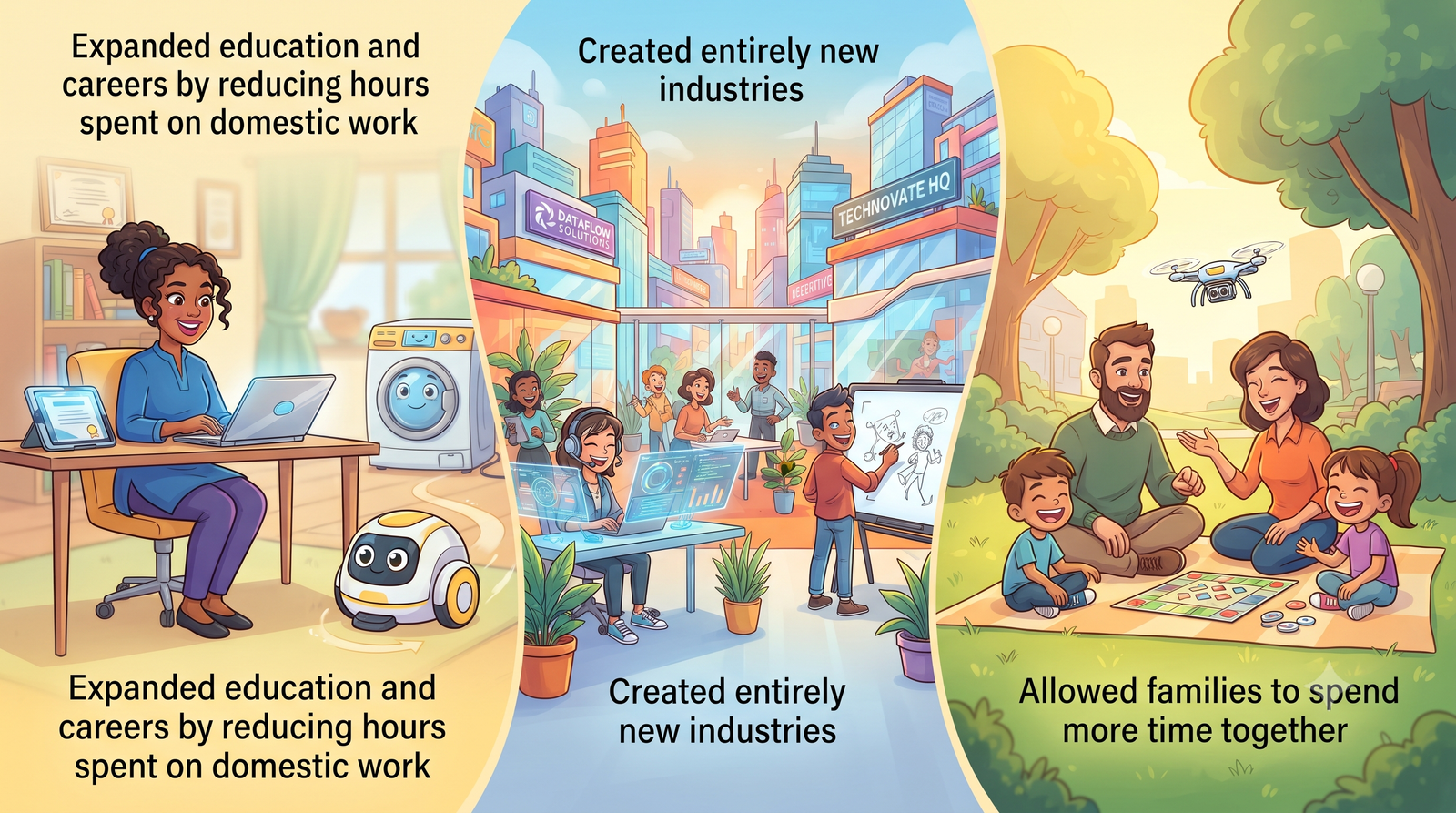
Time once consumed by repetitive chores became available for education, work, family, and rest.
What happened to the time these machines gave back?
Some of it went into work. Some into education. Some into caring for children and families. Some into leisure, creativity, and simply resting.
The impact was especially significant for the people who traditionally carried the greatest share of household labor.
One machine after another.
Mechanical Help
Early household machines began replacing some of the most exhausting repetitive tasks.
Electricity Enters the Home
Electrification made increasingly powerful household appliances practical.
Automation Accelerates
Washing, cleaning, cooking, and food storage increasingly became machine-assisted activities.
Convenience Becomes Normal
Machines that once seemed extraordinary became ordinary parts of everyday life.
They did not simply make life easier.
They changed what people expected from everyday life. Work that once demanded hours of physical effort could increasingly be completed with the push of a button.

Civilization changed one ordinary machine at a time.
The washing machine reduced the burden of laundry. The vacuum cleaner fought dust. The can opener made preserved food easier to access. The dishwasher reduced another repetitive chore. The microwave changed the meaning of cooking time. And the refrigerator transformed the way humanity stored and consumed food.
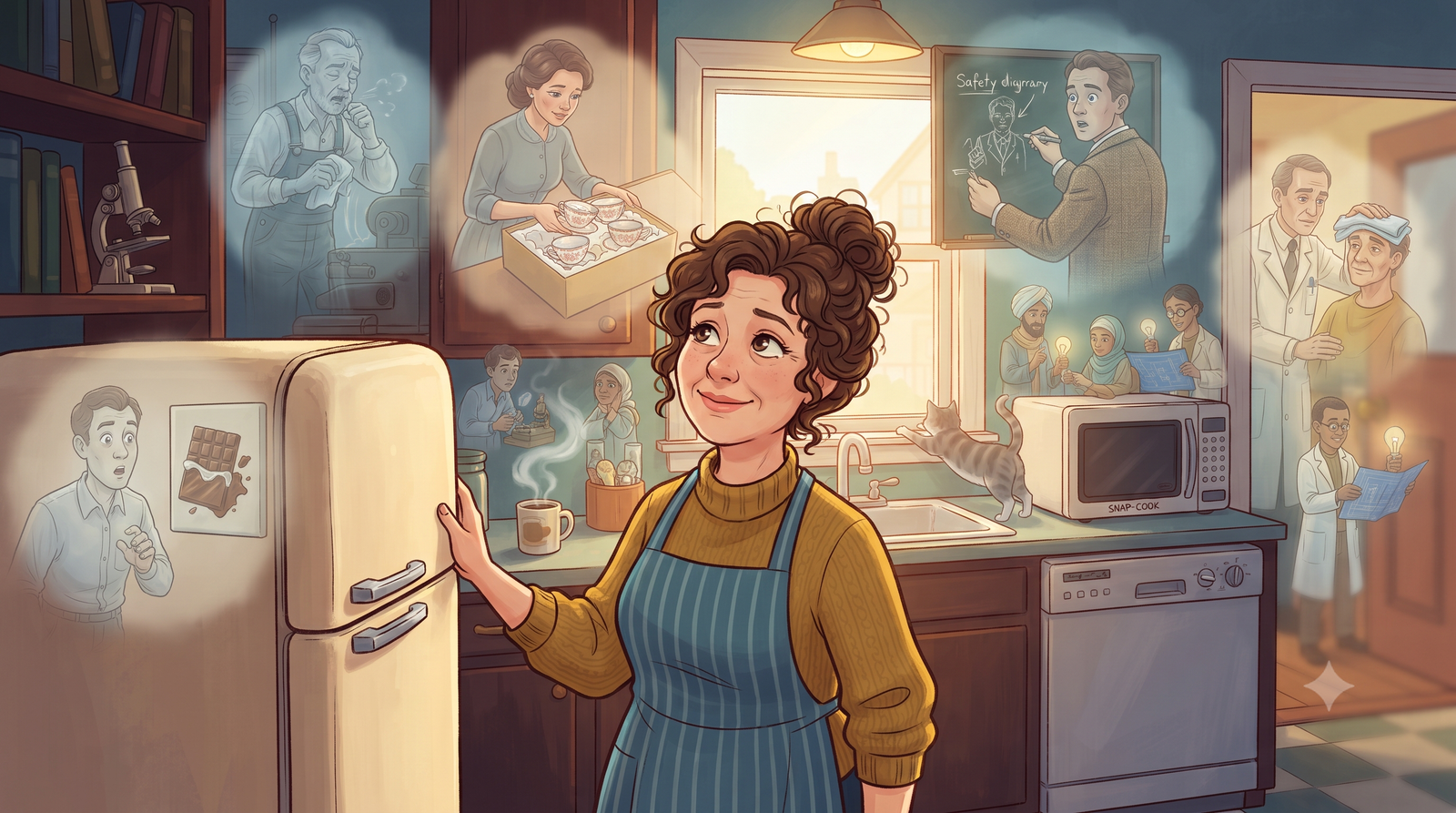
Listen closely. The machines are still running.
Somewhere, a refrigerator hums quietly in the kitchen. A washing machine turns behind a closed door. A microwave counts down the final seconds of dinner.
They are sounds so ordinary that most of us barely notice them. But hidden inside those sounds is a remarkable story — a story about people who looked at everyday problems and decided that life could be different.
The inventors behind these machines were not simply building appliances. They were removing friction from everyday life. They were finding ways to make washing easier, cleaning faster, food safer, cooking quicker, and ordinary routines less demanding.
One invention rarely changes civilization by itself. But millions of small improvements, repeated every day, can quietly reshape the way an entire generation lives.
And perhaps that is the real story.
We often measure inventions by what they produce: cleaner clothes, cleaner floors, warmer food, colder storage, easier meals.
But their greatest contribution may be something they never physically produced at all.
Time to work. Time to learn. Time to create. Time to care for someone. Time to rest. Time to simply be human.
One ordinary machine
at a time.
And that may be the most extraordinary thing of all.
Enjoyed the story? There’s more to discover.
If this journey through the machines that changed our lives made you look at everyday technology a little differently, don’t let the story end here.
Like the video. Share the story. And most importantly, Subscribe to Cider Studio.





Leave a Reply