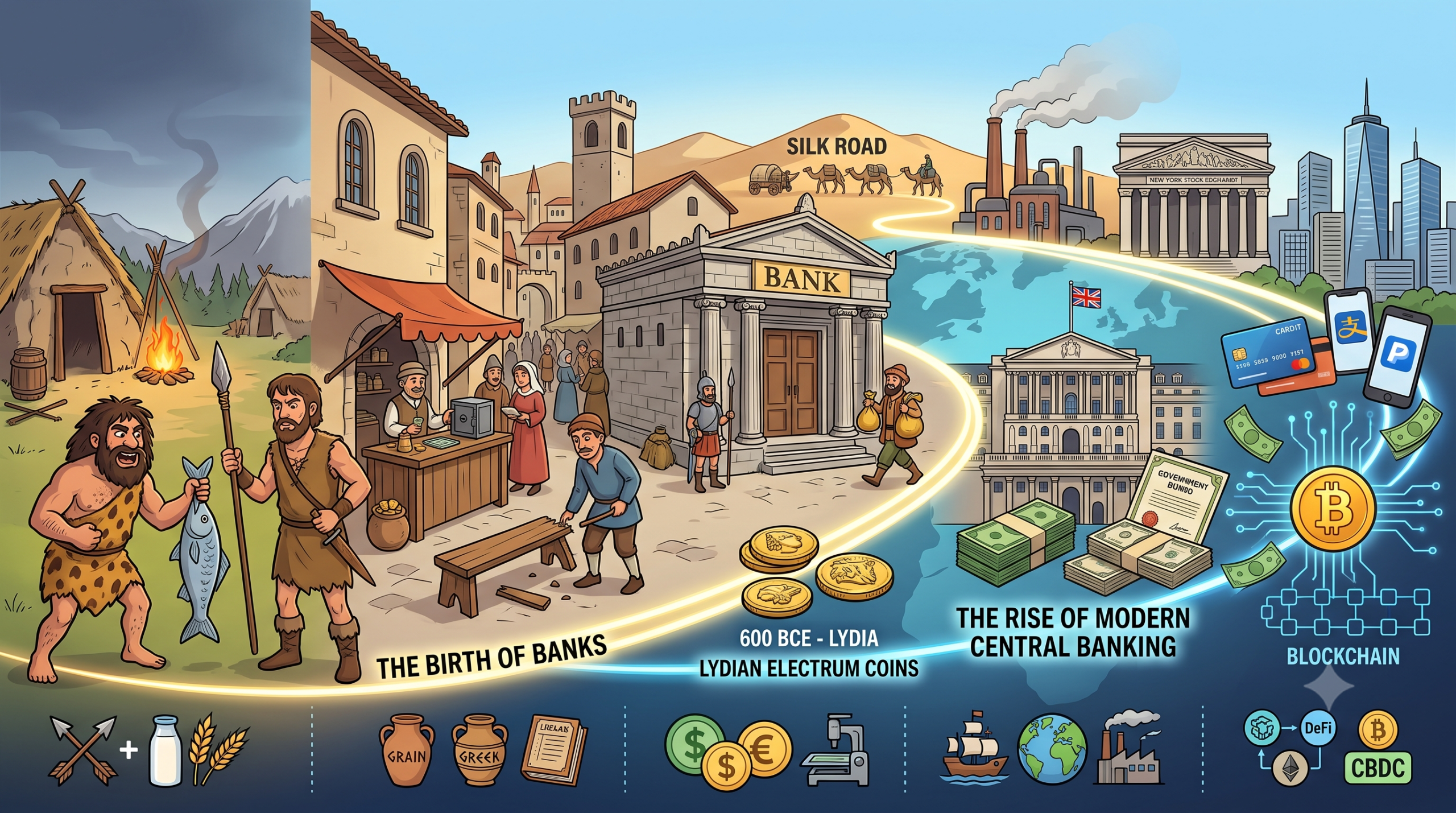
Money: The Greatest Invention That Changed the World
From simple barter to digital currencies, discover how one invention reshaped civilizations, powered economies, and transformed human history.
Imagine This…
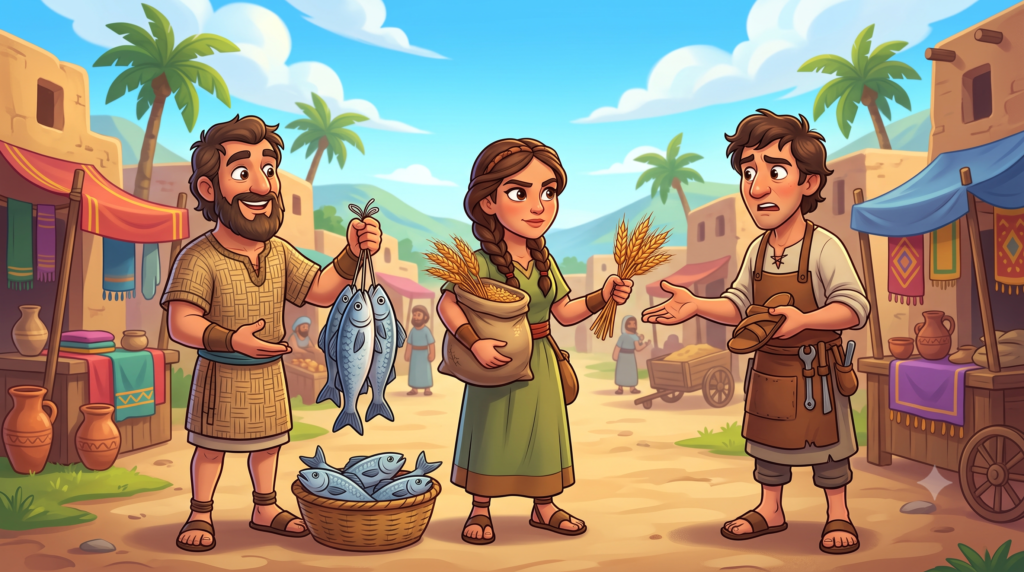
You have fish, but you need shoes. The shoemaker doesn’t want fish—he wants wheat. Now you must find a farmer who wants fish and who also has wheat.
Complicated, right?
This was everyday life before money.
Money is one of the most powerful inventions in human history. It has built empires, fueled global trade, created billionaires, caused wars, and transformed economies.
Today, money isn’t just coins and paper notes—it also exists as invisible digital code moving across the world in milliseconds.
🚀 In This Article
Where did money come from? How did it evolve from shells and gold coins into digital transactions? And what could the future of money look like?
Let’s explore the fascinating journey of money through history.
What Is Money?
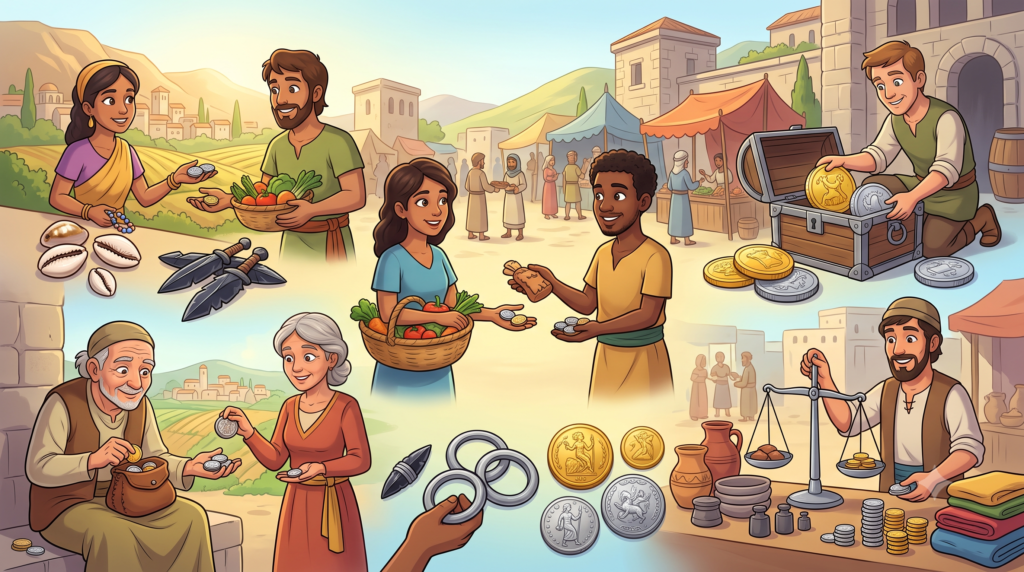
Money is anything that people agree has value and can be used to exchange for goods and services. It acts as a bridge between buyers and sellers, making trade easier than ever before.
The Simple Idea Behind Money
Instead of searching for someone who wants exactly what you have, money allows everyone to trade using a universally accepted system of value.
The Three Essential Functions of Money
Medium of Exchange
Money makes buying and selling simple. Instead of exchanging goods directly, people use money to trade for products and services.
Store of Value
Money allows people to save wealth and use it in the future, preserving purchasing power over time.
Unit of Account
Money provides a common measurement system that helps us compare prices and understand the value of goods and services.
From Ancient Coins to Digital Money
Today, we use currencies like the dollar, euro, rupee, and yen. But throughout history, money has appeared in many forms—from shells and livestock to gold coins, paper notes, and digital currencies.
The First Forms of Money
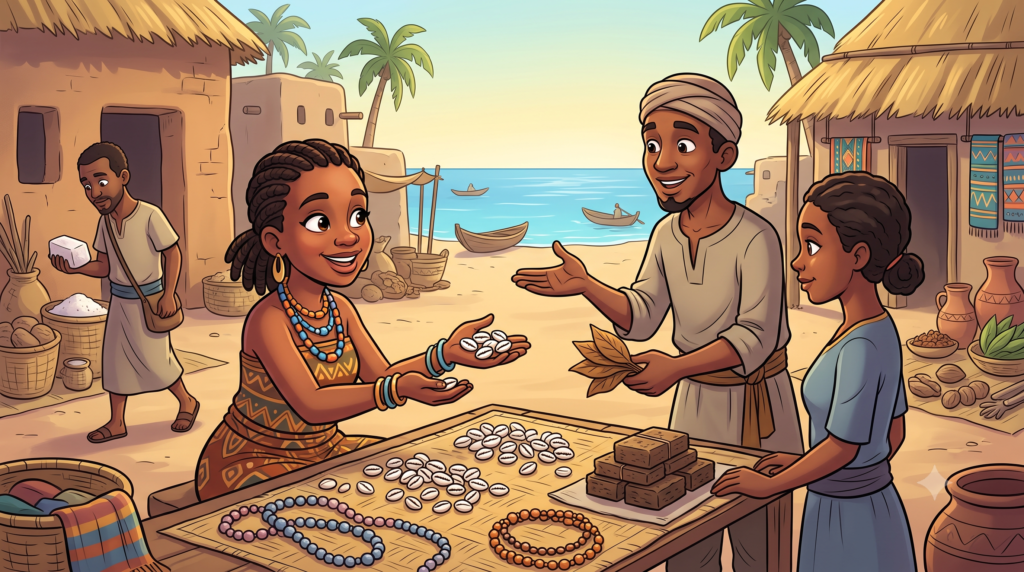
Before coins and paper notes existed, humans searched for simpler ways to trade. Societies began using objects that everyone agreed had value — creating the first forms of commodity money.
Commodity Money: Valuable Objects as Currency
Everyday items became tools of exchange because people trusted their value. These early forms of money included:
The First Standardized Coins
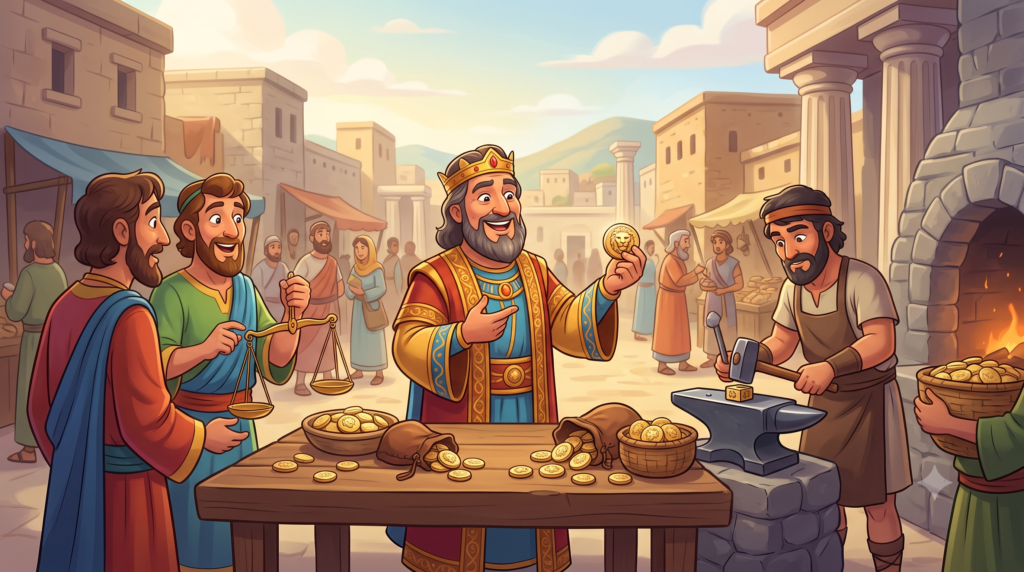
Around 600 BCE, the Kingdom of Lydia (modern-day Turkey) introduced the world’s first standardized metal coins made from electrum — a natural alloy of gold and silver.
This innovation transformed trade forever by creating a reliable, portable, and widely accepted form of money.
Why Did Metal Coins Become Popular?
Durable
Coins could survive years of use without easily wearing away.
Portable
People could carry valuable wealth wherever they traveled.
Difficult to Counterfeit
Standardized designs made fake coins harder to create.
Widely Accepted
Coins became trusted across growing trade networks.
Fun Fact: The Wealthiest King
The famous phrase “As rich as Croesus” comes from King Croesus of Lydia, who became legendary for his immense wealth and prosperity.

The Birth of Banks
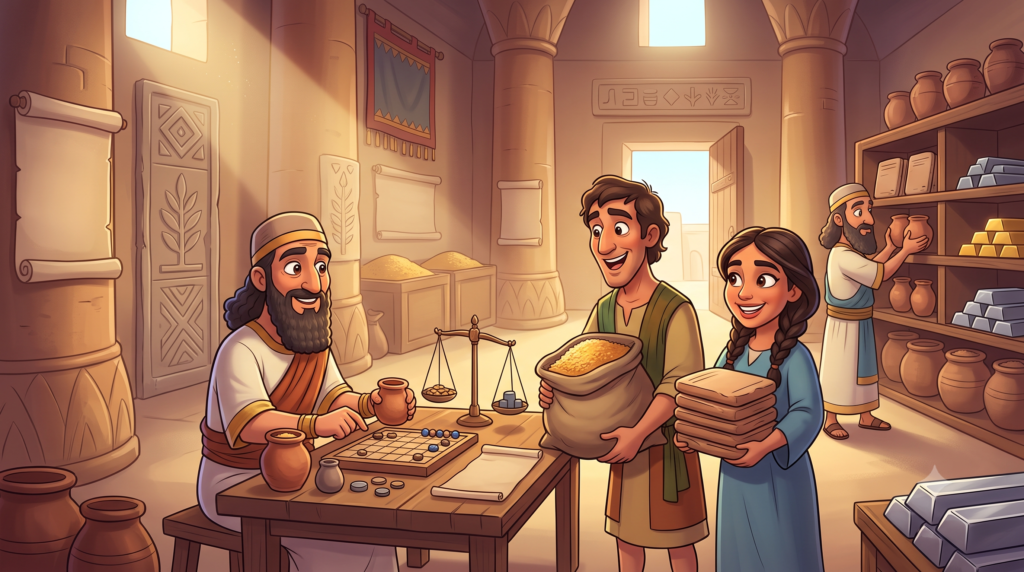
As trade expanded across civilizations, merchants needed a safer way to store and transfer wealth than carrying bags of gold and silver. This need gave birth to one of humanity’s most important financial inventions — banking.
Where Did The Word “Bank” Come From?
The word bank comes from the Italian word banco, meaning “bench”, where medieval money changers conducted their businesses.
The word bankrupt comes from banca rotta, meaning “broken bench” — referring to a money changer’s bench being broken when their business failed.
Early Banking Systems Around The World
Mesopotamia
Temples acted as early financial centers, accepting deposits and providing loans to communities.
Ancient Greece
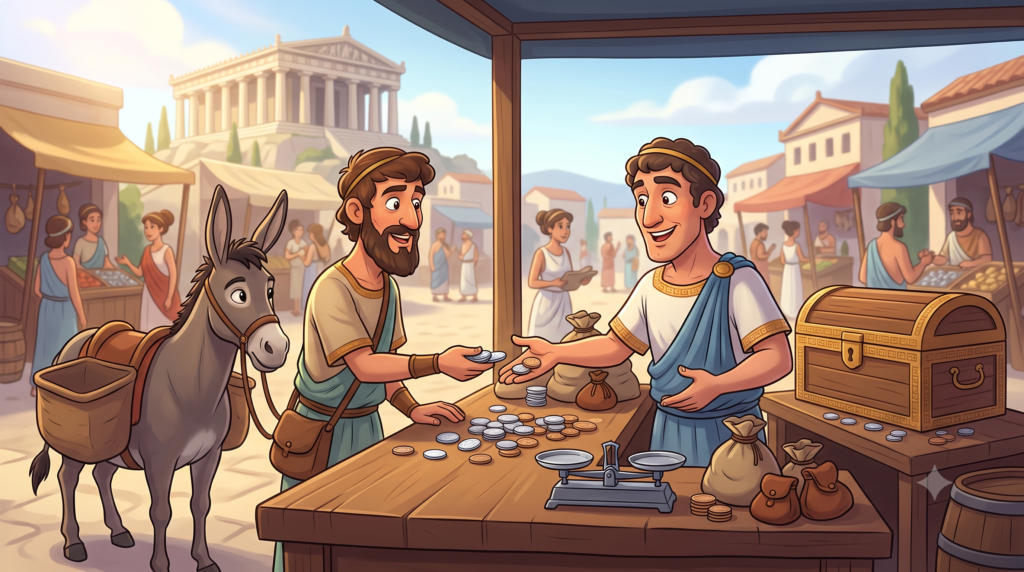
Money lenders exchanged currencies and financed merchants involved in long-distance trade.
Ancient Rome
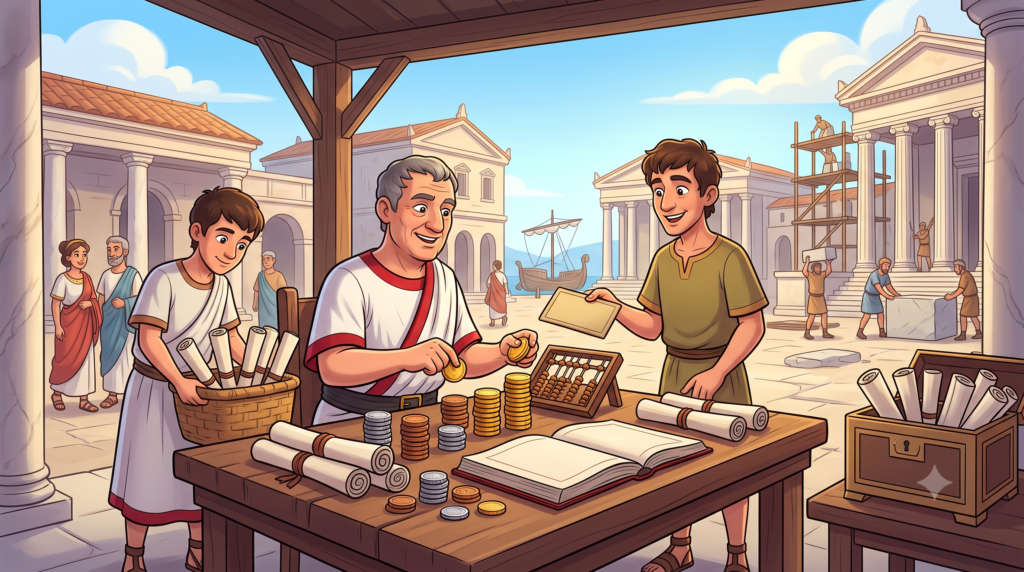
Banks supported businesses, trade networks, and large construction projects across the empire.
The Renaissance Banking Revolution
During the Renaissance, powerful banking families like the Medici transformed financial systems by introducing advanced banking practices.
Institutions such as the Bank of England (1694) helped establish the foundation of modern central banking.
Modern Banks: More Than Storage
Today’s banks do much more than protect money. Through lending and credit creation, they help businesses grow, support economies, and also introduce financial risks.
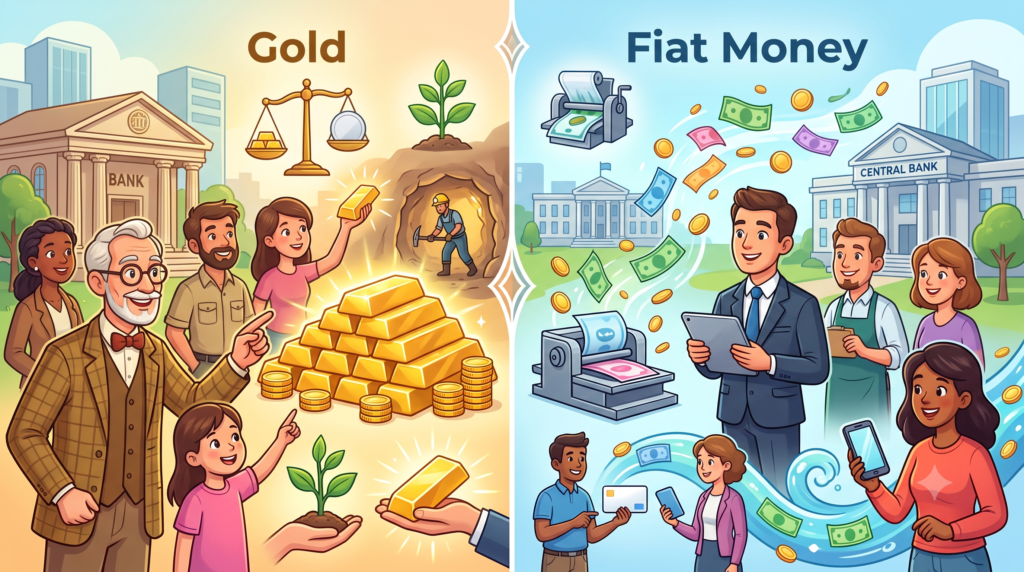
The End of Gold & The Rise of Fiat Money
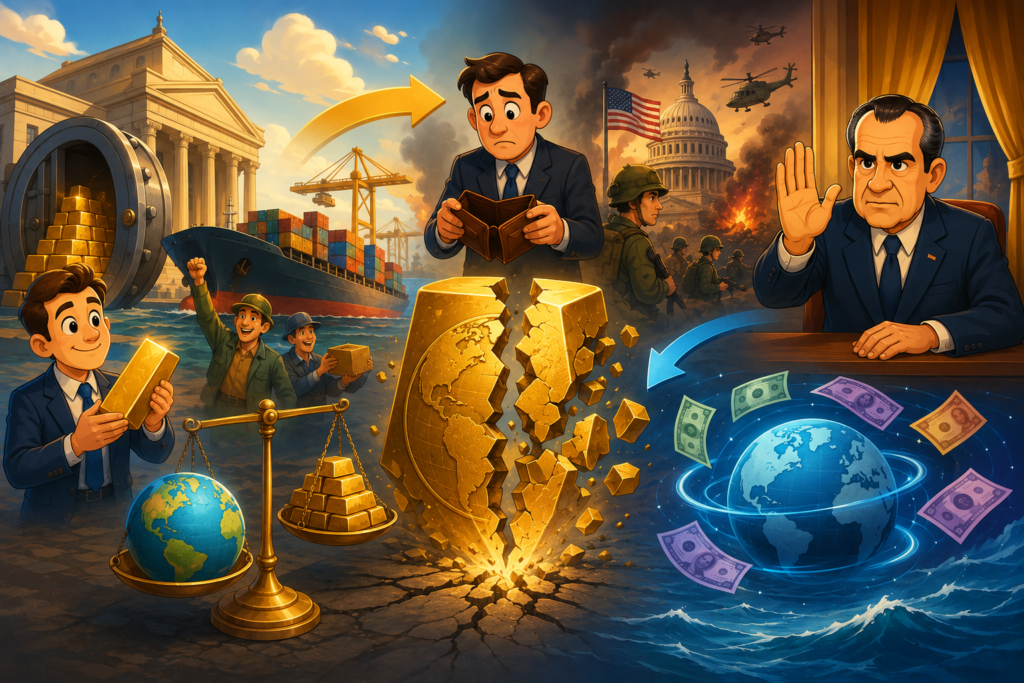
For many years, countries followed the Gold Standard, where paper money could be exchanged for a fixed amount of gold. This system connected currencies to a physical resource and influenced global economies for generations.
The Era of the Gold Standard
Under the Gold Standard, the value of money was directly linked to gold reserves. People trusted currencies because they could theoretically be converted into a fixed amount of gold.
The Turning Point In Monetary History
Bretton Woods System
After World War II, many currencies were linked to the US dollar, which was backed by gold.
The End of Gold Convertibility
President Richard Nixon suspended the dollar’s convertibility into gold, effectively ending the Gold Standard era.
The Rise of Fiat Money
Today, most countries use Fiat Money — currency that has value because governments declare it legal tender and people trust the economic system behind it.
How Fiat Money Works
Not Backed By Gold
Modern currencies are not directly connected to physical gold reserves.
Government Authority
Governments establish fiat money as official legal tender for transactions.
Public Confidence
The value of money depends on trust, stability, and the strength of the economy.
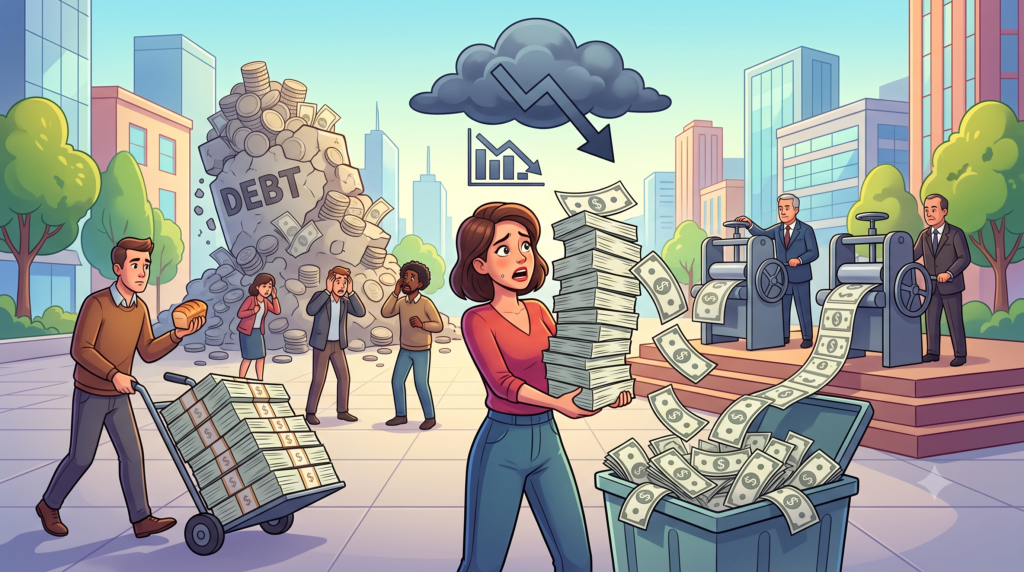
Fiat money gives governments flexibility during economic crises, but it can also create challenges such as inflation, currency depreciation, and increasing national debt.
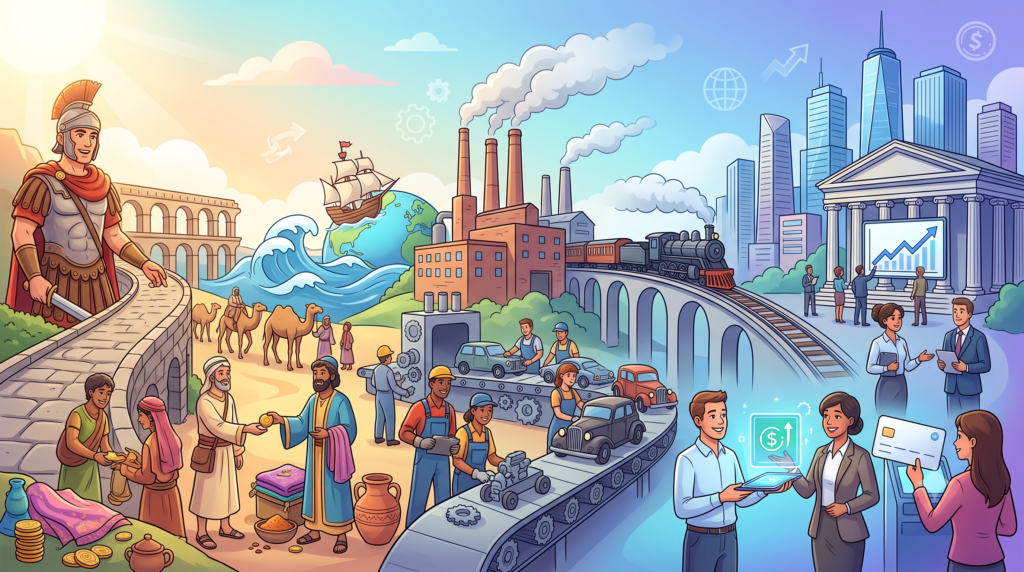
How Money Changed the World
Money transformed human civilization in countless ways. It became more than a method of exchange — it became a force that connected nations, powered innovation, and reshaped the course of history.
Connecting The World Through Trade
Money made global trade possible by connecting distant civilizations through historic trade routes like the Silk Road. It allowed people, cultures, and economies to exchange goods across continents.
Age of Exploration
Wealth and investment financed voyages that discovered new lands, expanded trade networks, and changed world history.
Industrial Revolution
Money funded factories, railways, and technological innovation, creating mass production and economic growth.
Money In Today’s Economy
Businesses & Entrepreneurship
Money provides capital for starting companies, creating jobs, and developing new ideas.
Stock Markets
Financial markets allow people and organizations to invest, grow wealth, and support businesses.
Banking & Credit
Credit systems help individuals and companies access funds for growth and development.
Global Trade
Money enables international transactions between countries, businesses, and consumers.
The Double-Edged Power of Money
While money has created progress and prosperity, it has also contributed to challenges such as inflation, financial crises, recessions, and market crashes throughout history.

Digital Money Era
Today, most money exists digitally rather than as physical cash. The way people store, transfer, and use money has changed forever, creating a faster and more connected financial world.
The World Goes Cashless
Modern economies increasingly rely on digital transactions instead of physical currency. Money can now move instantly across the world with just a few clicks.
How People Use Digital Money Today
Online Banking
Digital banking allows people to transfer money, pay bills, and manage finances without visiting a bank.
Cards
Credit and debit cards allow fast and secure payments across stores, websites, and services.
Mobile Wallets
Mobile wallets store payment information and make everyday transactions simple and convenient.
Instant Payments
Systems like UPI allow people to send and receive money instantly through digital platforms.
The Decline of Physical Cash
Less than 10% of the world’s money exists as physical cash. The majority of money today exists as digital records stored within financial systems.
The Birth of Cryptocurrency
In 2009, Satoshi Nakamoto introduced Bitcoin, the world’s first decentralized cryptocurrency powered by blockchain technology.
Bitcoin operates independently of governments and inspired thousands of cryptocurrencies around the world.
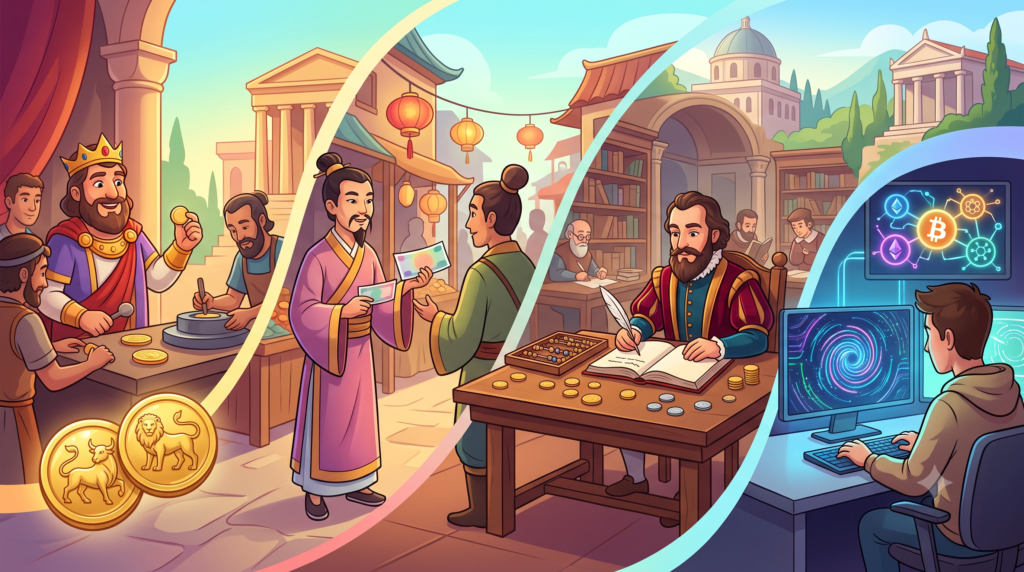
Who Really Invented Money?
Money wasn’t invented by a single person. Instead, it evolved over thousands of years through the ideas, innovations, and contributions of different civilizations and individuals.
A Human Collaboration Across History
From ancient coins to digital currencies, money represents humanity’s continuous search for better ways to trade, store value, and connect economies.
Influential Contributors In The Evolution Of Money
King Croesus
Standardized Metal CoinsThe King of Lydia introduced standardized metal coins, creating a reliable system for trade and commerce.
Chinese Merchants
Paper MoneyChinese innovations in paper currency changed how people stored and transferred wealth.
The Medici Bank
Modern Banking PracticesThe Medici family helped develop advanced banking methods that influenced modern financial systems.
Satoshi Nakamoto
Decentralized Digital CurrencySatoshi Nakamoto introduced Bitcoin, creating a new era of decentralized digital money.
Money: Humanity’s Greatest Collaborative Invention
No single person created money. It is the result of thousands of years of innovation, trust, and cooperation between civilizations.
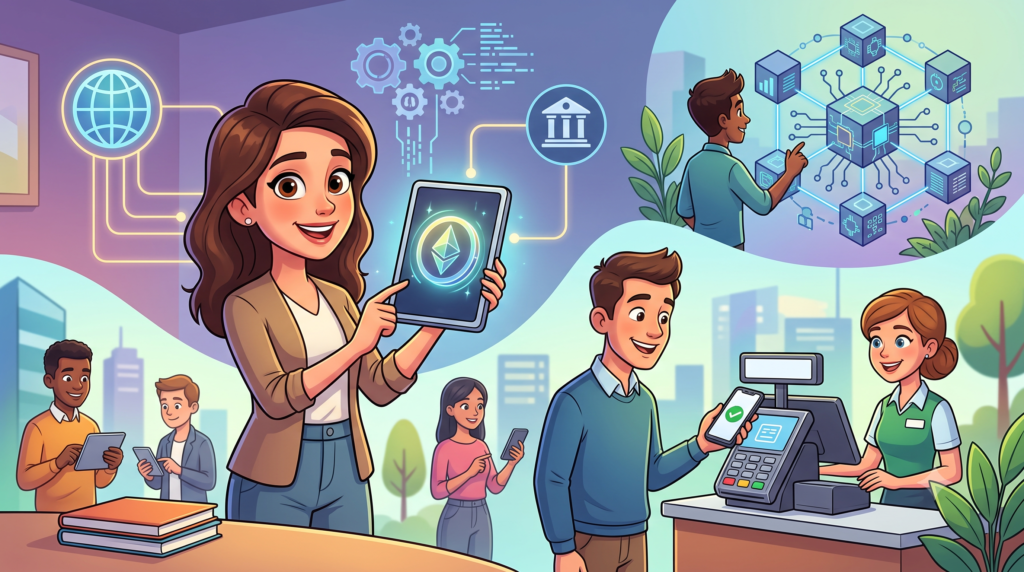
The Future of Money
Money continues to evolve rapidly. From physical coins to digital currencies, the next chapter of money will be shaped by technology, automation, and new financial systems.
A New Era Of Financial Innovation
The future of money may look very different from today’s systems. Artificial intelligence, blockchain, and digital currencies are creating new ways to exchange and manage value.
Emerging Trends Shaping The Future
Central Bank Digital Currencies
Governments around the world are exploring CBDCs — government-issued digital currencies designed for modern economies.
AI & Smart Contracts
Artificial Intelligence and smart contracts may automate financial transactions, making systems faster and more efficient.
Cashless Societies
Countries such as Sweden are moving toward digital-first economies where physical cash becomes less common.
Decentralized Finance
DeFi allows financial services to operate through blockchain networks without traditional banking systems.
Beyond Traditional Money
Some experts imagine future systems based on energy, reputation, or fully automated economies where money may play a much smaller role than it does today.
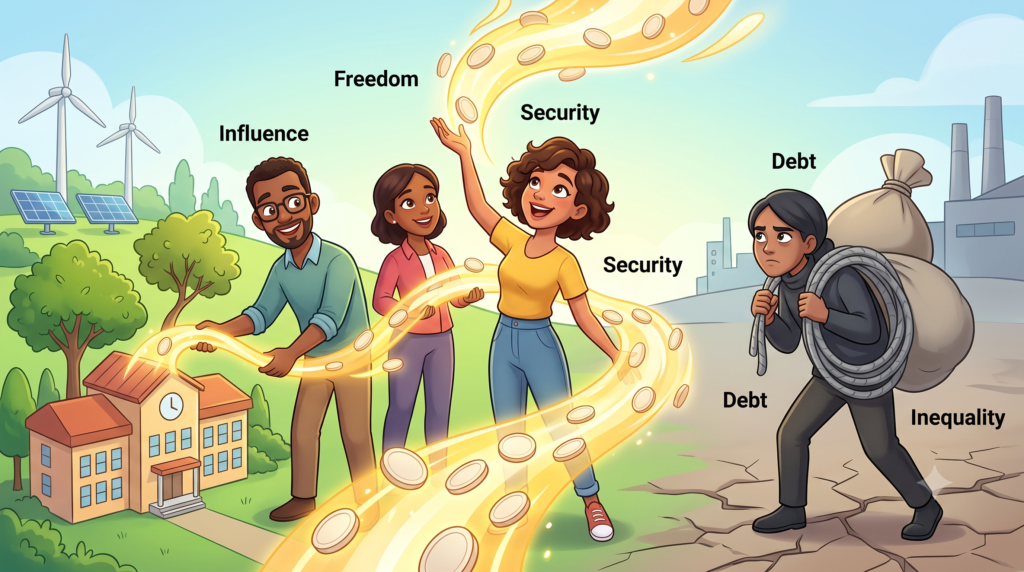
The Power of Money
Money represents much more than currency. It is a force that can shape lives, build nations, create opportunities, and influence the direction of human civilization.
Money Is A Tool Of Power
Throughout history, money has been used to create progress, support innovation, and provide people with choices. But the same power can also create challenges when misused.
The Positive Power Of Money
- Freedom
- Security
- Opportunity
- Influence
The Dark Side Of Money
- Debt
- Inequality
- Corruption
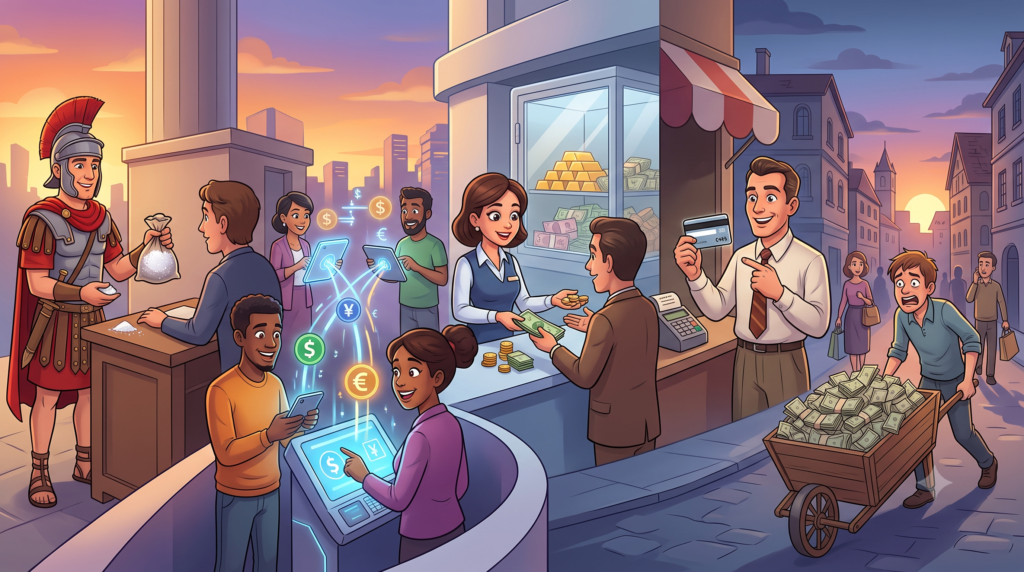
Mind-Blowing Fun Facts
Behind every coin, note, and digital transaction lies a fascinating story. These surprising facts reveal the hidden history and secrets of money.
The Salt Behind Salaries
The word salary comes from ancient Rome, where soldiers were sometimes paid with salt — a valuable resource at the time.
Invisible Money
More than 90% of the world’s money exists only in digital form, stored as electronic records rather than physical cash.
How Banks Multiply Money
Banks use fractional reserve banking, allowing them to lend out much of the money deposited by customers.
Birth Of The Credit Card
The first modern credit card was introduced by Diners Club International in 1950, changing how people spent money.
Money That Lost Its Value
During Germany’s hyperinflation in 1923, people carried wheelbarrows of money because currency had become nearly worthless.
Money is not just numbers and paper — it is a reflection of human history, innovation, trust, and civilization.
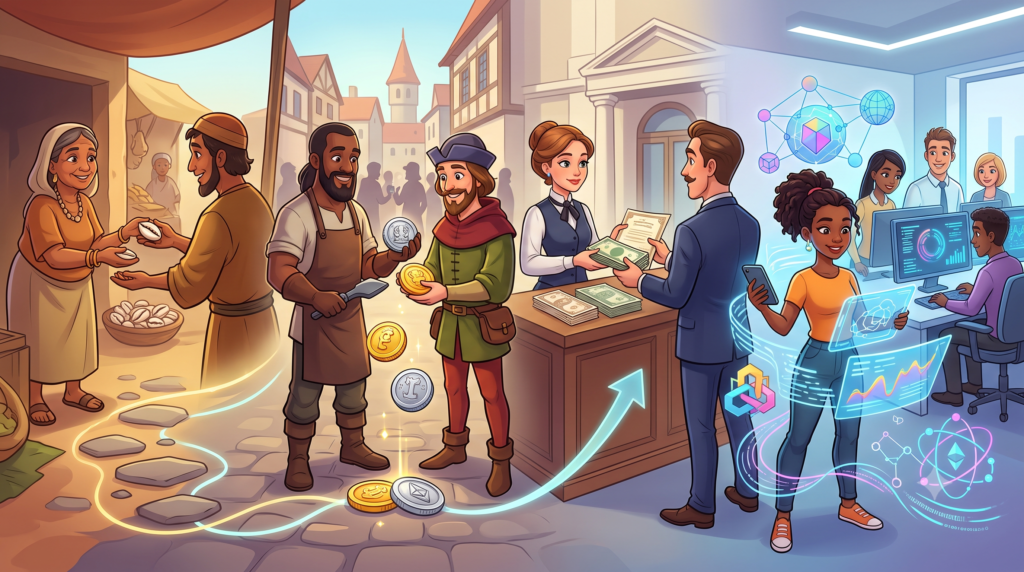
The Never-Ending Journey Of Money
From cowrie shells and cattle to gold coins, paper notes, and digital currencies, money has continuously evolved alongside human civilization.
Ancient Beginnings
Cowrie shells, salt, and commodities became humanity’s earliest attempts to create systems of exchange.
The Age Of Currency
Coins, paper money, and banking systems transformed trade, economies, and global civilizations.
The Digital Future
Cryptocurrencies, digital payments, and new financial technologies are creating the next chapter of money.
Continue Exploring The Story Of Money
Enjoyed discovering the incredible journey of money, banking, and financial evolution? Stay connected for more fascinating stories about History, Economics, Technology, Innovation, and The Future Of Civilization.
▶ Watch Money Stories on YouTube



Leave a Reply