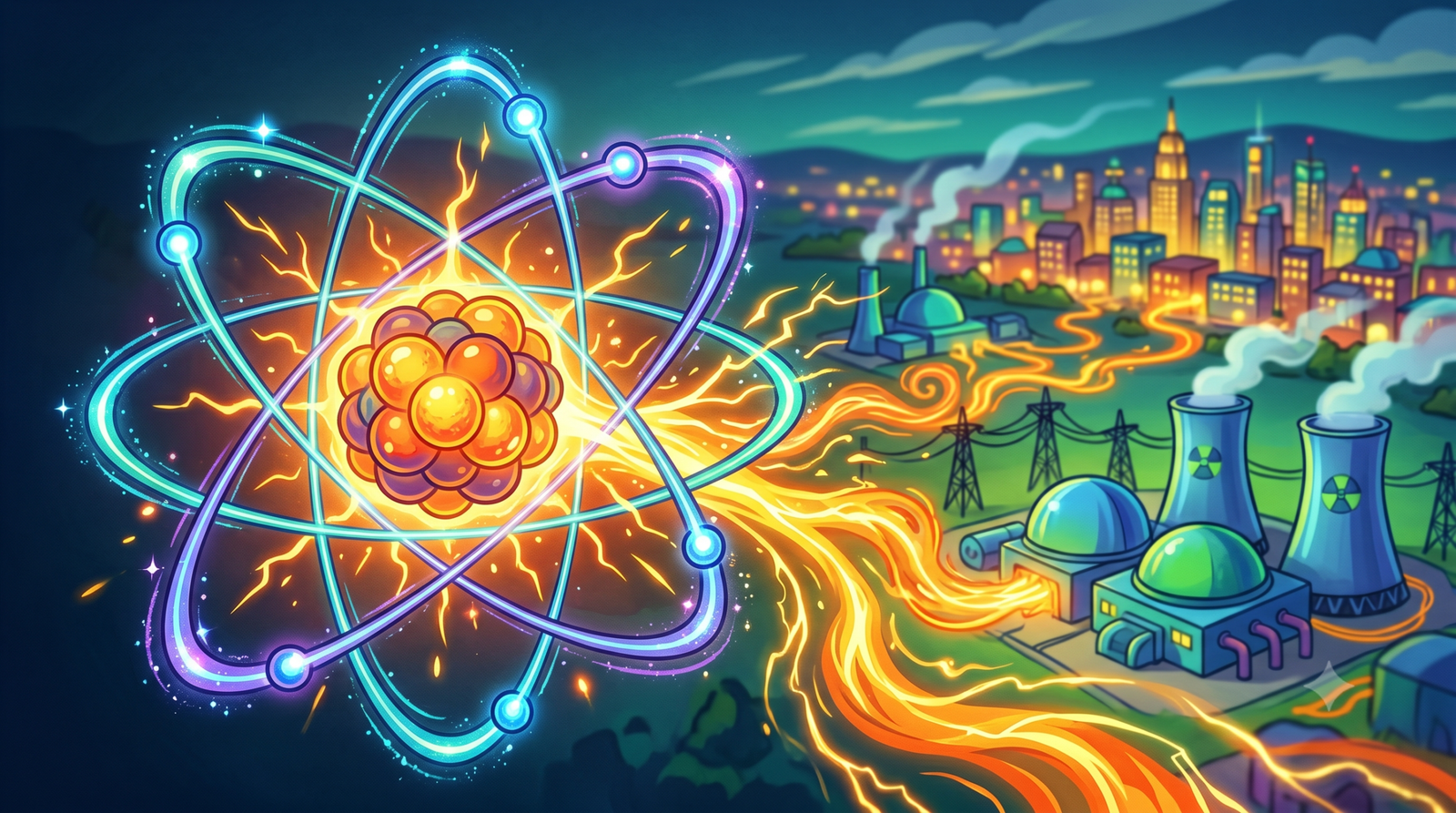

What if I told you that inside everything around you…
🪑 The chair you’re sitting on.
🌬️ The air you’re breathing.
🧬 Even your own body…
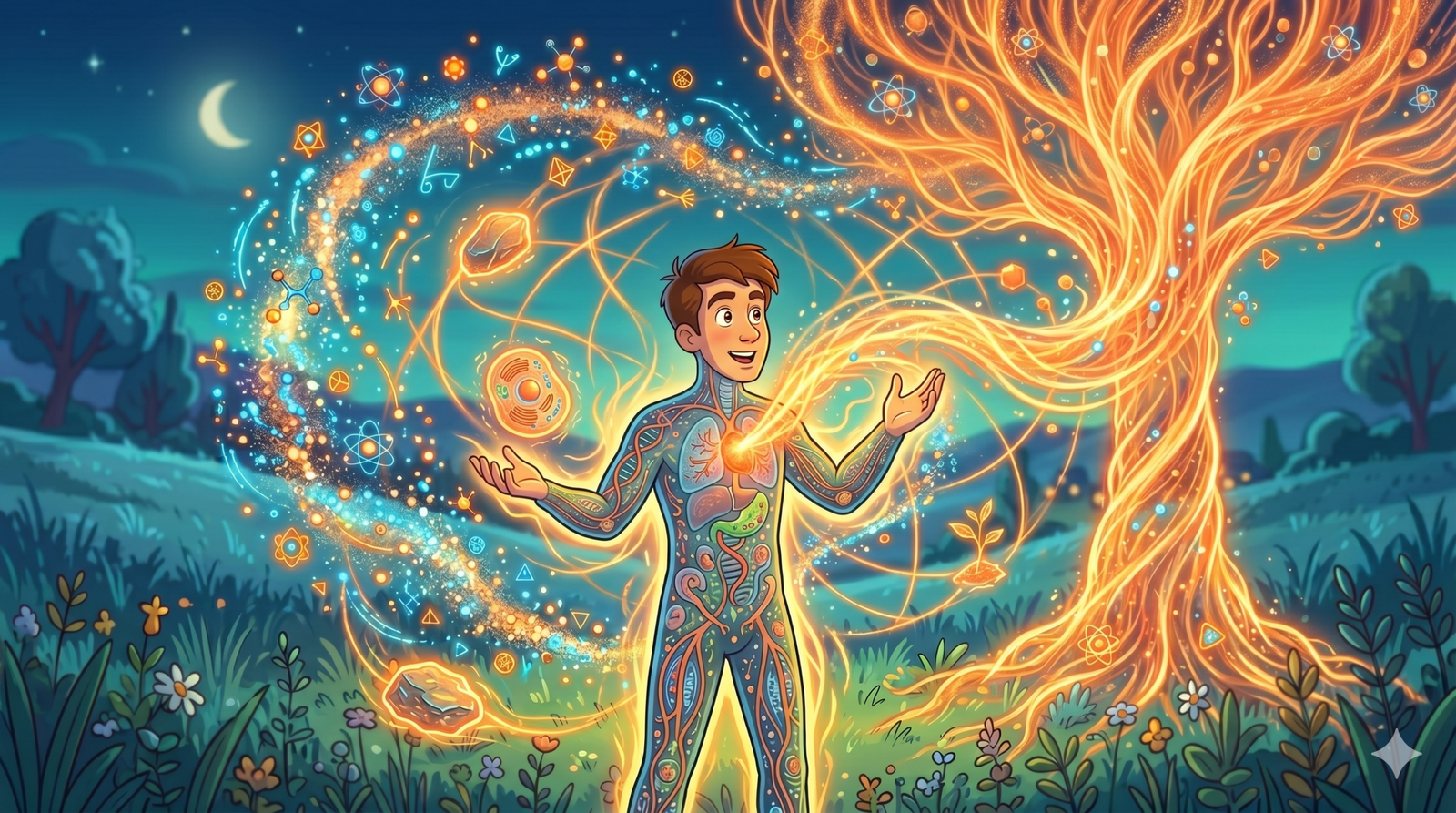
…is an incredible amount of hidden energy.
Energy so powerful that a tiny piece of uranium no bigger than your thumb can produce as much energy as tons of coal.
Incredibly Powerful
A tiny amount of nuclear fuel can contain an extraordinary amount of energy.
Power Entire Cities
Nuclear energy can generate enormous amounts of electricity for millions of people.
Years Without Refueling
Nuclear reactors can provide sustained power for years, including aboard submarines.
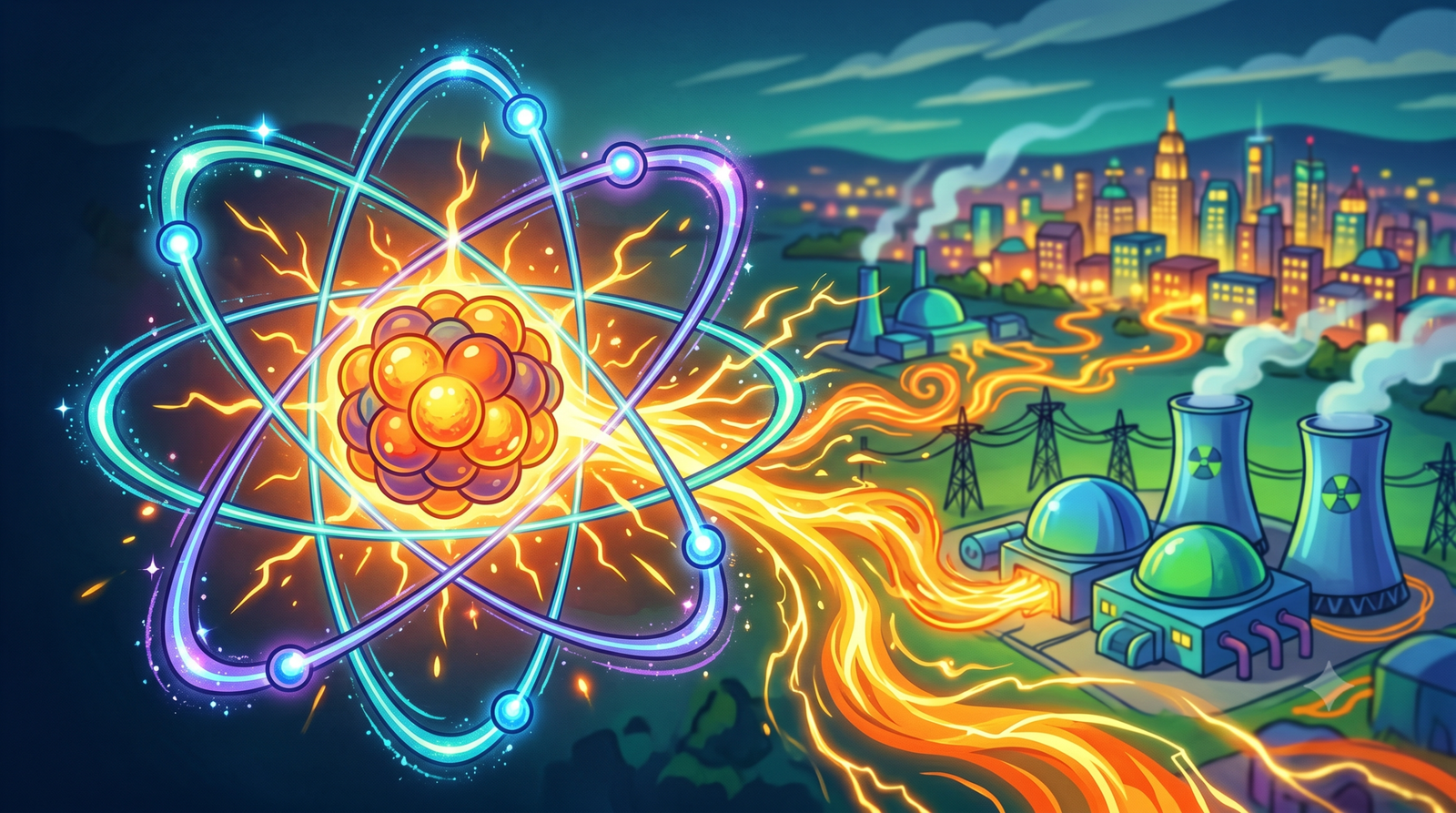
Energy powerful enough to…
Light Entire Cities
Nuclear power plants can generate vast quantities of reliable electricity.
Power Submarines
Nuclear propulsion allows submarines to operate for years without conventional refueling.
Reach Beyond Earth
Nuclear technology could play an important role in humanity’s future exploration of Mars and beyond.
Create Devastating Weapons
The same fundamental energy can also be harnessed for destructive purposes.
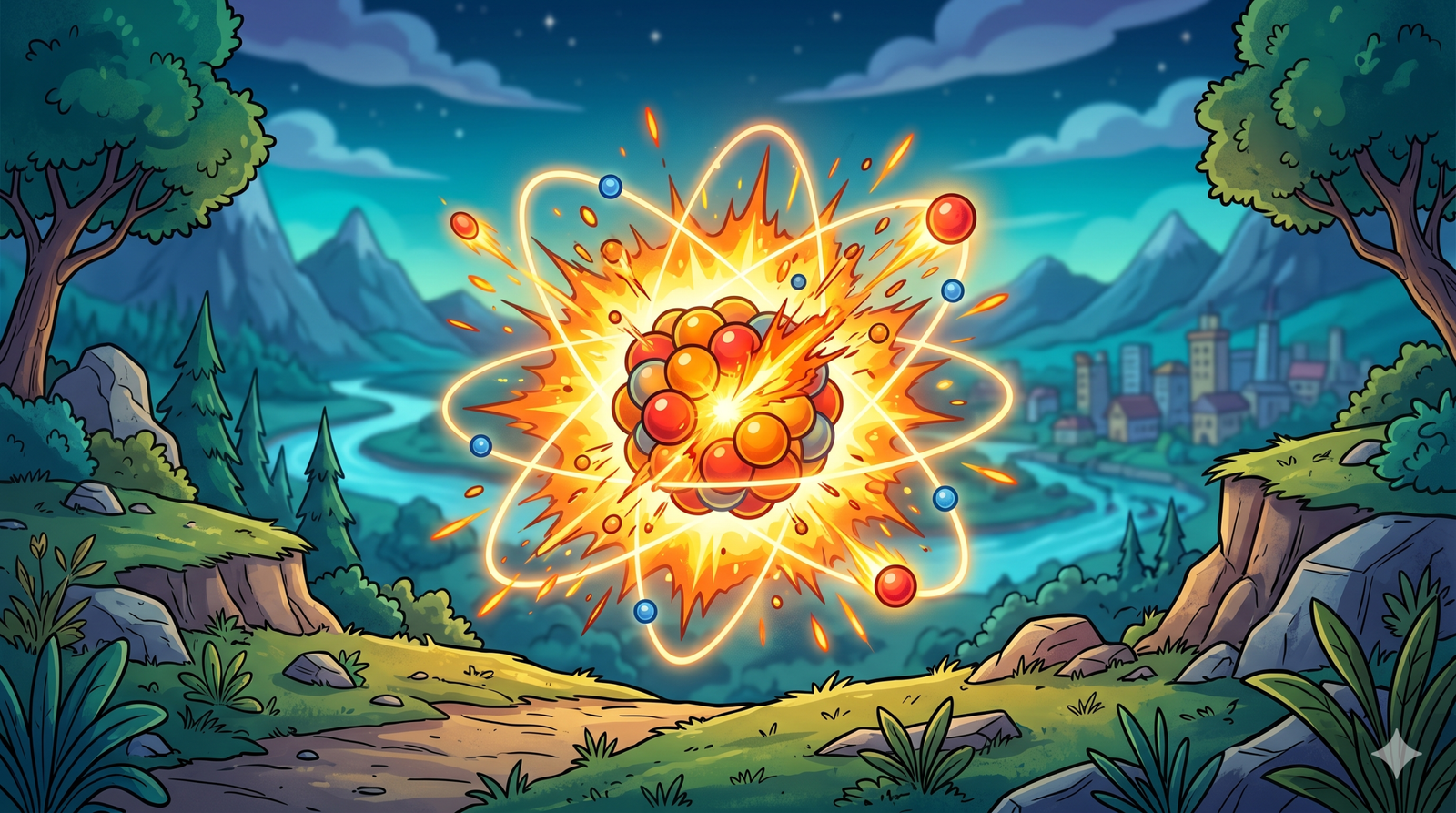
This is the story of Nuclear Energy.
The explosive power hidden inside the atom.
And it all begins with a question:
What exactly is an atom?
What Is An Atom?
Before scientists could split the atom, they first had to imagine that it existed.
The Question Begins
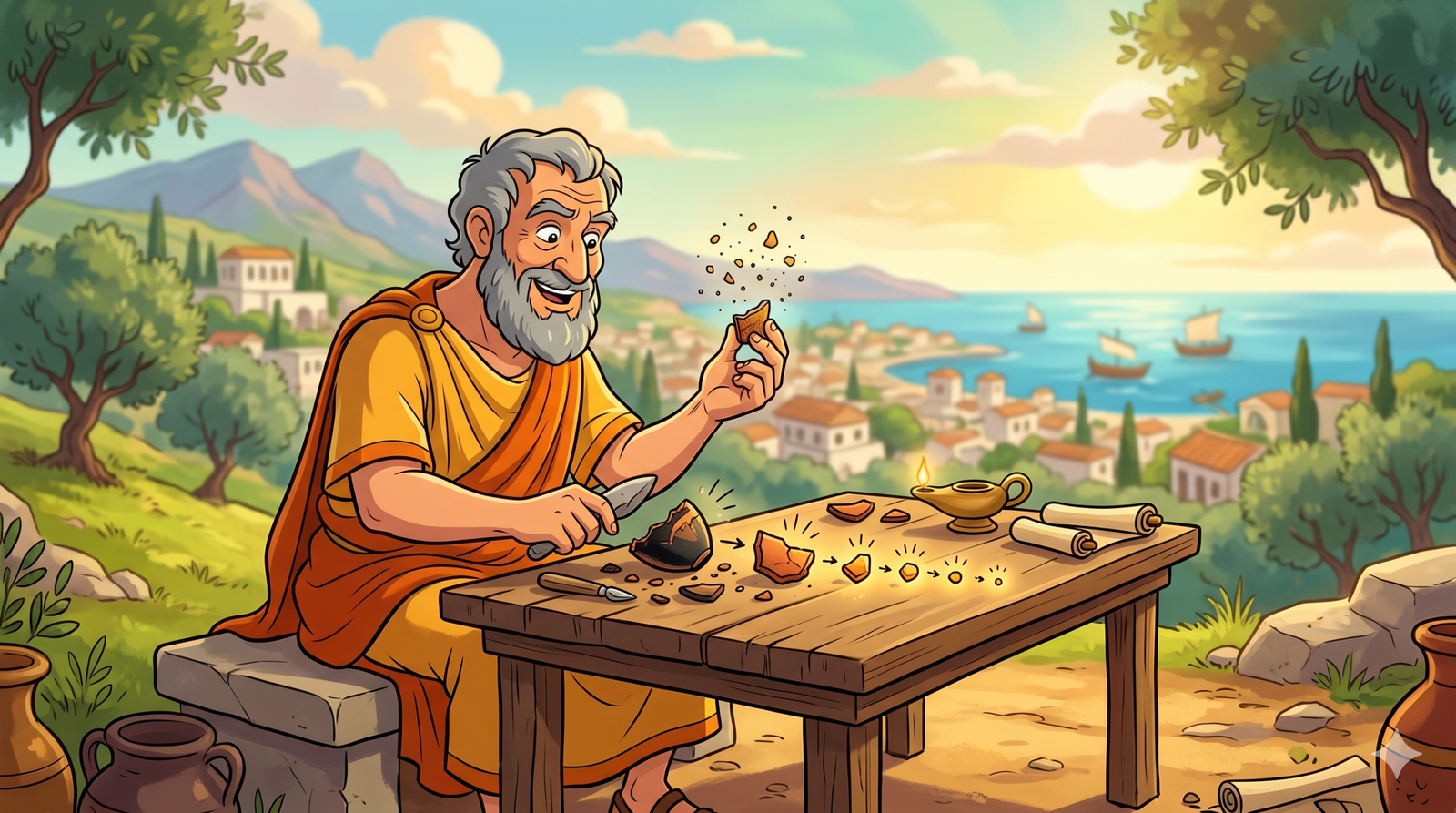
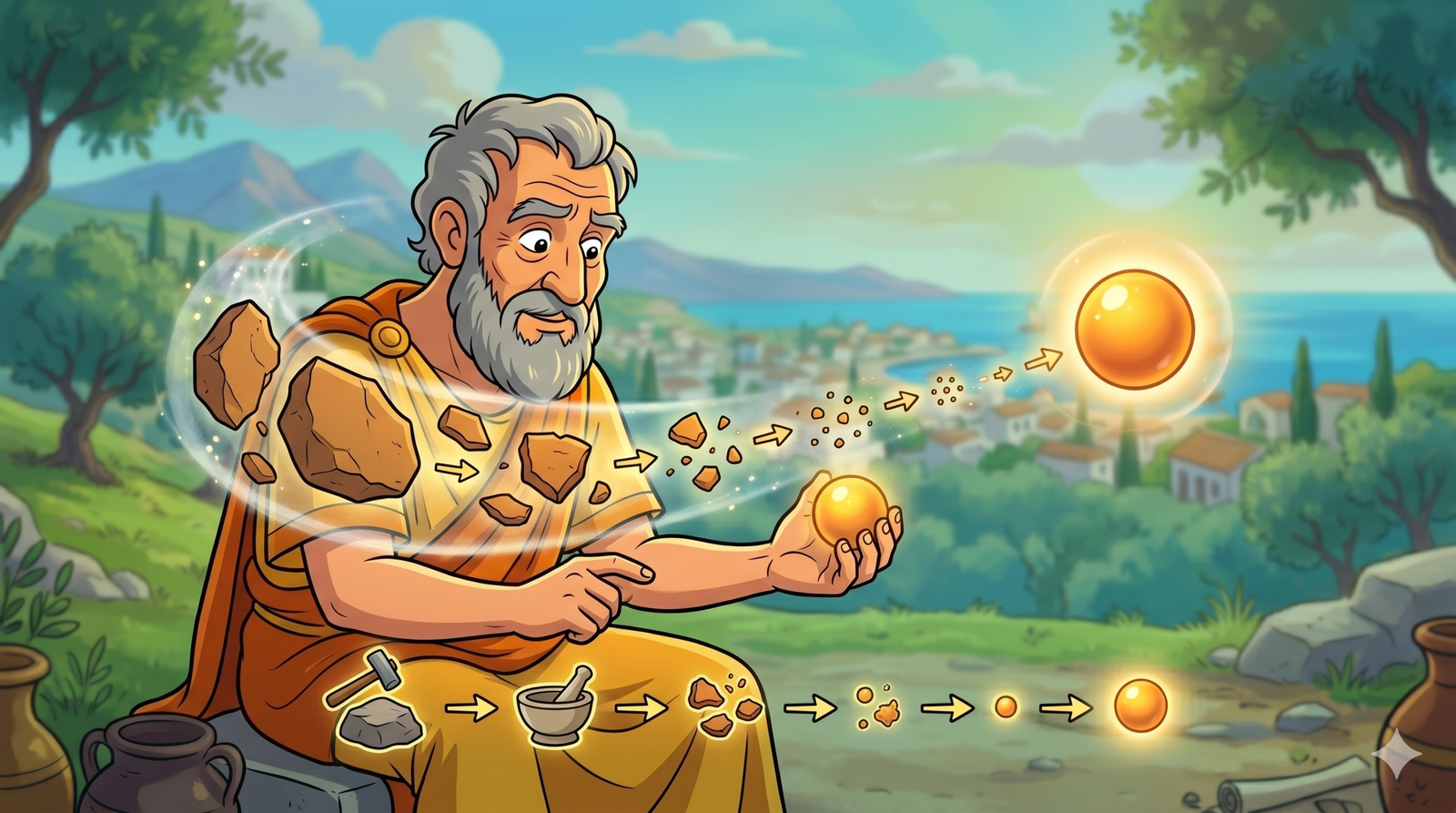
Around 2,400 years ago, a Greek philosopher named Democritus imagined that if you kept breaking matter into smaller and smaller pieces, eventually you would reach something that could not be divided anymore.
The Indivisible Particle
He called these tiny particles “atomos” — meaning indivisible.
Greek for indivisible
From Philosophy to Science.
Then in 1803, English scientist John Dalton proposed the first modern atomic theory.
Scientists finally began to believe that everything in the universe was made from tiny atoms.
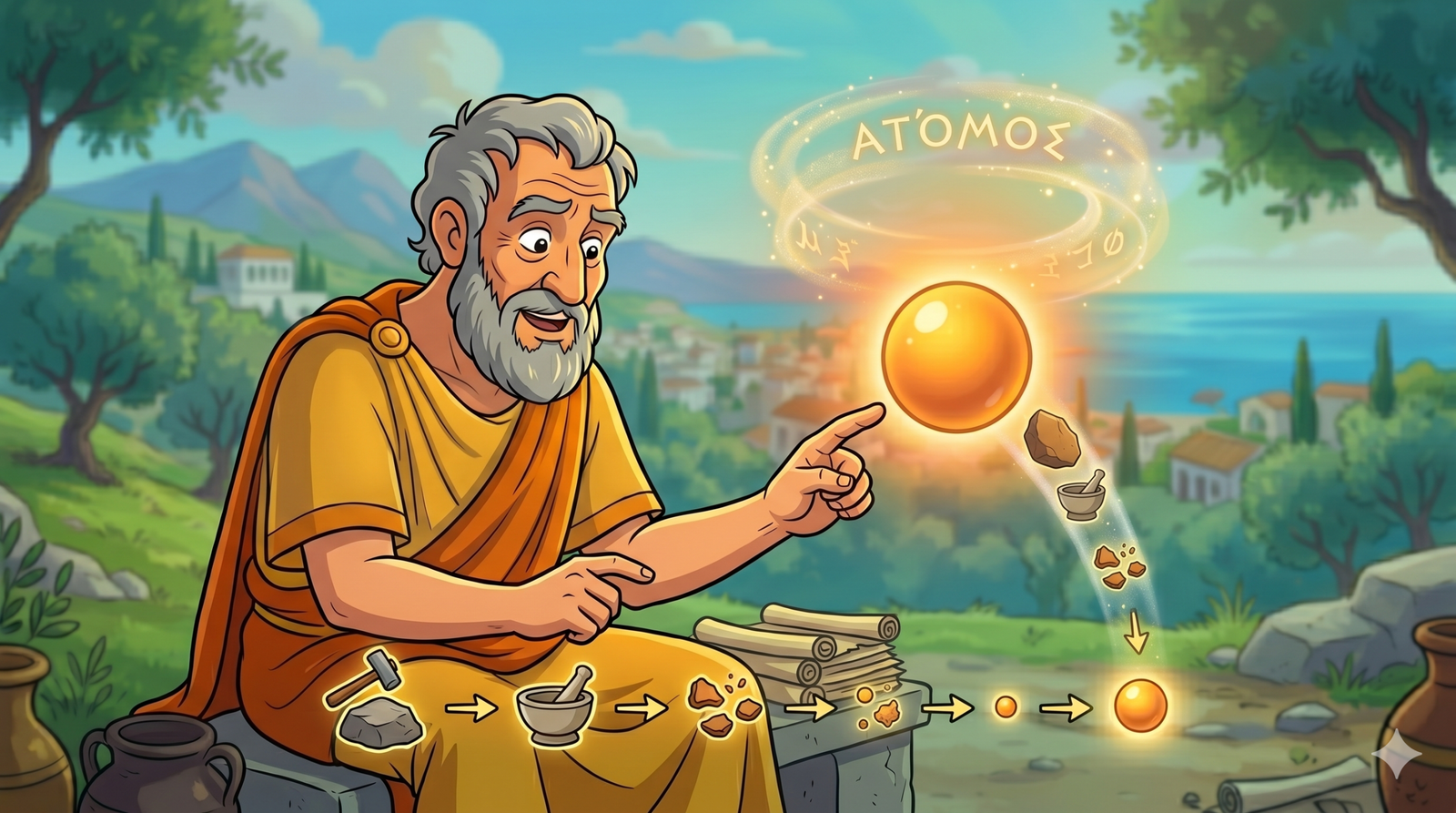
Everything begins with atoms.
An idea imagined by an ancient philosopher eventually became the foundation of modern atomic science.
Discovering the Nucleus
One experiment revealed that the atom was not what scientists thought it was.
In 1909, Ernest Rutherford fired tiny particles at a thin sheet of gold.
He expected most of them to pass through.
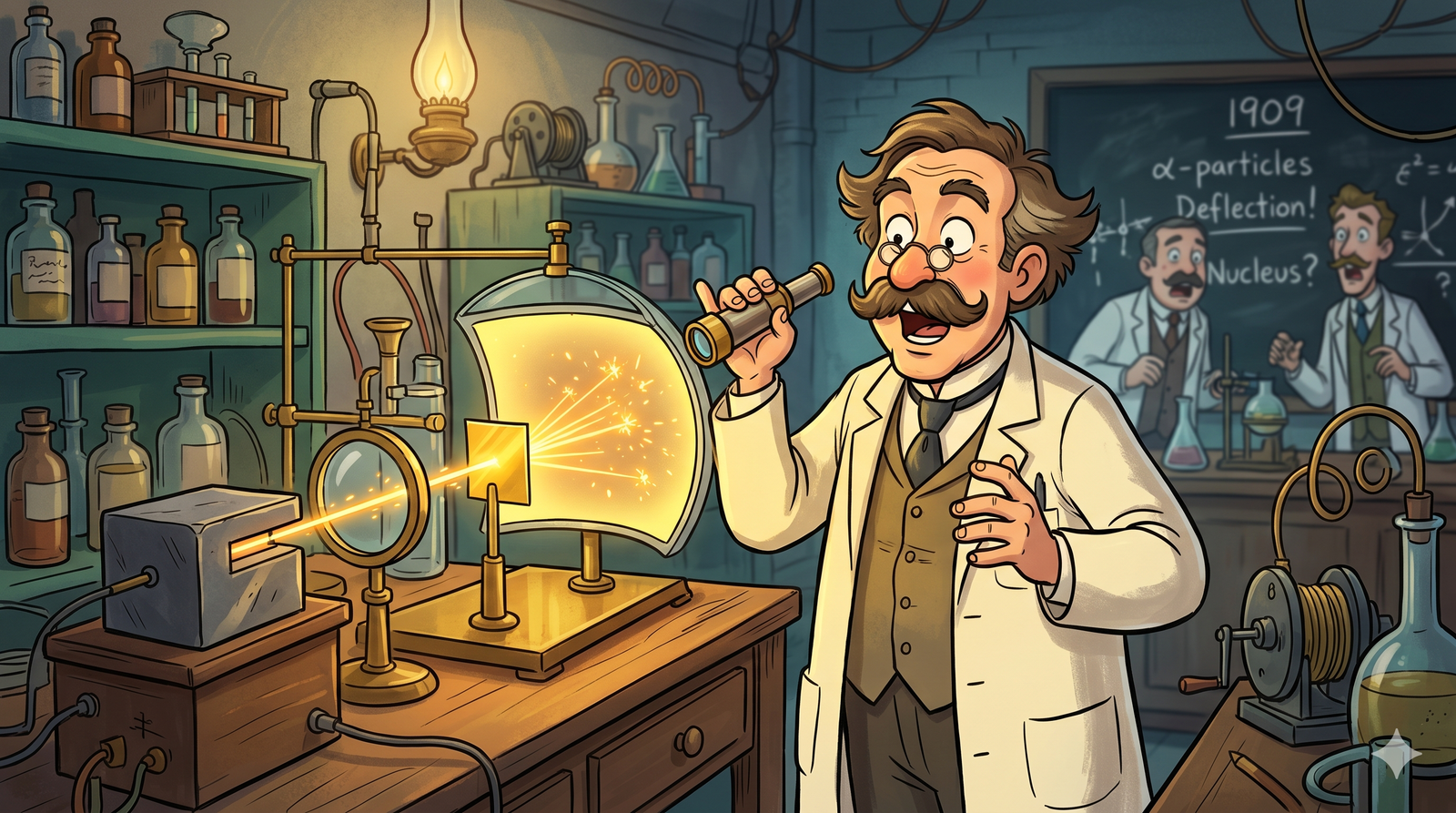
Tiny particles were fired toward an extremely thin sheet of gold. What happened next changed our understanding of the atom forever.
A few bounced back.
Most particles passed straight through.
That made sense if an atom was mostly empty space. But Rutherford noticed something deeply unexpected.
A small number of particles were deflected — and some were even sent back toward their source.
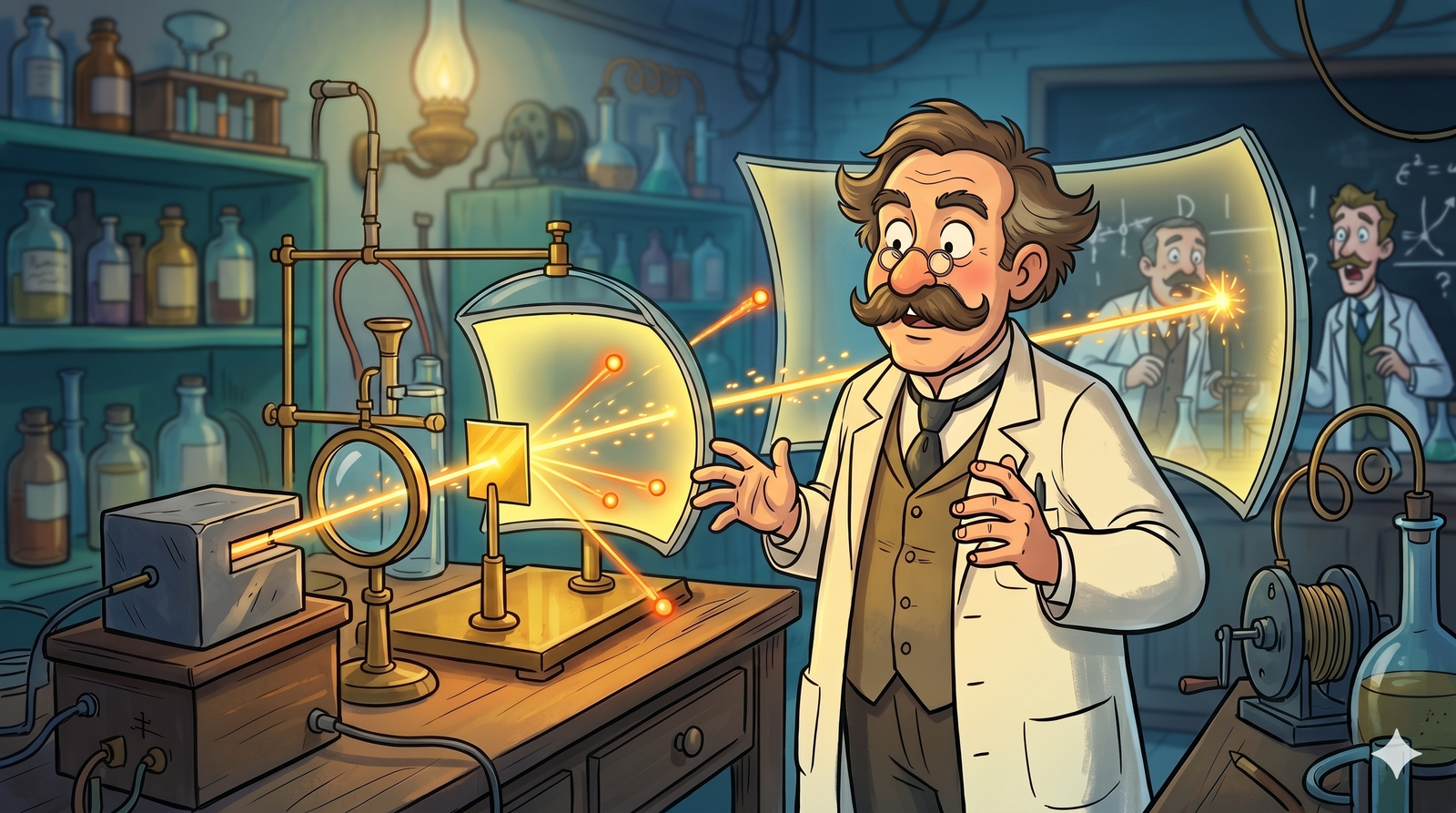
Rutherford realized something amazing.
Atoms were mostly empty space.
At their center was a tiny, incredibly dense nucleus. Almost all of the atom’s mass was concentrated there.
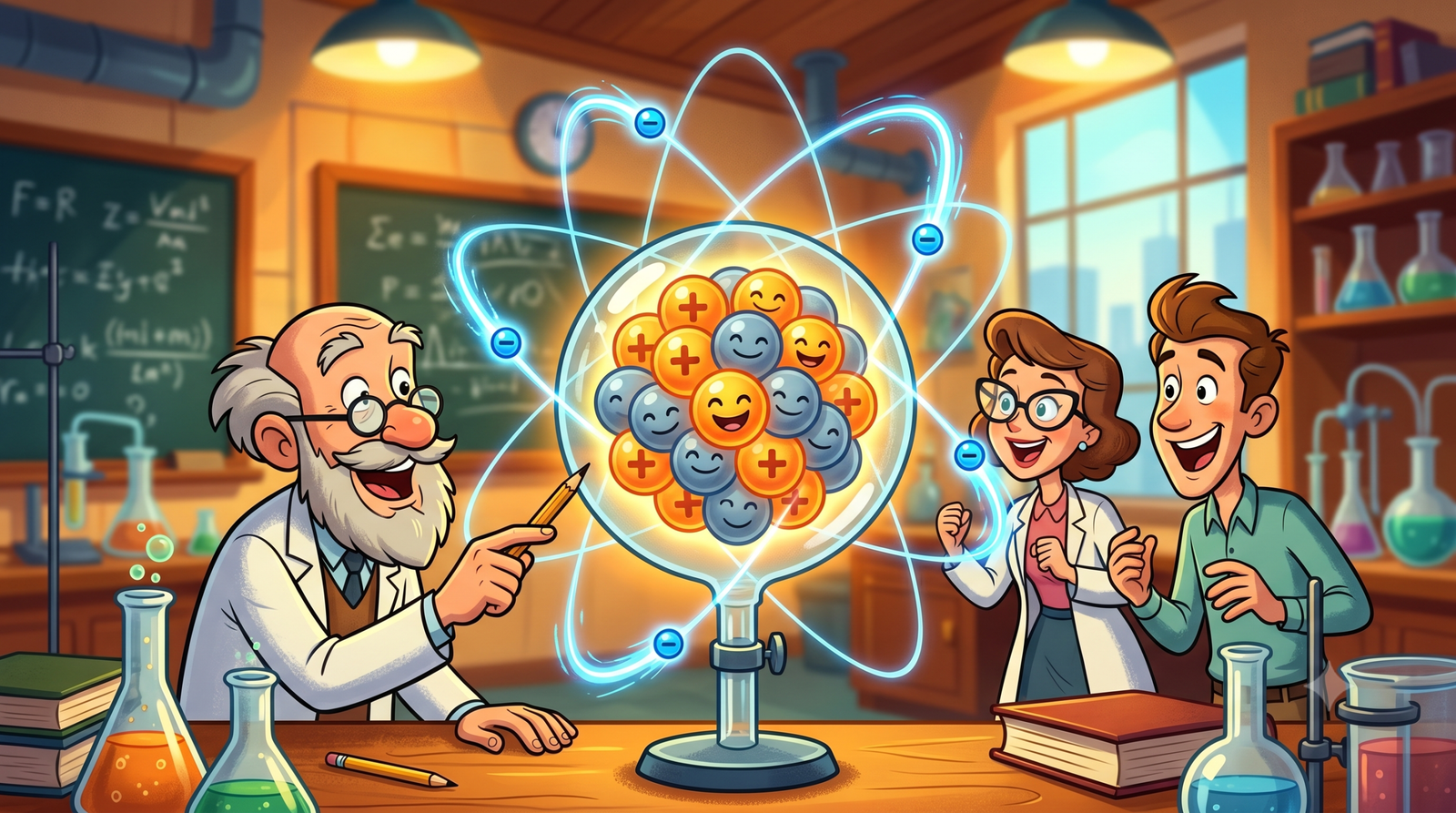
The nucleus.
Later, scientists discovered that this tiny nucleus contained positively charged protons and neutral particles called neutrons.
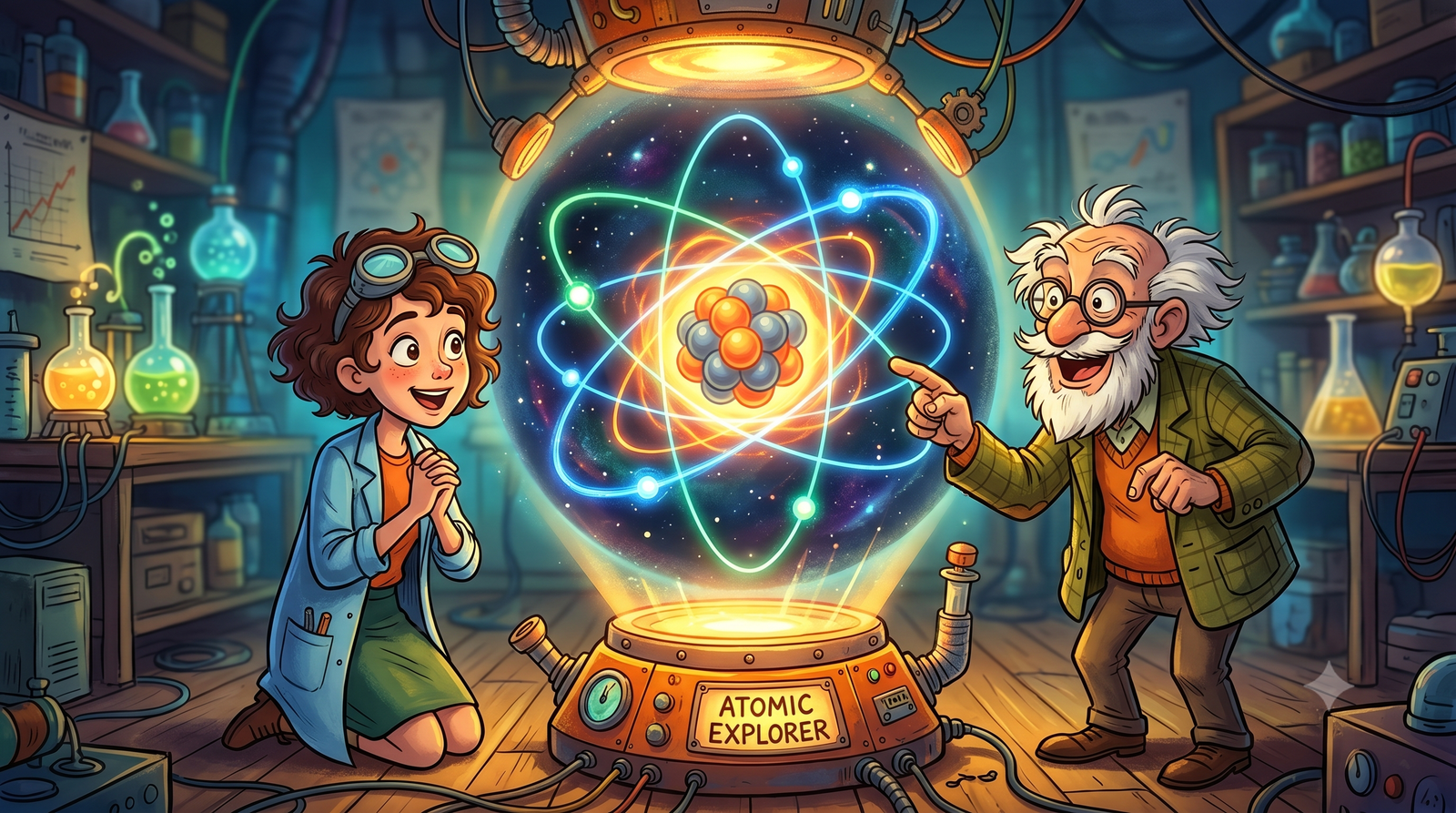
Around that tiny, dense nucleus raced tiny electrons — revealing a hidden structure far more fascinating than anyone had imagined.
Einstein’s E = mc²
In 1905, Albert Einstein developed a simple equation that revealed one of the deepest connections in nature.
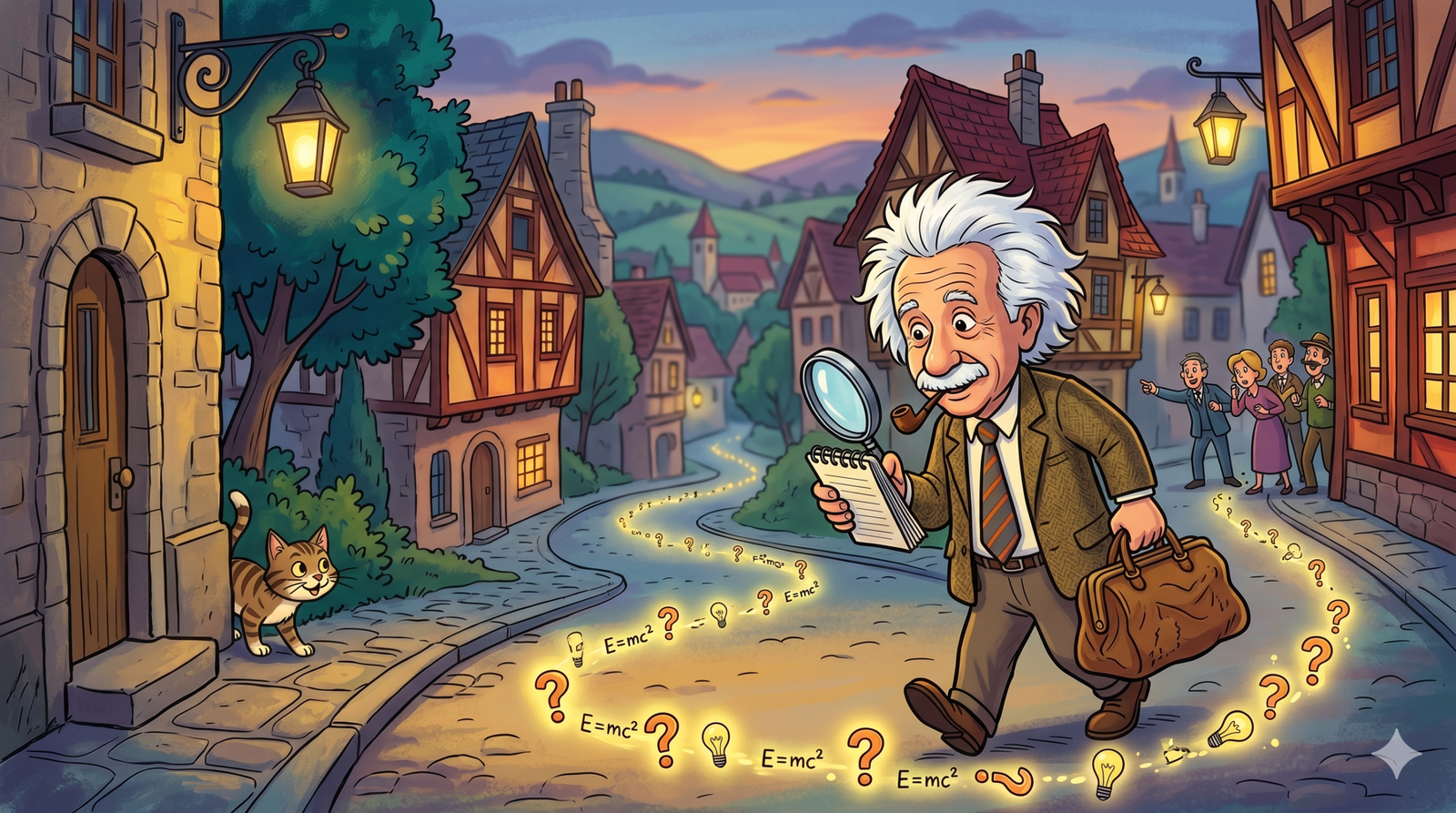
In 1905, Albert Einstein developed a famous equation:
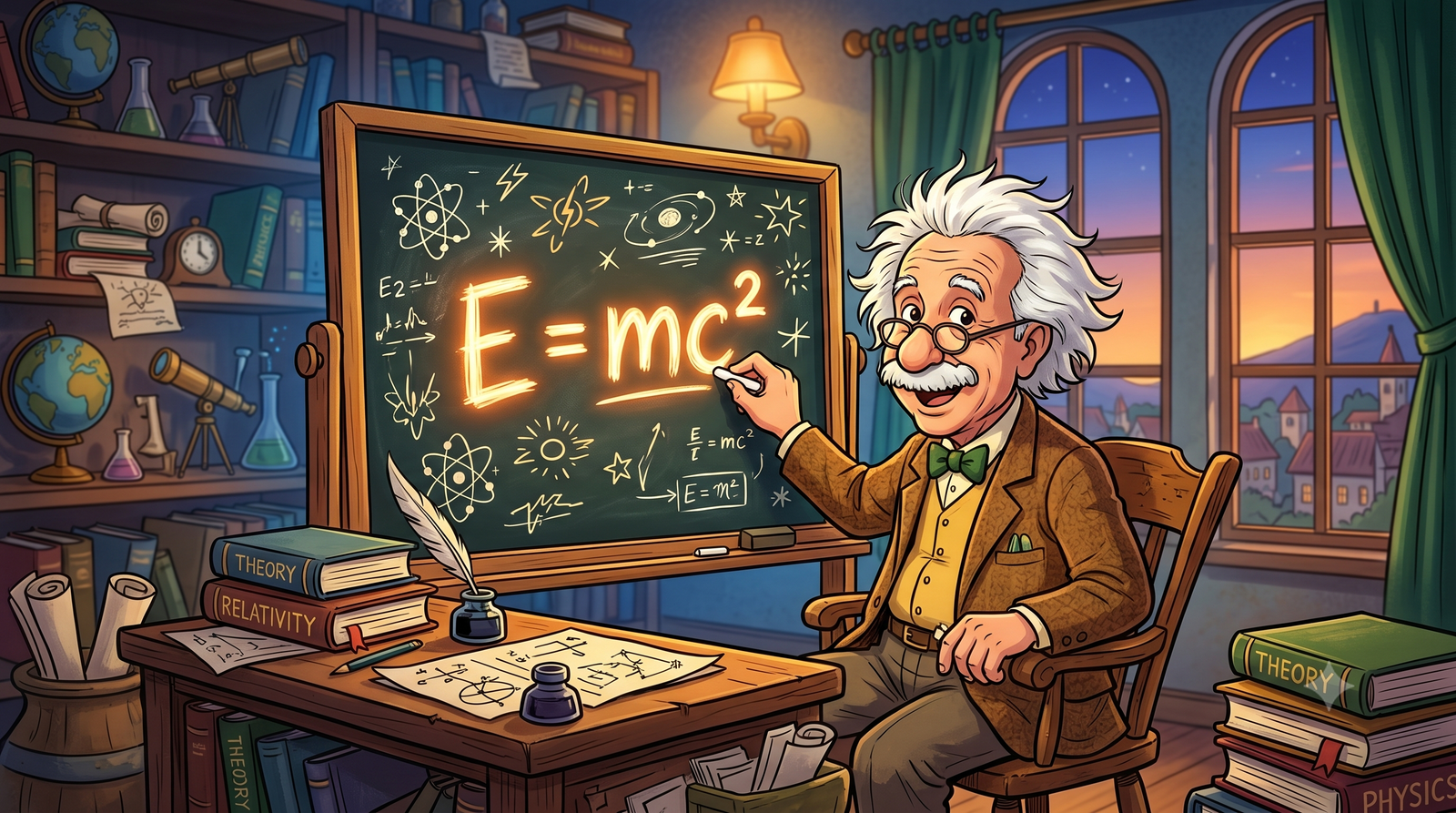
A tiny equation. An enormous idea.
This simple equation revealed something astonishing.
Matter and energy are connected.
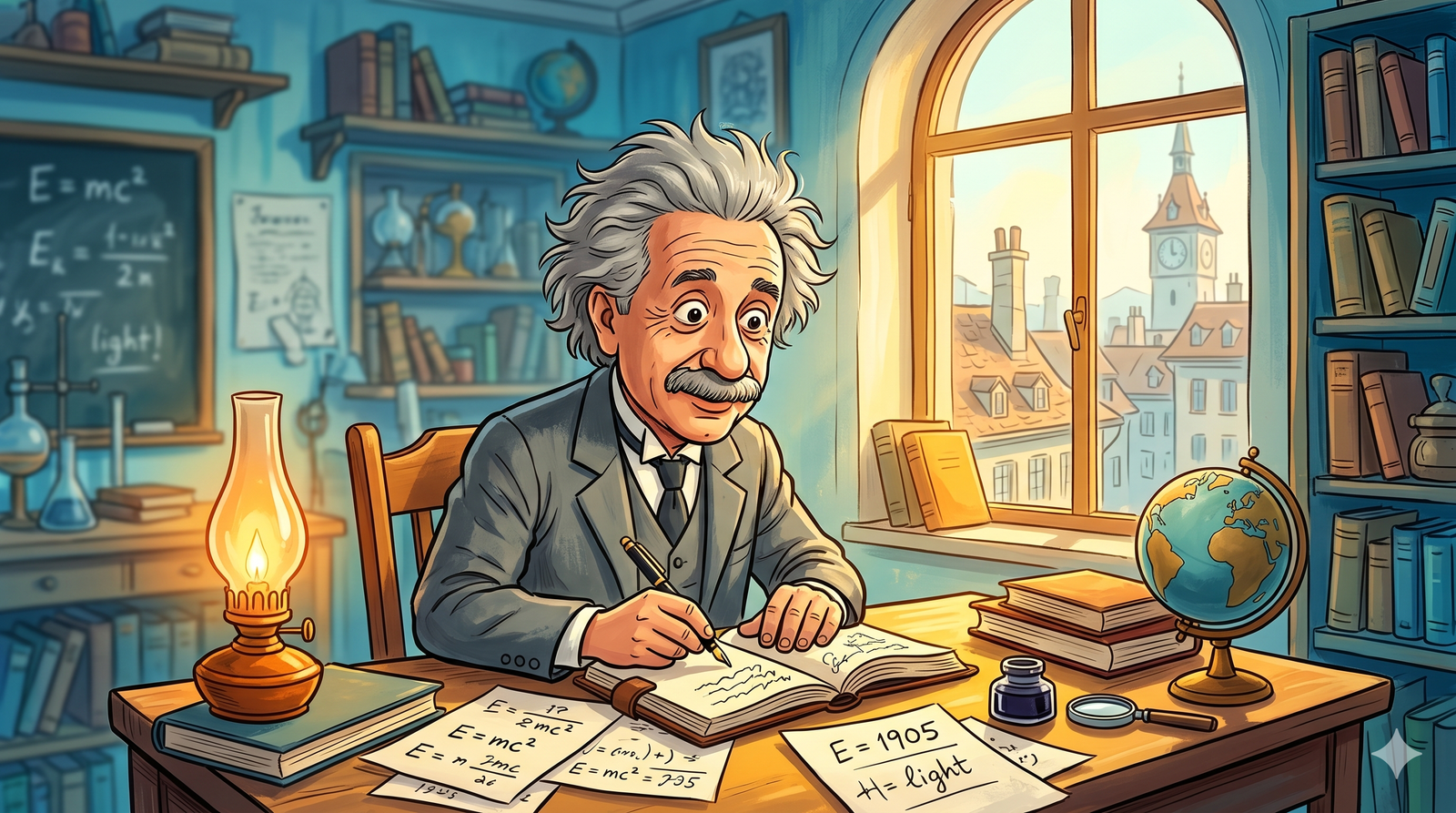
Mass is not simply matter. It represents stored energy.
Small mass. Huge energy.
Even a tiny amount of mass could be converted into an enormous amount of energy.
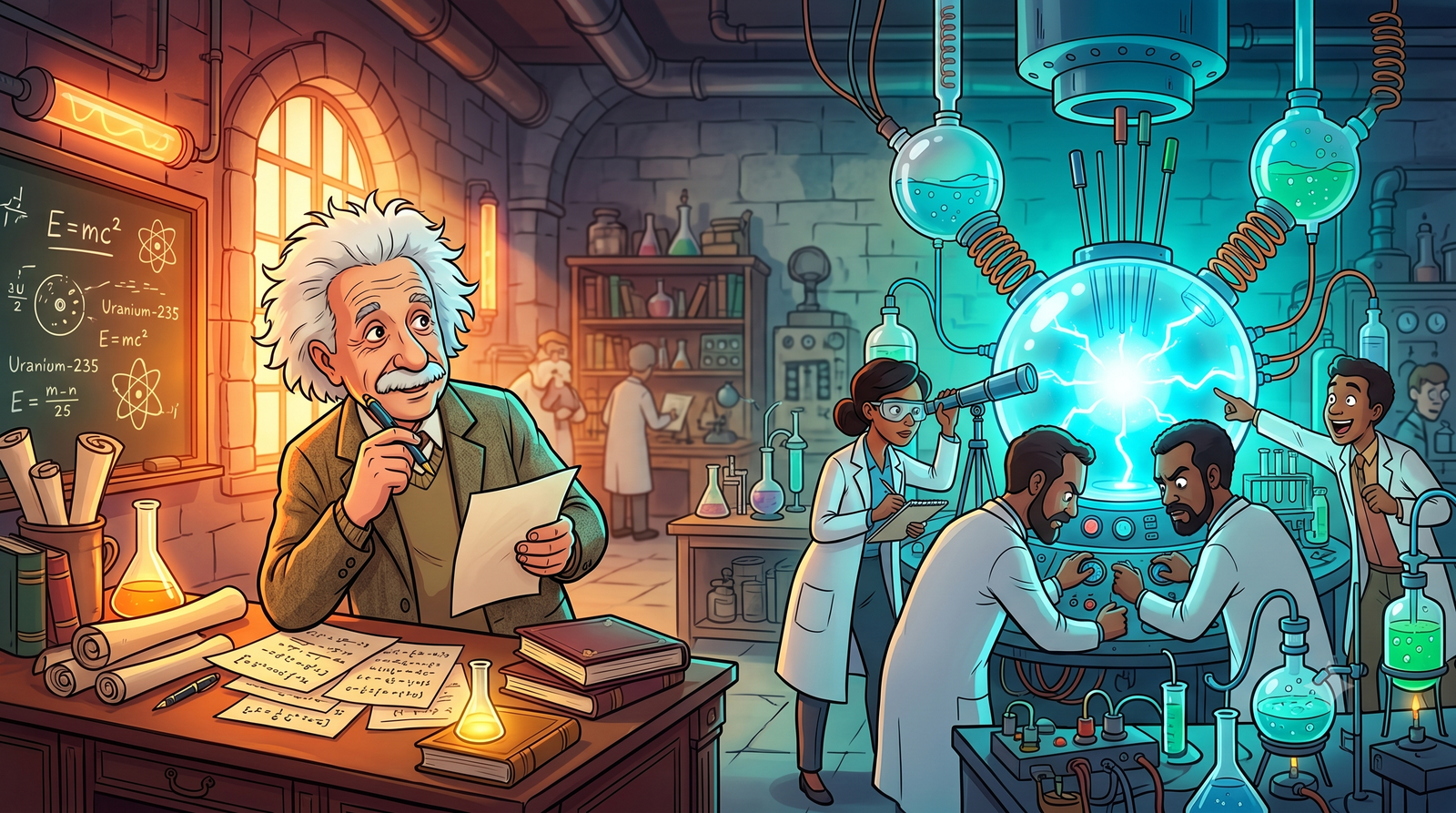
But how could scientists release that energy?
How could scientists release that energy?
The Discovery
of Nuclear Fission
In 1938, an experiment with uranium revealed something humanity had never witnessed before.
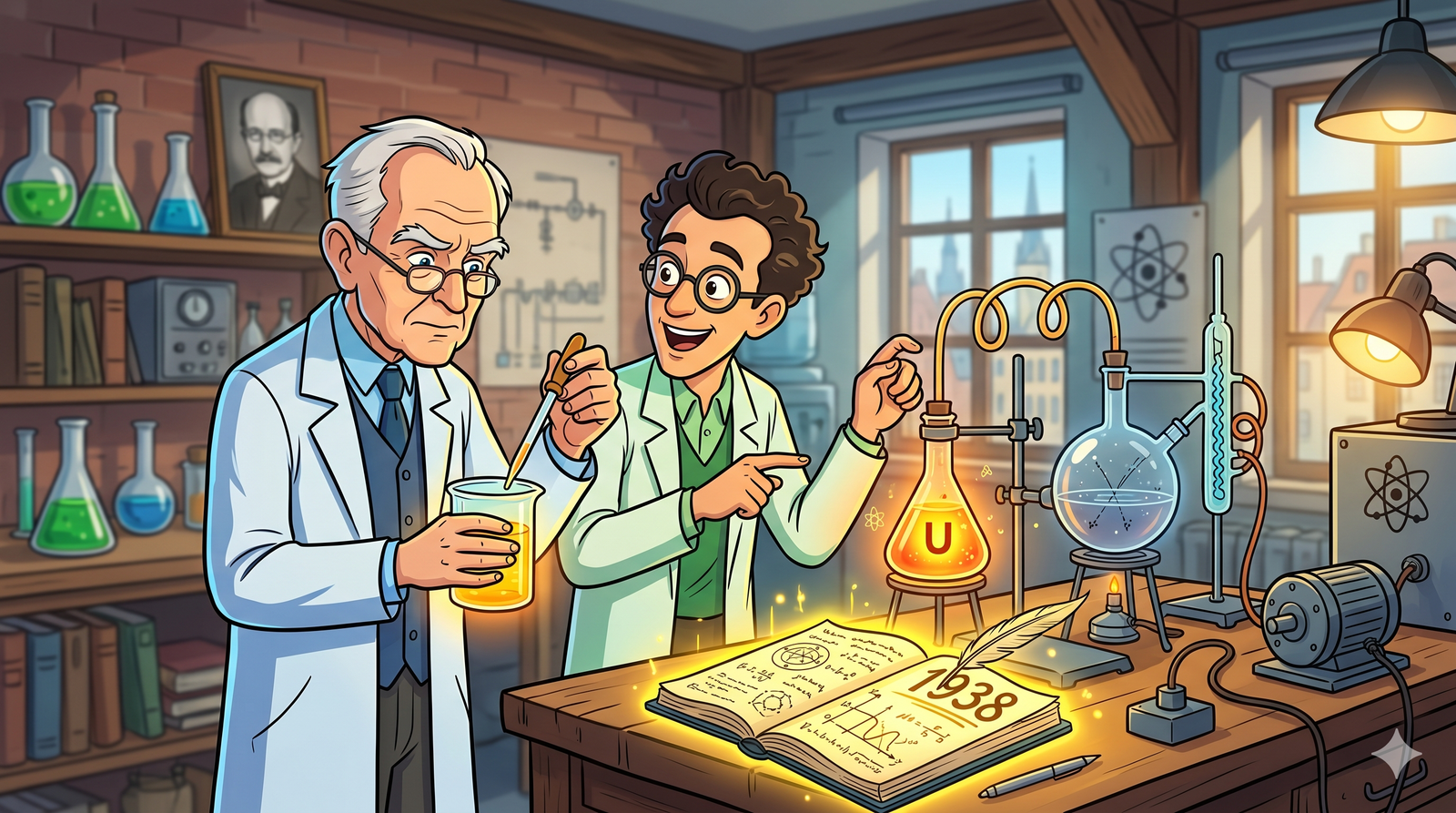
The answer arrived in 1938.
German scientists Otto Hahn and Fritz Strassmann were experimenting with uranium.
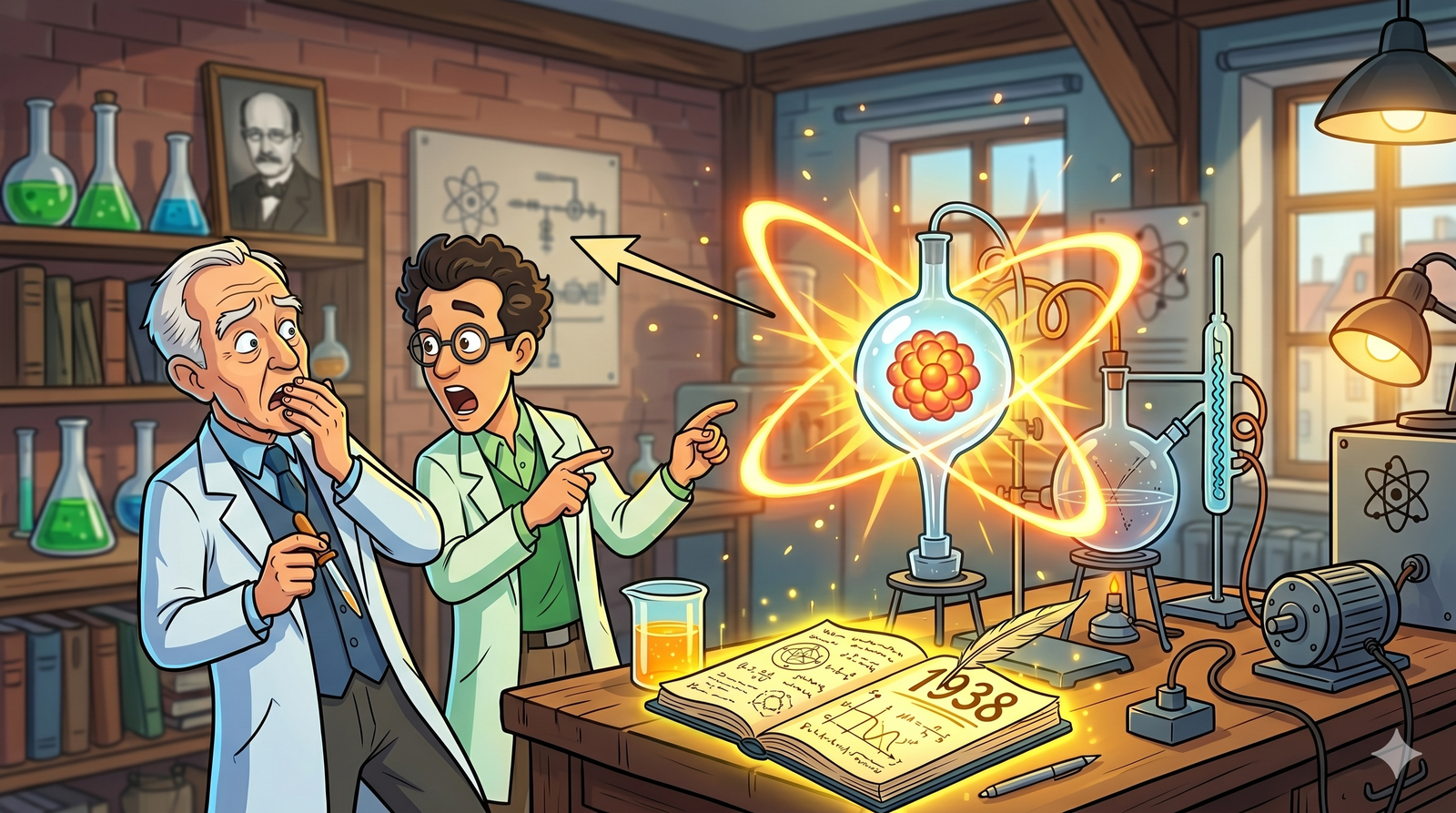
& Fritz Strassmann
The missing piece of the puzzle.
Their colleague, Austrian physicist Lise Meitner, helped explain the results.
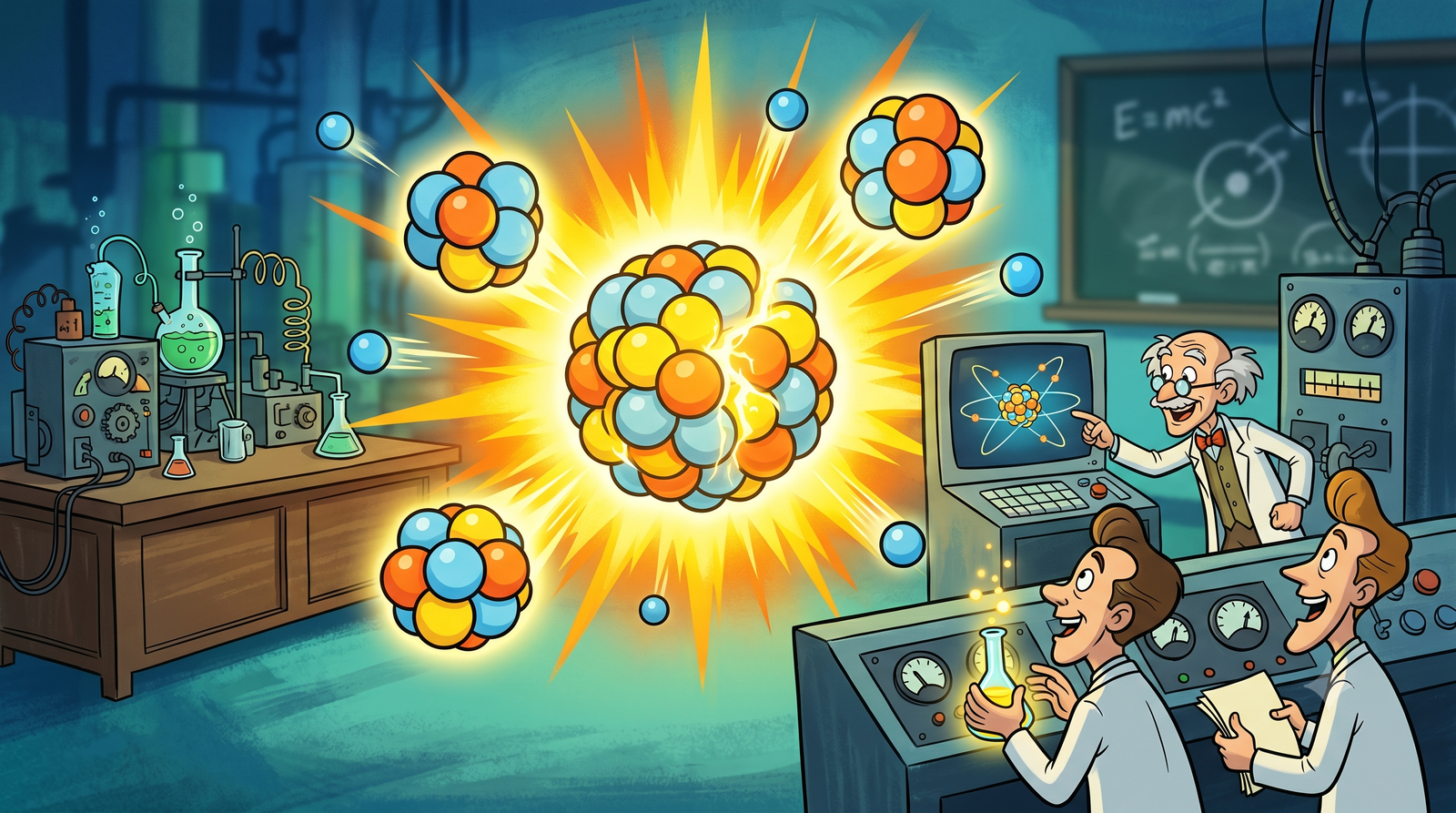
Something extraordinary had happened.
The uranium atom had split.
What appeared impossible had happened inside the uranium atom.
When a heavy atomic nucleus splits, energy is released along with additional particles.
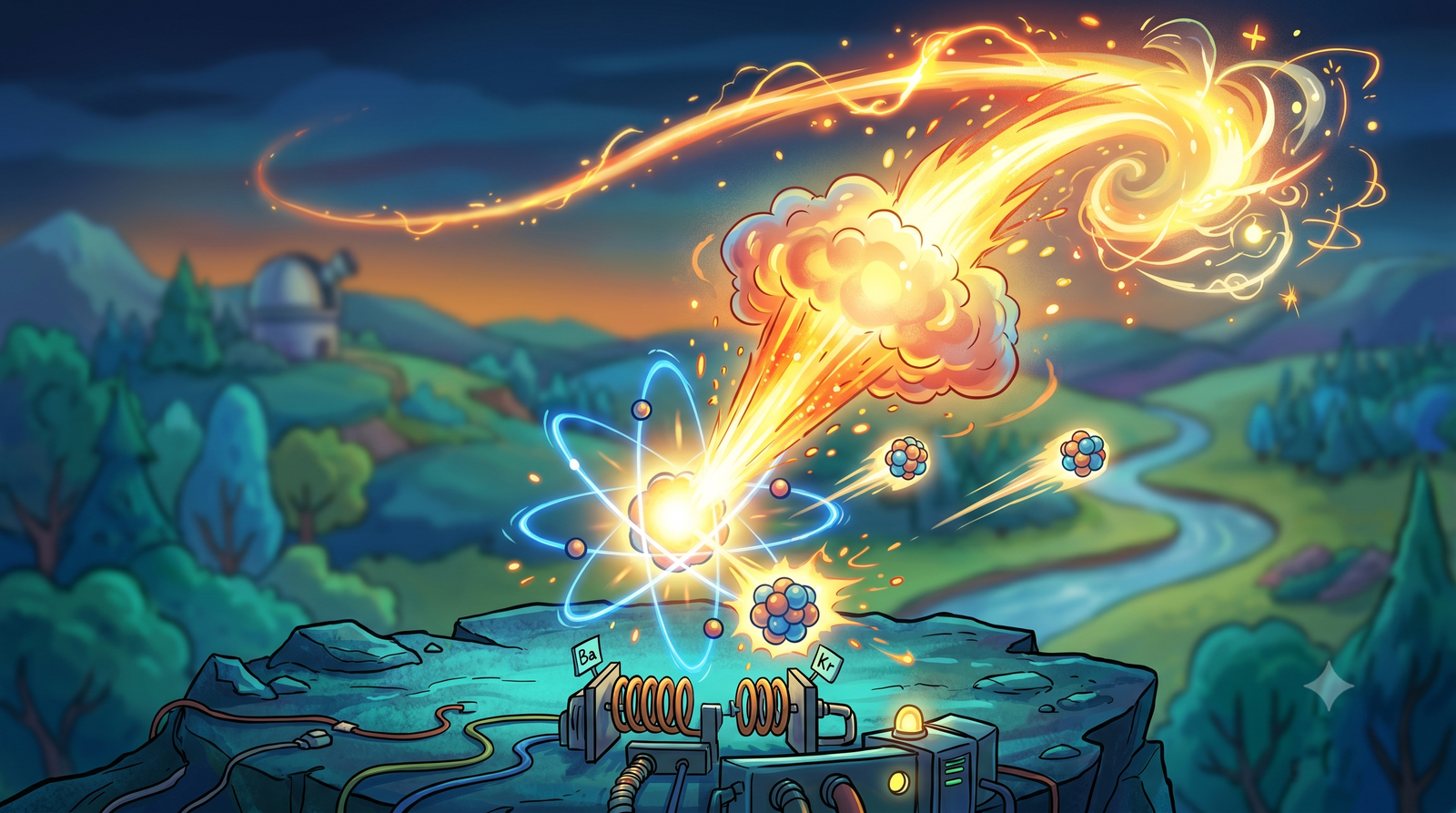
Mass was becoming energy.
As the atom split, some of its mass was transformed into energy.
Humanity had discovered how to unlock the energy hidden inside matter itself.
How a Chain Reaction Works
One tiny event can trigger another. Then another. Then another.
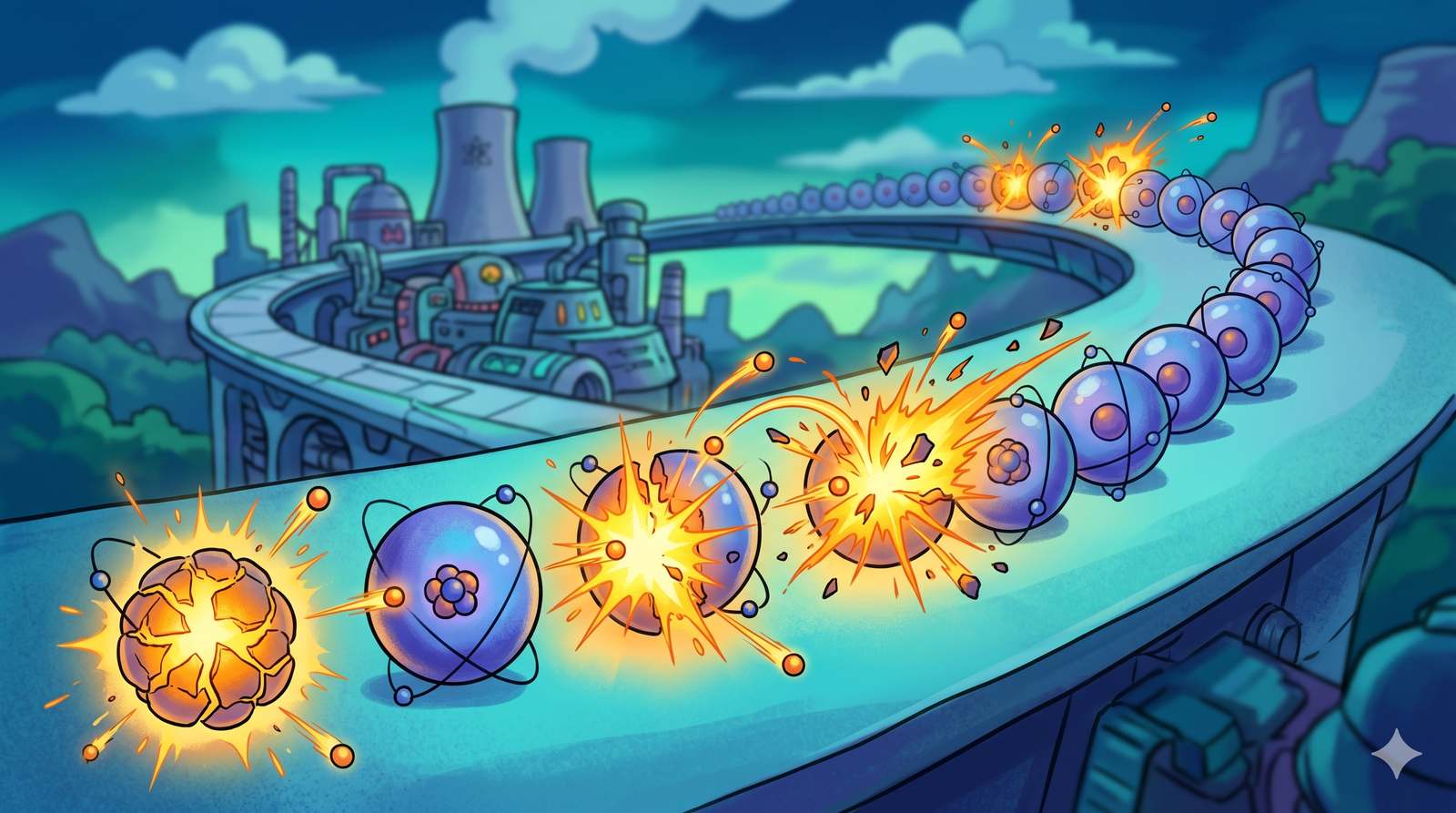
One split atom releases energy.
But the real magic happens when one split atom causes another atom to split.
Neutrons
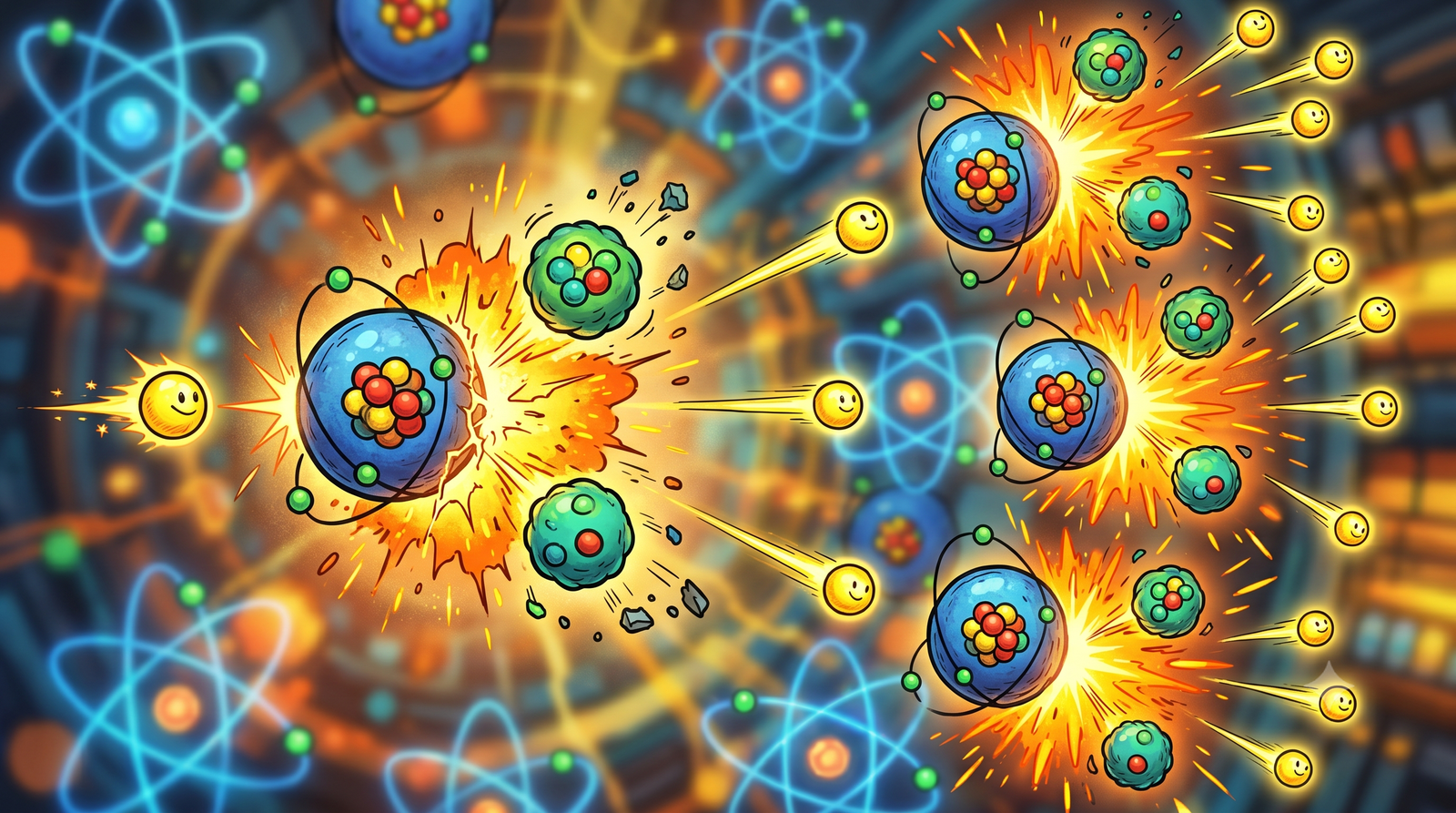
When a Uranium-235 atom splits, it releases neutrons that can strike nearby uranium atoms.
When a Uranium-235 atom splits, it releases neutrons.
These neutrons strike nearby uranium atoms, causing them to split too.
Control.
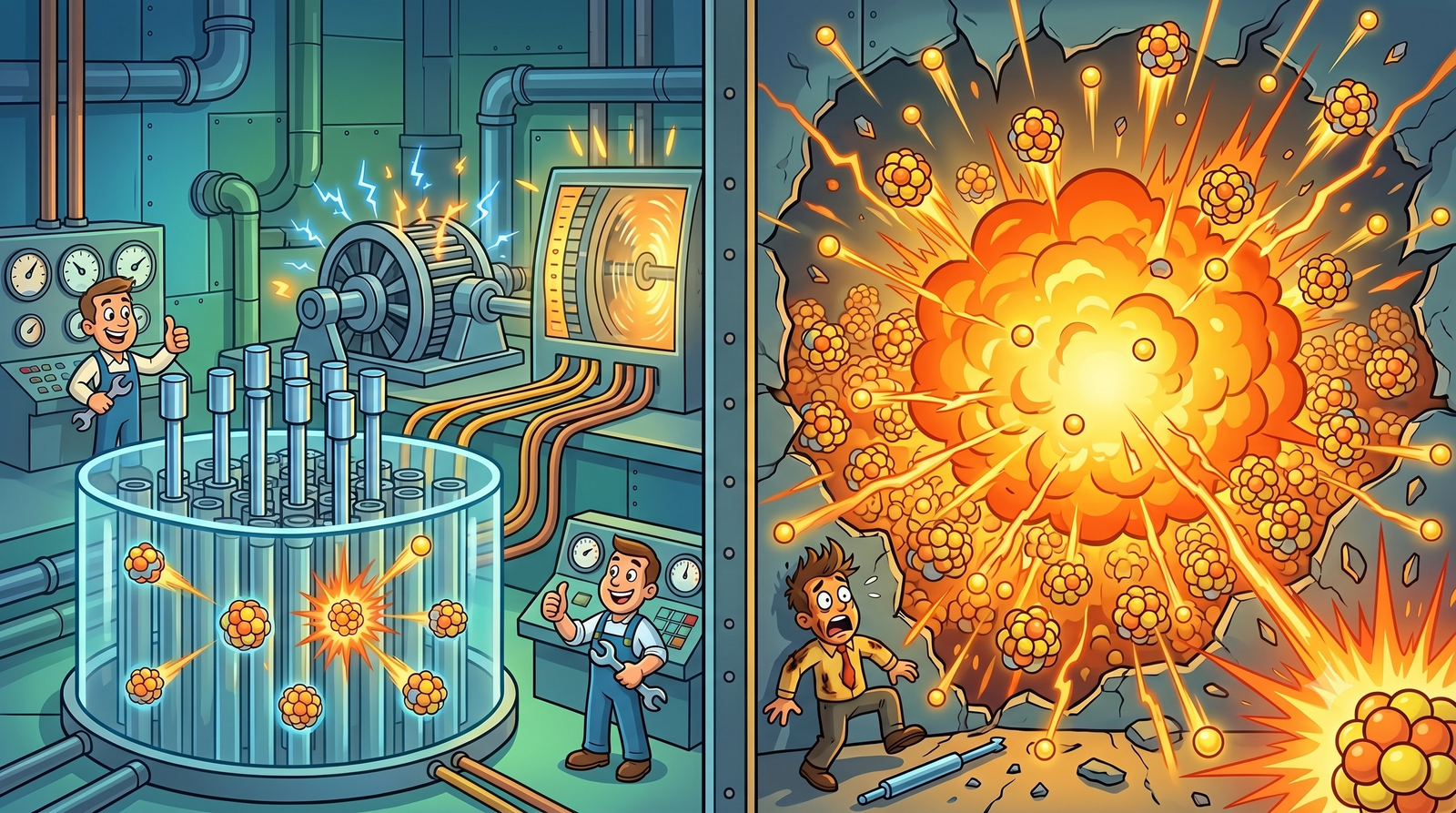
Energy becomes electricity.
If the chain reaction is carefully controlled, the released energy can be used to generate electricity.
Energy can become destructive.
If the reaction grows without control, an enormous amount of energy can be released in a very short time.
Control.
The same fundamental chain reaction can lead to dramatically different outcomes.
The First Nuclear Reactor
A hidden experiment beneath a football stadium changed the course of human history.
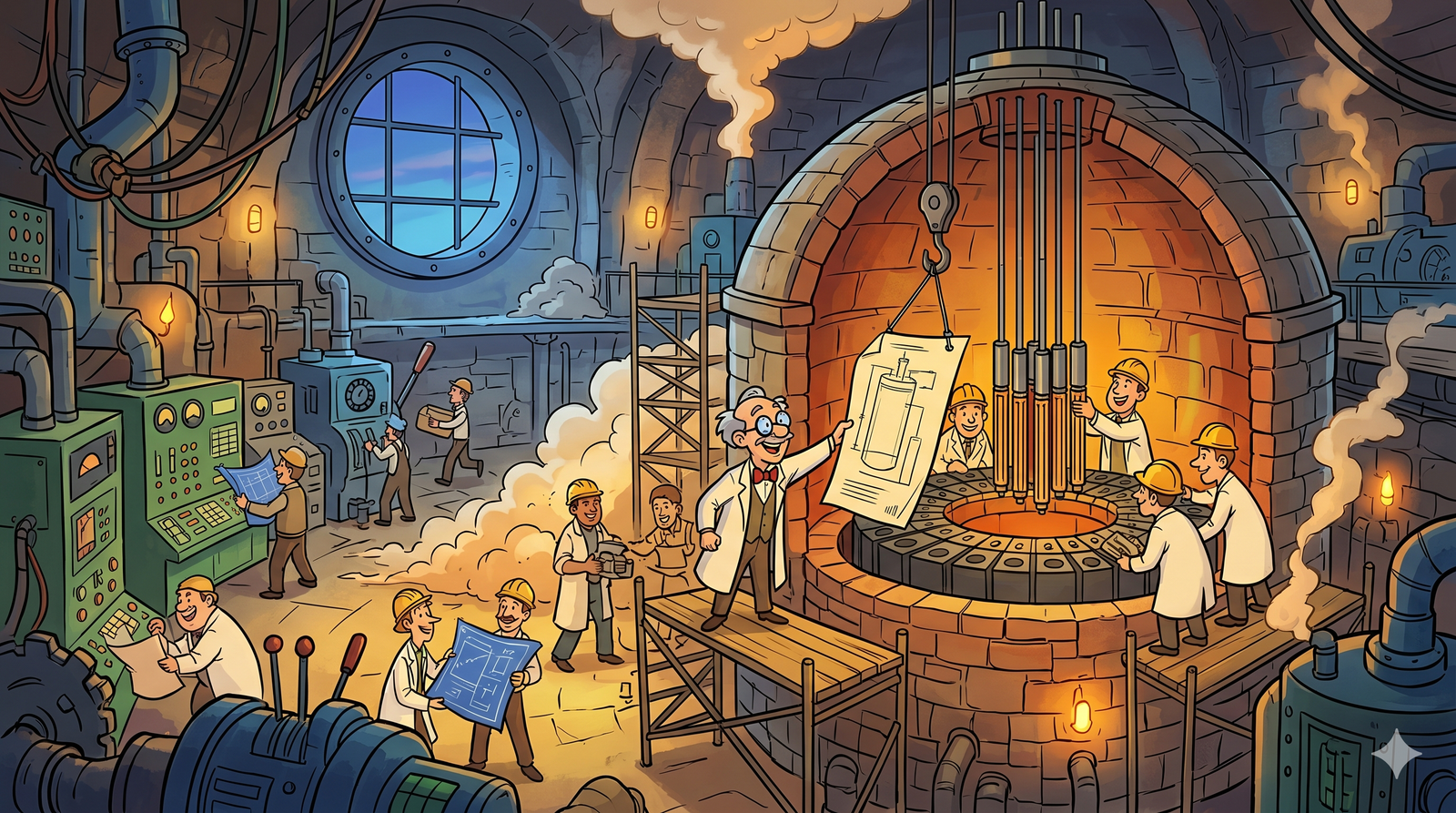
Beneath a football stadium.
On December 2, 1942, beneath a football stadium at the University of Chicago, a team led by Italian physicist Enrico Fermi achieved the world’s first controlled nuclear chain reaction.
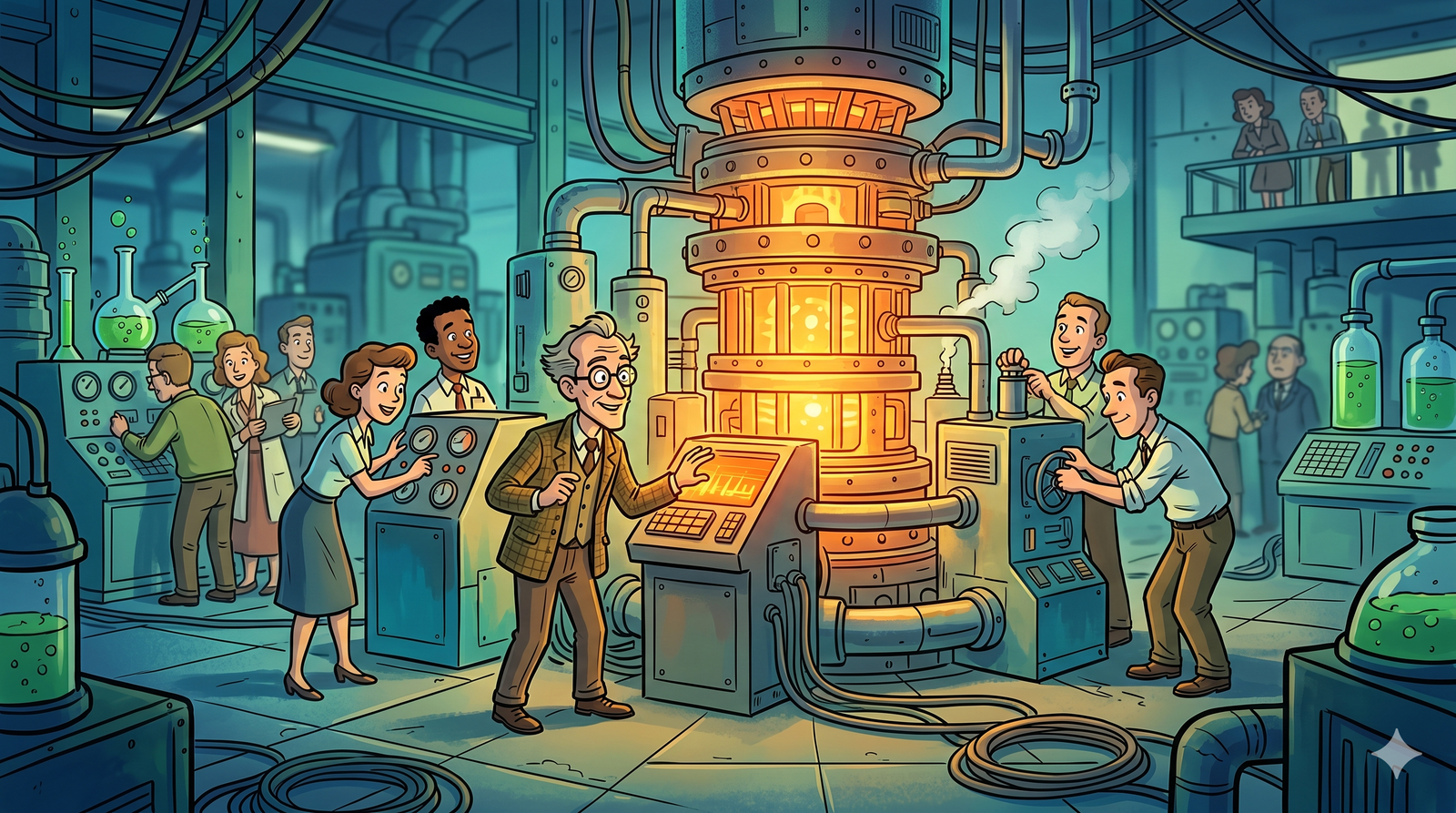
Enrico Fermi
The reaction worked.
For the first time, humanity had created a controlled nuclear chain reaction.
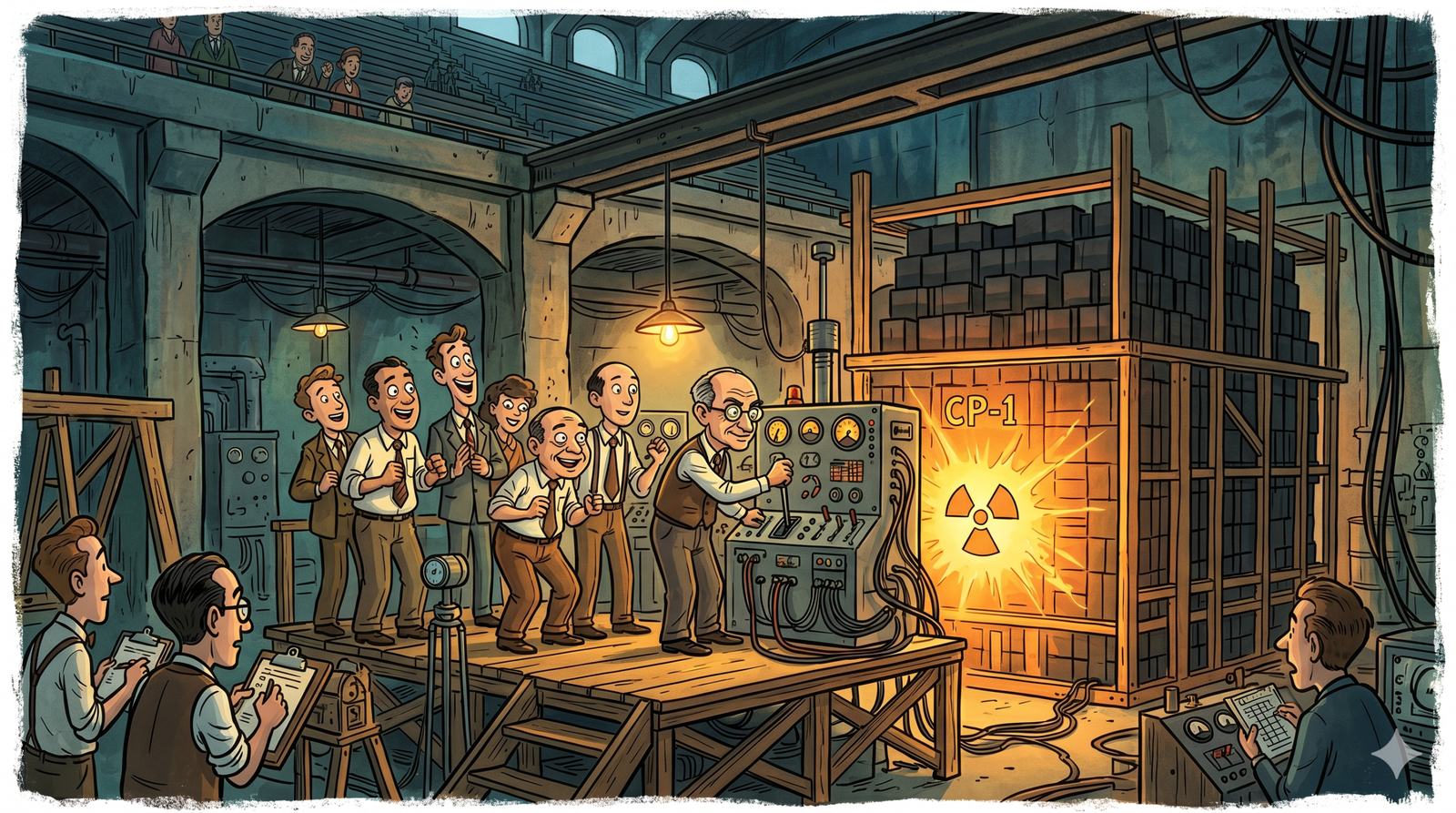
The reactor was born.
Humanity had entered the Atomic Age.
What began as an experimental pile of graphite, uranium and carefully controlled physics became the foundation of a new technological era.
The Atomic Bomb
Nuclear power revealed its darkest possibility.
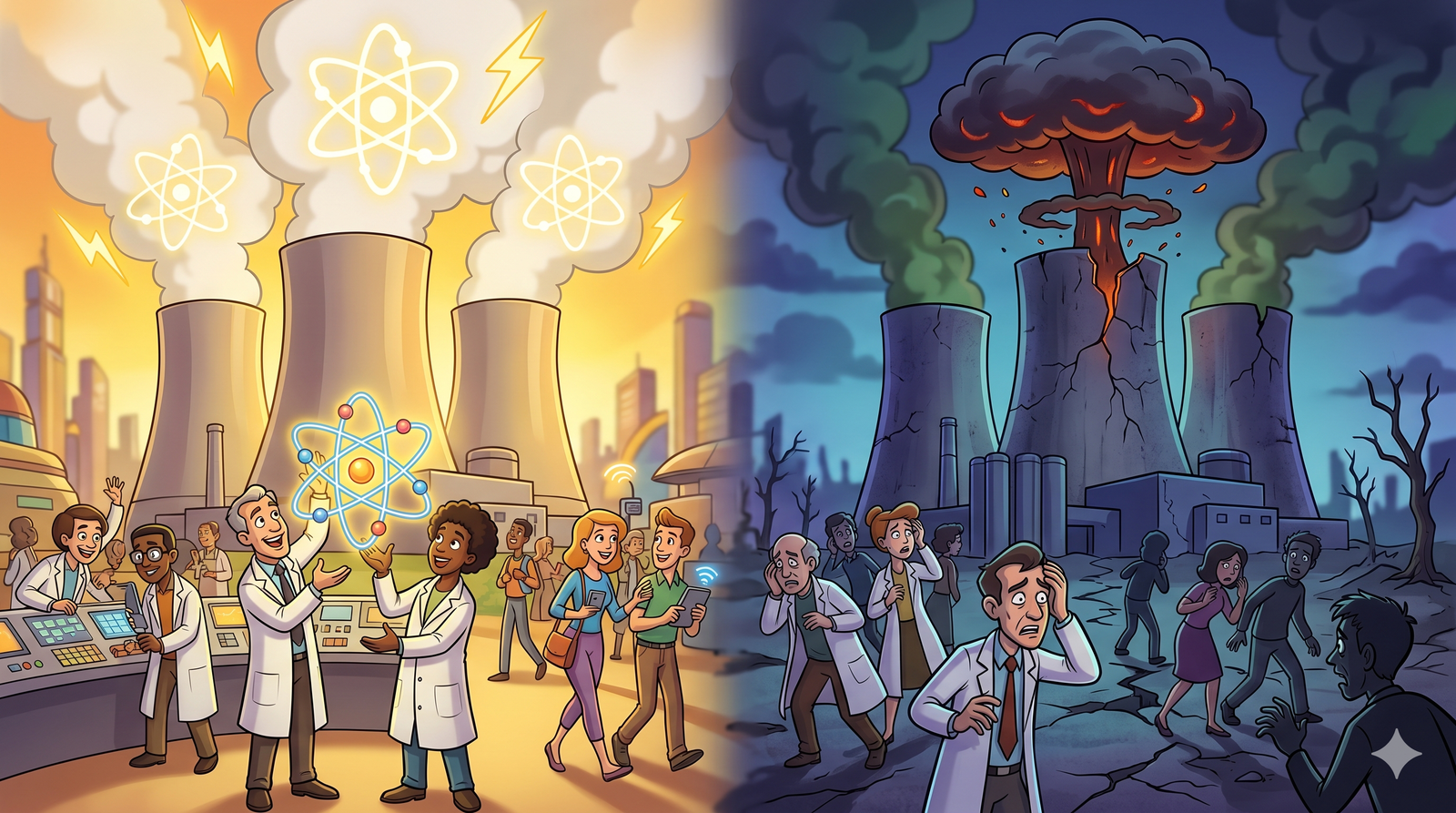
Unfortunately, the first use was not peaceful.
Scientists working on the Manhattan Project developed the first atomic bombs.
RESEARCH
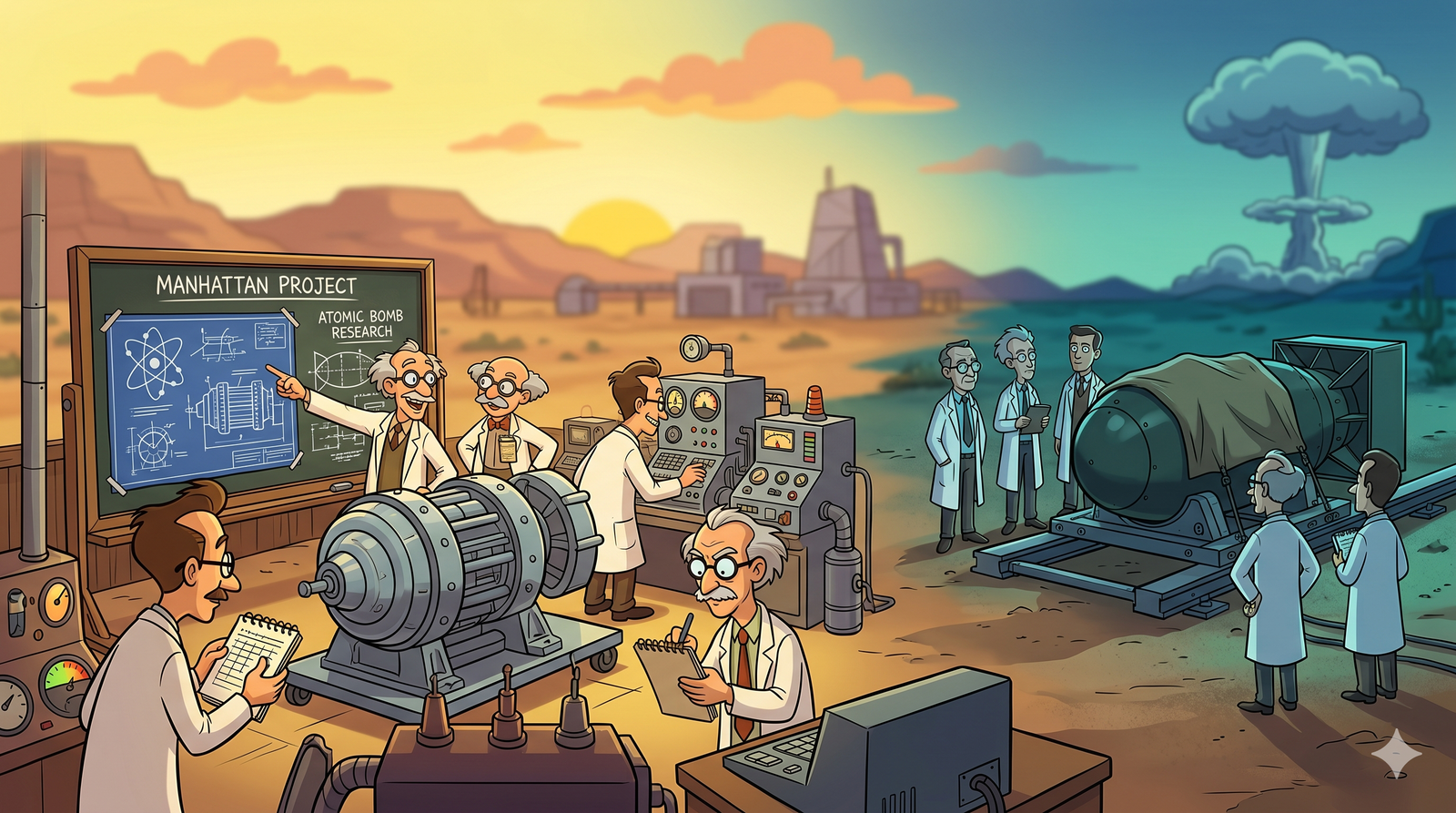
A weapon unlike anything before it.
Nuclear fission had moved from laboratory experiments into a weapon of unprecedented destructive power.
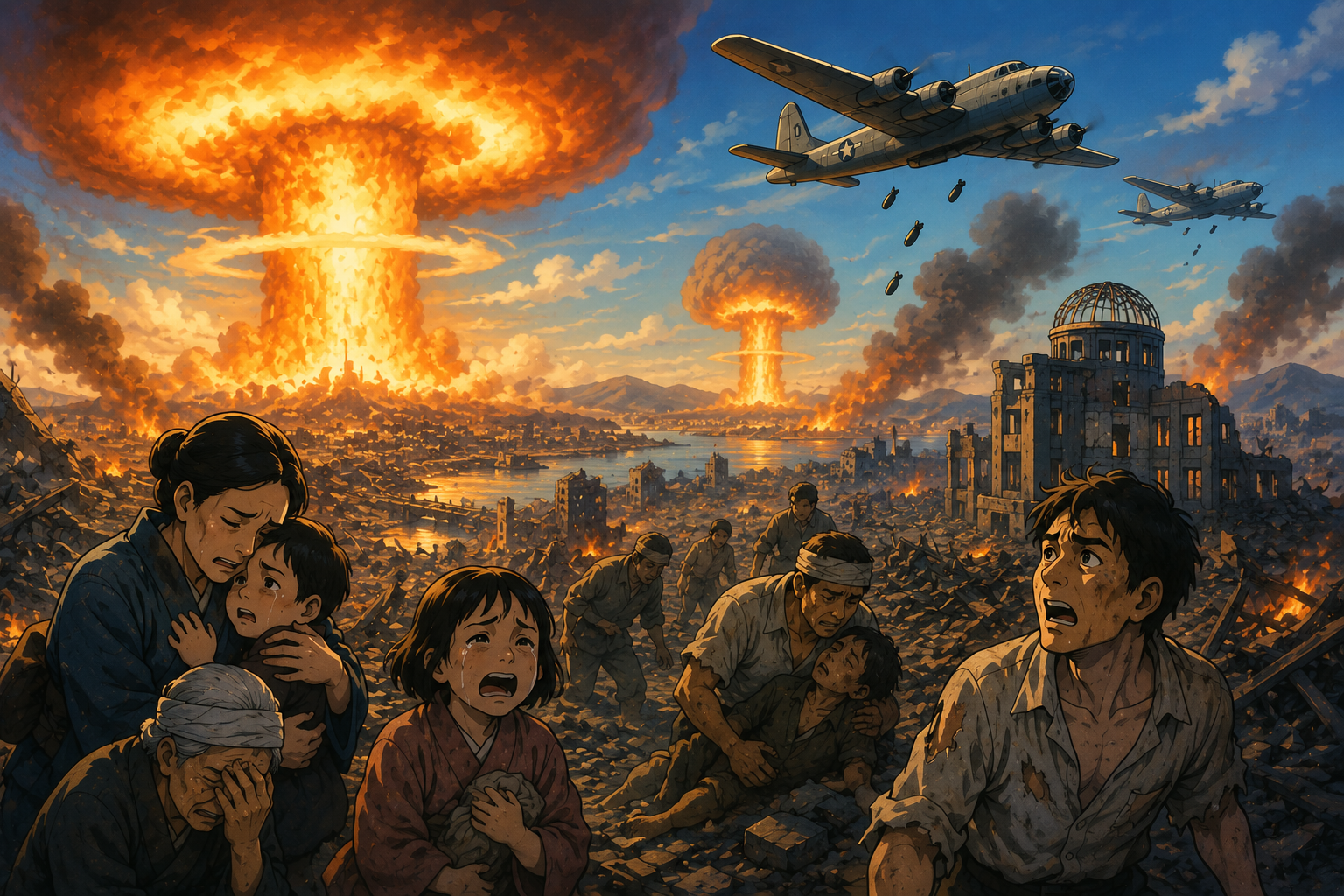
Two dates. One world changed forever.
Hiroshima
An atomic bomb was dropped on Hiroshima, causing catastrophic destruction and loss of life.
Nagasaki
Three days later, a second atomic bomb was dropped on Nagasaki, bringing another devastating human toll.
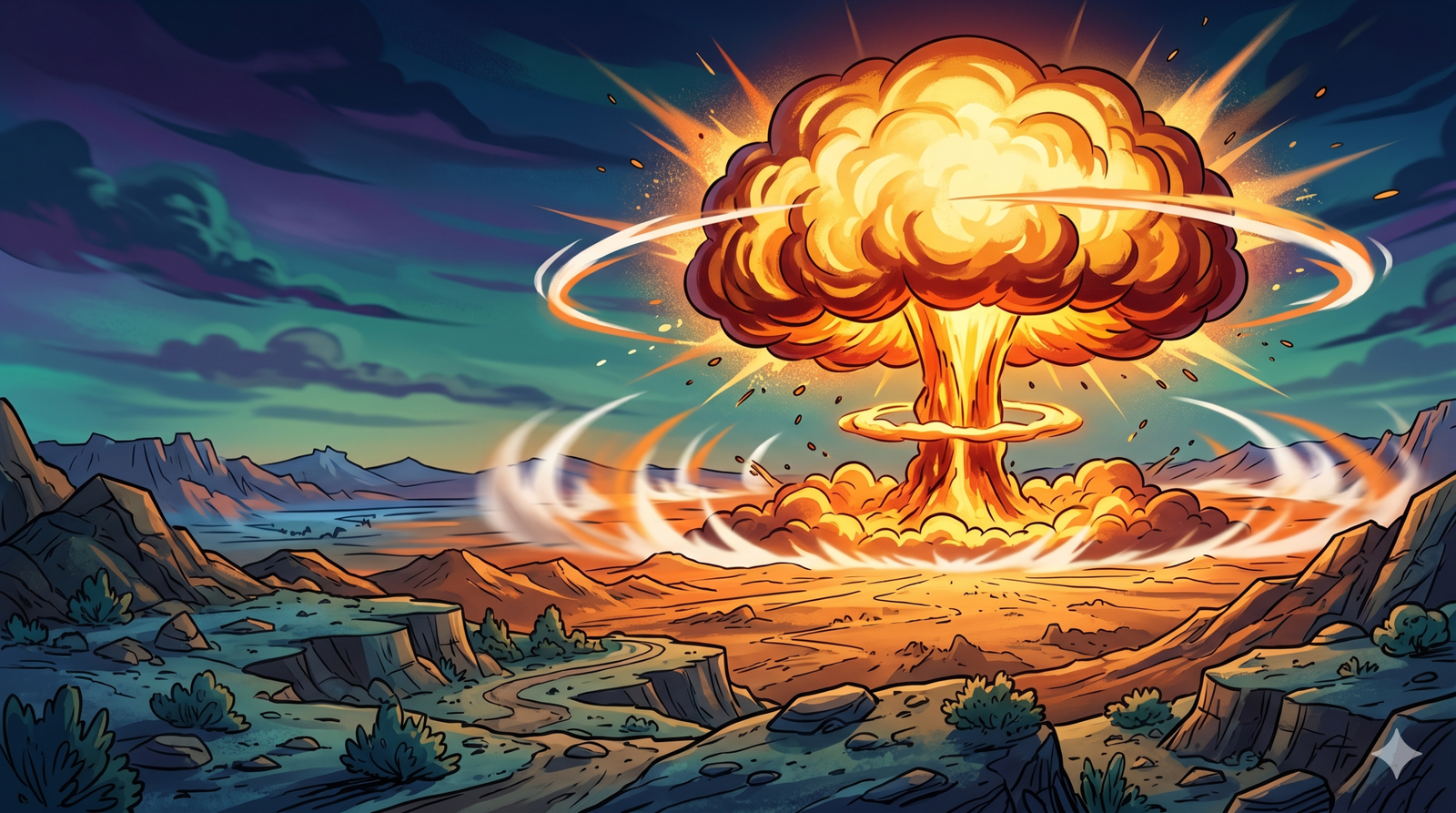 HIROSHIMA
 NAGASAKI
The destruction was devastating.
Humanity suddenly understood that the energy hidden inside the atom could produce power on an extraordinary scale — but also destruction on an equally terrifying one.
Great scientific power must be used responsibly.
The atom had revealed its extraordinary potential. The question was no longer only what humanity could do — but what humanity should do with that power.
Atoms for Peace
After the war, scientists began searching for a very different future for nuclear technology.
The atom could power a city.
Instead of being used for destruction, nuclear technology could be harnessed to produce electricity.
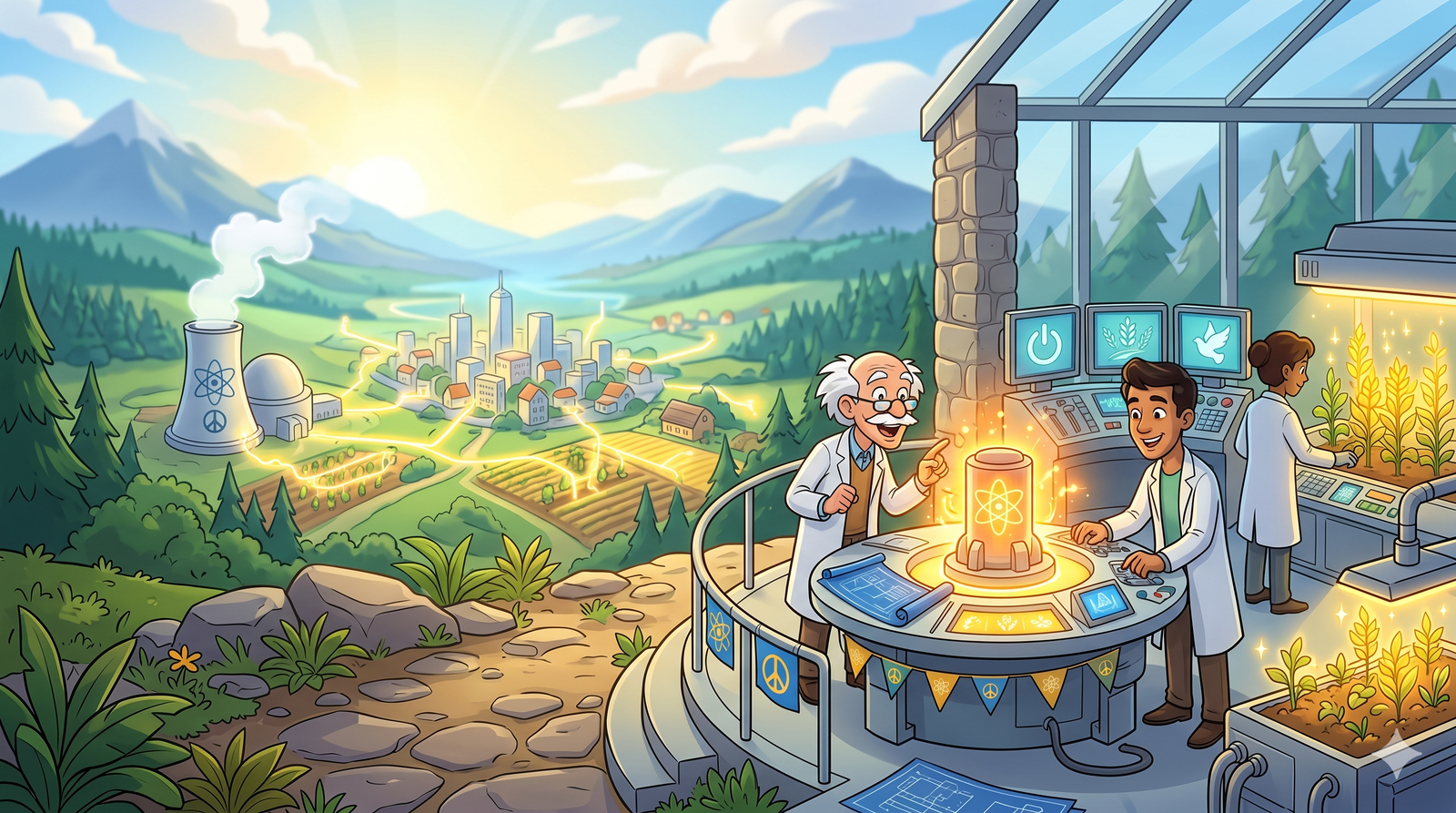
Electricity from the atom.
In 1954, the world’s first nuclear power station began supplying electricity in Obninsk, Russia.
POWER STATION
GENERATION
Soon, many countries followed.
ENERGY
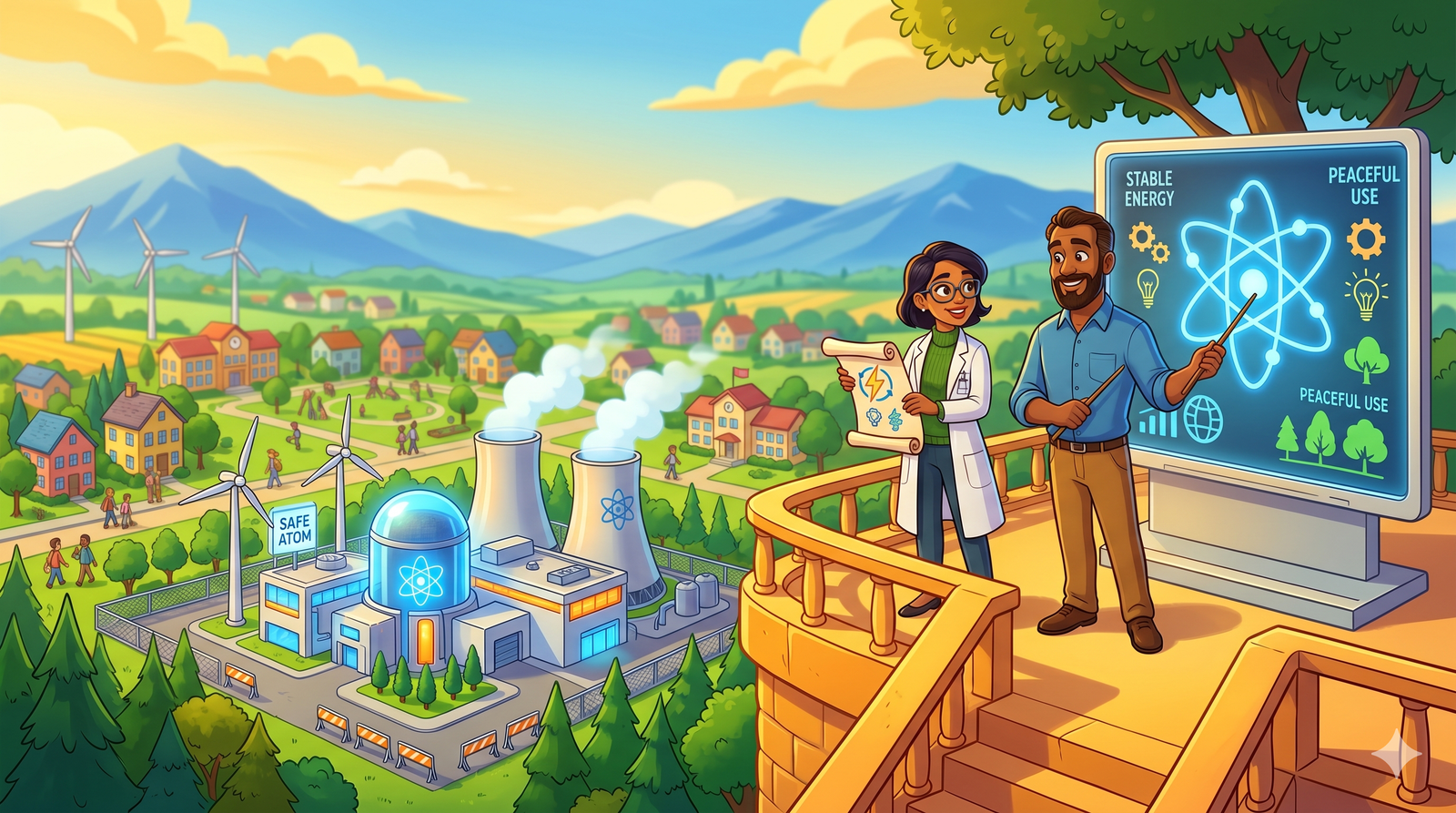
Reactors generate electricity.
Nuclear reactors use the heat released by fission to produce steam, drive turbines, and generate electricity.
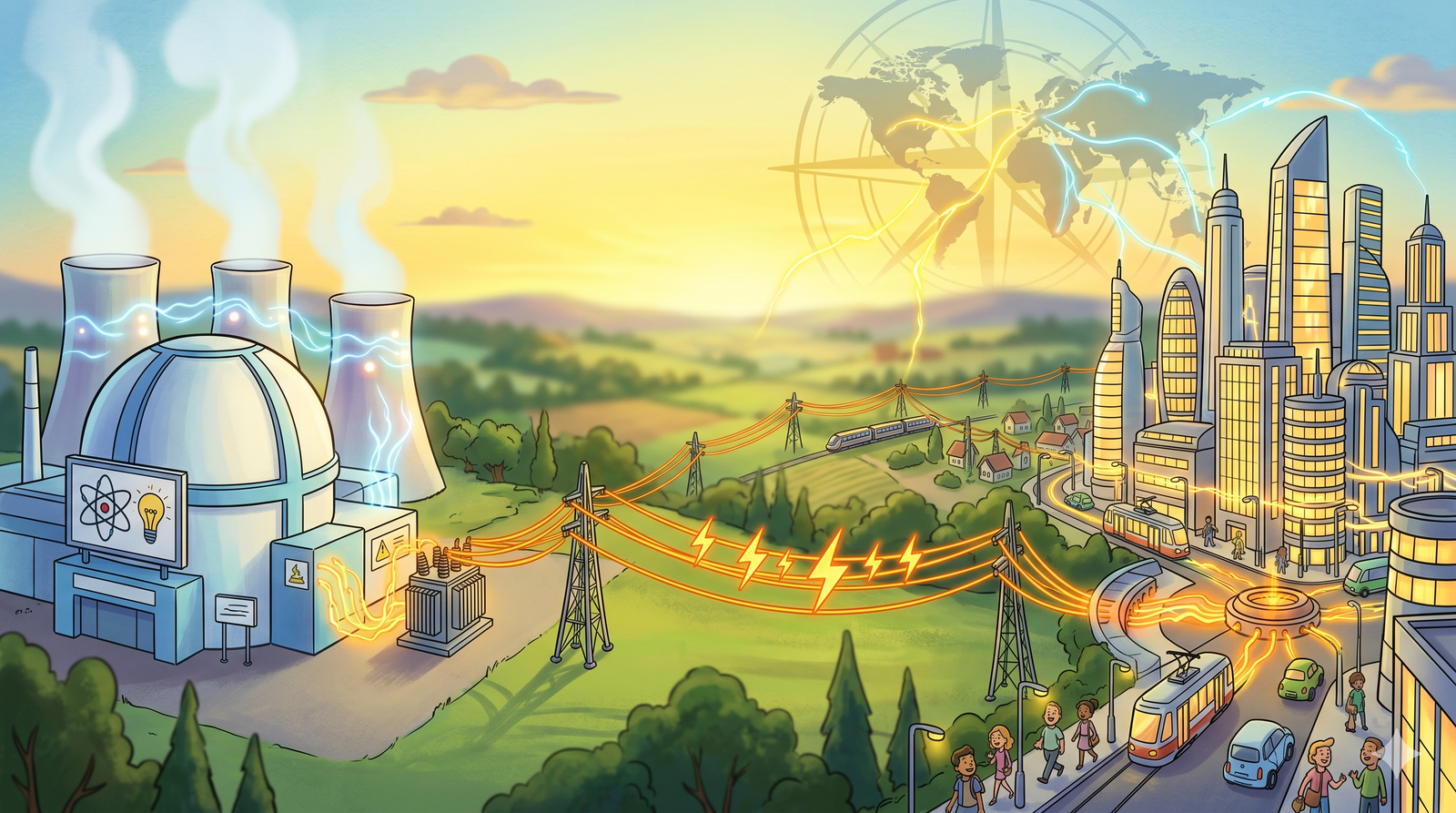
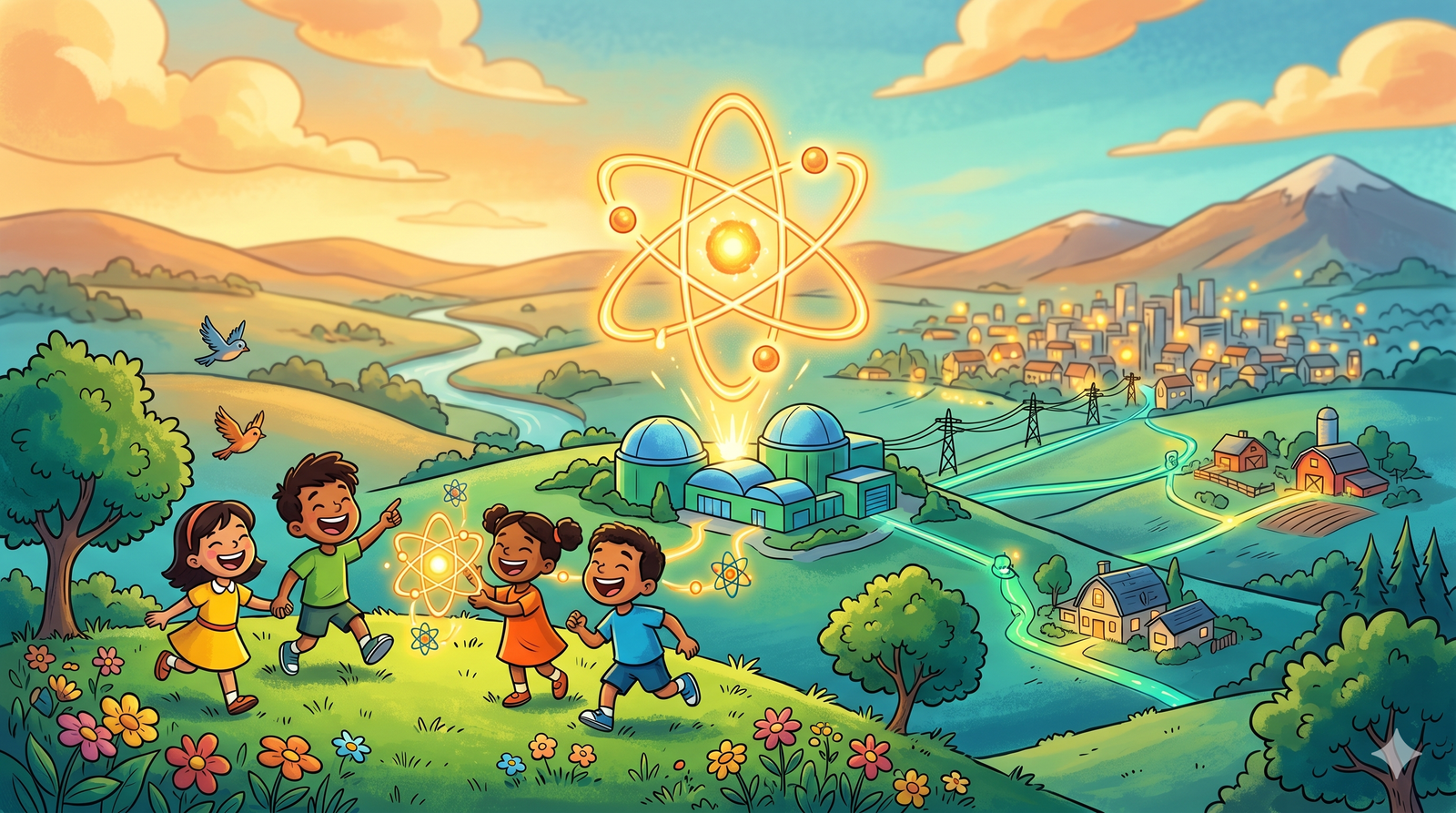
Very little carbon dioxide is produced during operation.
Power without burning fuel.
Unlike coal and oil, nuclear power plants produce very little carbon dioxide during operation.
The atom found a peaceful purpose.
What once represented unimaginable destruction could also become a powerful source of electricity for modern civilization.
Nuclear Energy Around Us
Most people think nuclear technology only means power plants.
But the atom is working quietly all around us.The technology is closer than you think.
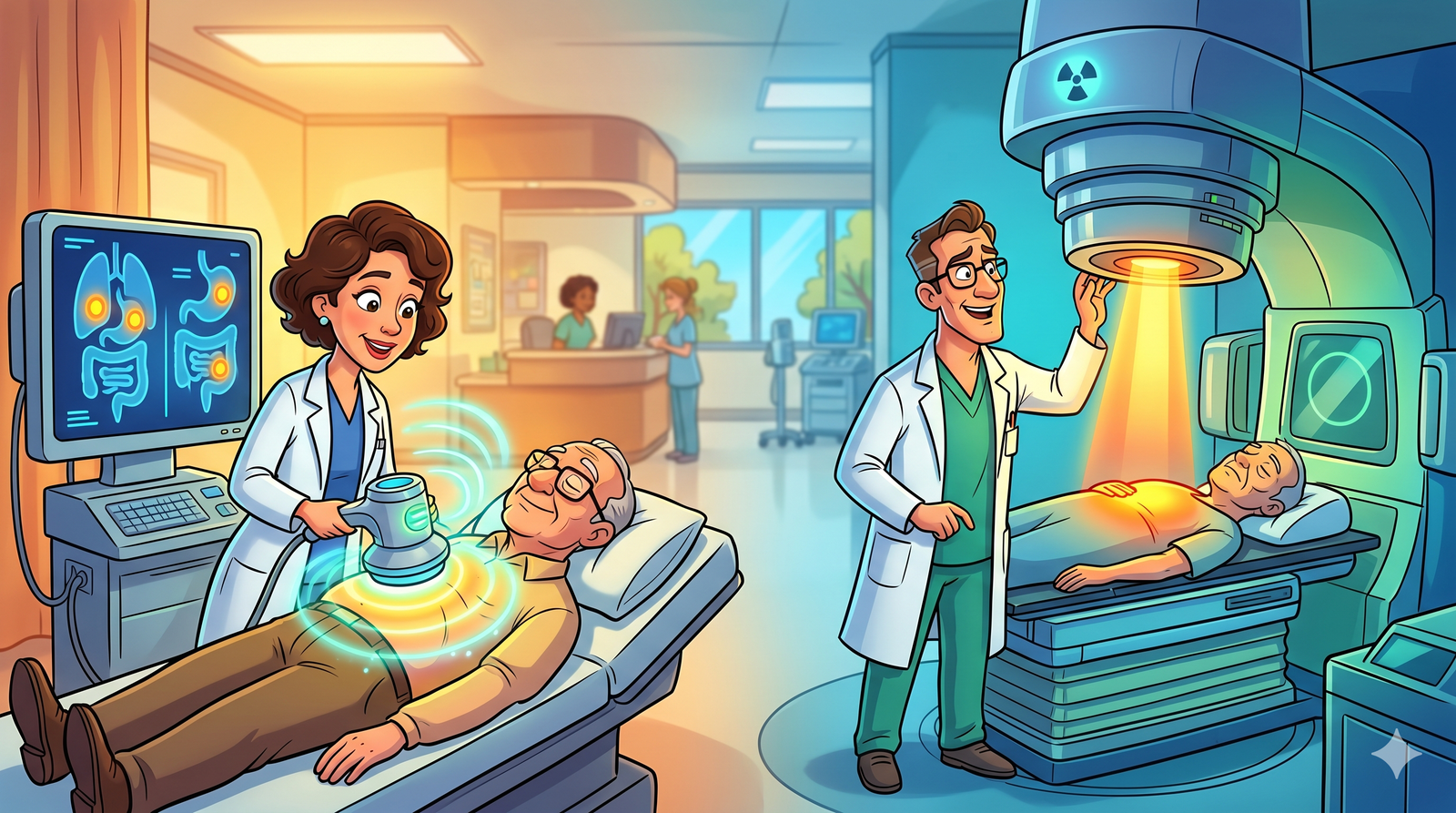
The atom can help heal.
Doctors use radioactive materials to detect diseases and treat cancer. Nuclear science has become an important tool in modern medical diagnosis and care.
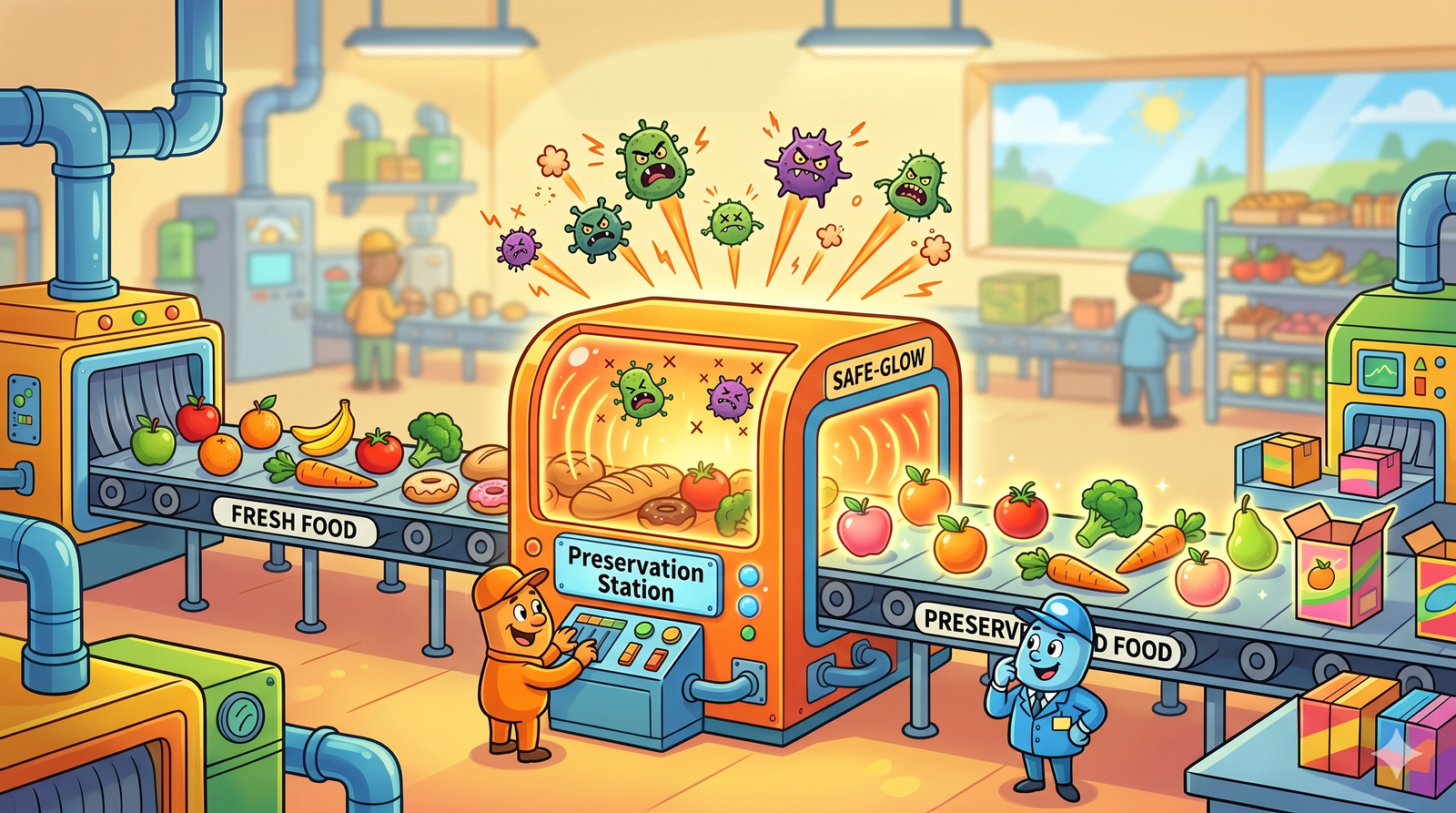
Protecting what we eat.
Radiation can help preserve food and eliminate harmful bacteria, helping extend shelf life and improve food safety.
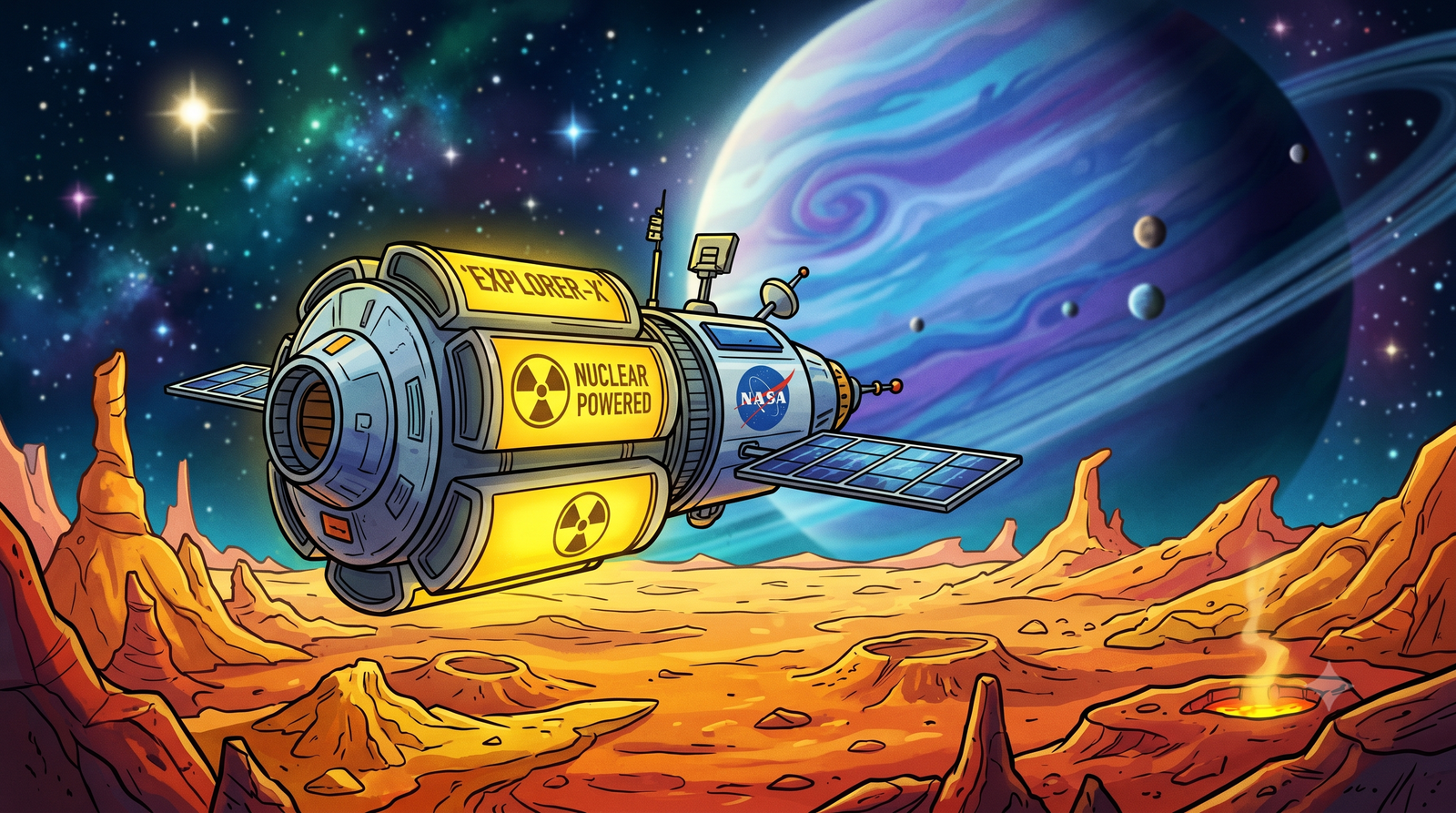
Powering distant worlds.
NASA uses nuclear-powered systems, including radioisotope power systems, to provide reliable energy for spacecraft exploring distant worlds.
Seeing what eyes can’t.
Engineers can use nuclear technology to inspect pipelines, bridges, aircraft, and other structures without simply taking them apart.
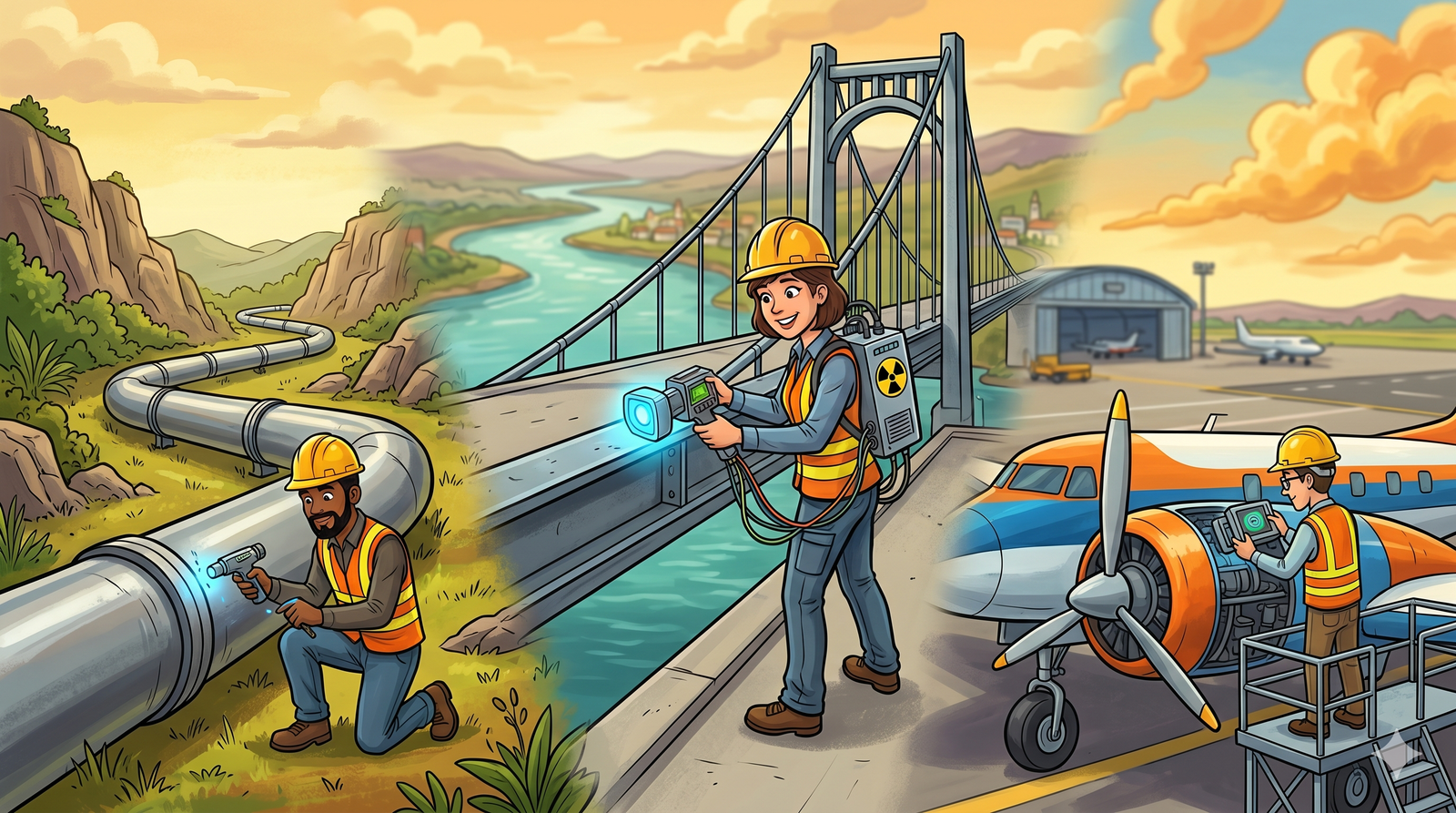
Nuclear science isn’t just about reactors.
From hospitals and food safety to spacecraft and industrial engineering, nuclear technology has quietly become part of modern civilization.
Nuclear-Powered Submarines
A reactor small enough to fit inside a vessel transformed how humans could travel beneath the ocean.
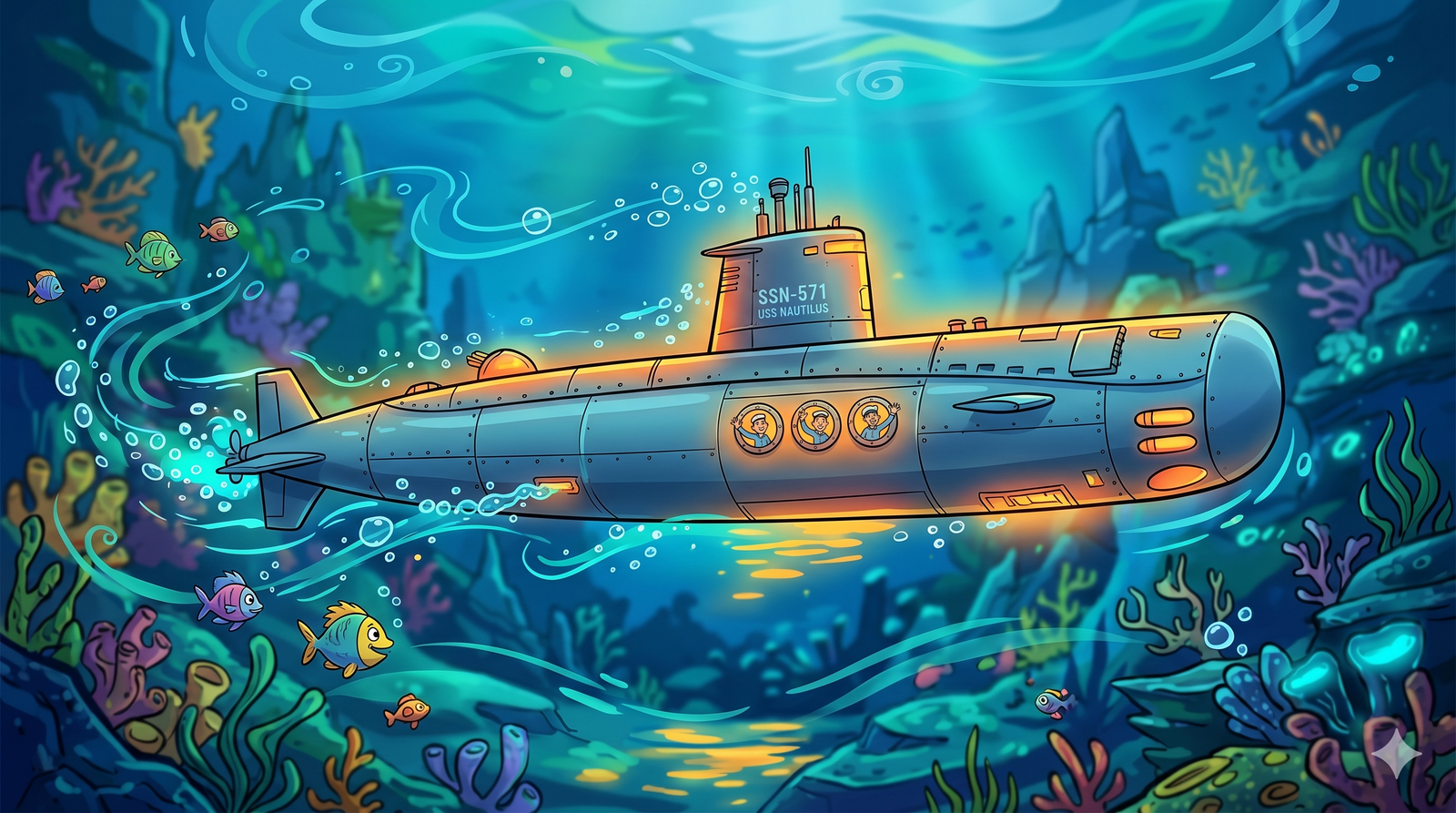
The submarine that changed everything.
In 1954, the USS Nautilus became the world’s first nuclear-powered submarine.
Instead of depending on conventional propulsion, it carried a nuclear reactor that could provide enormous amounts of energy for long periods.
Stay underwater. Keep moving.
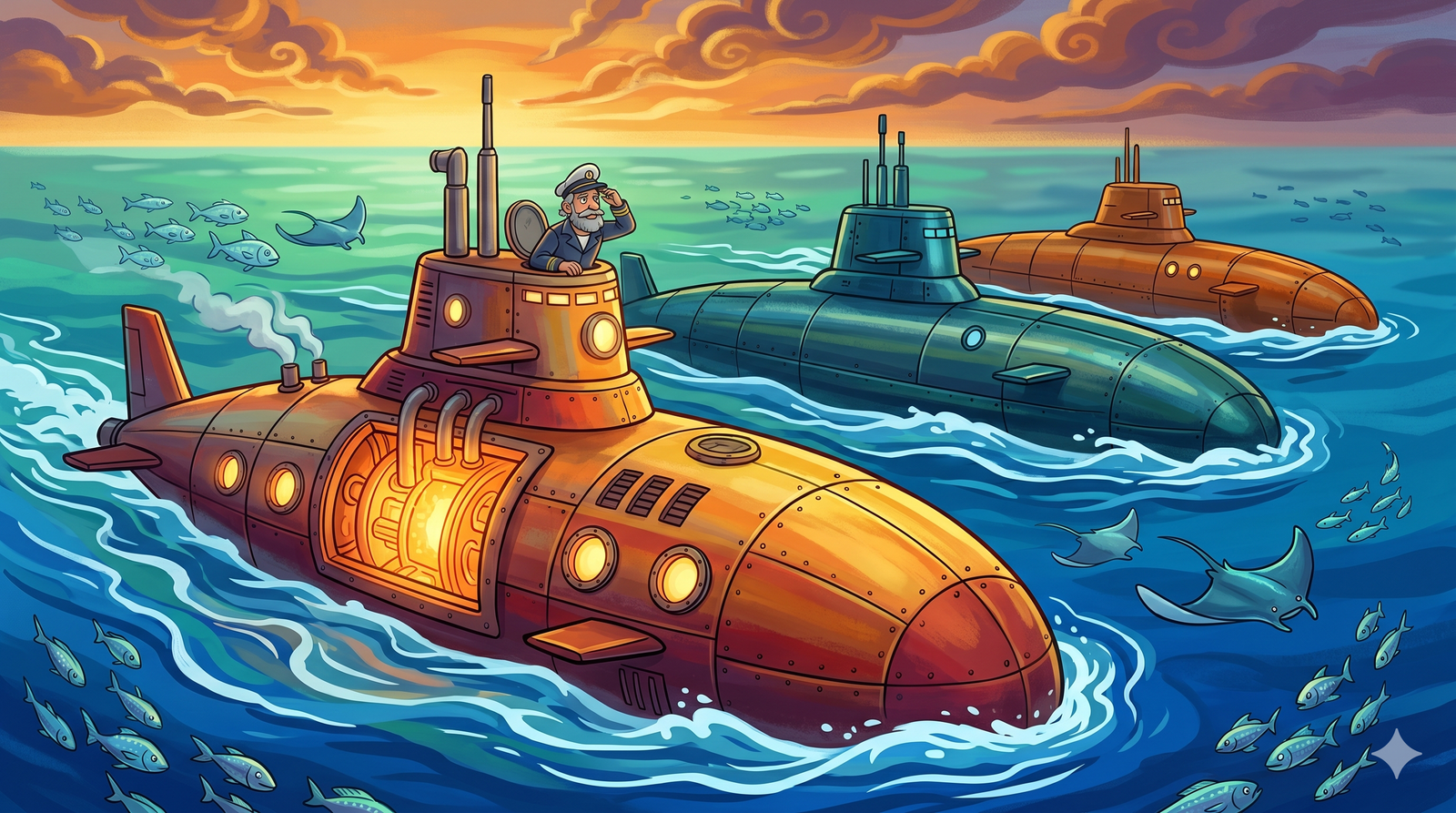
Unlike conventional submarines, nuclear-powered submarines can remain submerged for extraordinarily long periods, limited primarily by supplies, maintenance, and the needs of the crew.
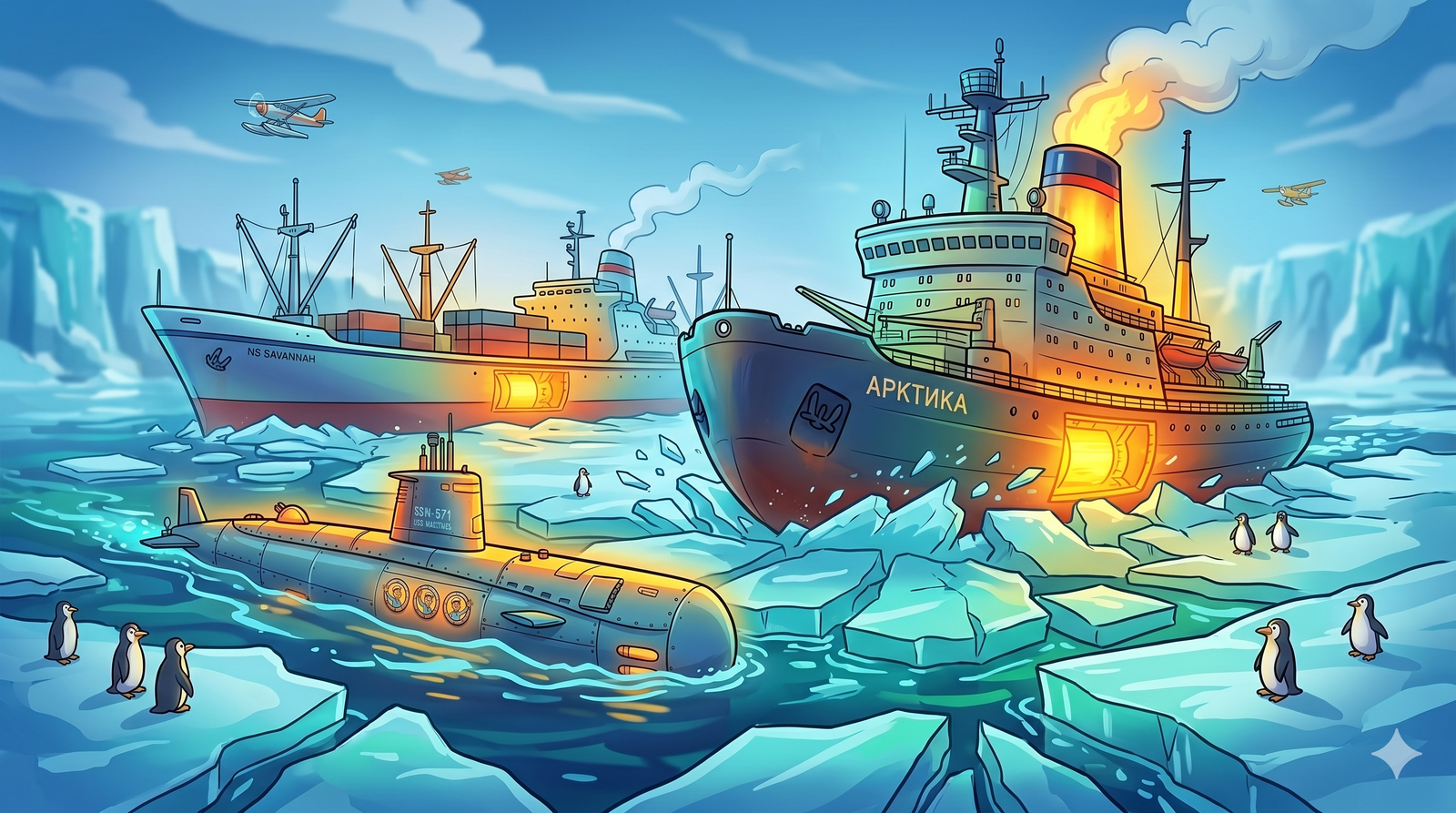
How does a nuclear reactor move a submarine?
122° 01′ W
Power that lasts for years.
Even today, many naval vessels use nuclear reactors because they can operate for years without refueling.
The Dream of Nuclear Fusion
Everything we’ve discussed so far uses Nuclear Fission.
Splitting atoms apart.
Split it. Or combine it.
FISSION
Heavy atomic nuclei are split apart to release energy.
FUSION
Light atomic nuclei are combined to release energy.
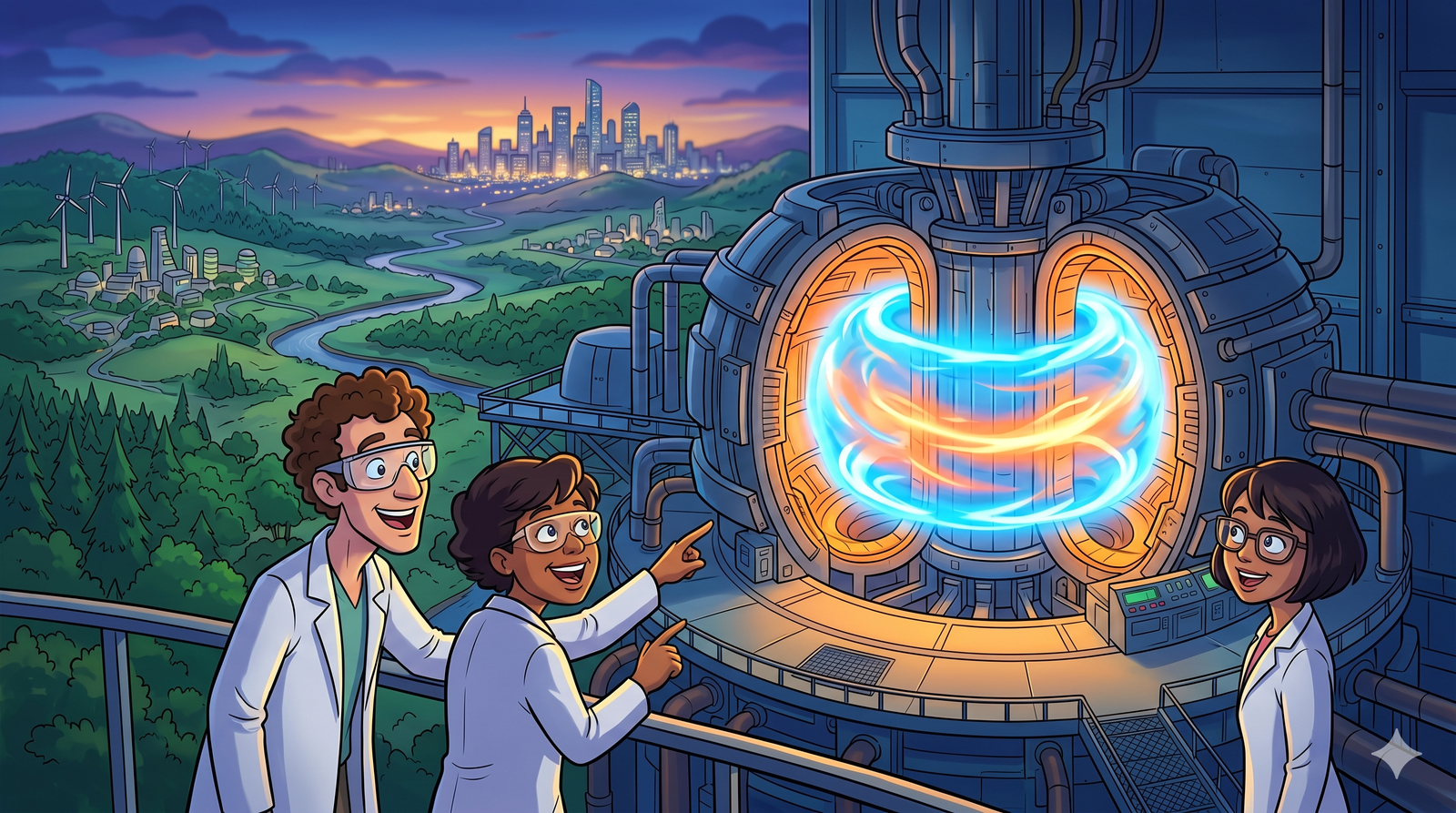
The ultimate energy challenge.
Scientists hope to recreate the conditions that allow fusion to happen inside stars.
Instead of using gravity like the Sun does, experimental fusion reactors attempt to confine extremely hot plasma using powerful magnetic fields.
Look up. That’s fusion.
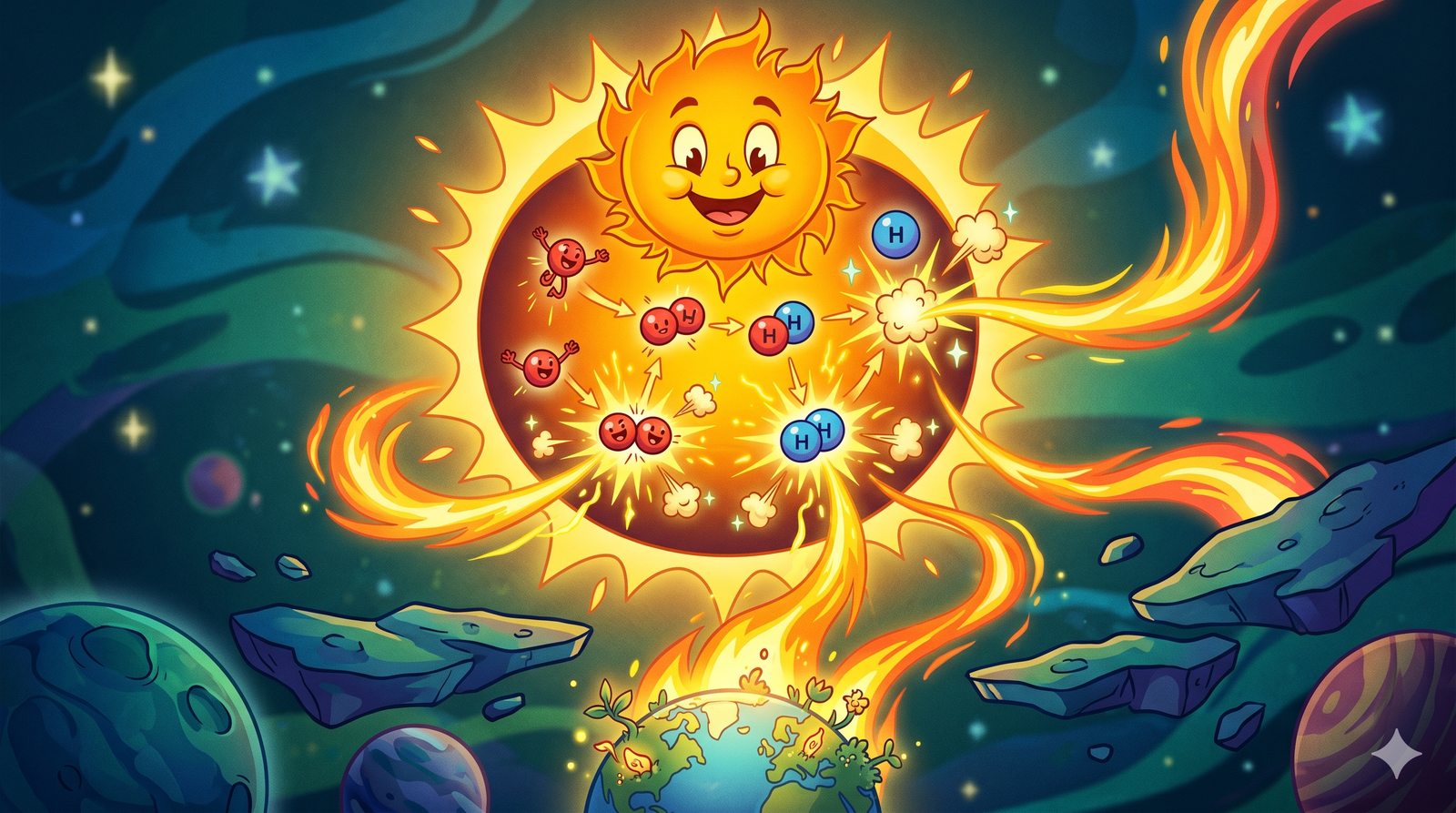
This is how the Sun shines.
Every second, the Sun fuses millions of tons of hydrogen into helium, releasing enormous amounts of energy in the process.
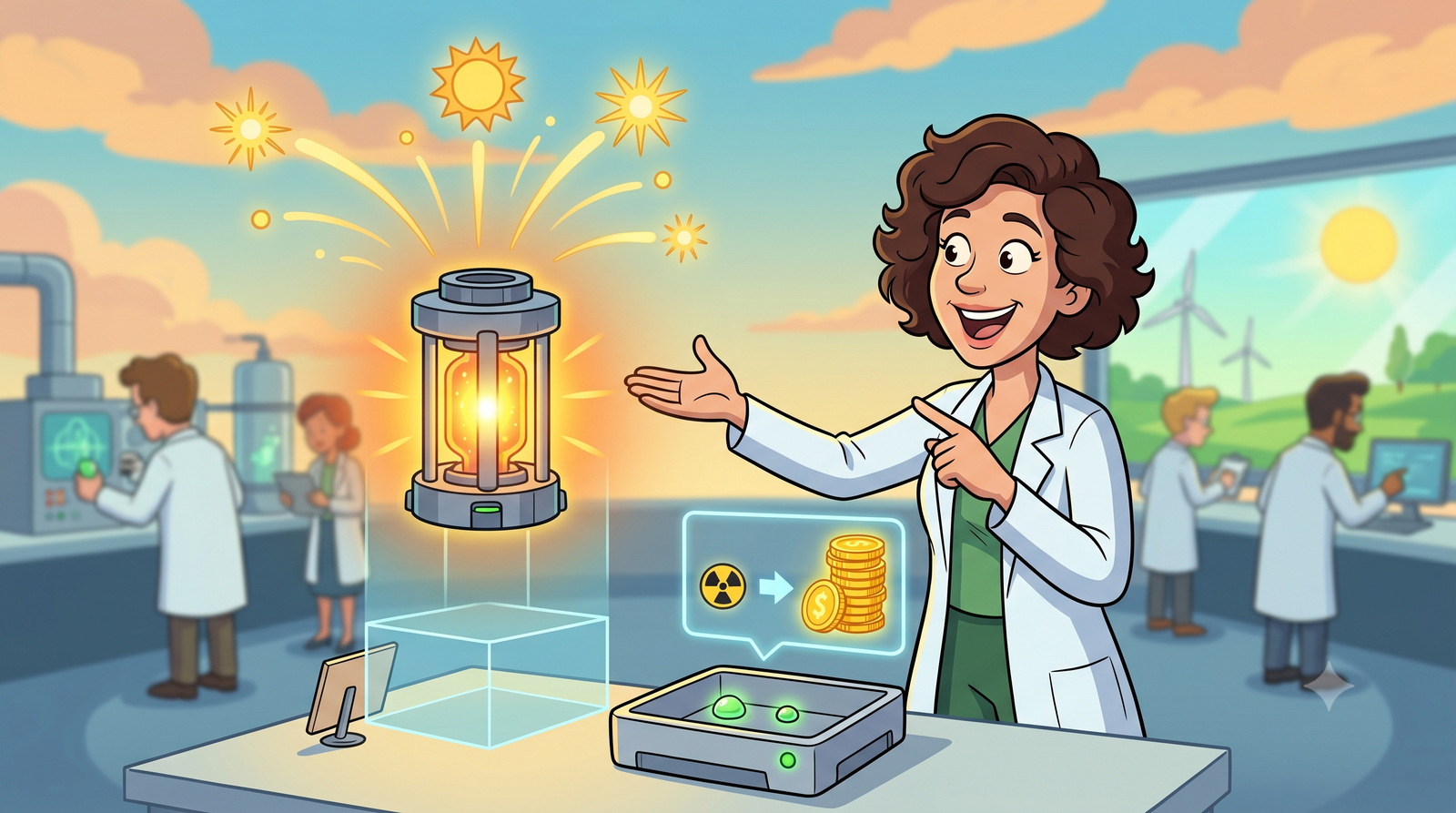
Energy without limits?
If successful, fusion could provide a powerful source of low-carbon energy with very little long-lived radioactive waste from the fusion reaction itself.
Bringing the power of the stars to Earth.
Many believe fusion could transform civilization during this century.
FROM SPLITTING ATOMS TO BUILDING STARS ON EARTHNuclear Rockets & The Future
Traditional rockets carry huge amounts of fuel.
The farther they travel, the harder the journey becomes.
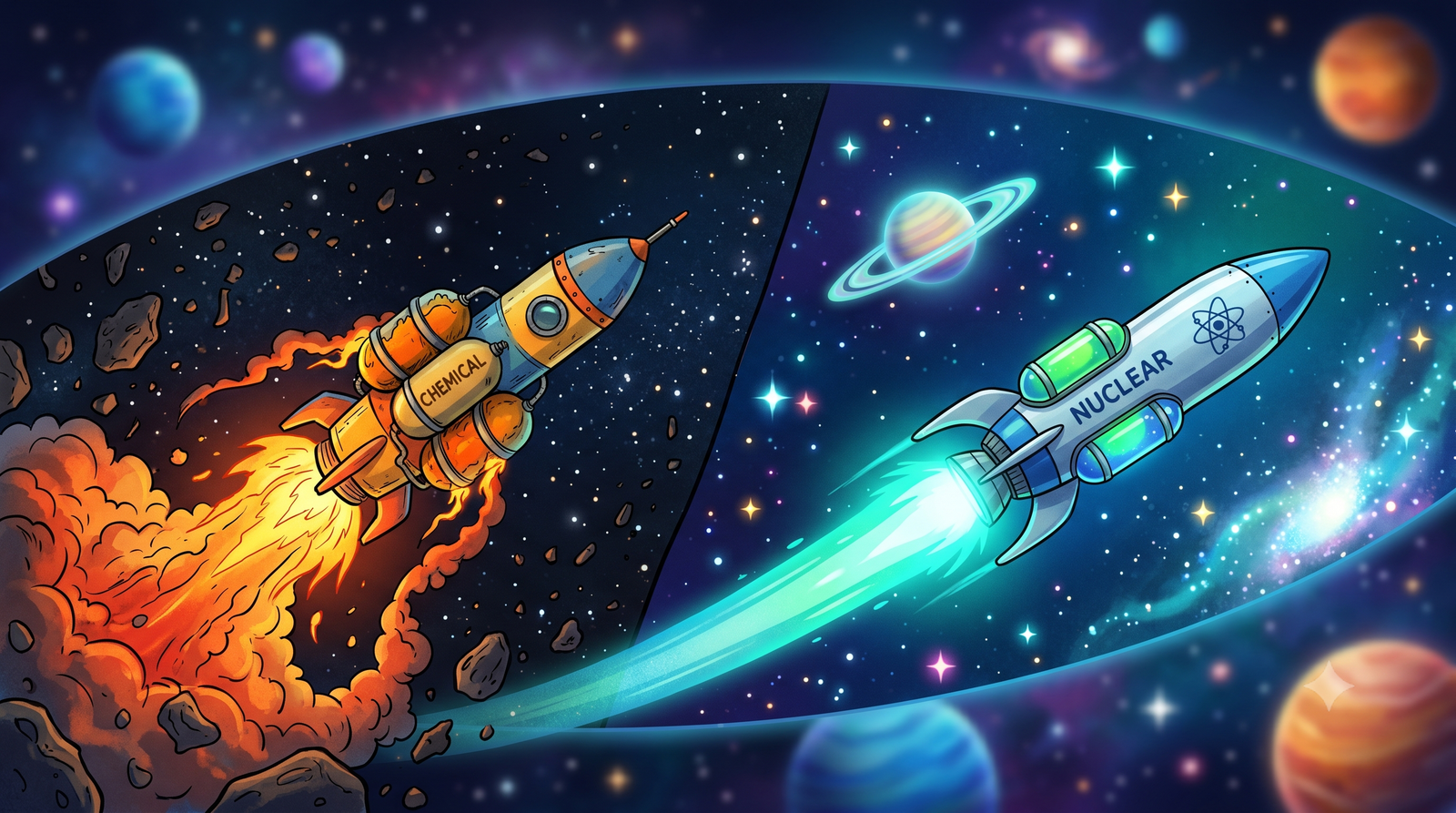
Space is farther than it looks.
Traditional chemical rockets depend on carrying enormous quantities of propellant.
As missions become longer and farther away, the amount of fuel required becomes a major engineering challenge.
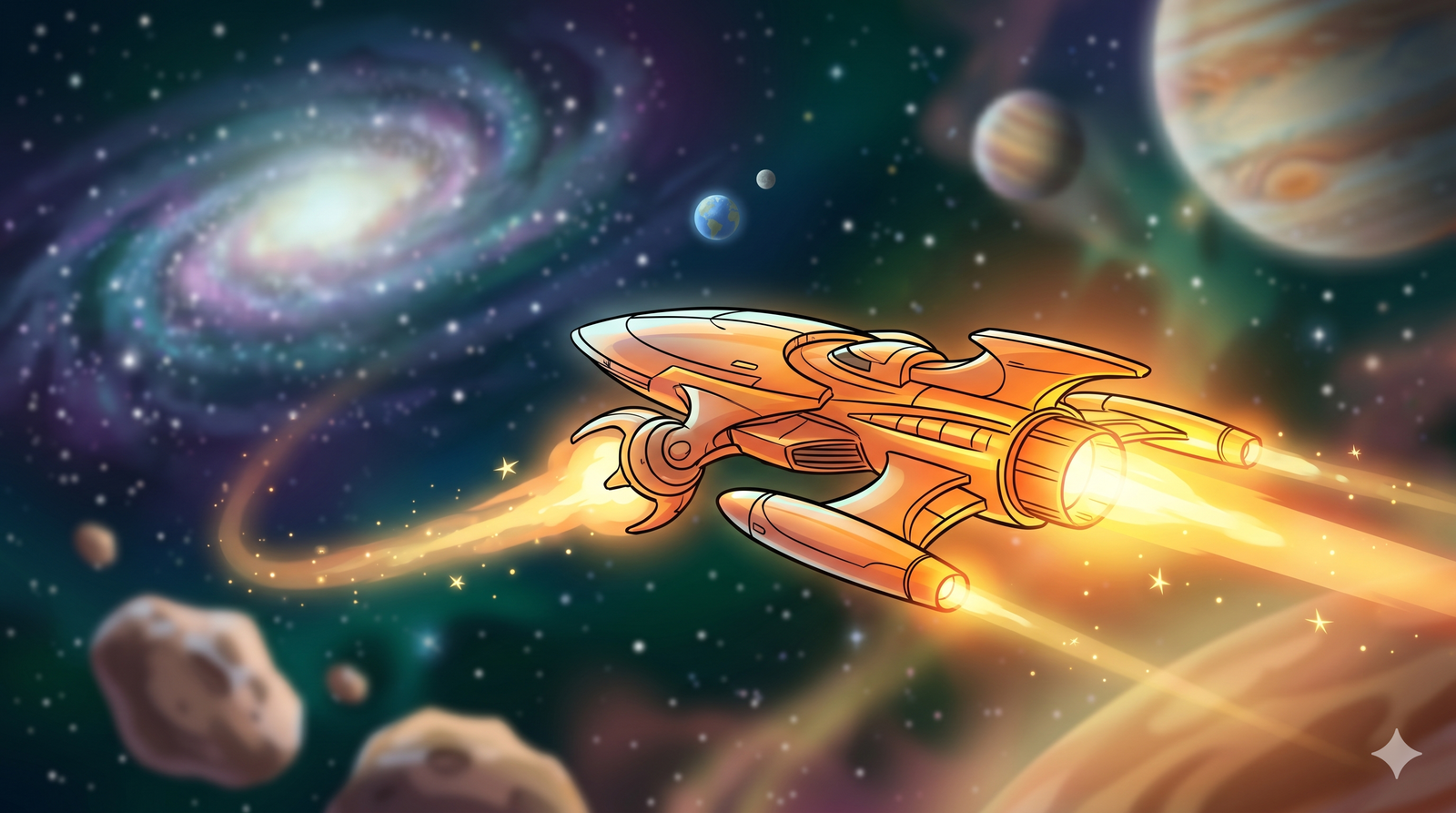
Heat the fuel. Push harder.
Nuclear thermal rockets use a nuclear reactor to heat a propellant, such as hydrogen, to extremely high temperatures.
The hot propellant then expands and rushes through a nozzle, producing thrust.
A shorter road to another world.
Scientists are developing nuclear propulsion concepts that could potentially reduce travel times for future crewed missions to Mars.
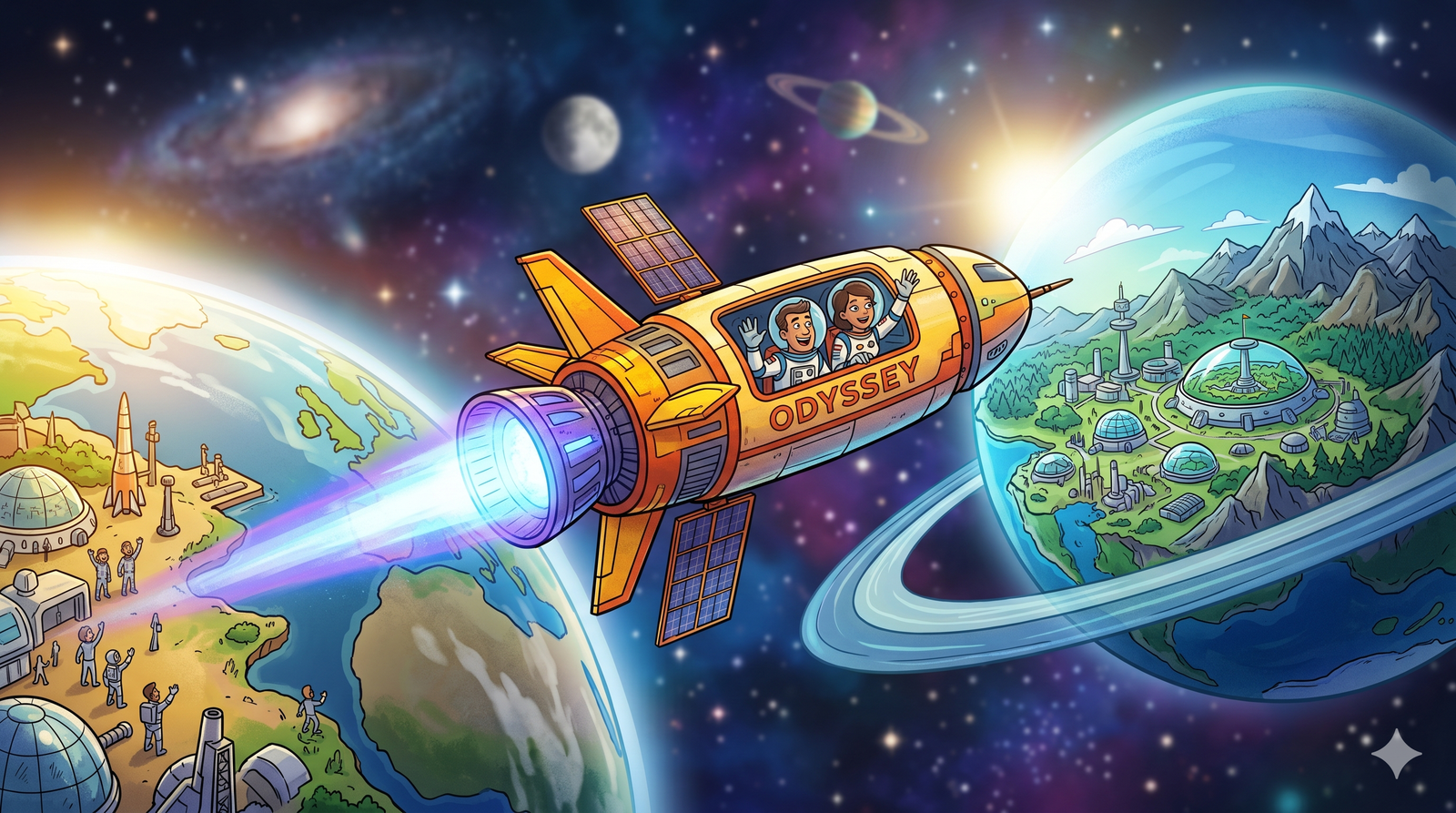
From visiting planets…
…to becoming a species that lives among them.
One day, nuclear technology may help humanity travel faster and farther through the Solar System, opening possibilities that are difficult to imagine today.
The atom could take us beyond Earth.
One day, nuclear technology may help humanity become an interplanetary species.
Fun Facts
Think you know nuclear energy? These five fascinating facts might change the way you look at atoms, space, submarines, and even your home.
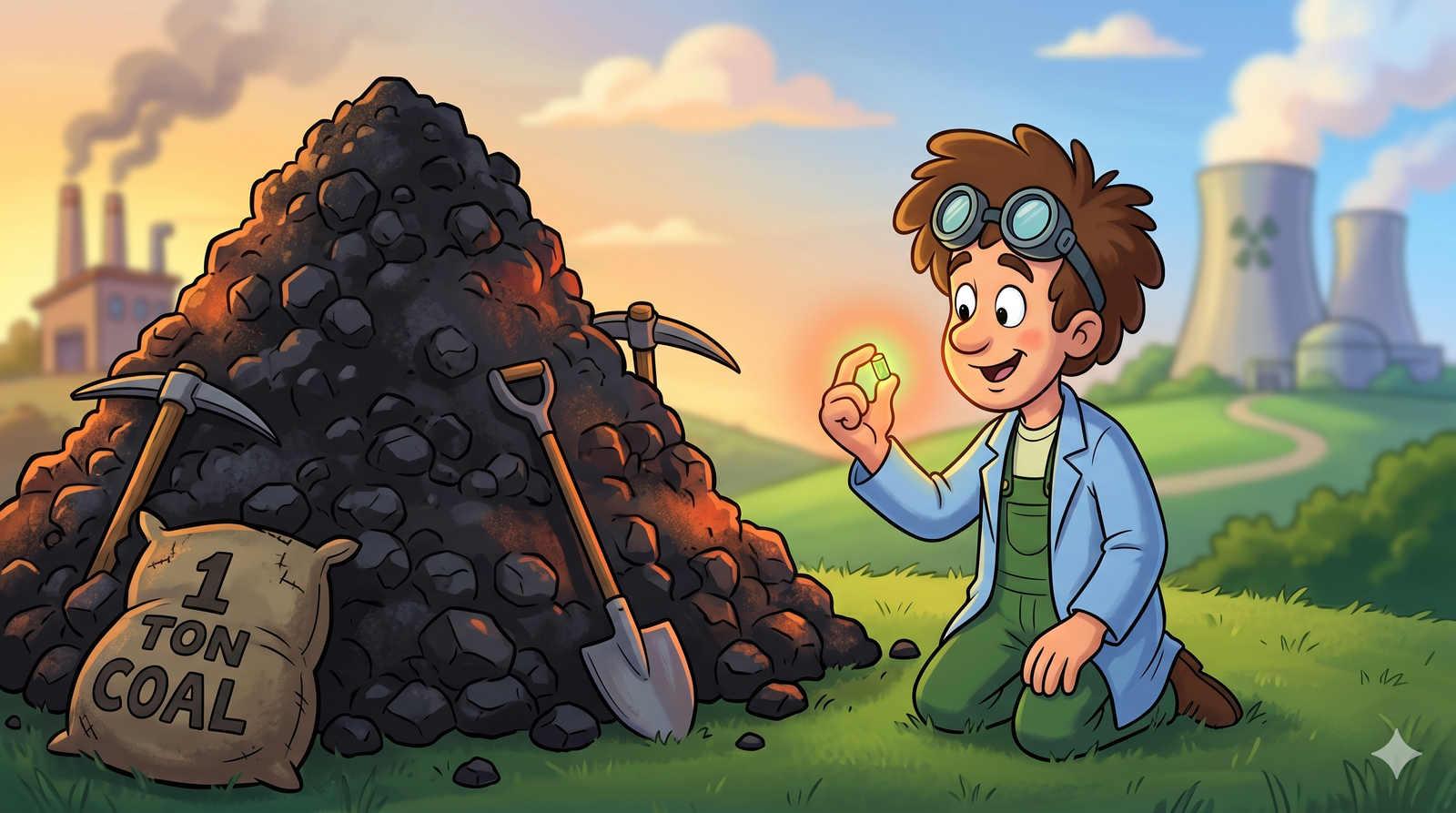
A tiny pellet can pack enormous energy.
A uranium fuel pellet about the size of a fingertip can contain as much energy as roughly a ton of coal. That’s one of the reasons nuclear fuel is so incredibly energy-dense.
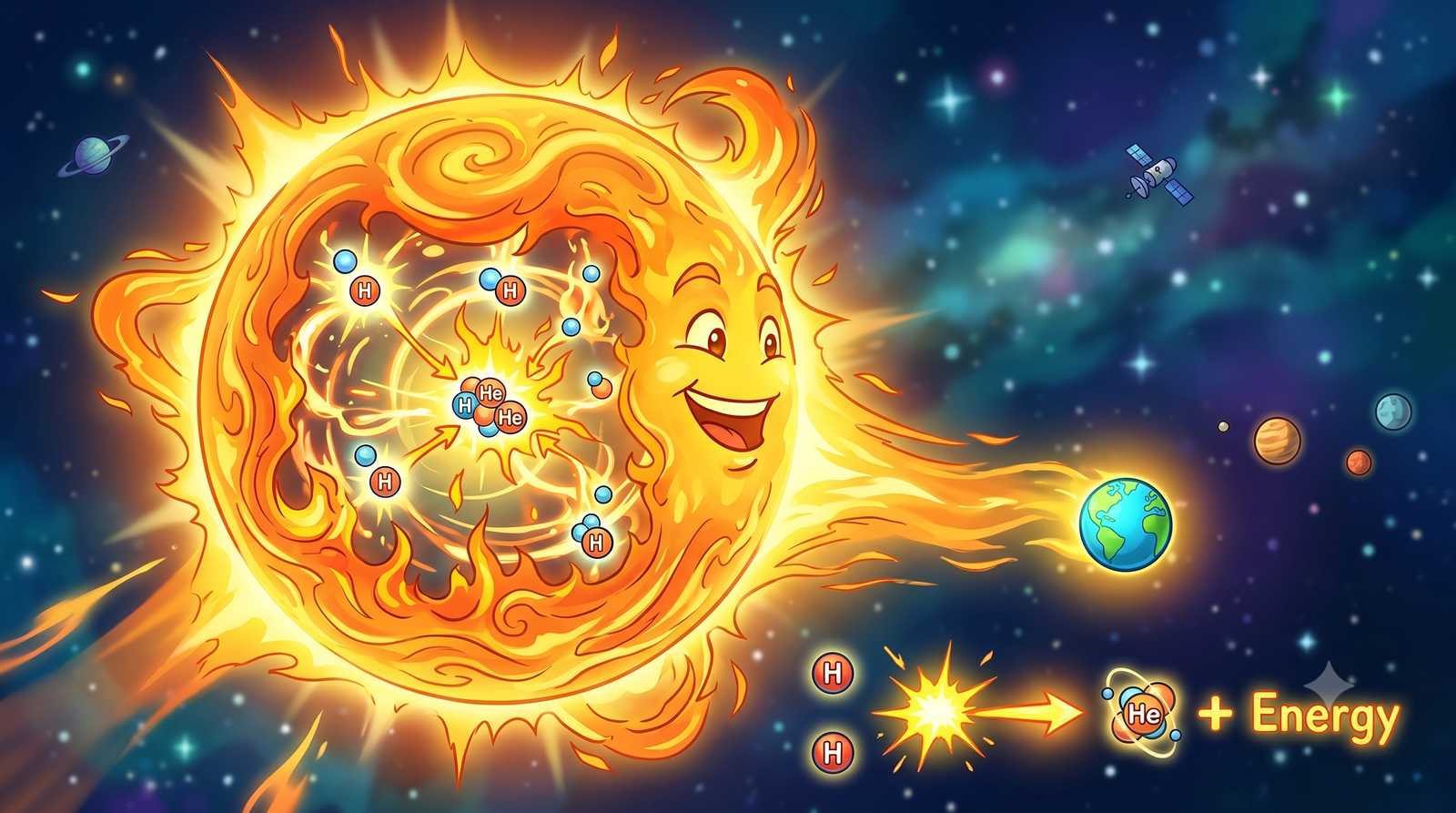
The Sun is basically a gigantic fusion reactor.
The Sun produces its incredible energy through nuclear fusion. Deep inside its core, hydrogen nuclei combine to form helium and release enormous amounts of energy.
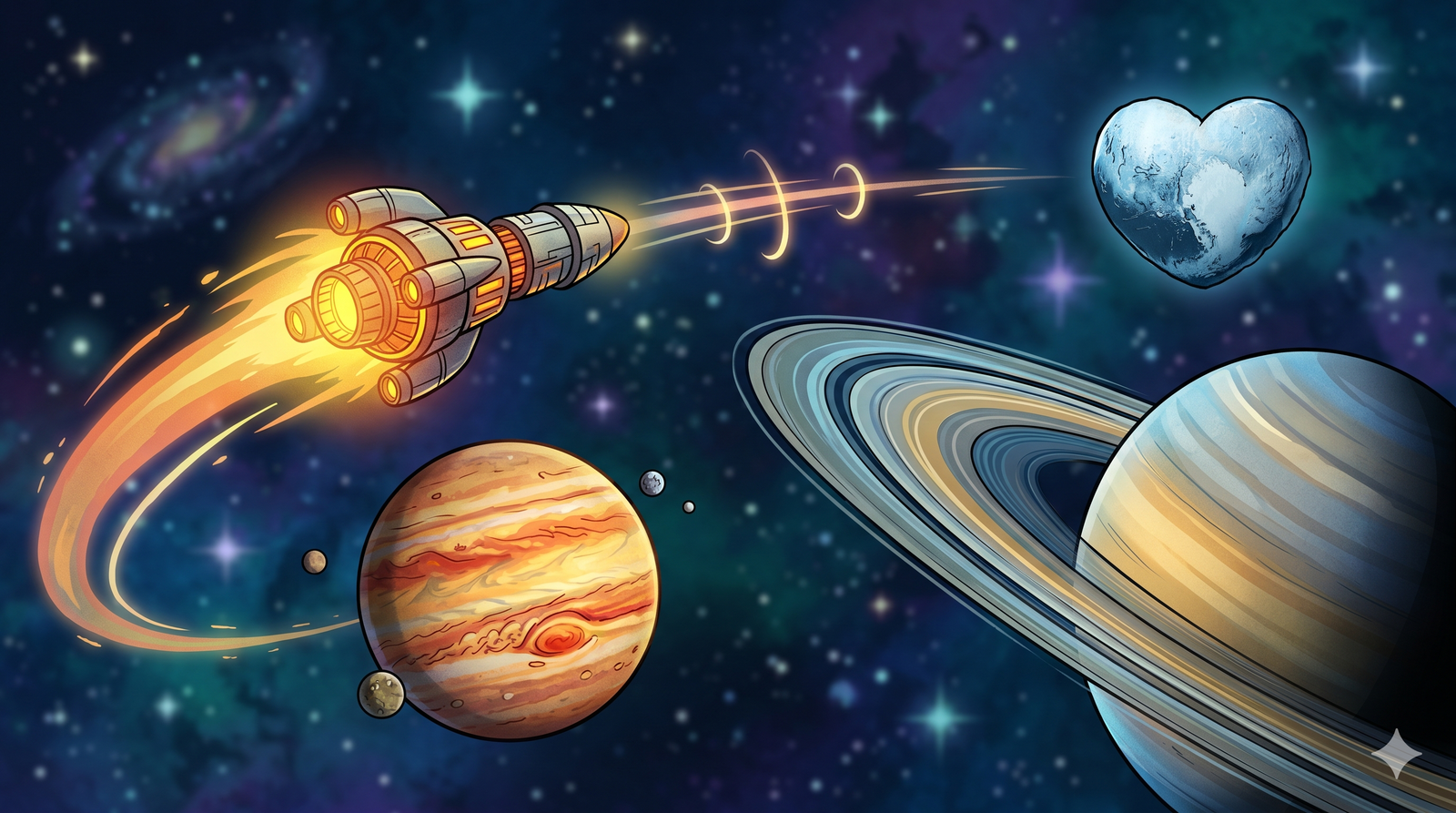
Nuclear power has travelled far beyond Earth.
Nuclear-powered spacecraft have explored some of the most distant worlds in our Solar System, including Jupiter, Saturn, Pluto, and regions far beyond them.
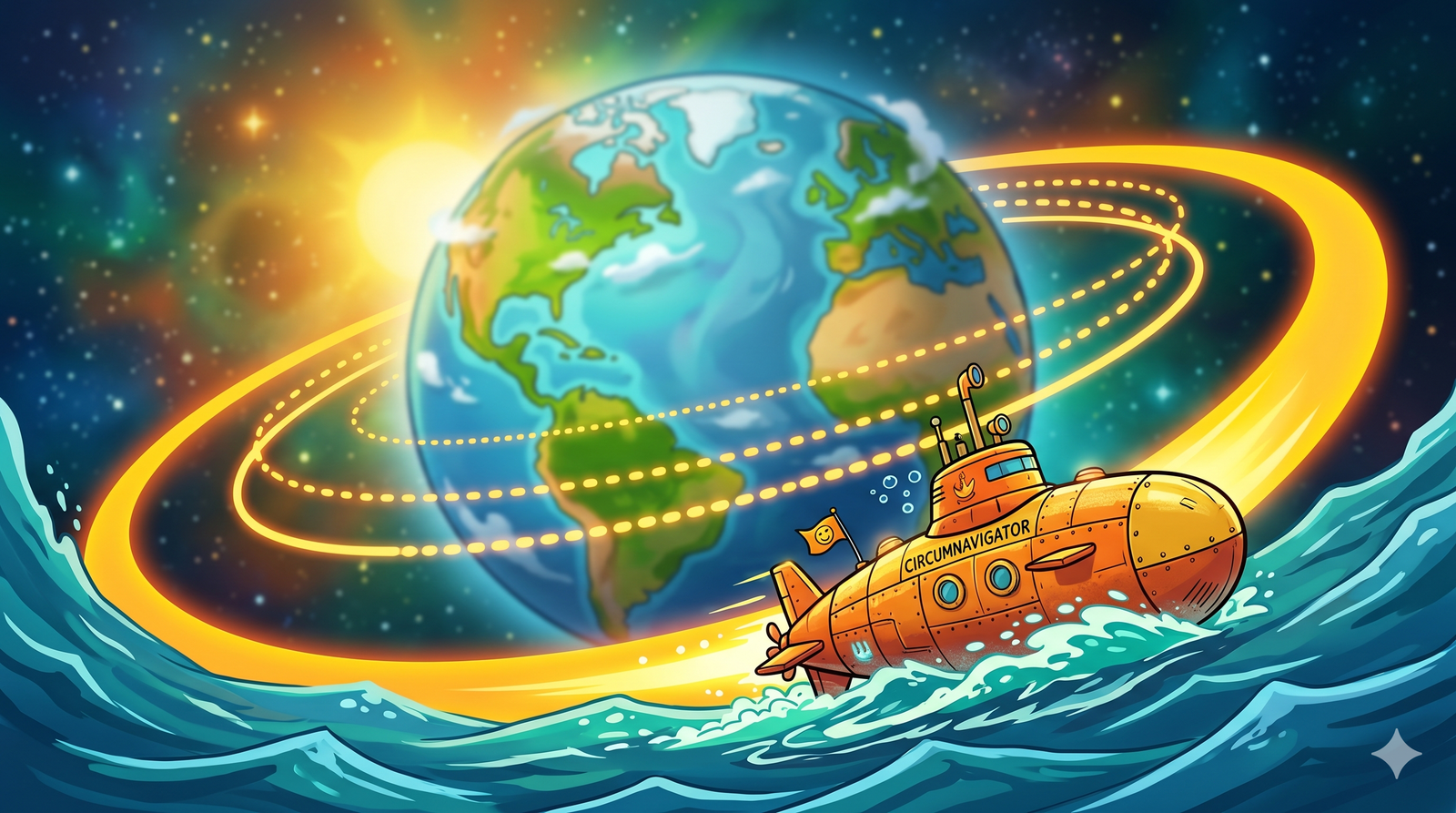
Some submarines can travel around Earth without refueling.
Nuclear propulsion gives certain submarines remarkable endurance. Some can travel around the Earth several times without needing to refuel.

Nuclear technology may already be inside your home.
Many household smoke detectors use tiny amounts of radioactive material to help detect smoke and warn people about potential fires.
Small particles. Extraordinary stories.
From the heart of the Sun to spacecraft exploring distant worlds, nuclear science reaches much farther than most of us imagine.
The Future of Nuclear Energy
One tiny atom. An unimaginable amount of energy. And a future we are only beginning to understand.
Inside every atom lies a hidden universe of energy.
From Rutherford discovering the nucleus…
To Einstein revealing the connection between matter and energy…
To Meitner, Hahn, Strassmann, and Fermi unlocking nuclear fission…
Humanity has learned how to tap one of nature’s greatest powers.
Rutherford
Revealing the tiny, dense heart hidden inside the atom.
Einstein
Showing that mass and energy are deeply connected.
Meitner · Hahn · Strassmann
Helping humanity understand the extraordinary power of a split atom.
Fermi
Demonstrating the world’s first controlled nuclear chain reaction.
What happens next?
Will nuclear fusion power our cities?
Will nuclear rockets take us to Mars?
Or even take humanity to the stars?
ONLY TIME WILL TELL.
But one thing is certain.
The power hidden inside the atom…
…will continue shaping the future of humanity for generations to come.
🎬 WANT TO SEE MORE?
Explore More Fascinating Content
Enjoyed this journey through the incredible world of nuclear energy? Discover more fascinating science, technology, history, and mind-blowing stories on our YouTube channel.
Categories:



Leave a Reply