Have you ever wondered how a giant airplane weighing hundreds of tons can fly through the sky? Or how humans went from dreaming about flying to crossing oceans in just a few hours? In this article, we’ll explore the incredible history of aviation, discover how airplanes fly, learn about the different parts of an aircraft, and meet the brave pioneers who made modern flight possible.
Why Airplanes Changed the World
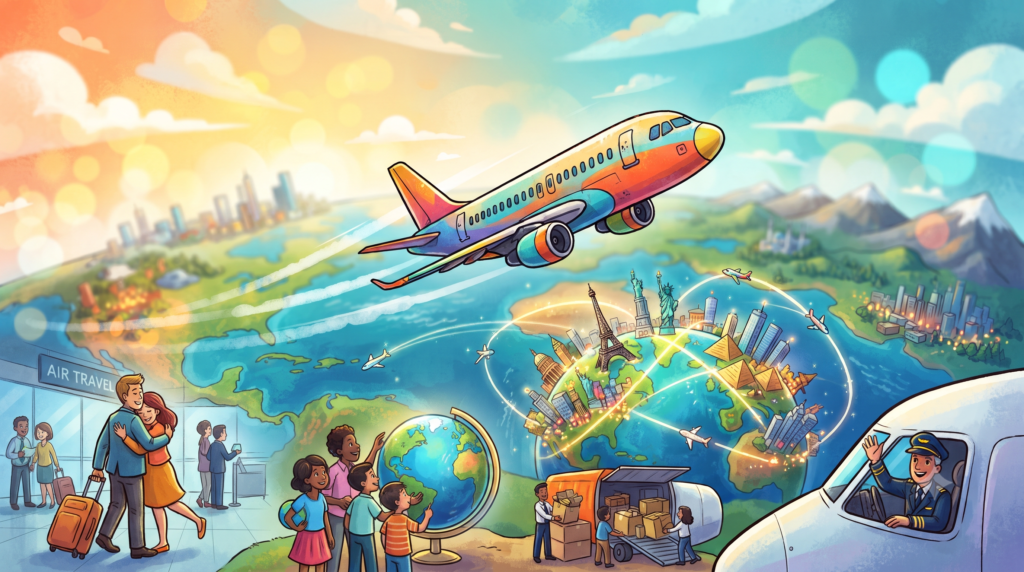
Airplanes have transformed the way people travel, communicate, and connect with the world. Just a little over a century ago, crossing the Atlantic Ocean by ship took more than a week, even on the fastest vessels. Today, modern commercial aircraft can make the same journey in less than seven hours, bringing countries and cultures closer than ever before.
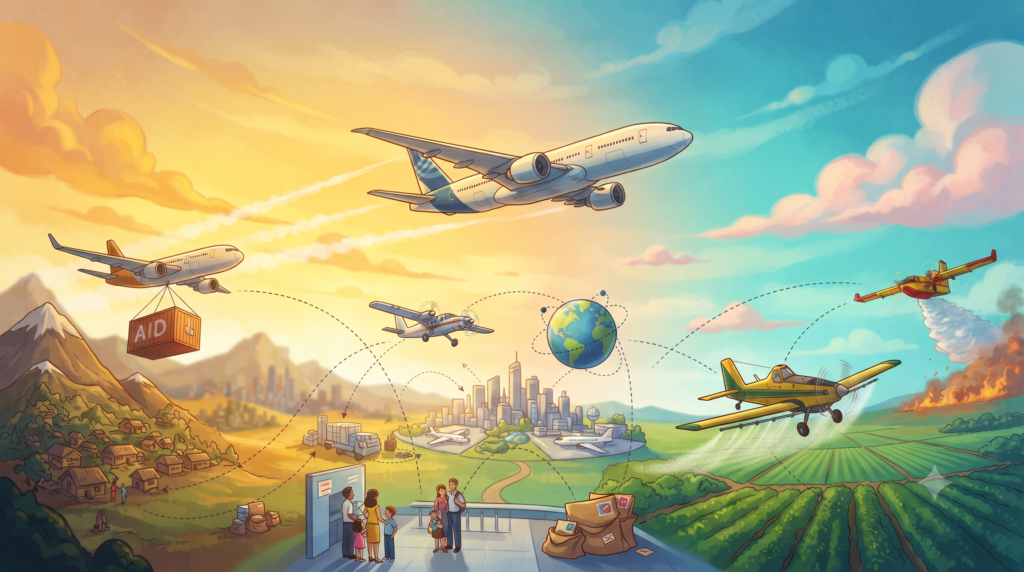
Flying has made international travel faster, safer, and more convenient. Whether it’s for business, education, tourism, or emergencies, airplanes have become an essential part of modern life. With the ability to fly over mountains, oceans, and deserts, aircraft have revolutionized transportation and opened up opportunities that were once unimaginable.
Modern jet aircraft typically cruise at speeds of over 500 miles (800 kilometers) per hour, while specialized military and experimental aircraft can travel even faster than the speed of sound. Aviation continues to evolve with new technologies that make flying more efficient, environmentally friendly, and accessible to millions of people around the world.
The History of Flight
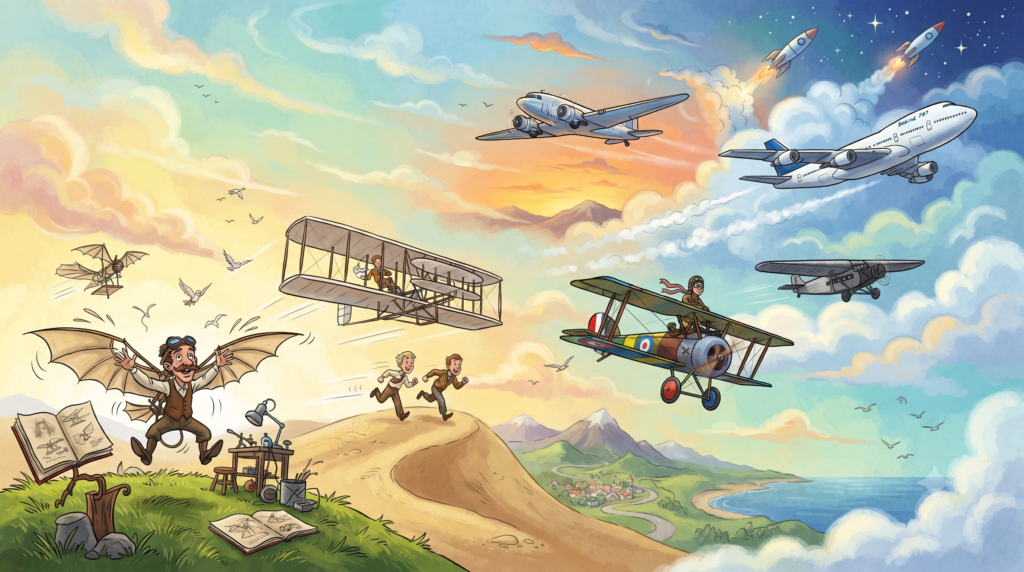
For centuries, humans dreamed of flying like birds. Inventors, scientists, and engineers studied nature in an effort to understand the principles of flight. Their experiments laid the foundation for one of humanity’s greatest achievements—the invention of the airplane.
The journey from simple gliders to sophisticated jet aircraft took decades of innovation, determination, and scientific discovery. Several pioneers made remarkable contributions that helped transform the dream of flight into reality.
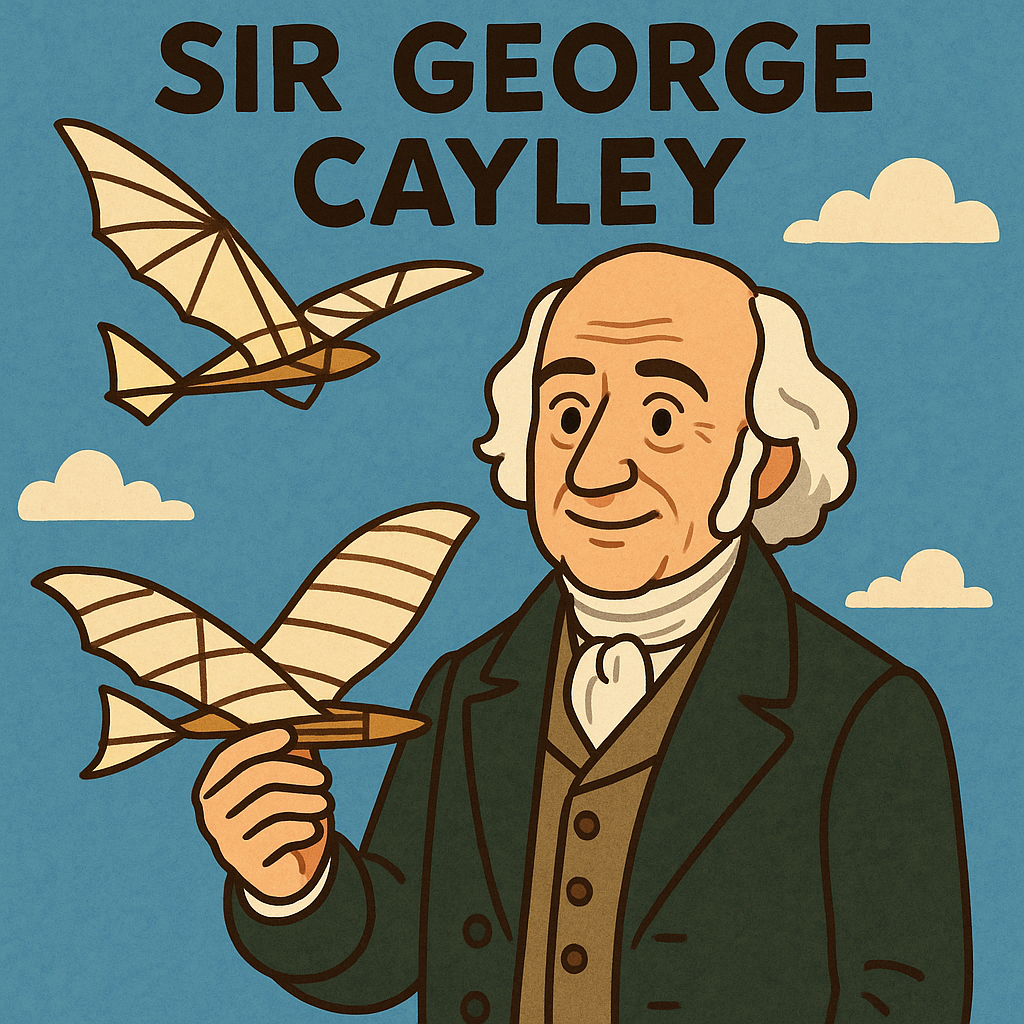
Sir George Cayley
Sir George Cayley (1773–1857) is widely regarded as the Father of Modern Aeronautics. Long before powered flight became a reality, Cayley recognized that successful flight depended on balancing four fundamental forces: lift, weight, thrust, and drag. These principles remain the foundation of aviation today.
In 1799, he designed one of the earliest concepts of a modern aircraft featuring fixed wings, a separate tail for stability, and a propulsion system. During the 1840s and early 1850s, he built several gliders to test his ideas, and in 1853, one of his designs successfully carried a human passenger. This achievement marked one of the earliest successful manned glider flights and demonstrated that controlled flight was scientifically possible.
Cayley’s pioneering research into aerodynamics inspired future aviation innovators and laid the groundwork for the development of modern aircraft.
Otto Lilienthal
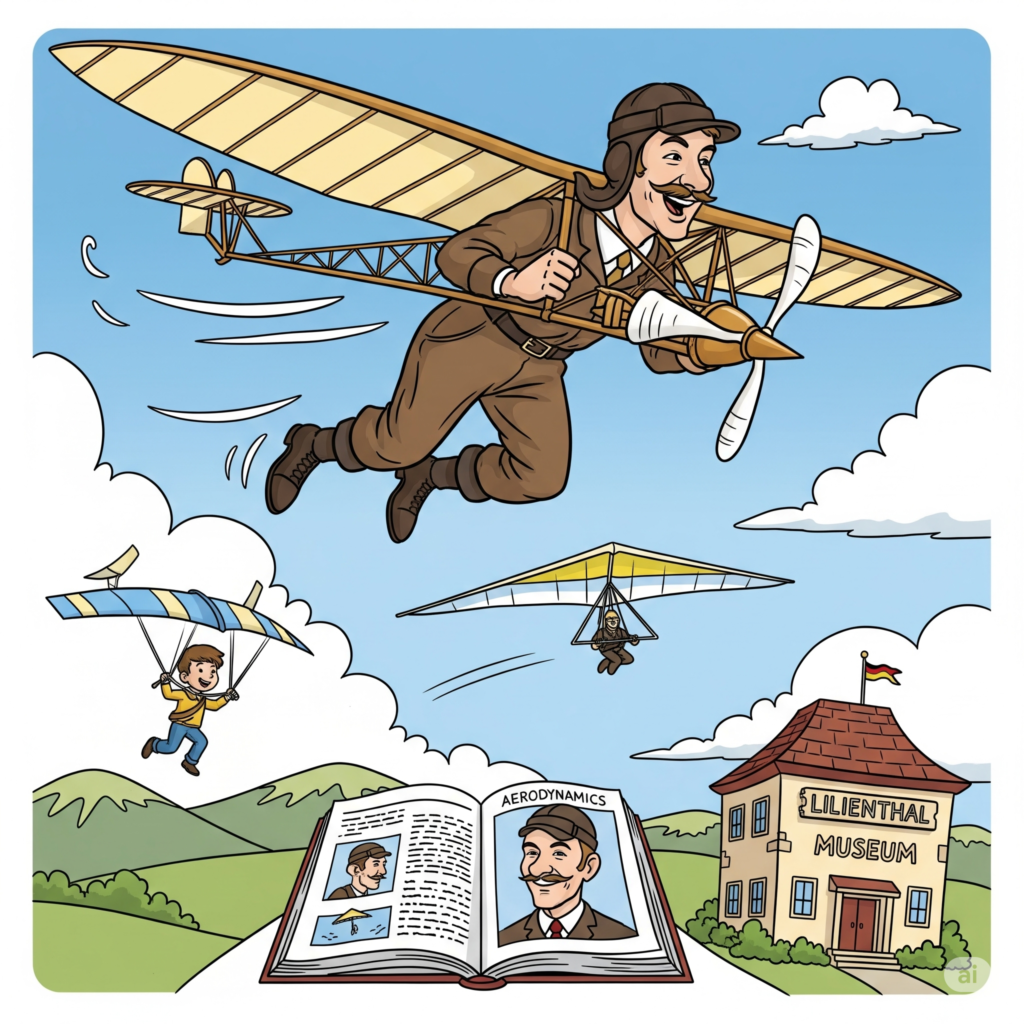
Otto Lilienthal (1848–1896), often known as the Glider King, was a German aviation pioneer who played a crucial role in advancing the science of flight. Fascinated by the way birds flew, he carefully studied their wing movements and applied his observations to the design of practical gliders.
During the 1890s, Lilienthal completed more than 2,000 controlled glider flights, proving that humans could successfully glide through the air using carefully designed wings. His experiments produced valuable information about lift, wing shape, and aerodynamics, which later influenced many aviation pioneers, including the Wright brothers.
Although Lilienthal tragically lost his life following a glider accident in 1896, his scientific approach and determination significantly advanced aviation and inspired future generations of aircraft designers.
The Wright Brothers
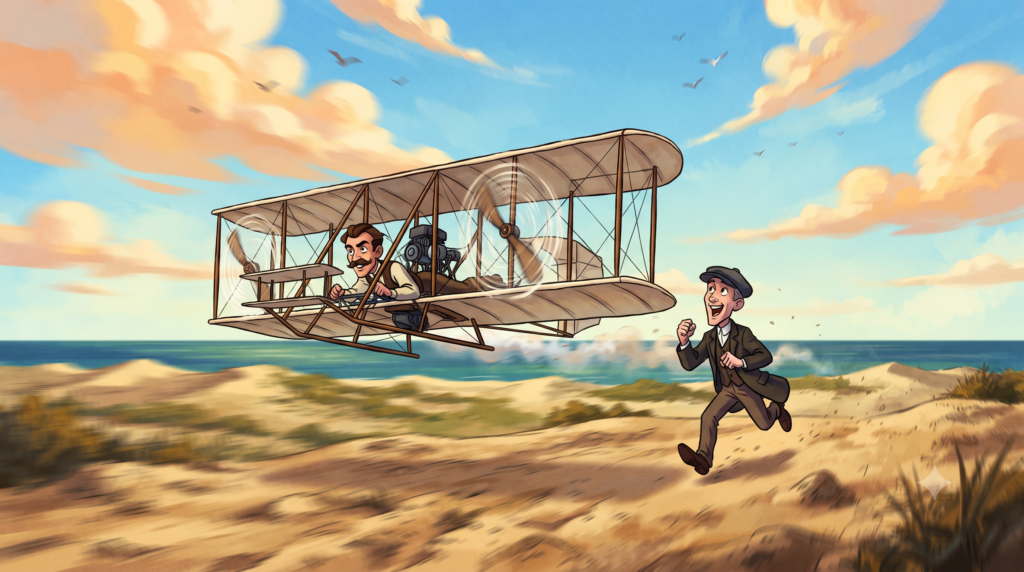
Orville and Wilbur Wright, better known as the Wright brothers, achieved one of the greatest milestones in aviation history by completing the world’s first powered, controlled, and sustained flight.
On December 17, 1903, near Kitty Hawk, North Carolina, the brothers successfully flew the Wright Flyer for 12 seconds, covering a distance of approximately 120 feet. While the flight was brief, it proved that powered human flight was possible.
The Wright brothers were self-taught engineers and bicycle mechanics who spent years studying wing design, propellers, and flight control systems. Their greatest innovation was developing effective methods to control an aircraft during flight, making powered aviation practical. Their success marked the beginning of modern aviation and changed transportation forever.
Breaking the Sound Barrier
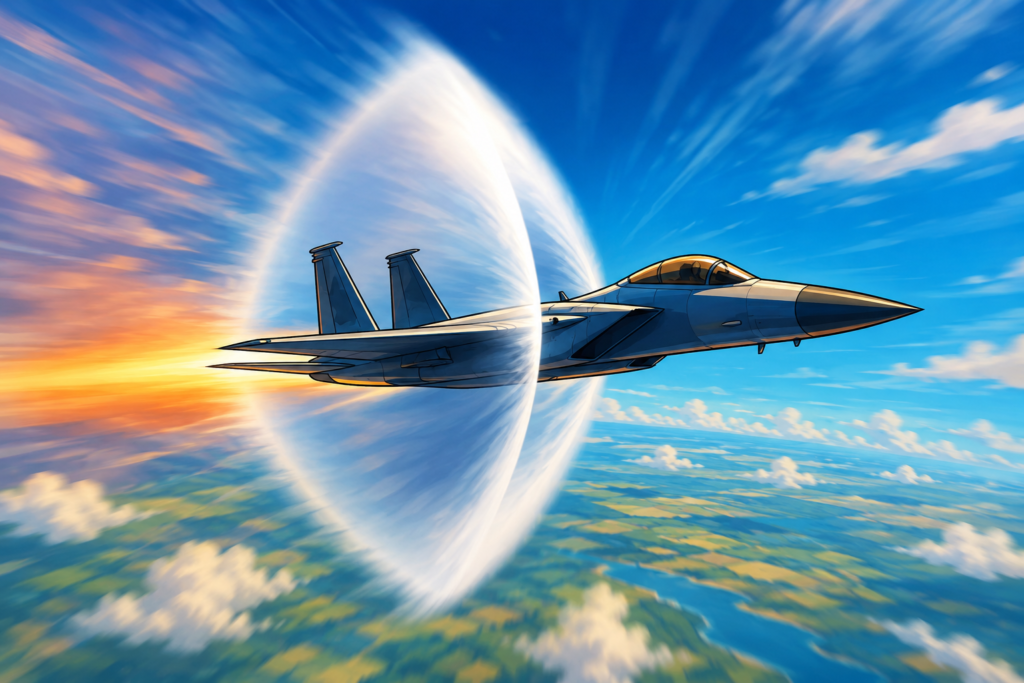
For many years, scientists believed that airplanes could never safely travel faster than the speed of sound because of the intense aerodynamic forces involved. This challenge became known as the sound barrier.
On October 14, 1947, American test pilot Chuck Yeager made history by becoming the first person to break the sound barrier. Flying the rocket-powered Bell X-1, Yeager exceeded the speed of sound and demonstrated that supersonic flight was possible.
This historic achievement opened the door to the development of faster military aircraft, advanced aerospace technology, and supersonic passenger travel, including the legendary Concorde.
How Airplanes Fly
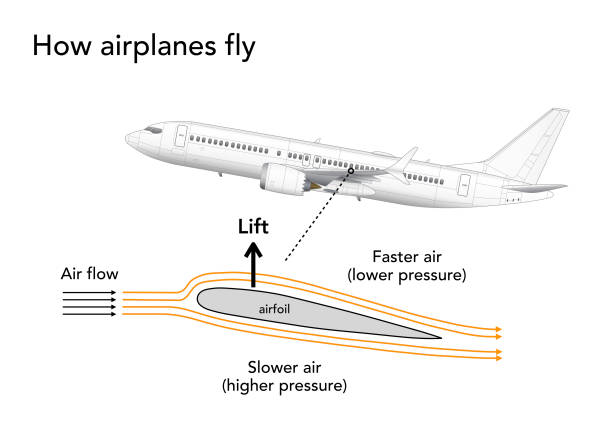
Despite their enormous size and weight, airplanes are able to fly because of four fundamental forces that act on them during flight: lift, weight, thrust, and drag.
As an aircraft moves forward, air flows over and under its specially shaped wings, known as airfoils. The curved upper surface causes air to move faster above the wing than below it, creating lower air pressure on top and higher pressure underneath. This pressure difference generates lift, the upward force that allows the airplane to rise into the air and remain airborne.
The aircraft’s engines produce thrust, which moves the airplane forward, while drag acts in the opposite direction by resisting motion through the air. At the same time, weight, caused by gravity, pulls the airplane downward. A successful flight depends on balancing these four forces throughout takeoff, cruising, and landing.
Parts of an Airplane
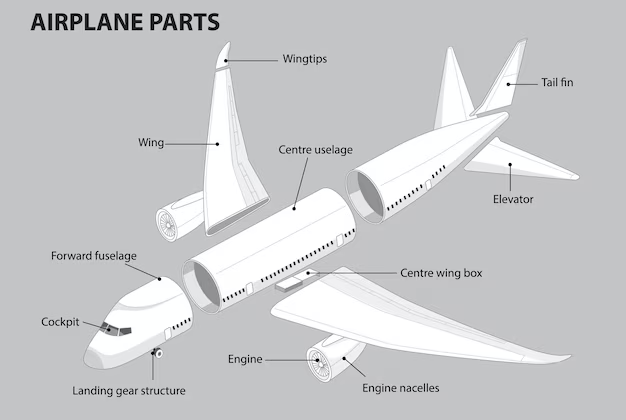
Every airplane consists of several important components that work together to ensure safe and efficient flight.
The fuselage forms the main body of the aircraft and houses passengers, cargo, and various onboard systems. At the front is the cockpit, where pilots operate the aircraft using sophisticated instruments and controls.
The wings generate lift, enabling the aircraft to fly, while the engines provide the thrust required to move forward. At the rear of the airplane is the tail section, or empennage, which helps maintain stability during flight.
The rudder, attached to the vertical stabilizer, controls the aircraft’s side-to-side movement, known as yaw. The elevators adjust the aircraft’s pitch, allowing it to climb or descend, while the ailerons, located on the wings, control rolling movements during turns.
Finally, the landing gear supports the aircraft during takeoff, landing, and taxiing on the ground. Every component plays a vital role in ensuring smooth and safe flight.
Inside the Cockpit
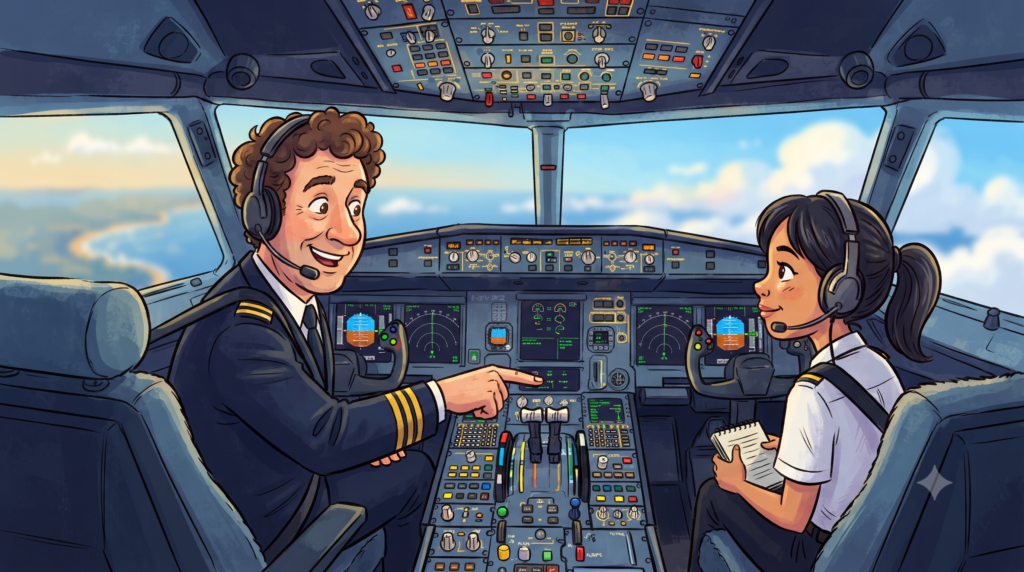
The cockpit serves as the control center of an airplane, where pilots monitor aircraft systems and navigate safely from takeoff to landing. Modern cockpits are equipped with advanced digital displays and sophisticated navigation equipment.
The Primary Flight Display (PFD) provides essential flight information such as airspeed, altitude, attitude, and heading. Navigation systems, including GPS and autopilot controls, help pilots follow their planned routes accurately.
Pilots also monitor engine performance, fuel levels, hydraulic systems, and electrical systems using dedicated information displays. Weather radar allows crews to detect storms and avoid hazardous weather conditions.
The control wheel or side stick enables pilots to control the aircraft’s direction, while the throttle levers regulate engine power. Rudder pedals help steer the aircraft during taxiing and assist with directional control during flight. Together, these systems enable pilots to operate aircraft safely under a wide range of conditions.
Types of Airplanes
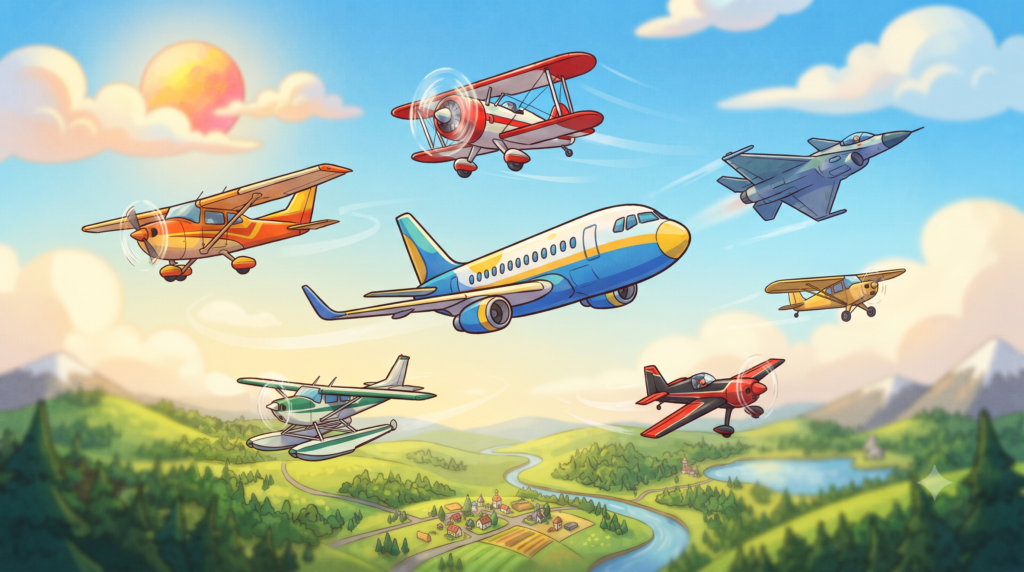
Airplanes are designed for a wide variety of purposes, and each type serves a unique role in aviation.
Jet aircraft are commonly used for commercial passenger travel because they can fly at high speeds and high altitudes over long distances.
Propeller aircraft remain popular for regional transportation, pilot training, and short-distance flights due to their efficiency and reliability.
Seaplanes are specially designed to take off and land on water using floats or boat-shaped hulls instead of conventional landing gear. They are commonly used in remote regions where airports are unavailable.
Observation aircraft are built to provide excellent visibility for aerial photography, surveying, environmental monitoring, and traffic observation.
One of the most famous aircraft in history was the Concorde, a supersonic passenger jet capable of flying at more than twice the speed of sound. It reduced transatlantic flight times to approximately four hours, demonstrating the remarkable potential of supersonic commercial aviation.
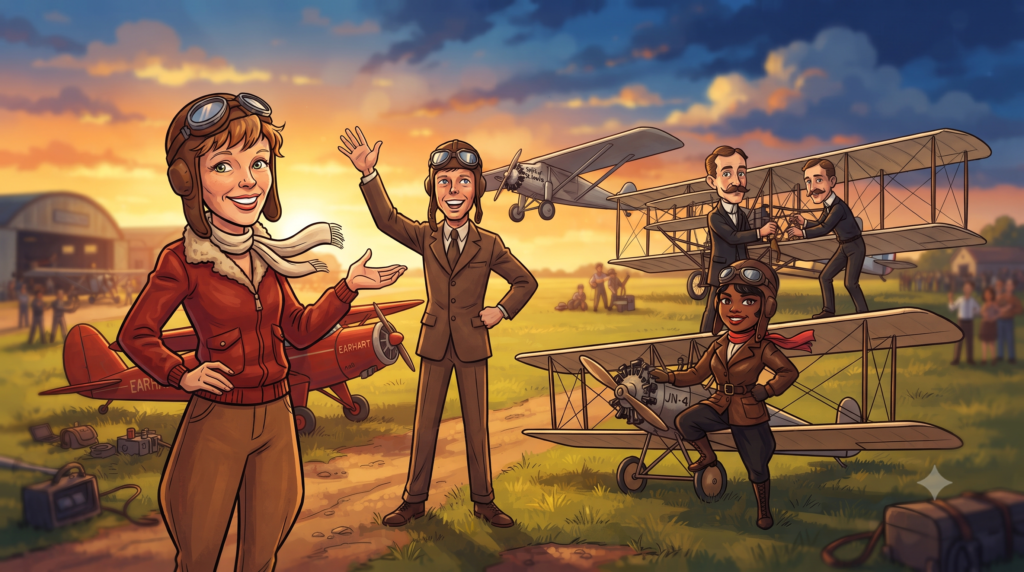
Famous Aviators
The history of aviation is filled with courageous individuals whose achievements expanded the boundaries of human flight.
John Alcock and Arthur Whitten Brown completed the world’s first nonstop transatlantic flight in 1919, flying from Newfoundland, Canada, to Ireland despite challenging weather conditions and limited navigation equipment. Their success proved that long-distance air travel across oceans was possible.
In 1927, Charles Lindbergh became the first person to complete a solo nonstop flight across the Atlantic Ocean. Flying the Spirit of St. Louis, he traveled from New York to Paris in approximately 33½ hours, inspiring a new era of aviation.
Amelia Earhart became the first woman to fly solo across the Atlantic Ocean in 1932. She broke numerous aviation records and encouraged women around the world to pursue careers in aviation and other traditionally male-dominated fields. Although she disappeared during her attempt to fly around the world in 1937, her legacy continues to inspire generations.
Another pioneering aviator was Amy Johnson, who became the first woman to fly solo from England to Australia in 1930. Her remarkable journey demonstrated extraordinary courage and determination, making her one of the most celebrated female pilots in aviation history.
Together, these pioneering aviators pushed the boundaries of what was possible and inspired future generations of pilots, engineers, and explorers.
Conclusion
From the earliest gliders developed by Sir George Cayley to today’s advanced commercial aircraft and supersonic jets, the story of aviation is a remarkable journey of innovation, perseverance, and scientific achievement. Every breakthrough in aircraft design has brought the world closer together, making travel faster, safer, and more efficient.
Modern airplanes are among the safest and most sophisticated machines ever built, combining advanced engineering with skilled pilots and cutting-edge technology. As aviation continues to evolve through sustainable fuels, electric aircraft, and next-generation aerospace innovations, the future of flight promises even greater possibilities.
The dream of human flight has become an everyday reality, proving that with curiosity, determination, and innovation, the sky is not the limit—it is only the beginning.
Like | Share | Subscribe – YouTube Channel Link: https://www.youtube.com/@ciderstudiodr






Leave a Reply