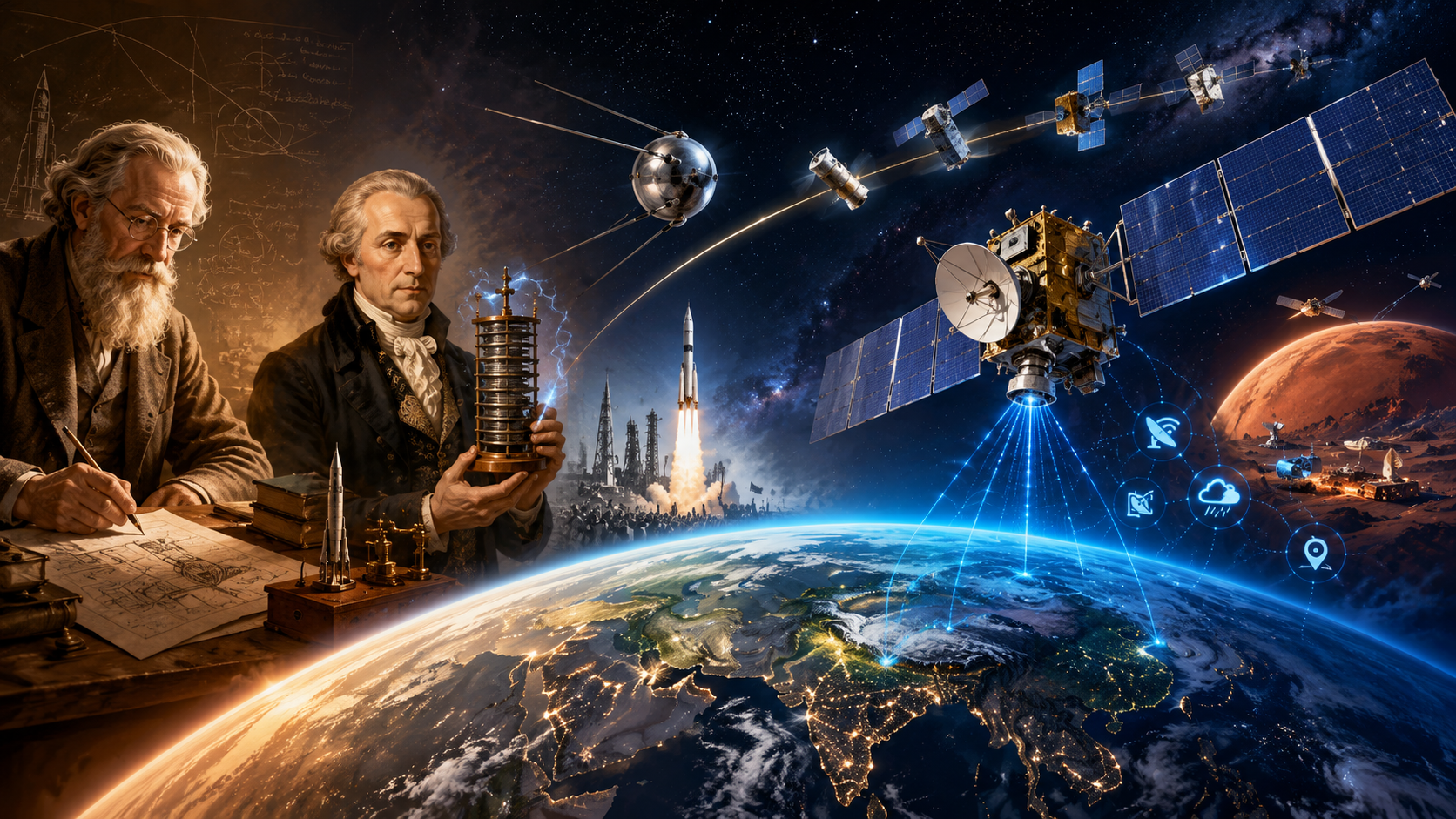
Look up at the night sky, beyond the clouds and airplanes, and you will find thousands of human-made machines silently moving around Earth. These incredible inventions are called satellites. They are our invisible helpers in space, supporting communication, navigation, weather forecasting, scientific discoveries, and much more.
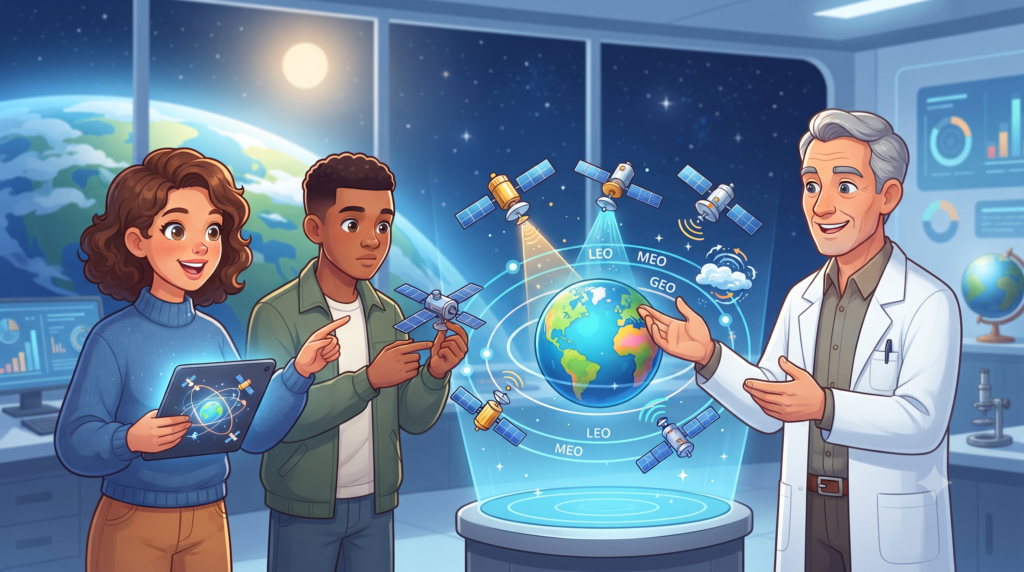
A satellite is an object that moves around a planet or another celestial body in space. The Moon is Earth’s natural satellite, while artificial satellites are machines created by humans and launched into space for different purposes.
These space technologies help us stay connected, understand our planet, explore the universe, and improve everyday life.
🚀 The Dreamer Who Reached for the Stars – Konstantin Tsiolkovsky
Konstantin Tsiolkovsky was a Russian scientist and visionary born on September 17, 1857. Despite facing challenges due to hearing loss, he became a self-taught learner and developed a deep interest in mathematics, science, and space exploration.
He later became a mathematics and physics teacher and spent his life imagining the future of space travel.
His major contributions included the Rocket Equation, ideas about multistage rockets, space stations, airlocks, and space elevators. Because of his groundbreaking ideas, he is known as the “Father of Astronautics”.
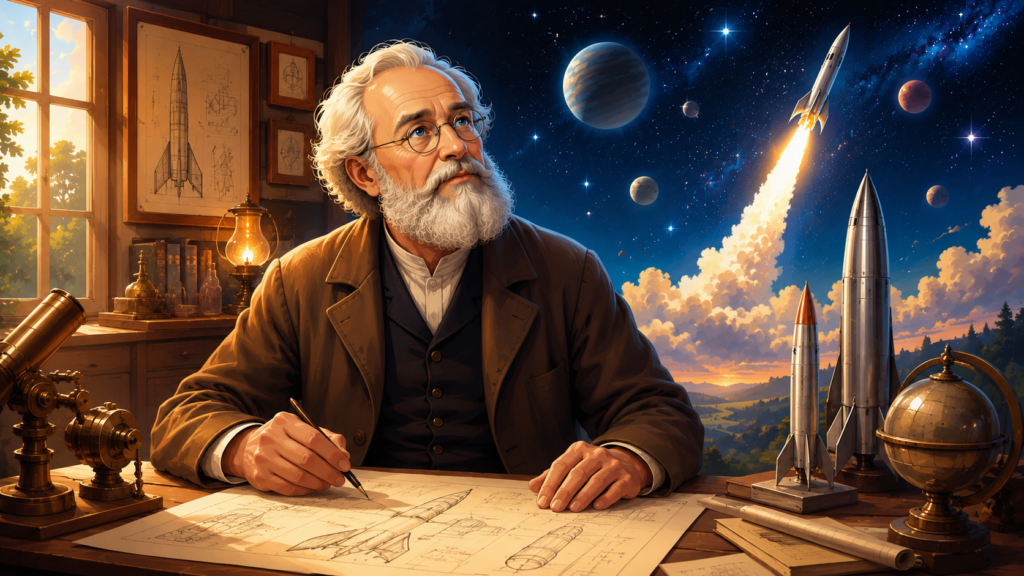
His dreams and scientific theories became the foundation for modern space exploration.
⚡ The Man Who Brought Electricity to Life – Alessandro Volta
Alessandro Volta was an Italian scientist born in 1745 who made important discoveries in the field of electricity. His curiosity and experiments helped transform our understanding of electrical power.

⚡ The Birth of the First Battery
His greatest invention was the Voltaic Pile in 1800, the world’s first true battery. This invention provided a reliable source of electricity and opened the door to modern electronics.
Batteries are also essential for satellites because they provide power when satellites operate in space. In honor of his contribution, the unit of electric potential was named the “volt”.
🚀 The Space Race – A Race Beyond the Stars
The Space Race was a competition between the United States and the Soviet Union during the Cold War to achieve major milestones in space exploration.
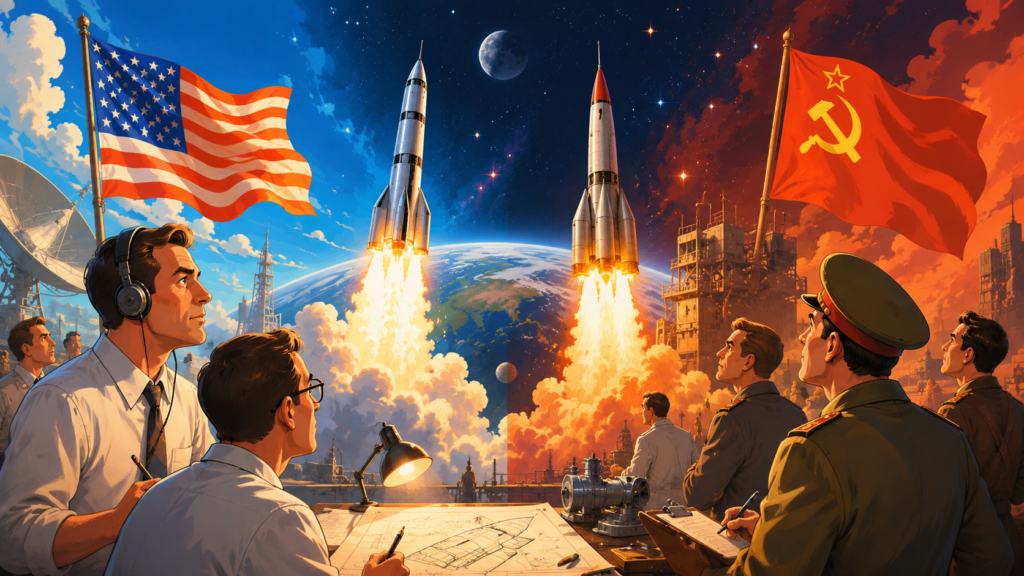
In 1957, the Soviet Union launched Sputnik 1, the first artificial satellite to orbit Earth. In 1961, Yuri Gagarin became the first human to travel into space.
The United States responded by creating ambitious space programs through NASA. The historic Apollo 11 mission successfully landed humans on the Moon on July 20, 1969, with Neil Armstrong becoming the first person to step on the lunar surface.
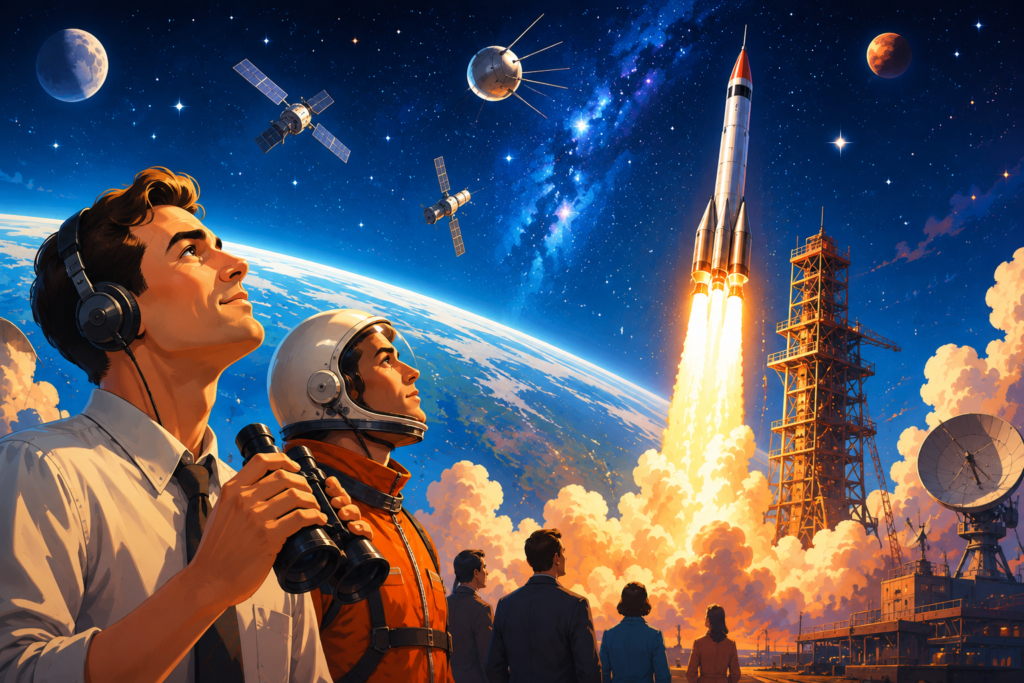
The Space Race accelerated technological development and helped create many innovations that continue to benefit humanity today.
🛰️ How Satellites Work – The Helpers in the Sky
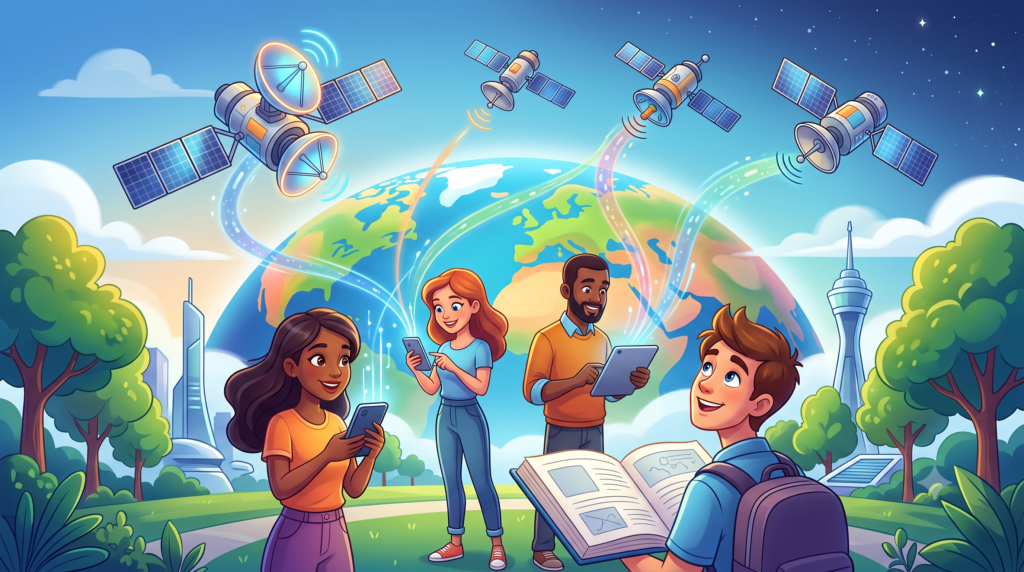
Satellites are like advanced robots in space, designed with different systems that allow them to function independently.
🛰️ Inside a Satellite: The Technology Behind Space Machines
A satellite contains several advanced systems that work together to help it survive and operate in space:
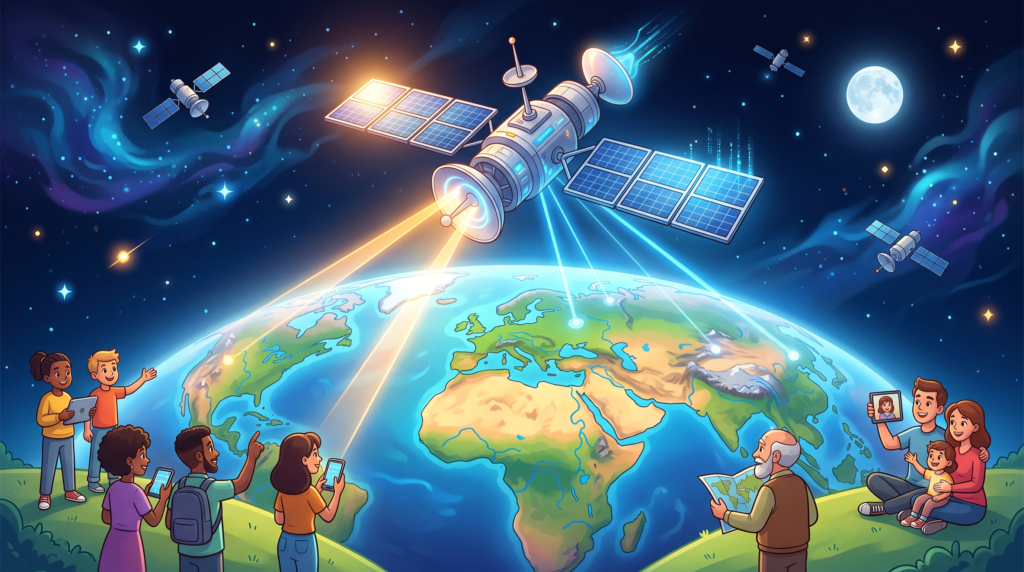
🌍 Satellites receive signals from Earth, process information, and send data back to different locations around the world.
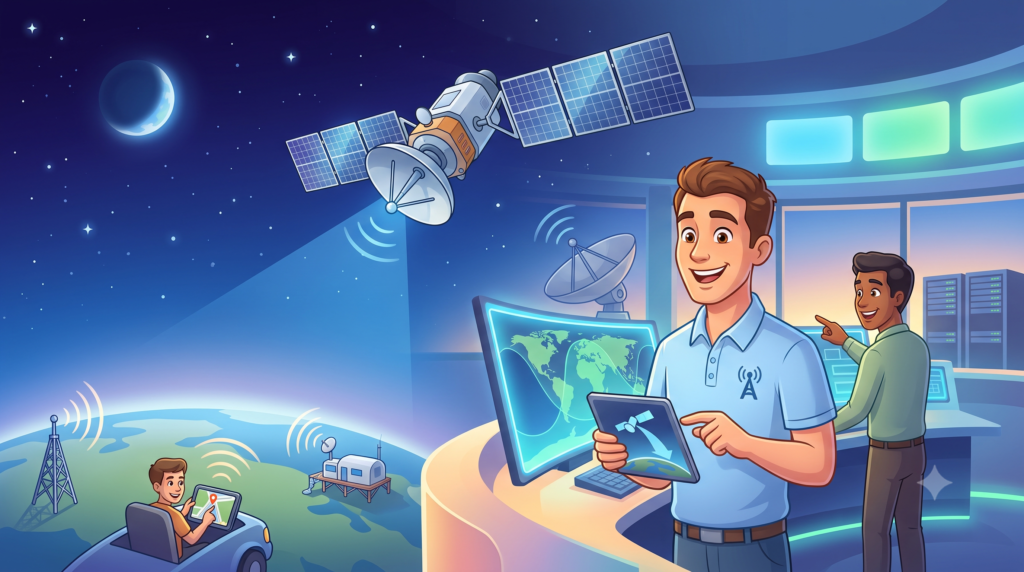
📡 How Satellites Communicate – Connecting the World
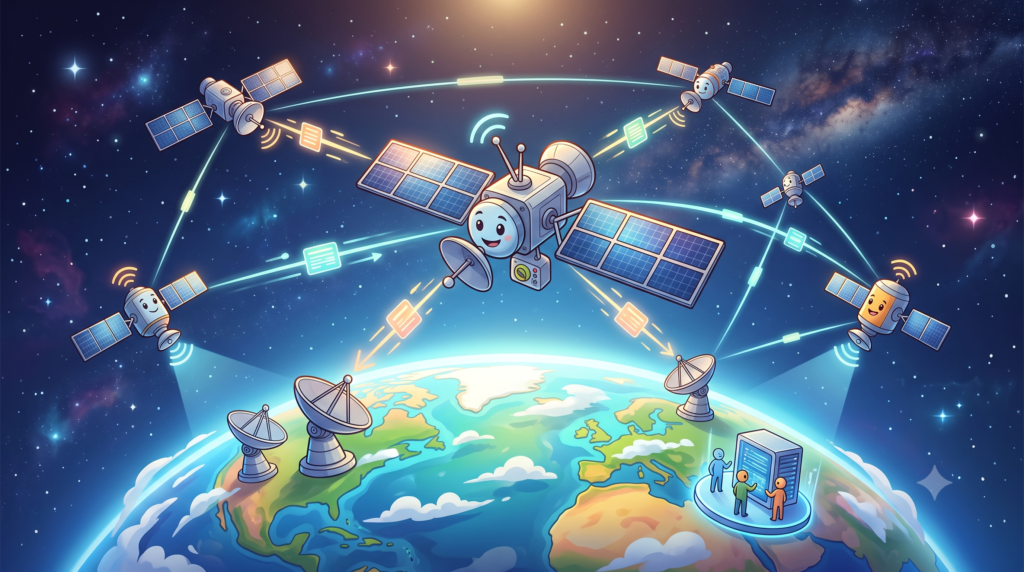
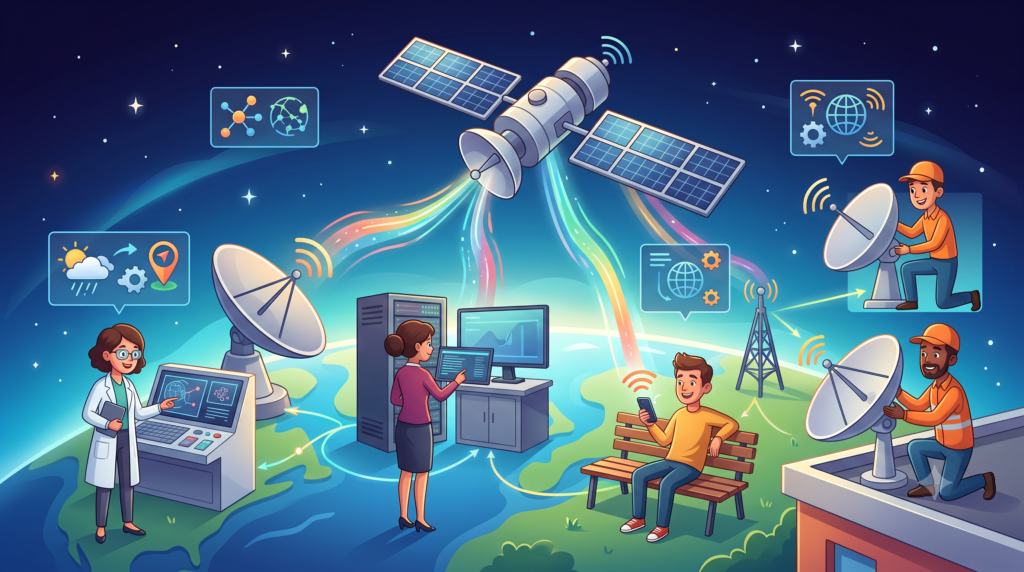
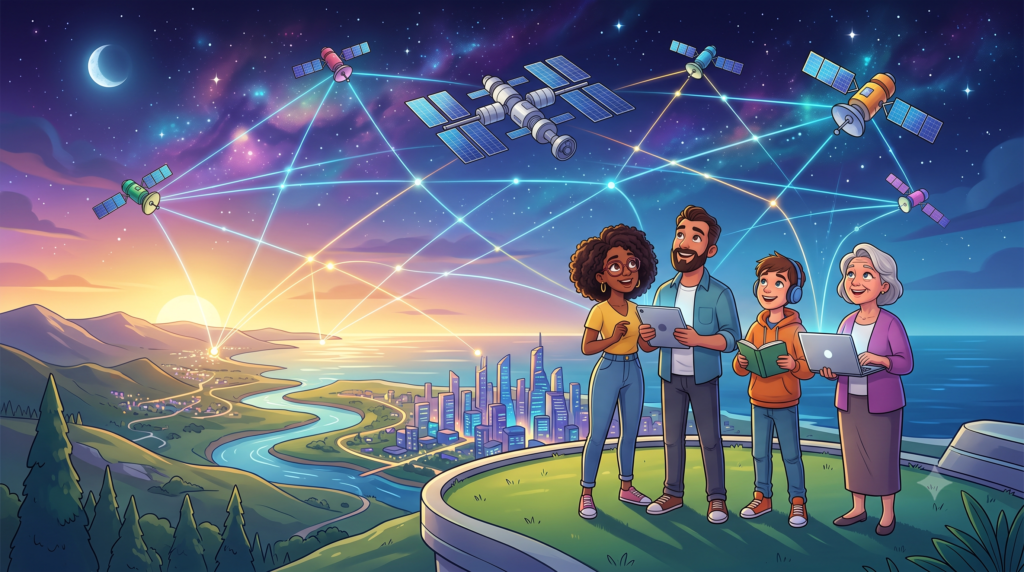
Satellites act as communication bridges between different parts of Earth. When a signal is sent from a device, it travels to a satellite, which then sends it back to another location.
This technology allows people to make phone calls, watch television, access the internet, and communicate across continents within seconds.
🛰️ What Do Satellites Do?
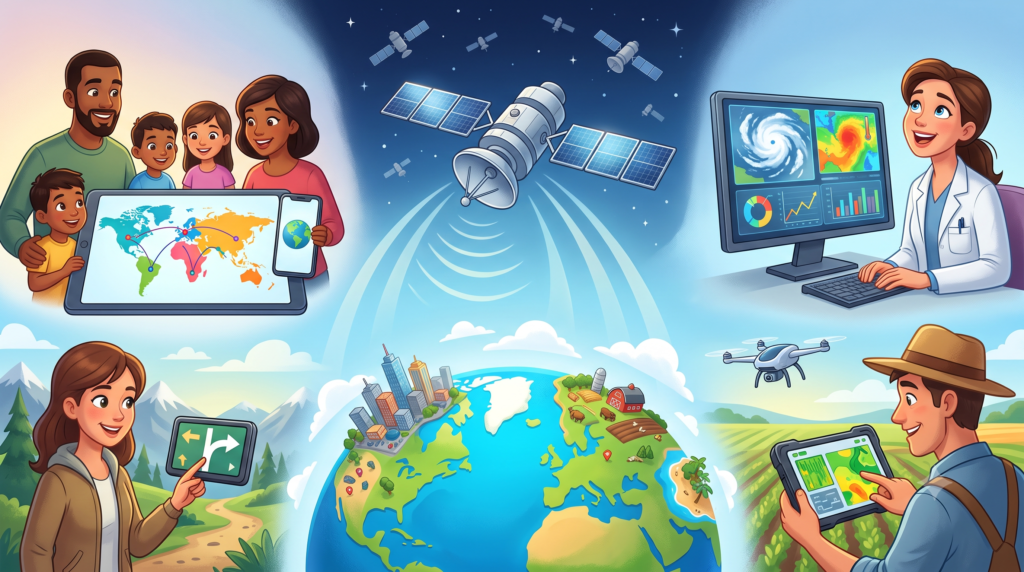
Satellites are the invisible helpers above Earth, performing powerful tasks that make modern life possible.
Communication
Communication satellites connect people across the world through phone services, television broadcasts, and internet networks.
Navigation
GPS satellites help airplanes, ships, vehicles, and smartphones determine their exact locations.
Weather Monitoring
Weather satellites observe clouds, storms, and climate patterns, helping scientists predict weather conditions and natural disasters.
Science & Space Exploration
Satellites help researchers study planets, stars, galaxies, and other mysteries of the universe.
Protecting Earth
Earth observation satellites monitor forests, oceans, pollution levels, and environmental changes.
🌍 Modern Satellites – Technology Orbiting Our Planet
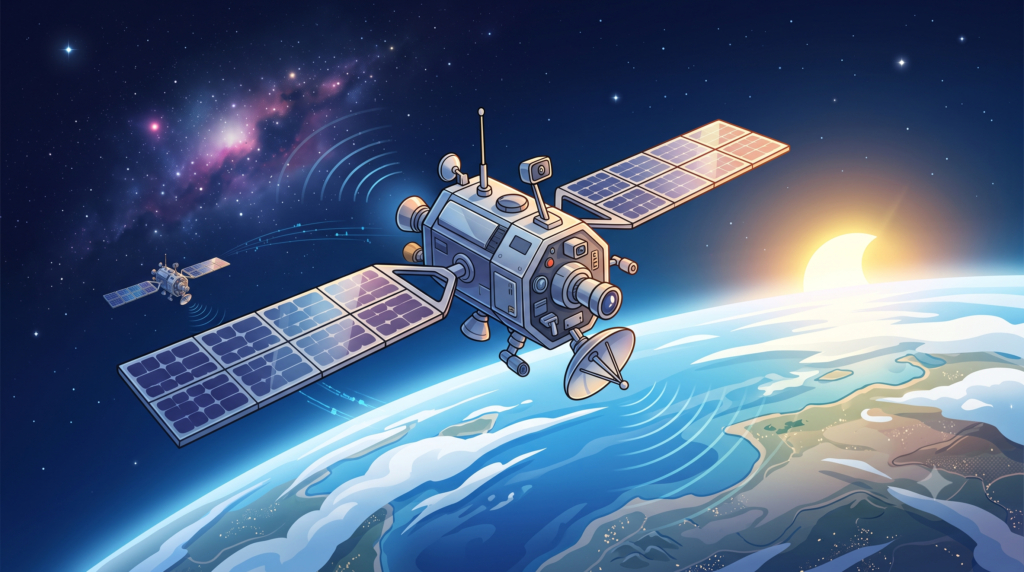
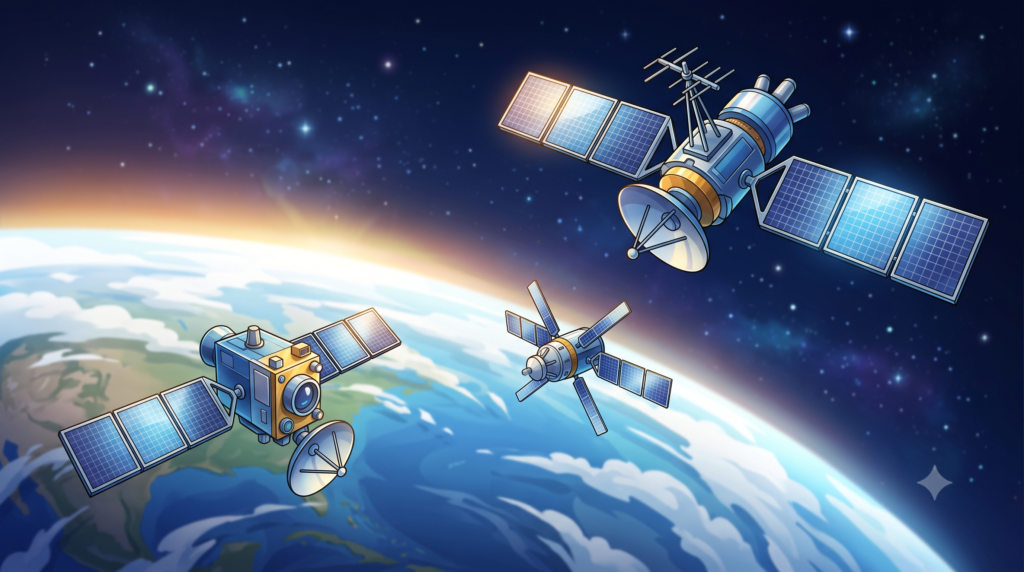
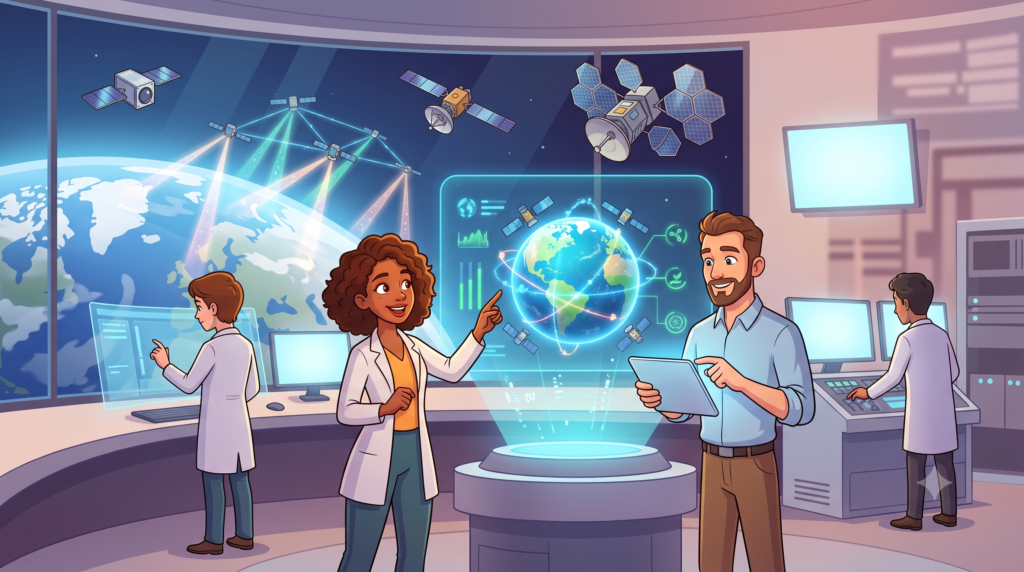
Today, thousands of satellites orbit Earth, each designed for different purposes. Some capture images of our planet, some provide communication services, while others help with weather prediction and scientific research.
Satellites have also traveled beyond Earth and are exploring planets like Mars, Jupiter, and Saturn, while also studying the Sun and unlocking new secrets of our solar system.
🌍 How Satellites Have Changed the World
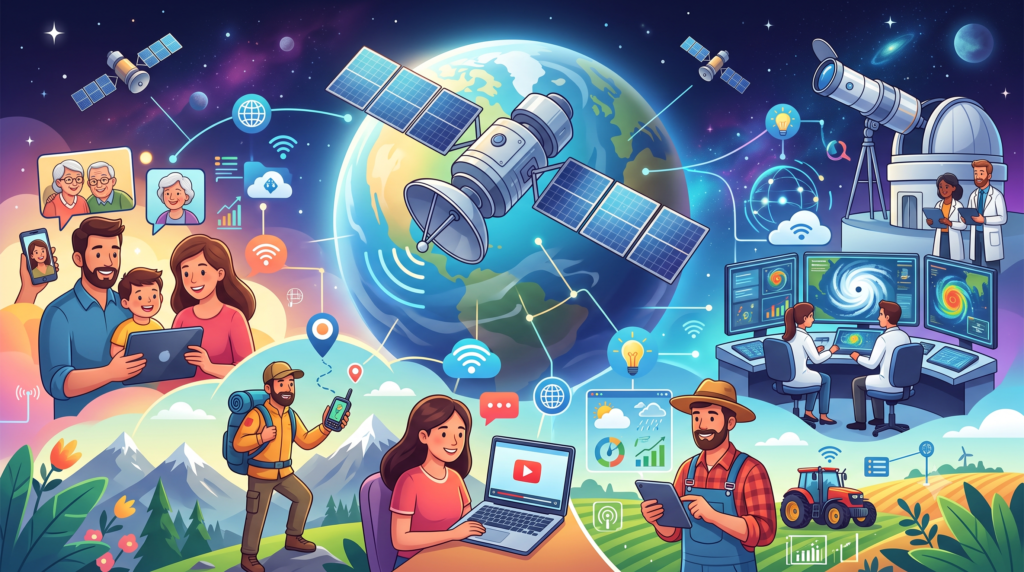
Satellites have completely transformed the way humans live. They allow instant communication across oceans, improve weather forecasting, support navigation systems, and help scientists explore space.
Satellites provide valuable information about Earth, helping us understand environmental changes, monitor our planet, and take steps to protect Earth’s future.
🚀 The Future of Satellites
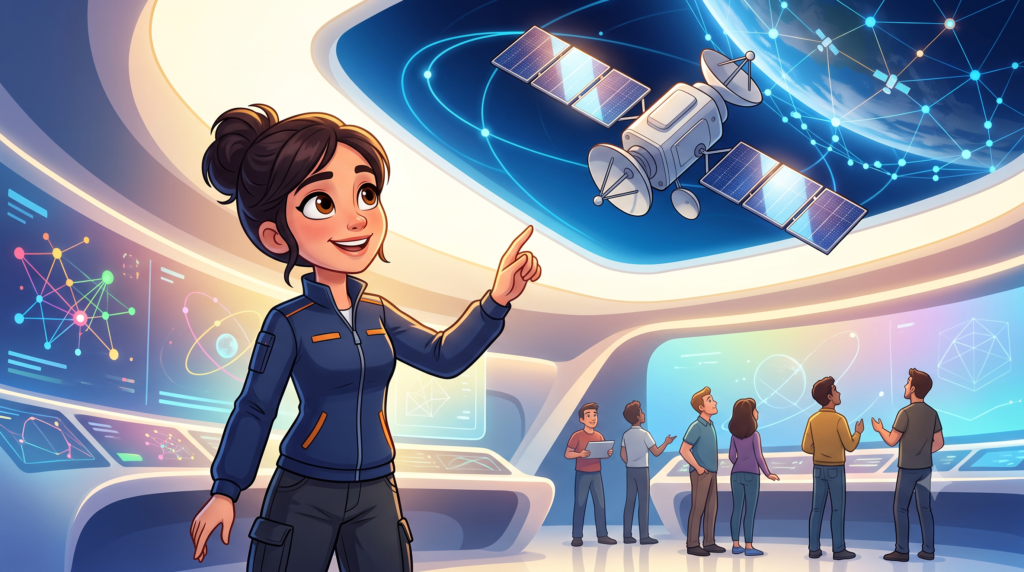
The future of satellites promises exciting possibilities. Scientists are exploring ideas such as space-based solar power, advanced satellite networks, and technologies that could support future human missions to Mars.
Satellites may help provide faster internet connectivity and create new opportunities to improve life for people around the world.
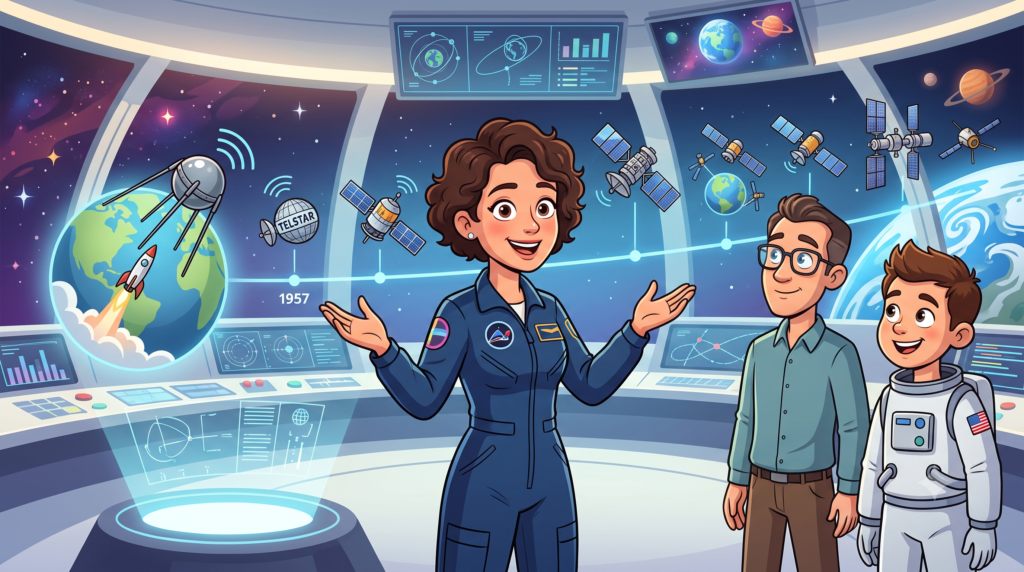
🚀 The Journey of Satellites: From Sputnik to Space Innovations
The journey of satellites began in 1957 with Sputnik 1, the first artificial satellite launched by the Soviet Union. This historic event marked the beginning of the Space Age and changed the future of space exploration forever.
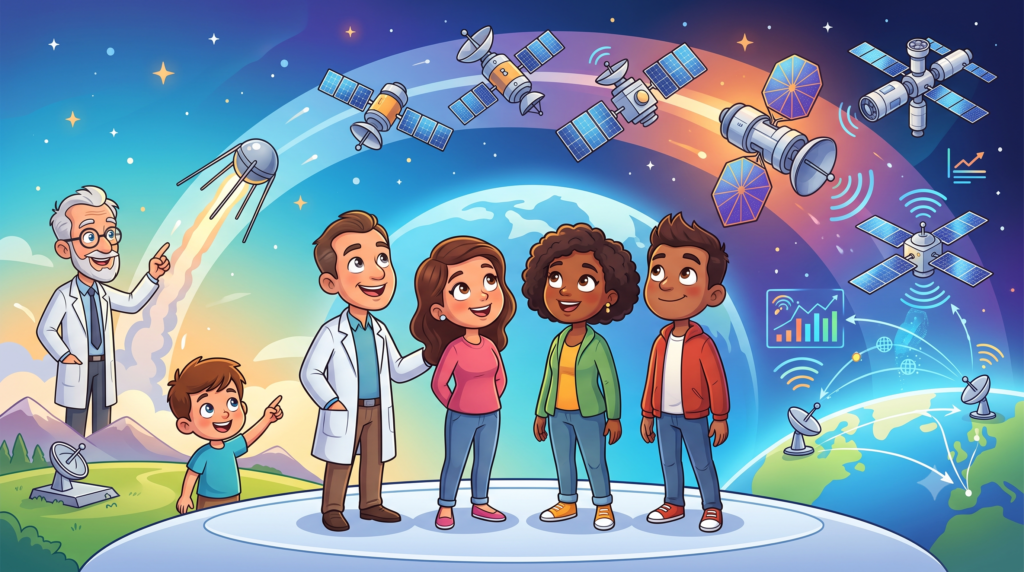
Over the years, satellites have evolved from simple scientific tools into advanced technologies that support communication, navigation, weather forecasting, Earth observation, and space exploration.
Today, modern satellites are smaller, smarter, and more powerful, helping connect the world while expanding our understanding of Earth and the universe.
🌌 Conclusion – Satellites: Technology That Connects Us to the Universe
From the first Sputnik satellite to today’s advanced space systems, satellites represent human curiosity, creativity, and the desire to explore beyond Earth.
Continue Your Journey Beyond the Stars
Enjoyed learning about satellites and space technology? Stay connected with Cider Studio for more amazing stories about Space, Science, Technology, and Innovation.
▶ Watch Cider Studio on YouTube




Leave a Reply