
The Mysterious ₹500 Note 💸
One little note. Two curious minds. One BIG mystery! 🔍

☀️ One Saturday morning, Mum placed a ₹500 note on the table.

“Can we buy ice cream?”

“Where did this money actually come from?”
How do people earn money in the first place?

Suddenly, something unbelievable happened! The ₹500 note magically grew little legs and invited them on an incredible adventure to discover how people earn money! 🦵💸
Money Doesn’t Just Appear! 💰
Follow the magical note and discover how people really earn money! ✨

🚀 Adu and Roro followed the magical note through a world full of surprises. Along the way, they discovered something amazing: money doesn’t simply appear out of nowhere!
People earn money by working, building businesses, creating wonderful things, and helping others. Let’s see how! 👀
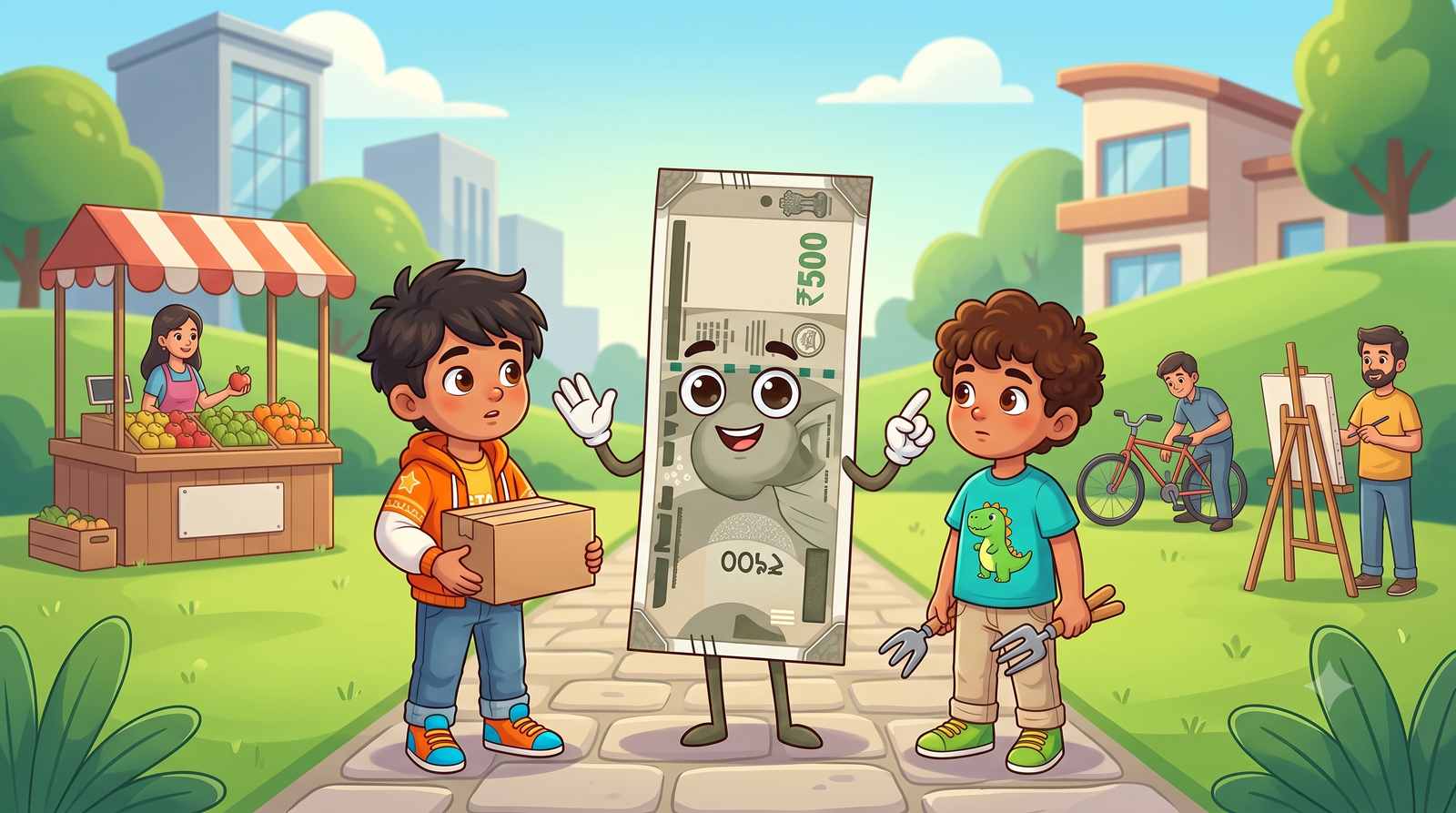
“So people earn money by working hard and using their skills?”
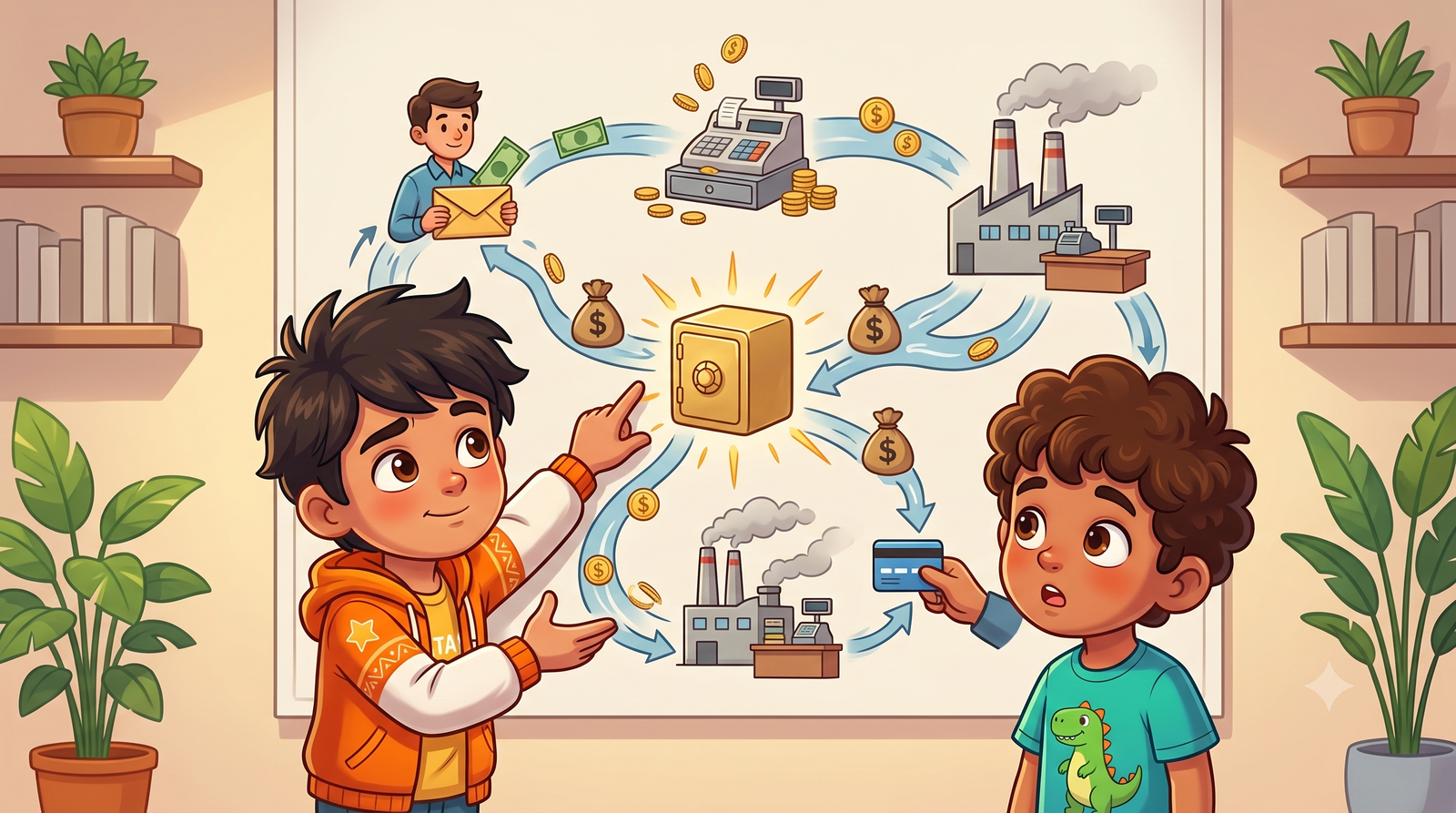
“And shopkeepers earn money when people buy the things they sell?”

💡 The magical note revealed one more secret: artists earn by creating, teachers earn by teaching, doctors earn by treating patients, and many other people earn by providing services that others need.
Money is earned by providing something valuable to others!
The Teacher: Earning Through Knowledge 📚
Sharing knowledge, inspiring young minds, and building a brighter future! 🌈
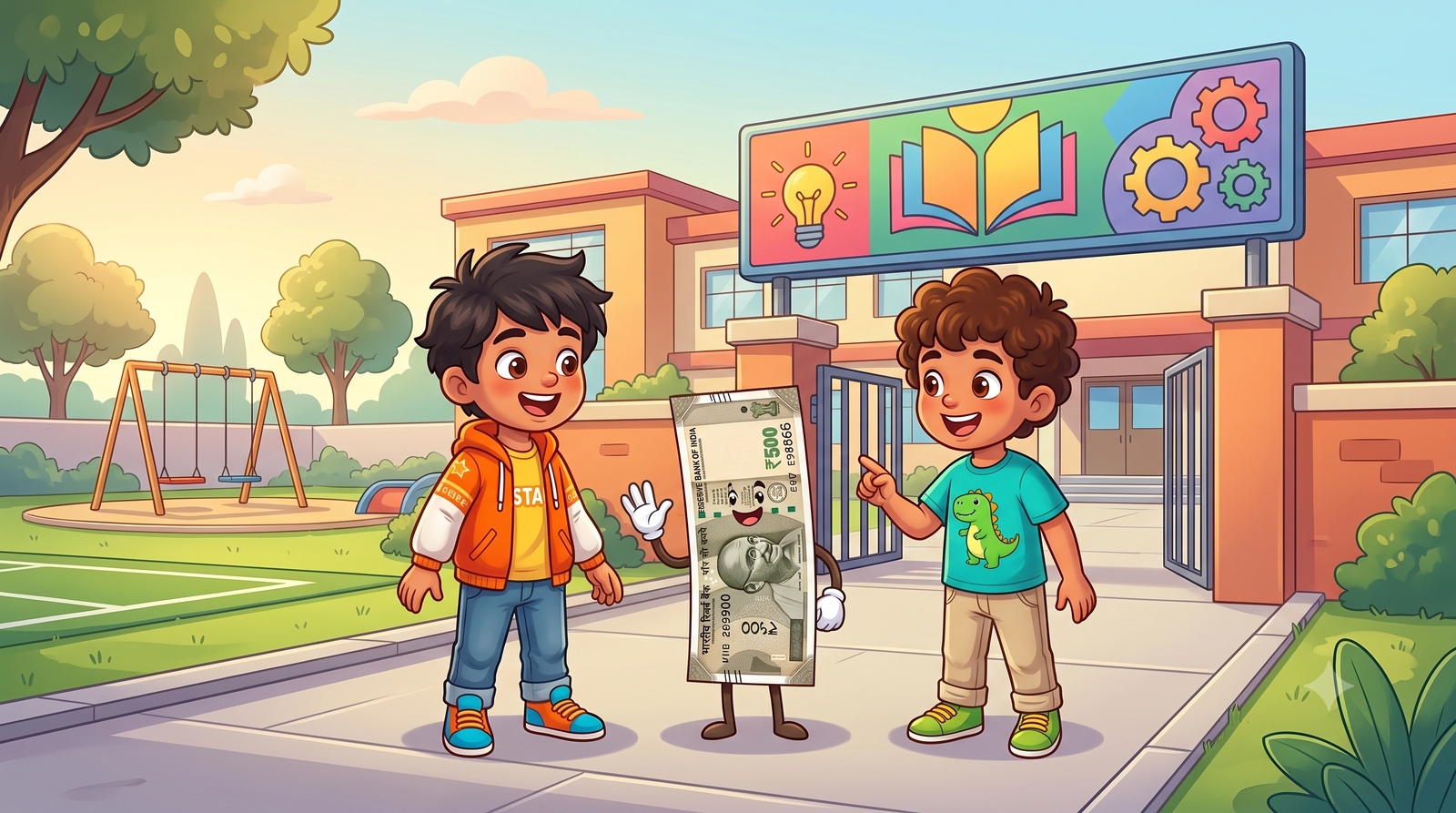
✨ As Adu and Roro followed the magical ₹500 note, they arrived at a lively school. Inside a classroom, a teacher was helping children understand multiplication.
The teacher explained the numbers, answered questions, and made learning fun. The boys watched in amazement as the children began to understand! 💡

“The teacher is using knowledge to help everyone learn!”

“Do teachers earn money for sharing knowledge and guiding students?”
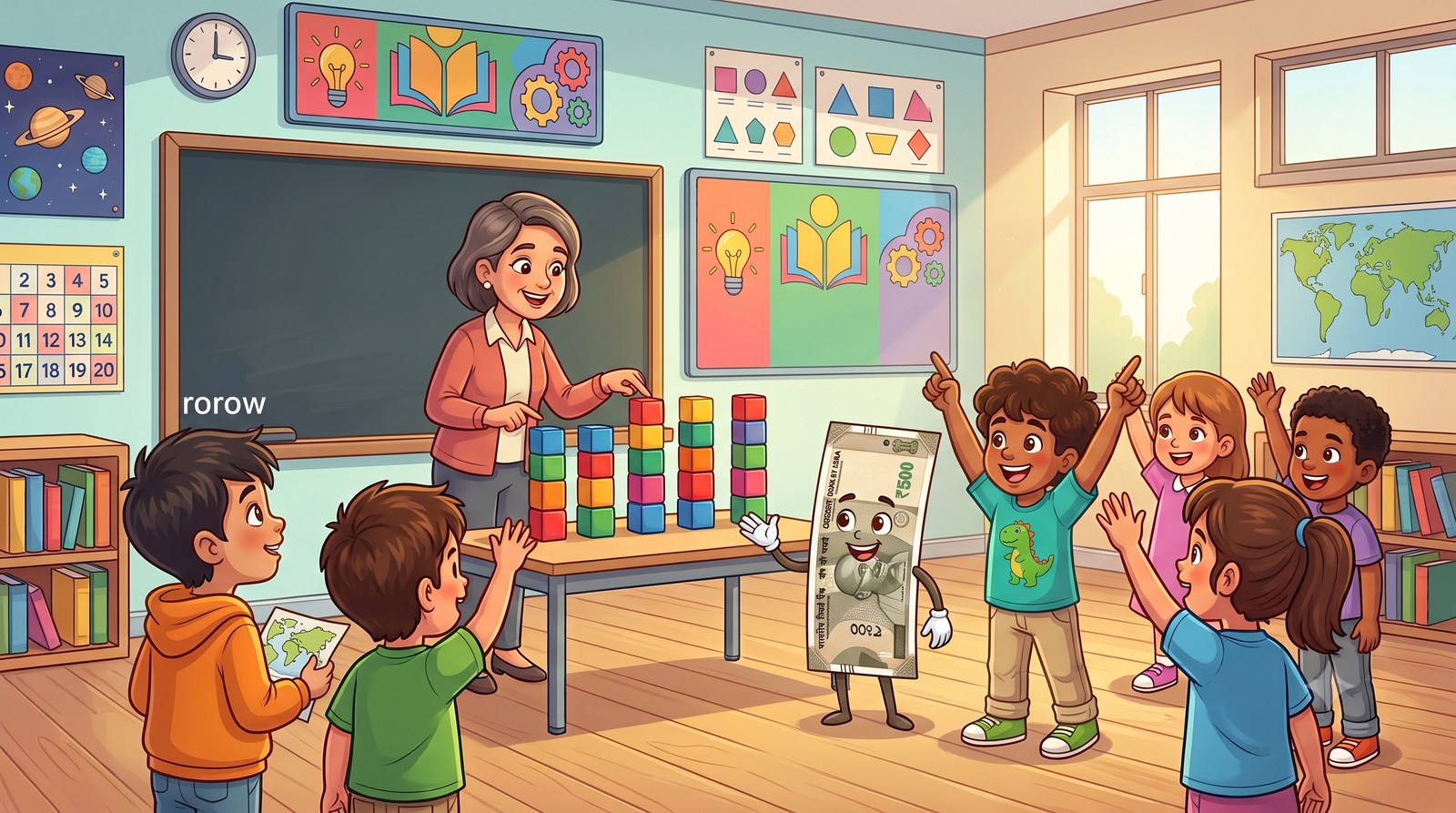
💜 The magical note revealed the secret! Teachers earn money by sharing knowledge, providing guidance, preparing lessons, and educating students.
Their time, skills, patience, and effort create value for others. By helping children understand new ideas and develop important skills, teachers make a real difference in the world. 🌱
Knowledge becomes valuable when we use it to help others learn and grow!
The Doctor: Earning Through Skills and Care 💚
Discover how medical knowledge, special skills, and a caring heart can make a real difference in people’s lives! 🌈

✨ Following the magical ₹500 note, Adu and Roro arrived at a busy clinic. Inside, they saw a doctor carefully examining a patient and listening to their concerns.
The doctor used medical knowledge, special equipment, and years of training to understand what was wrong. The boys watched with curiosity and admiration. 💙

“Wow! The doctor uses special skills and knowledge to help people get better!”

“Do doctors earn money because they use their skills and spend their time caring for people?”

💜 The magical note revealed another important secret! Doctors can earn money by using their medical education, professional skills, experience, and time to care for patients.
Becoming a doctor takes years of learning, practice, responsibility, and dedication. By examining patients, identifying health problems, recommending treatments, and offering guidance, doctors provide an important service to society. 🌱
💡 Their income is not simply about treating an illness. It also reflects the professional knowledge, effort, and responsibility involved in providing healthcare.
Special skills become valuable when we use them responsibly to help others and solve real problems!
The Farmer: Growing Food, Creating Value 🍅
Follow Adu and Roro into a colourful farm and discover how farmers grow food, serve their communities, and earn money by creating something people need! 🌱

✨ Following the magical ₹500 note, Adu and Roro arrived at a beautiful farm. Rows of green plants stretched across the field, and bright red tomatoes hung from their vines.
A farmer was carefully harvesting the ripe tomatoes. The boys watched as the farmer collected the fresh produce that would soon reach markets, shops, and customers. What an amazing discovery! 🍅

“Wow! The farmer grows tomatoes that people can buy and eat. Is that how the farmer earns money?”

“Now I understand! People pay for the food the farmer grows because it is useful to them!”
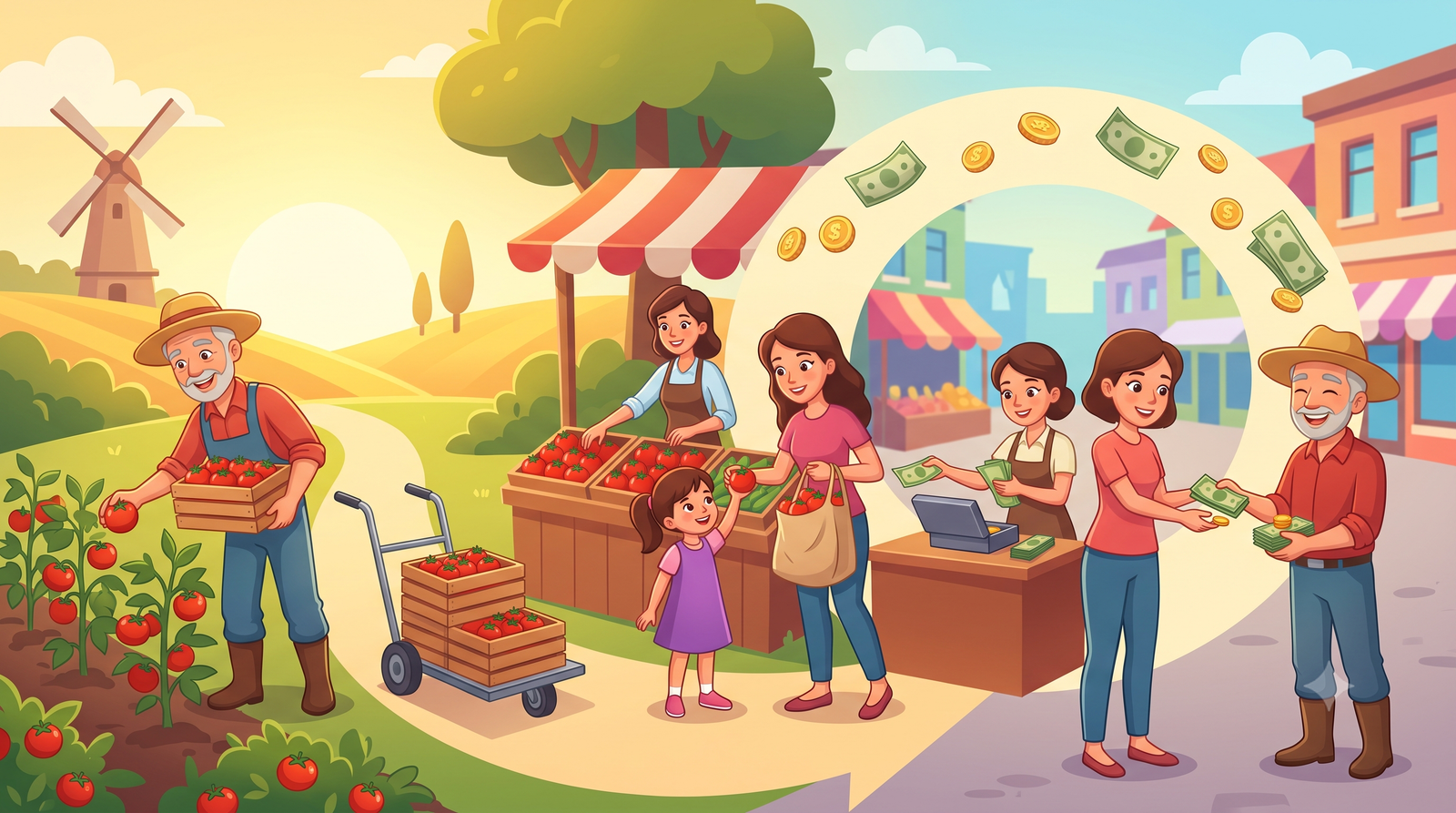
💚 The magical note revealed another important secret! Farmers earn money by growing food and selling their produce to markets, shops, and customers.
🌱 Growing food takes time, effort, and care. Farmers nurture their crops and harvest produce that becomes part of people’s everyday meals.
💡 The big idea is simple: when you produce something people need and are willing to buy, you create value. Farmers provide an essential product and can earn money by bringing that product to the people who need it.
When you grow or create something people need, you create value — and that value can help you earn money!
The Engineer: Solving Problems, Building Solutions ⚙️
Join Adu and Roro at a construction site and discover how science, mathematics, creativity, and problem-solving skills help engineers make the world a better place! 🌉
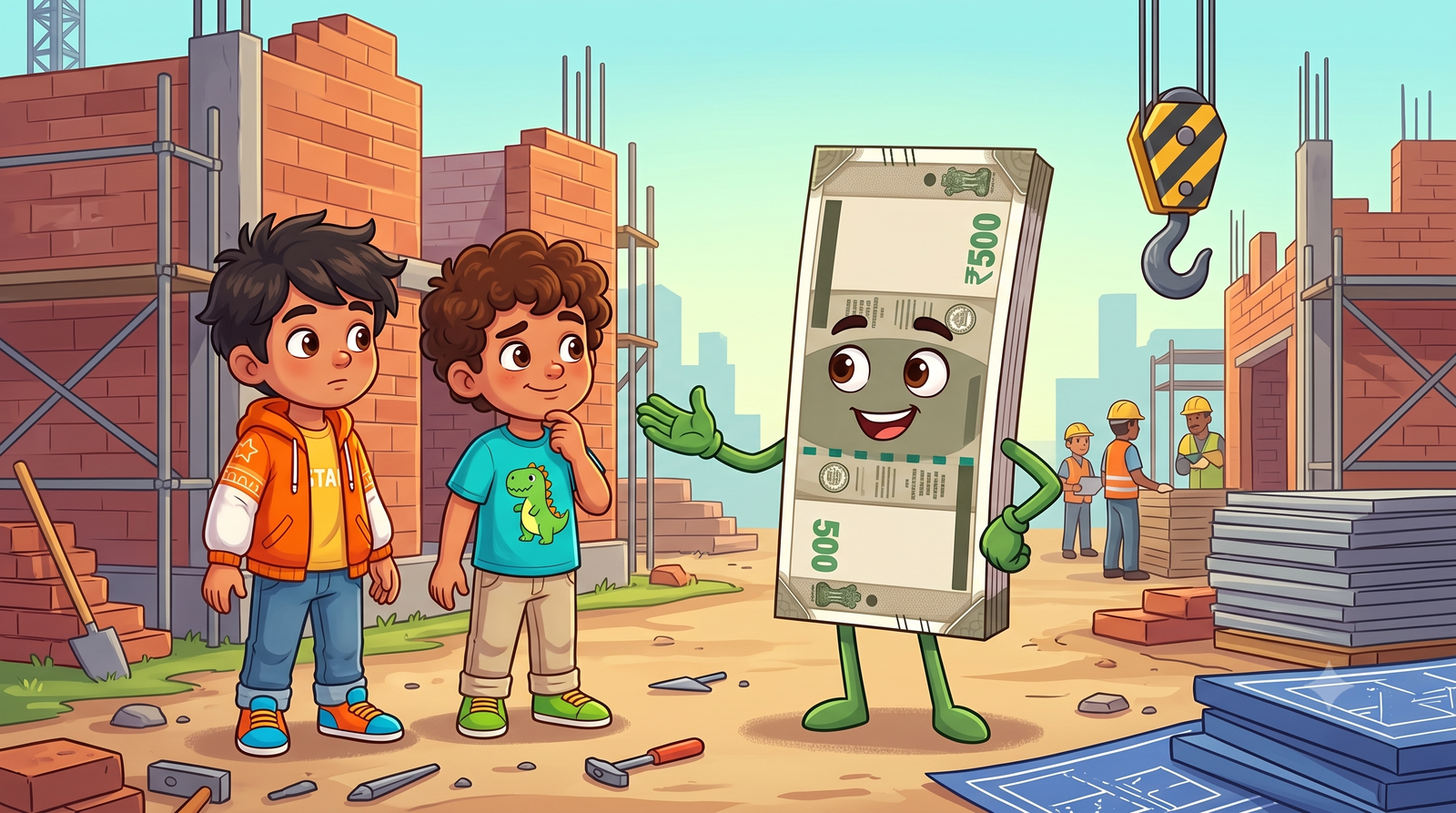
✨ Following the magical ₹500 note, Adu and Roro arrived at a construction site. They saw workers, building materials, machines, and a huge bridge taking shape.
Nearby, an engineer was studying drawings and discussing how the bridge should be designed. The boys were amazed to discover that building something strong and useful required much more than bricks and steel! 💙
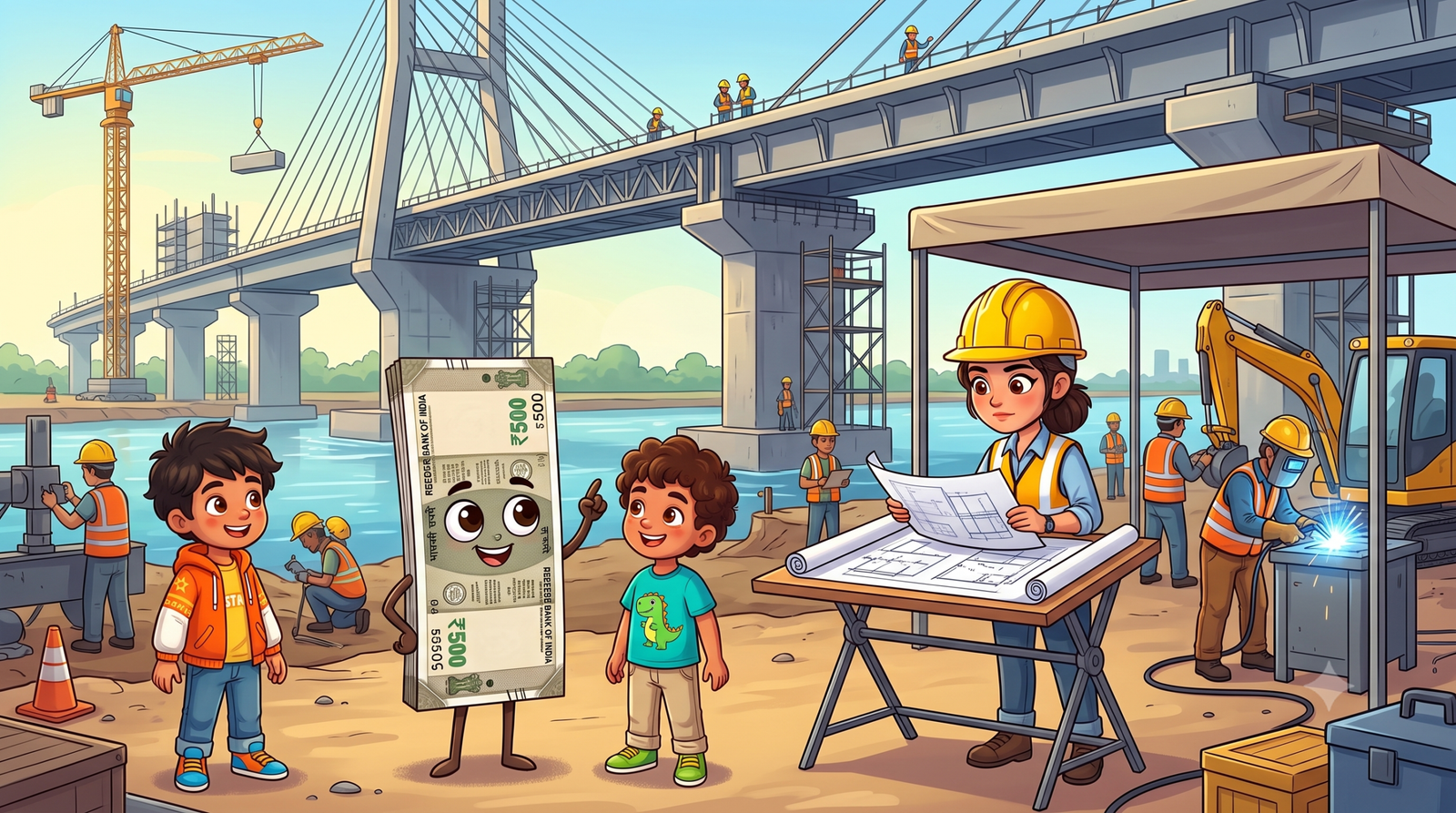
“Wow! The engineer uses mathematics and science to figure out how to build a strong bridge!”

“So engineers earn money by using their knowledge to solve problems and design things people need?”

💡 The magical note revealed another important secret! Engineers can earn money by using their professional knowledge and skills to solve problems and develop useful solutions.
🧠 Engineers apply science, mathematics, creativity, and careful thinking to understand challenges and design solutions. Whether they work on bridges, buildings, machines, or technology, their work can help people in many different ways.
🌟 When someone needs a problem solved, they may seek the expertise of an engineer. The engineer provides valuable work, and that work can be a source of income. The more important lesson is that useful solutions can create value for other people.
Solving problems with knowledge, creativity, and useful skills can create value — and that value can become a way to earn money!
The Shopkeeper: Understanding Revenue and Profit 💰
Join Adu and Roro inside a colourful grocery shop and discover the difference between money received from sales, the cost of products, and the expenses of running a business!
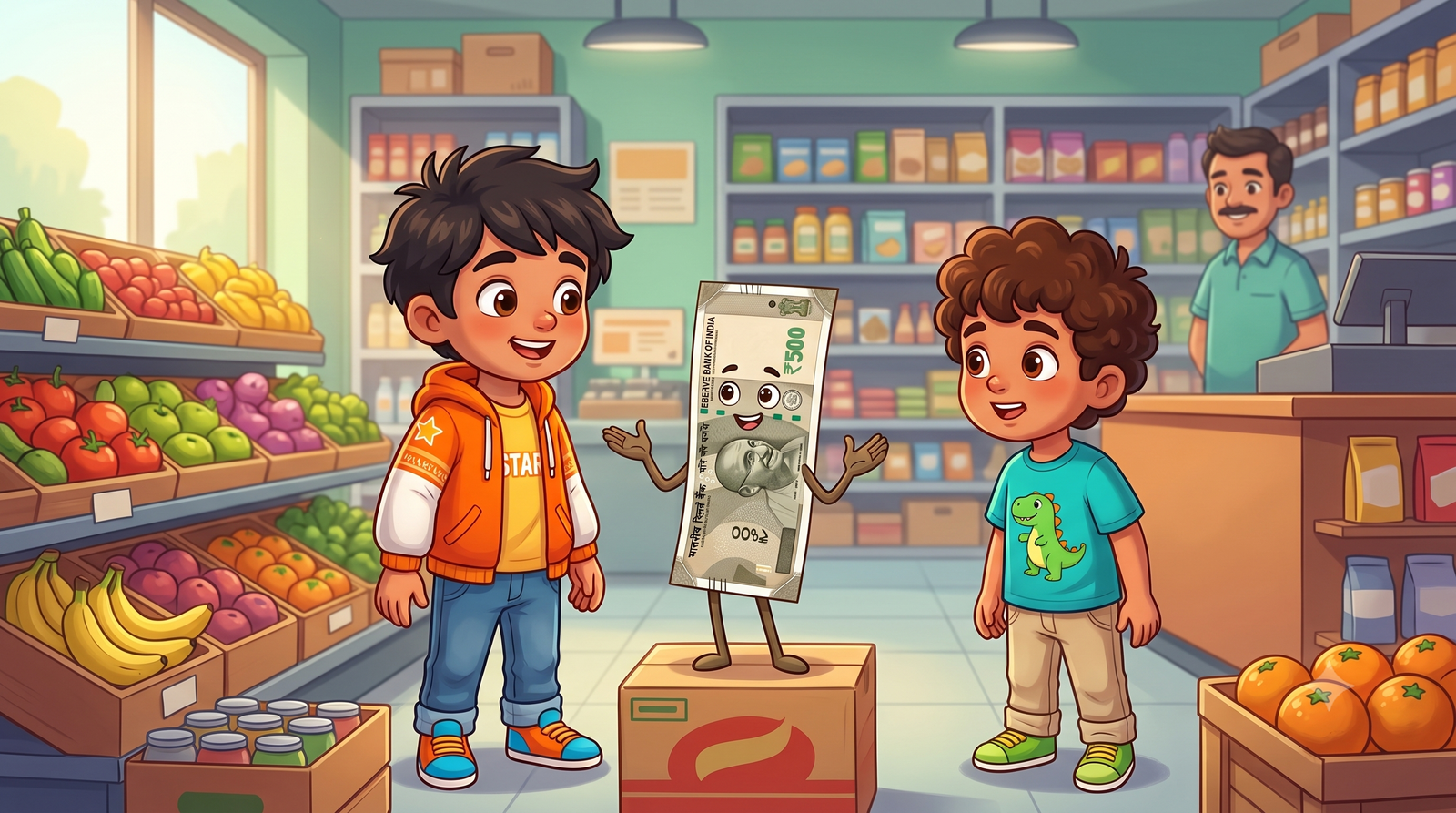
✨ Following the magical ₹500 note, Adu and Roro entered a busy grocery shop. They saw packets, bottles, biscuits, rice, and many other things that people buy every day.
The shopkeeper explained that he bought an item from a supplier for ₹80 and then sold it to a customer for ₹100. Adu quickly noticed the difference and excitedly worked out the numbers! 🧮
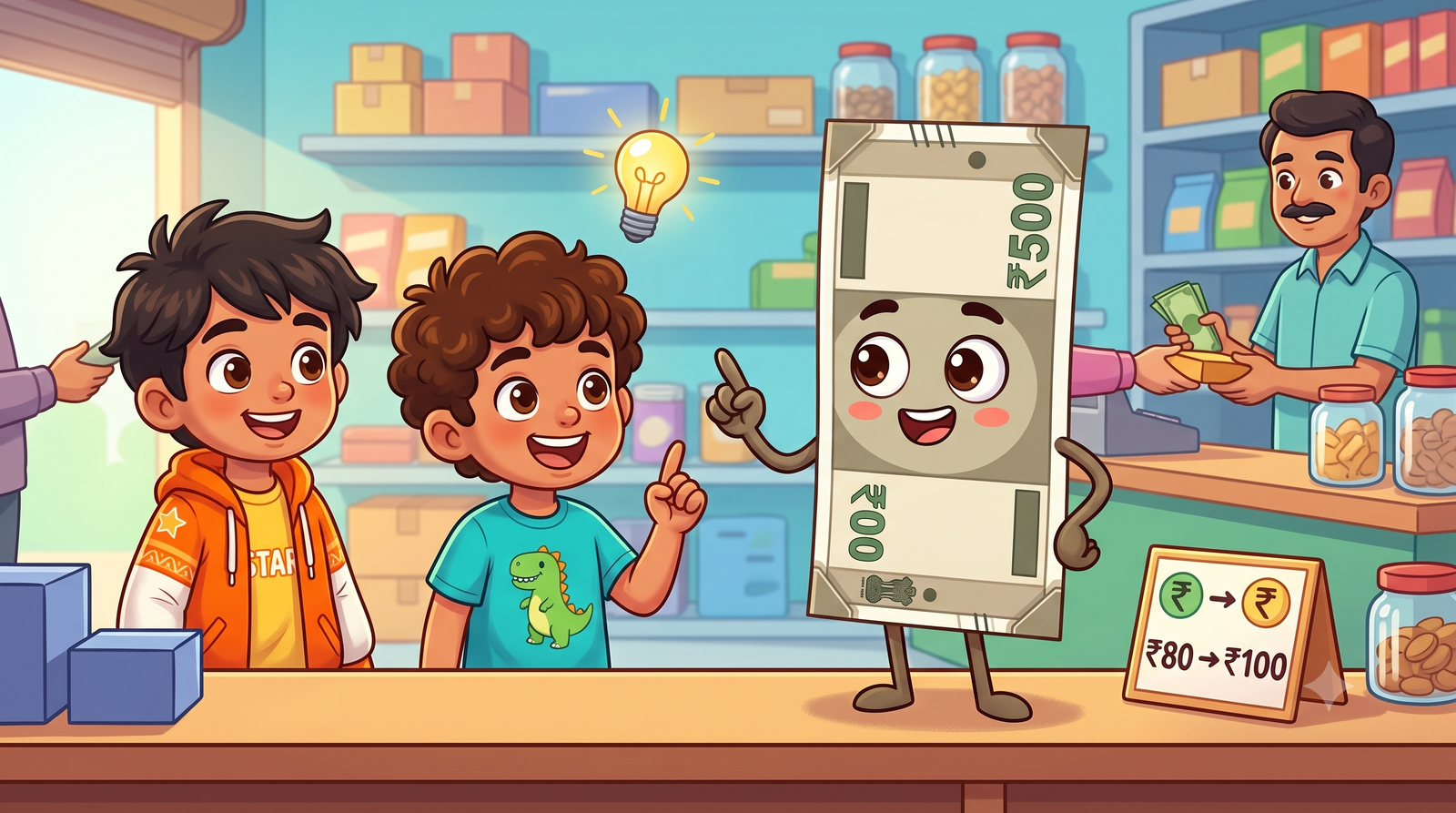
“That’s easy! ₹100 minus ₹80 equals ₹20. So the shopkeeper made ₹20 profit!”
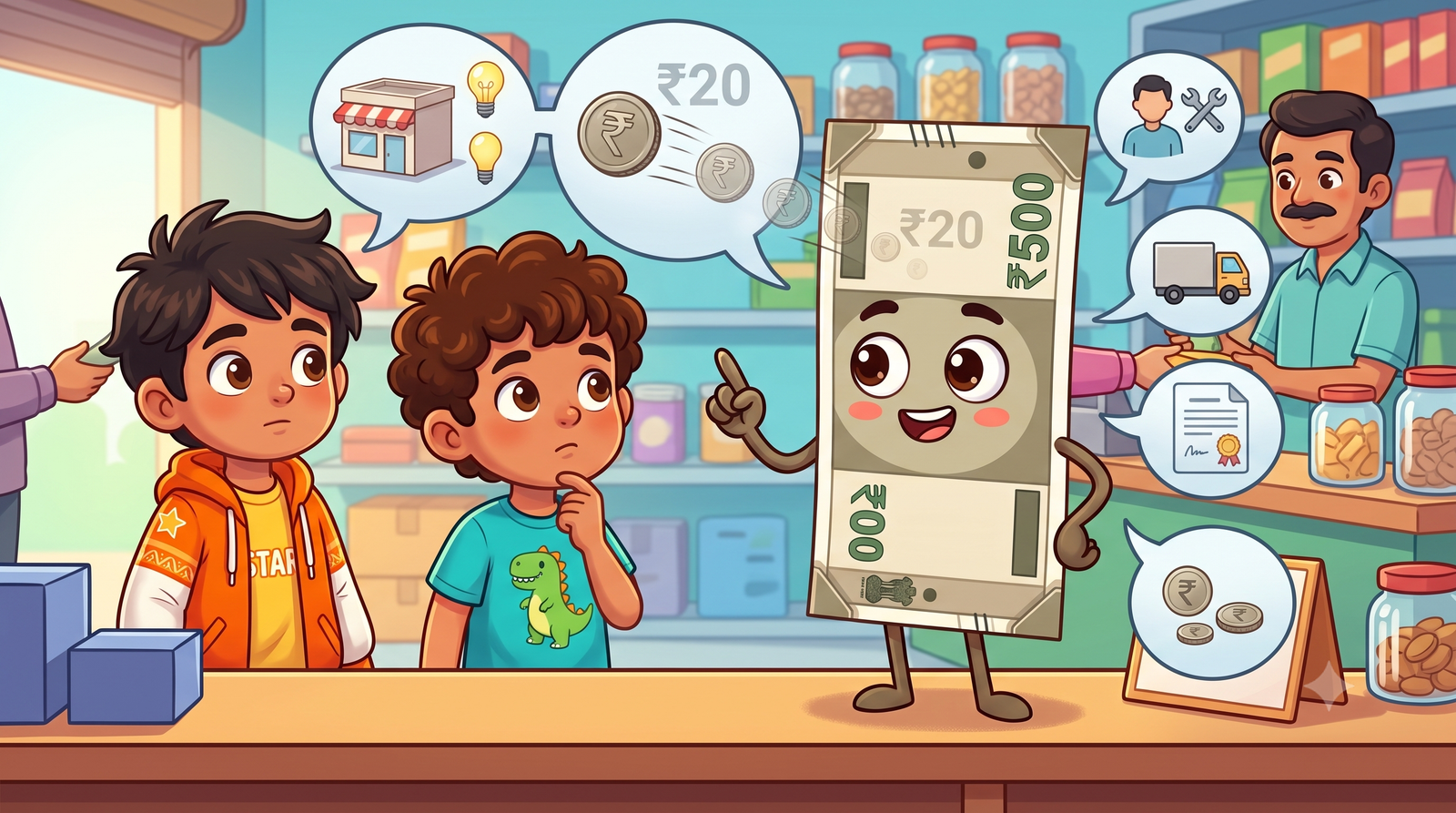
“Wait, Adu! The shopkeeper must also pay rent, electricity bills, and wages. Those expenses matter too!”
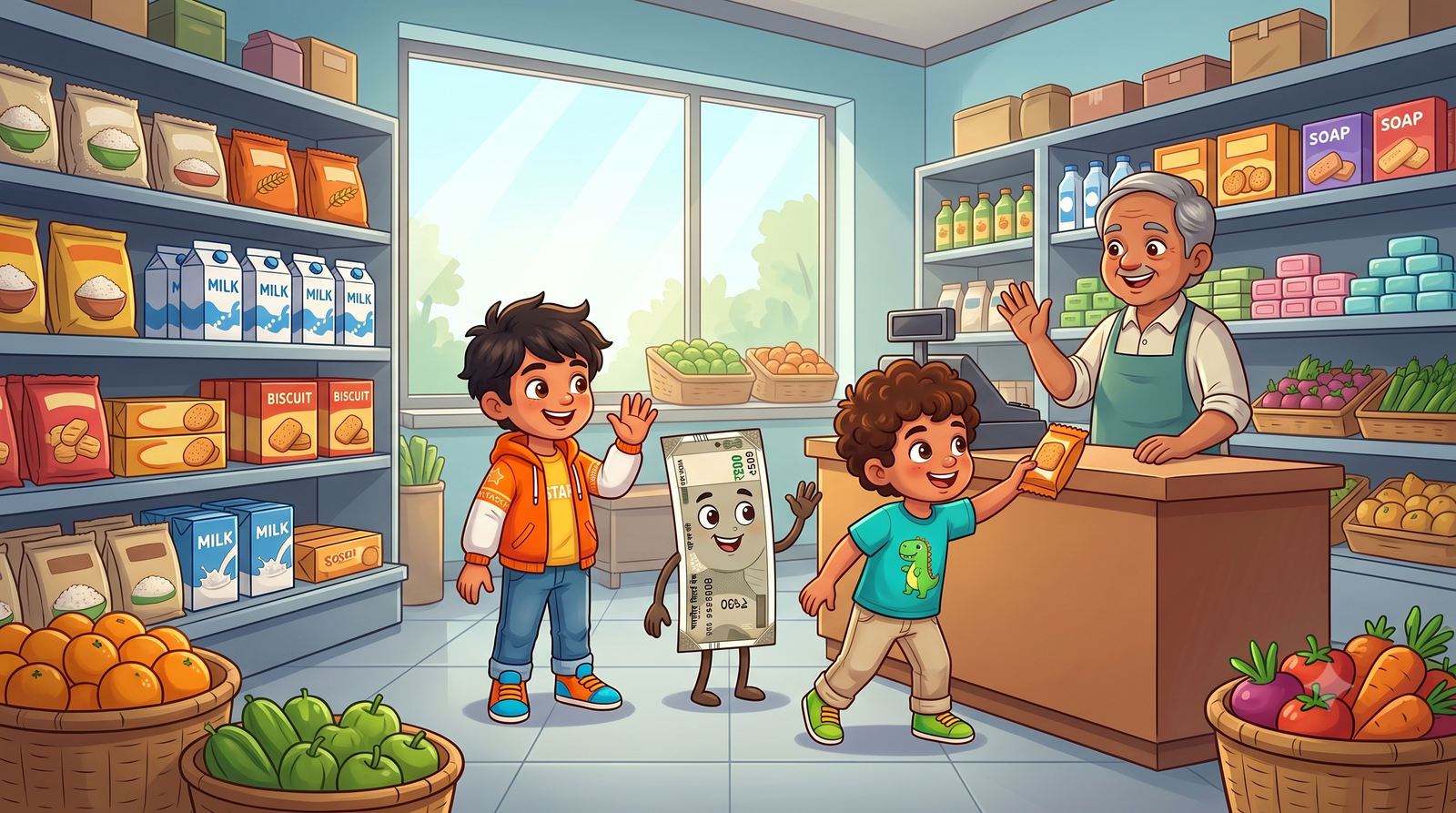
💚 The magical note revealed an important business secret! The money a shop receives from selling goods is called revenue. Revenue tells us how much money comes in from sales before subtracting costs and expenses.
🧮 If the shopkeeper buys an item for ₹80 and sells it for ₹100, the ₹20 difference is the gross profit on that item before other business expenses are considered.
💡 But running a shop costs money too! The shopkeeper may need to pay rent, electricity bills, wages, and other operating expenses. After accounting for the relevant costs and expenses, the amount left is the business’s net profit. If expenses are too high, the business may even make a loss.
Revenue is the money earned from sales. Profit is what remains after costs and expenses are deducted. Sales alone don’t tell the whole story!
Remember: rent, electricity, wages, and other expenses can reduce the final net profit. The ₹20 is not necessarily the shopkeeper’s final profit!
✨ Magical Money Adventure · Part 8
The Artist: Turning Creativity Into Income
Can a drawing become a dragon, a game become a business, and a song become a source of income? Join Adu and Roro as they discover how imagination can create real value.
🎨 A Studio Full of Magic
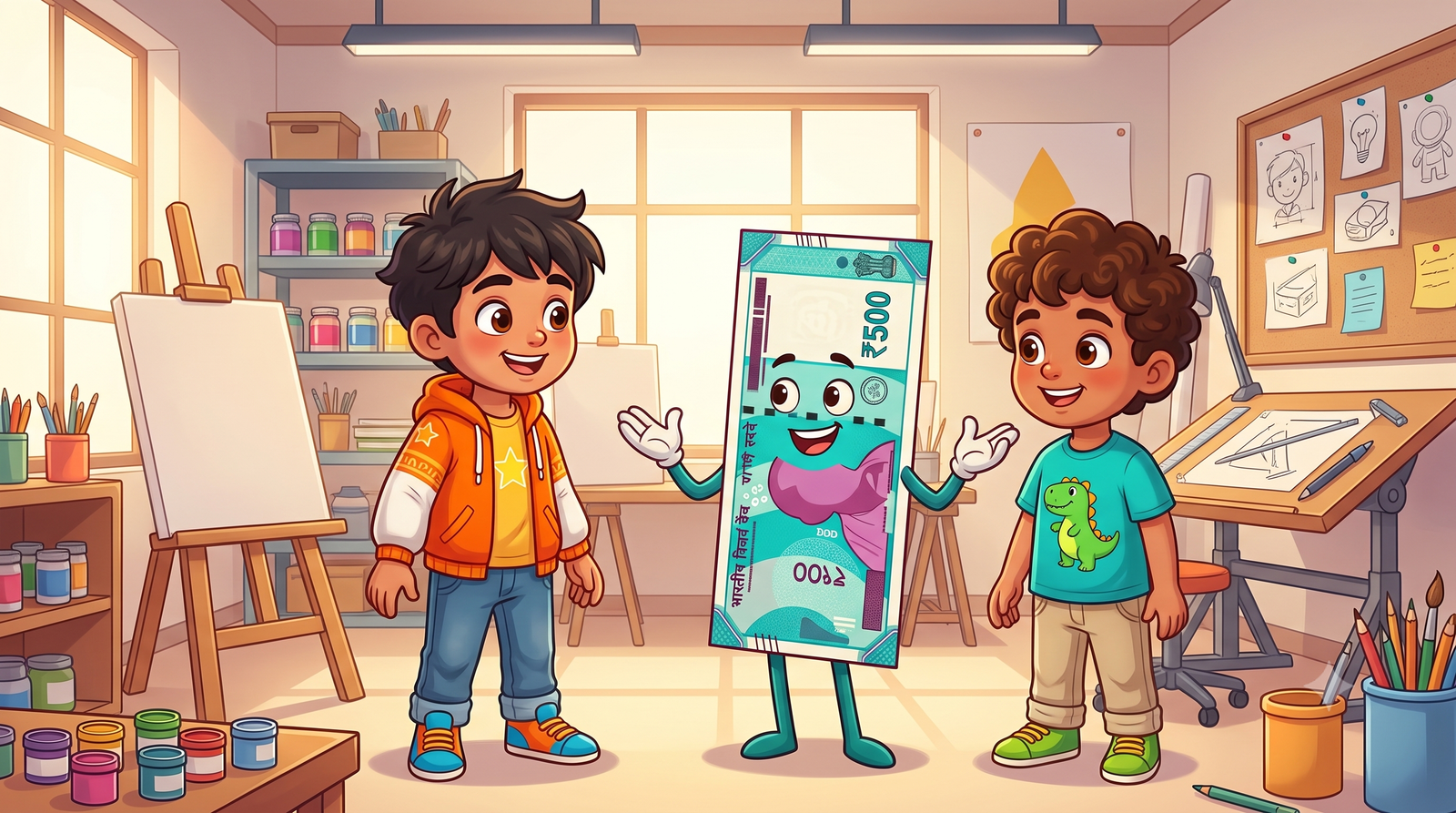
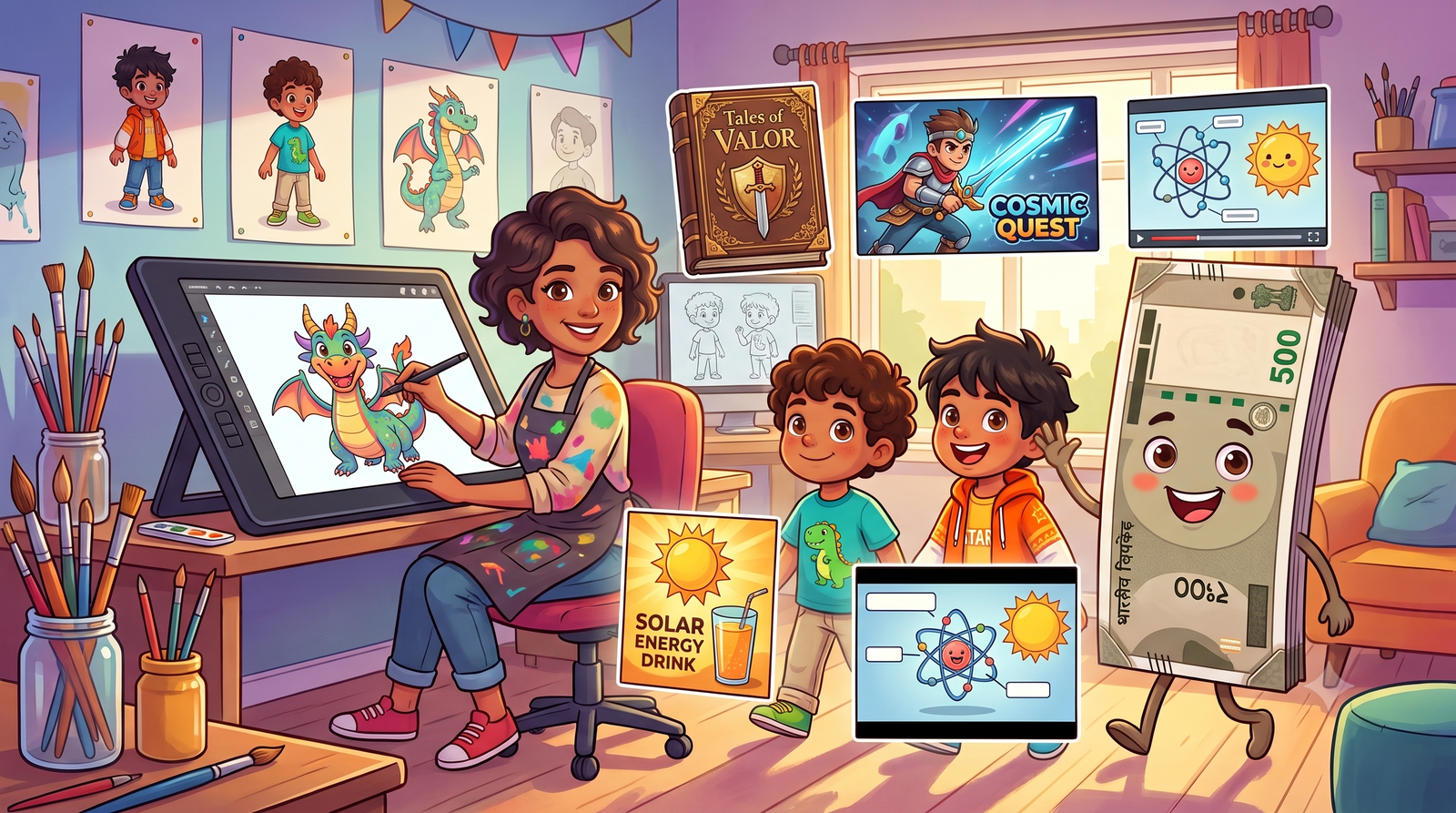
One sunny afternoon, Adu and Roro wandered into a colourful art studio. Paintbrushes stood in jars, sketches covered the walls, and a large computer displayed a magnificent dragon.
An artist was bringing the dragon to life, frame by frame. Its wings moved, its eyes blinked, and tiny sparks of fire danced from its mouth. The boys watched in amazement.

👦 Adu’s Big Question
Adu leaned closer to the screen. “You made that dragon yourself? But how can drawing pictures become a job?”
The Artist: “Every character starts with an idea. I use drawing, design, patience, and technology to turn that idea into something people can enjoy. Sometimes, people and companies pay me for my work.”
🤖 Roro Connects the Dots
Roro’s eyes lit up. “So when someone pays you to create a character, you’re earning money from your artistic skills!”
The Artist: “Exactly! People may hire artists to create book illustrations, animation, movie characters, video game designs, advertisements, and much more.”
🌈 Creativity Has Many Paths
The artist showed the boys different projects on a large screen. Each project began with creativity, but each could reach people in a different way.
Illustrations
Artists create pictures for books, comics, posters, and stories.
Films & Animation
Animators and artists help bring characters, scenes, and stories to life.
Video Games
Game artists design characters, worlds, objects, and visual effects.
Music & Digital Content
Musicians, designers, and digital creators can earn through commissions, licensing, sales, or eligible platform income.

💡 How Does Creativity Earn Money?
Adu wanted to understand how an artist could turn a creative idea into income. The artist explained that there are several ways.
Creating for a Client
A company pays an artist to design a logo, illustration, character, or advertisement.
Selling Creative Work
An artist may sell original artwork, prints, designs, or other creative products.
Licensing Artwork
An artist may allow a business to use their artwork under agreed terms and receive a licensing fee or royalties.
Digital Content
Creators may earn through paid projects, subscriptions, sponsorships, or eligible platform monetisation.
🧮 A Simple Money Example
Imagine an artist is hired to create a custom dragon illustration.
This is a simple illustration, not a guaranteed earning. Actual income depends on the project, costs, agreements, and other expenses.
The Big Lesson
Creativity Is a Skill. Skills Can Create Value.
Drawing, music, storytelling, animation, and design are more than hobbies. With practice, imagination, and effort, creative skills can help people solve problems, entertain others, and earn income.
🌍 Magical Money Adventure · Part 9
Thousands of Ways to Help and Earn
From chefs and drivers to scientists and entrepreneurs, Adu and Roro discover that the world is full of people using their skills to help others and earn money.
🏙️ A Town Full of Talents
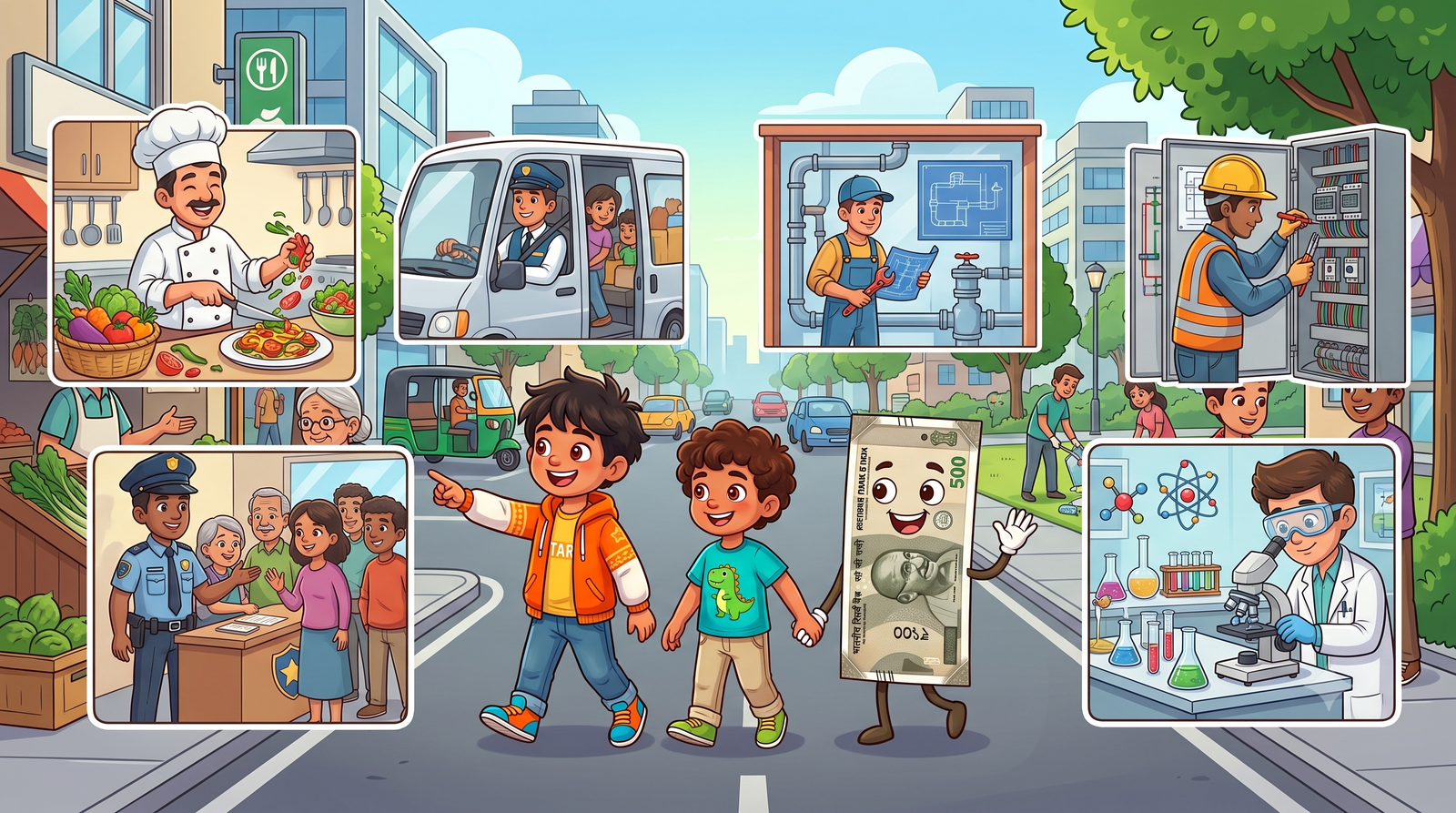
One bright morning, Adu and Roro set off to explore a busy town. The streets were full of activity. A chef prepared delicious food, a driver helped people reach their destinations, and a mechanic repaired a car that had stopped working.
Around every corner, someone was doing something useful. The boys began to wonder: could all these different jobs be ways of earning money?

👦 Adu Notices Something
“Look, Roro! The chef makes food, the driver takes people places, and the mechanic fixes vehicles. They all do different things, but everyone is helping someone!”
Roro: “You’re right, Adu! People pay for useful work because it saves time, solves problems, or gives them something they need.”
🧰 Meet the People Who Make Things Happen
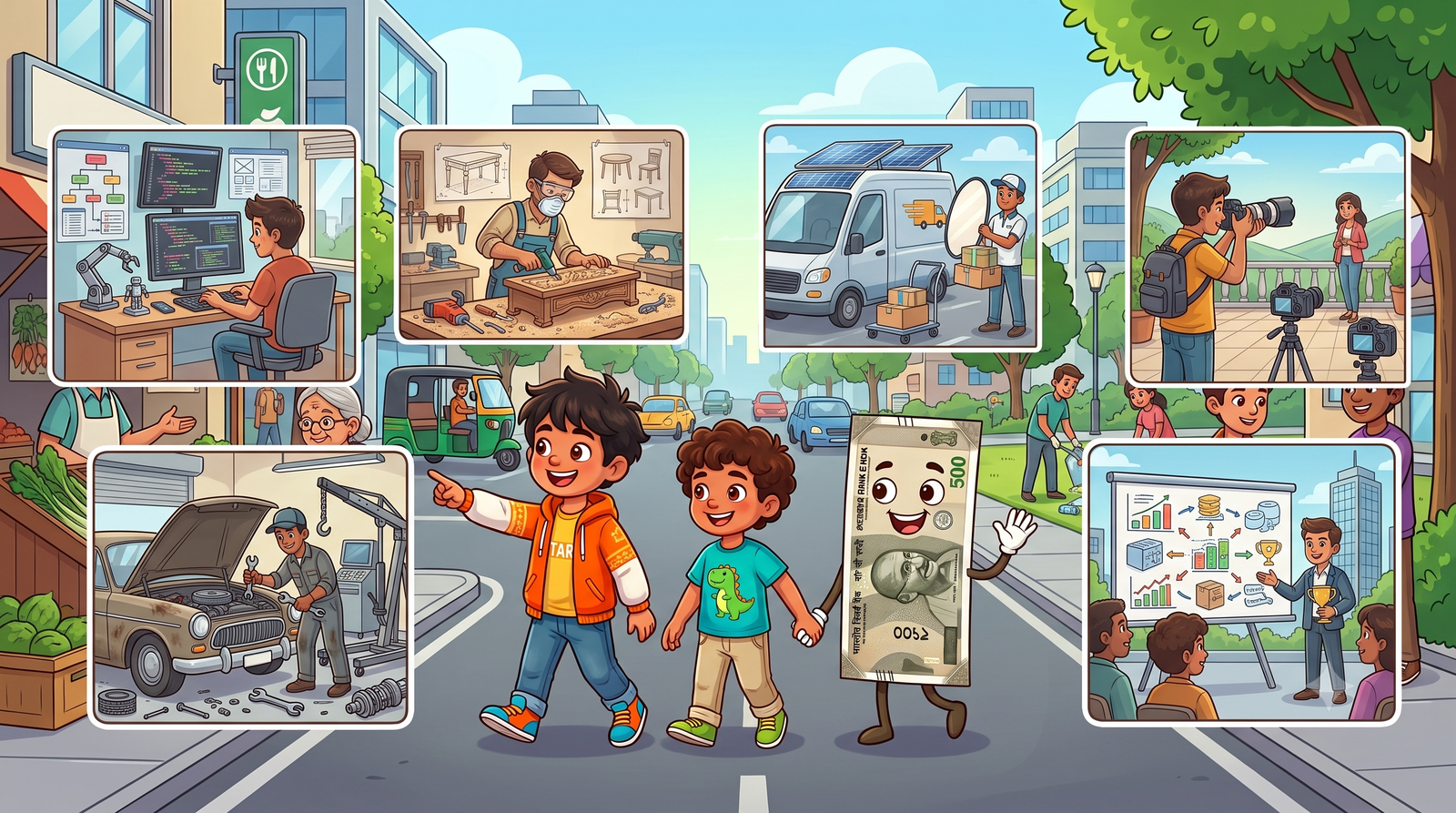
As they continued their walk, the boys discovered that useful work comes in countless forms. Some people create things, some repair them, some solve difficult problems, and others help businesses grow.
Chefs
Prepare meals that nourish people and bring them together.
Drivers
Help transport people, goods, and supplies to their destinations.
Plumbers
Install and repair pipes, taps, and water systems.
Electricians
Install and maintain electrical systems safely.
Scientists
Investigate questions and develop knowledge and discoveries.
Programmers
Write code to build websites, apps, and software.
Mechanics
Diagnose problems and repair vehicles and machines.
Photographers
Capture moments, tell stories, and create images for clients.
Entrepreneurs
Develop ideas, start businesses, and offer products or services.

🤖 Roro’s Big Discovery
Roro looked around the town and counted all the different kinds of work he could see. “There isn’t just one way to earn money. People can use their hands, minds, creativity, knowledge, or business ideas!”
Adu: “That means people can discover what they’re good at, practise their skills, and find ways to help others. There must be thousands of possibilities!”
💰 Different Paths, One Big Idea
The boys realised that people can earn in different ways. Some receive a salary for a job, some charge for a service, and some sell products they make or businesses they build.
Doing a Job
Employees may receive a salary or wages for their work.
Providing a Service
Professionals and skilled workers may charge customers for the services they provide.
Making or Selling Products
People may earn by making useful products or selling goods that customers need.
Building a Business
Entrepreneurs create businesses that provide products or services to customers.
🧮 A Simple Example
Imagine a bicycle mechanic charges ₹300 to repair a bicycle. The mechanic uses tools, time, and knowledge to solve the problem.
This is a simplified example. Actual earnings depend on the work, time involved, business expenses, and other costs.
The Big Lesson
There Are Thousands of Ways to Help and Earn.
Every community needs people with different skills. Whether someone cooks, repairs, drives, designs, discovers, builds, or starts a business, useful work can create value for others and provide a way to earn money.
The Big Secret: Creating Value for Others
What do teachers, doctors, farmers, engineers, and artists have in common? Adu and Roro are about to discover the big secret behind how people earn money!


Following the Magical ₹500 Note
The magical ₹500 note glowed in Adu and Roro’s hands. Suddenly, it began to sparkle and gently guided them back to the wonderful people they had met on their adventure.
First, they saw the teacher helping students understand new ideas. Next, the doctor cared for patients, the farmer grew fresh food, the engineer solved difficult problems, and the artist created something beautiful and enjoyable.
Everyone was doing something different, but each person was helping someone in their own special way.
What Do They All Have in Common?
The narrator smiled and asked the boys a very important question.
Adu
“The teacher shares knowledge, the doctor helps people feel better, and the farmer gives us food. They all do different things!”
Roro
“Wait! I think I’ve found the answer. They are all doing something useful for someone else!”
That’s the Big Secret!
People create value for other people. When they provide something useful, helpful, or enjoyable, that value can become a way to earn income.
Different Jobs, One Powerful Idea
Let’s see how different people create value in our daily lives.
The Teacher
Shares knowledge and helps students learn new skills.
Creates value through educationThe Doctor
Cares for patients and helps them manage their health.
Creates value through careThe Farmer
Grows crops that help feed families and communities.
Creates value through foodThe Engineer
Designs and builds solutions to everyday problems.
Creates value through solutionsThe Artist
Creates art that brings beauty, enjoyment, and inspiration.
Creates value through creativityMoney Begins With Value
Earning money isn’t just about receiving notes or coins. It often starts with understanding what people need and finding a way to help them.
A useful service, a helpful product, a new solution, or something that makes life more enjoyable can all create value. People may pay for that value, which can become income.
Can You Spot the Value?
Imagine someone repairs a broken bicycle. What value have they created for the bicycle’s owner?
They help the owner use the bicycle again, save time, and get where they need to go. Their useful work may earn them money!
Adu and Roro looked at the magical ₹500 note with fresh eyes. They had discovered something more valuable than the money itself: the secret of helping others.
“Create value, help people, and income can follow!”
✦Why Do Some Jobs Pay Differently?
Why might one person earn more than another? Adu and Roro are about to discover why different jobs can come with different pay!

A Question About Money
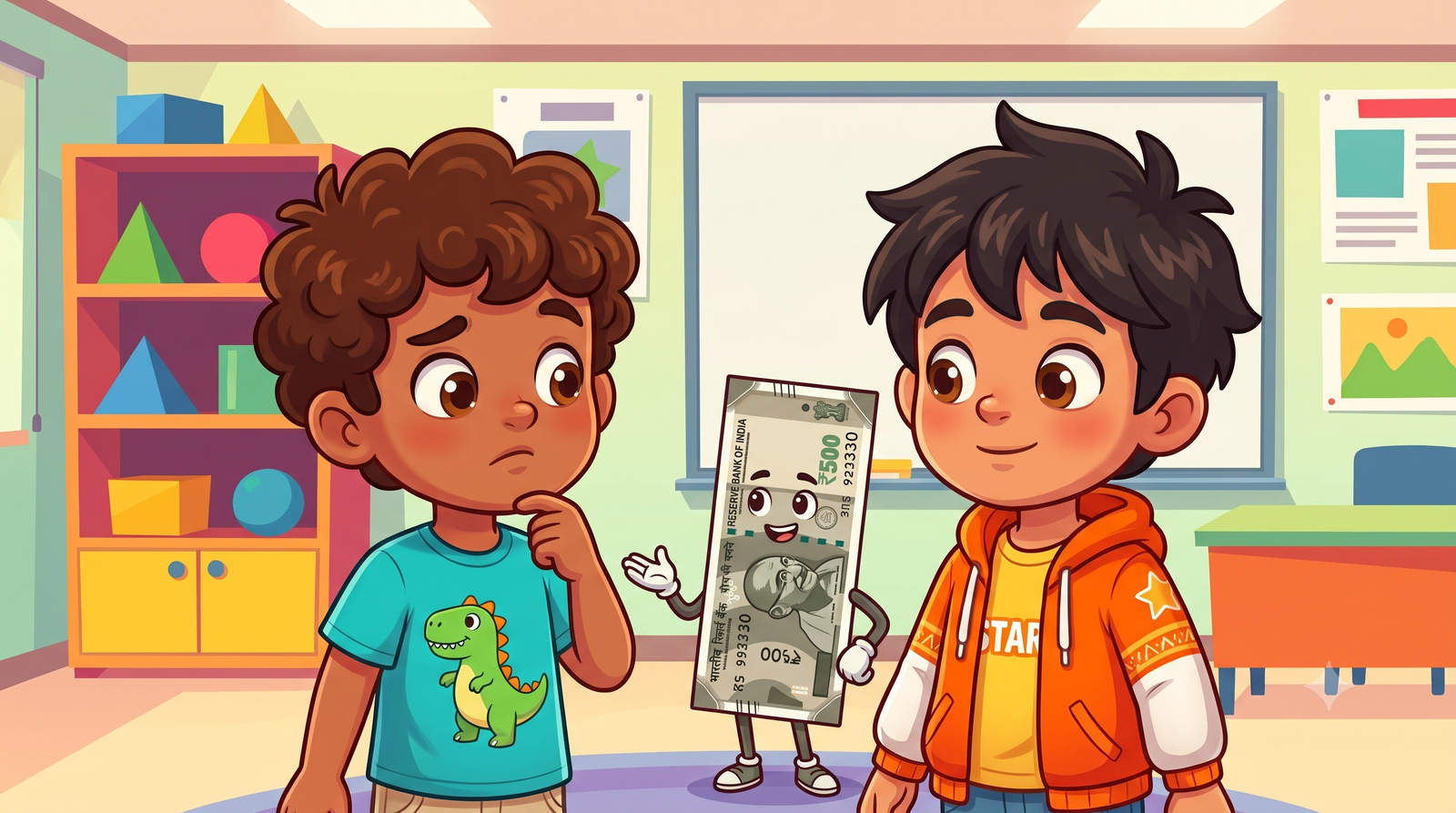
One sunny afternoon, Adu and Roro watched people going about their daily work. A teacher was teaching children, a doctor was caring for patients, a mechanic was repairing a vehicle, and an engineer was solving a technical problem.
Adu scratched his head. “They all work hard, but why doesn’t everyone earn the same amount of money?”
Roro looked at the magical ₹500 note and wondered whether it held another important lesson.
Seven Things That Can Affect Earnings
The boys discovered that pay can depend on several factors. No single factor decides everything, and different jobs and employers may work differently.
Skills
Some jobs require specialised skills. A skilled electrician, designer, or programmer may earn more when their abilities are valuable to employers or customers.
Education and Training
Some careers require degrees, professional qualifications, licences, or years of specialised training before someone can begin working independently.
Experience
People often improve through practice. Experienced workers may handle complex tasks, solve problems faster, and make better-informed decisions.
Responsibility
Some jobs involve managing teams, making important decisions, handling large budgets, or being accountable for safety. These responsibilities can influence pay.
Demand
When many employers or customers need a particular skill but few people can provide it, pay may increase. Demand can also change over time.
Location
The same job may pay differently in different cities or regions. Living costs, local demand, employers, and available opportunities can all make a difference.
How Many People Can Do the Job?
If a job needs rare skills and only a few qualified people are available, employers may offer more to attract them. If many qualified people are available, pay may be different.
It’s Usually a Combination
Earnings rarely depend on just one thing. Skills, training, experience, responsibility, demand, location, and worker availability can work together.
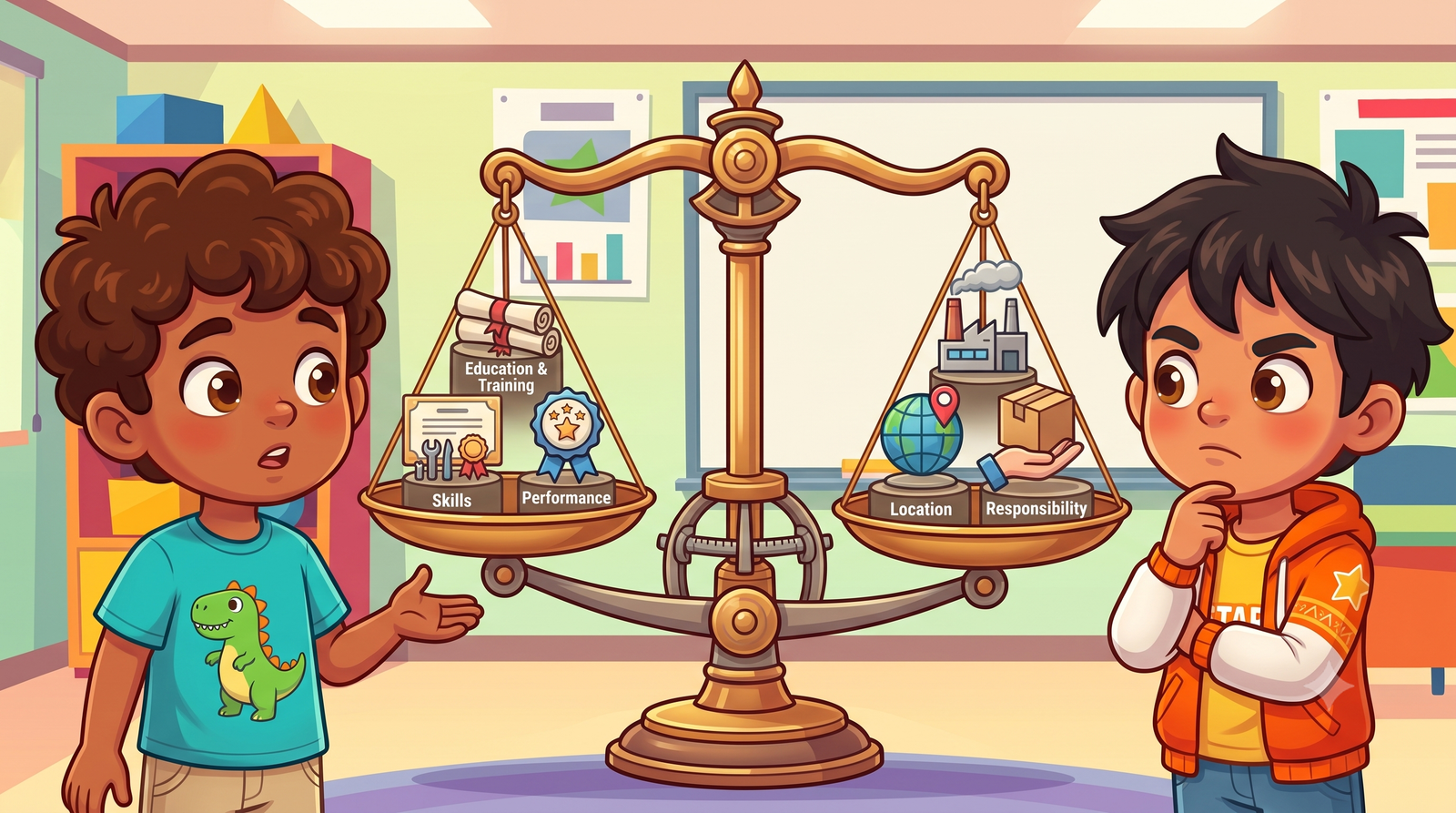
Two Jobs, Different Requirements
Job A
A role requiring basic training and routine tasks.
Different skill requirementsJob B
A specialised role requiring advanced training and complex decisions.
Different responsibilitiesIf Job B requires rarer skills or greater responsibility, it might offer higher pay. But the actual earnings depend on the employer, location, demand, and other conditions.
Does Higher Pay Mean Someone Is More Important?
Not at all! Many essential jobs may be paid less than other jobs. Teachers, cleaners, farmers, care workers, and many others make valuable contributions to our lives and communities.
Pay is influenced by many economic and workplace factors. It does not measure a person’s kindness, dignity, effort, or worth as a human being.
Different Jobs, Different Earnings
Earnings can vary because jobs require different skills, education, experience, responsibility, and levels of demand. Location and the number of qualified workers can also influence pay.
Understanding these factors can help us make thoughtful decisions about learning, careers, and our future.
Can You Solve Adu’s Question?
Imagine two people work in the same profession. One has ten years of experience, while the other has just started. Could their earnings be different?
Think About It!
Yes, they could earn different amounts. The experienced person may have stronger skills or greater responsibilities. However, pay also depends on the employer, role, location, and other circumstances.
Adu nodded as the pieces of the puzzle came together. Roro smiled and tucked the magical ₹500 note safely away. They now understood that jobs can have different pay for many different reasons.
“Learn new skills, gain experience, and keep discovering!”
✦The Money Circle: How Money Moves
What happens to your money after you spend it? Adu and Roro are about to discover how money travels from one person to another, keeping the world of buying and selling moving!
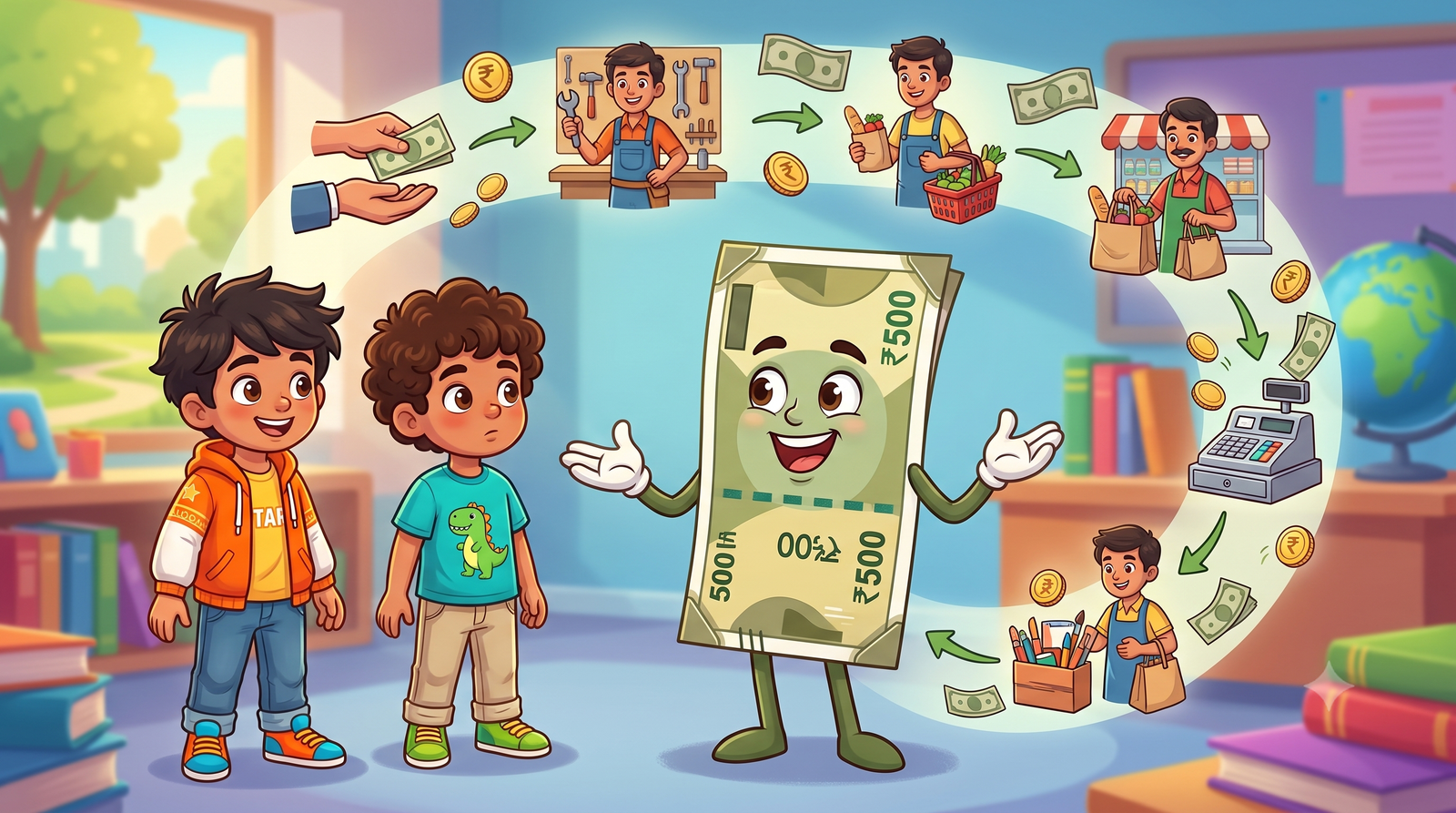

Roro’s Restaurant Visit
One afternoon, Roro and Adu felt hungry after a long day of exploring. They stopped at a restaurant and ordered a delicious meal.
When the bill arrived, Roro paid the restaurant for the food and service. He smiled, enjoyed his meal, and thought that was the end of the story.
But the magical ₹500 note began to sparkle! “Wait a minute,” Adu said. “What happens to the money after the restaurant receives it?”
Follow the Journey of Money
Roro’s payment becomes part of the restaurant’s income. The restaurant uses its money to pay for different things, and those payments can become income for other people.
Roro Spends Money
Roro pays the restaurant for his meal. In return, he receives food and service.
The Restaurant Receives Money
The restaurant receives payment from customers. It can use its revenue to pay business expenses, such as wages, ingredients, rent, and utilities.
Where Does the Restaurant’s Money Go?
The restaurant pays different people and businesses that help it operate.
Employees
Receive wages or salaries for their work.
Suppliers
Receive payments for vegetables, ingredients, and other goods.
Landlord
May receive rent for the restaurant’s premises.
Service Providers
May receive payments for electricity, delivery, or other services.
Other People Spend It
Restaurant employees may buy groceries. Suppliers may pay their workers. The landlord may shop at local stores. Each payment can become income for someone else.
More Businesses Receive Money
Grocery shops, markets, transport services, and many other businesses receive payments for the goods and services they provide.
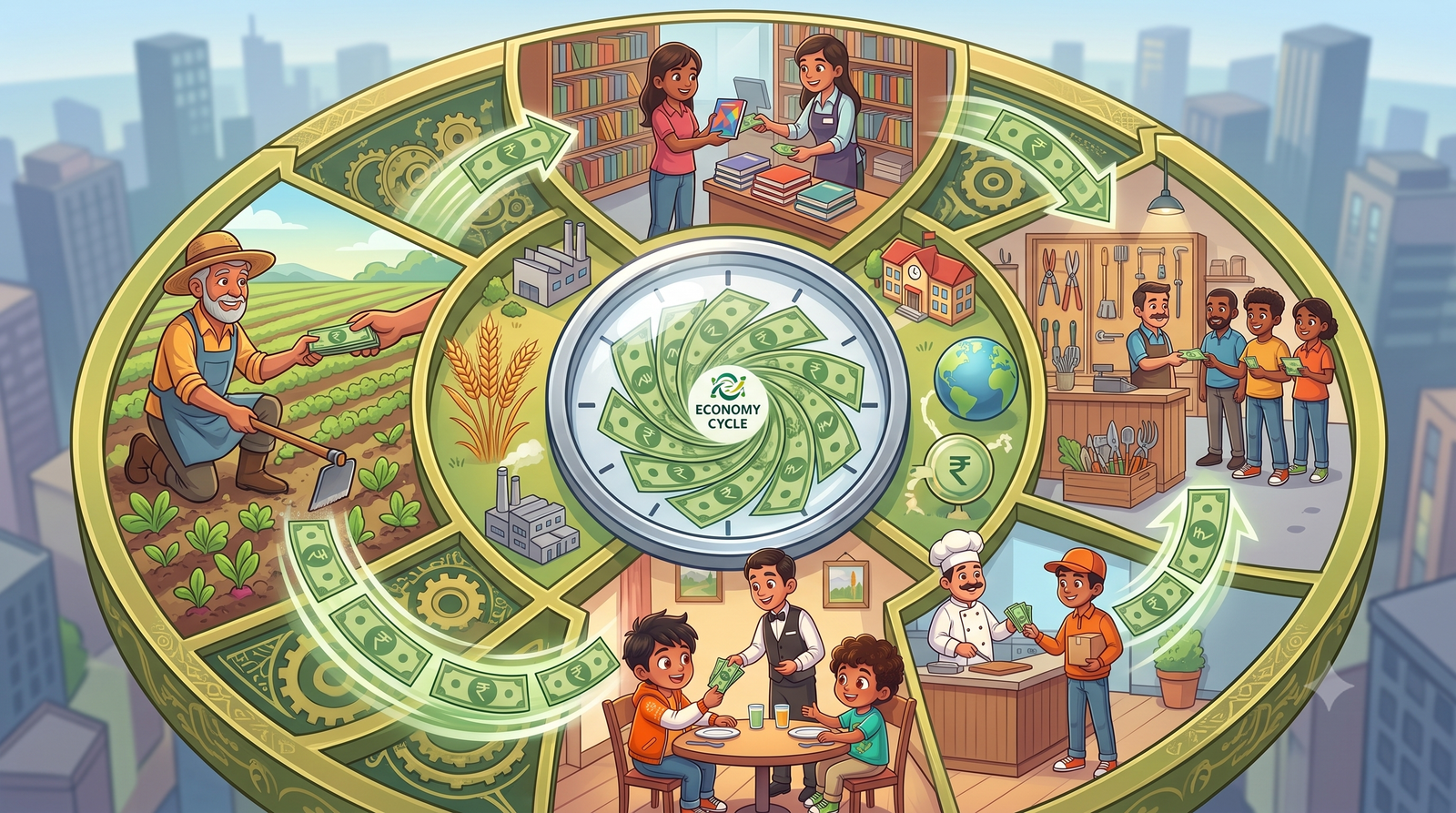
The Money Circle
People earn money, spend it on what they need, and help other people earn money through their purchases.
This is a simplified picture. In real life, money can also go toward savings, taxes, loan repayments, investments, and many other uses.

One Purchase, Many Connections
Imagine a restaurant worker receives wages and buys groceries from a neighbourhood shop.
The worker pays the shopkeeper for groceries.
The shopkeeper uses some business revenue to restock goods.
The wholesaler receives payment for supplying the groceries.
The wholesaler may then pay workers, transporters, or producers.
One person’s spending can become another person’s income. That’s how many everyday transactions connect people and businesses.
Does the Same Money Note Travel Everywhere?
Not necessarily! When people pay digitally, the payment is recorded electronically. Even when people use cash, a business may deposit some money, save some, or use it for other expenses.
The important idea is that payments connect people, businesses, and services. Money can move through many transactions, rather than following one exact path.
Money Connects Us All
Money helps people exchange goods and services. When customers spend, businesses receive payments. Businesses may then pay workers and suppliers, who can use their earnings to buy goods and services from others.
This continuous movement of money is one way people and businesses are connected throughout the economy.
Can You Continue the Money Journey?
Roro buys a sandwich from a café. The café uses part of its revenue to pay the baker who supplies its bread. What might the baker do with that payment?
Think About It!
The baker might pay employees, buy flour from a supplier, pay for electricity, or spend money at another business. Those payments can continue the journey of money!
Adu and Roro watched the magical ₹500 note sparkle again. They realised that spending money was not just about buying something. It was also part of a much bigger connection between people, workers, and businesses.
“When money moves, people and businesses connect!”
✦Jobs, Businesses, and Other Sources of Income
Does everyone earn money in the same way? Mum is ready to explain how people earn through jobs, businesses, and other sources of income. Adu and Roro are about to discover that there is more than one way to earn!
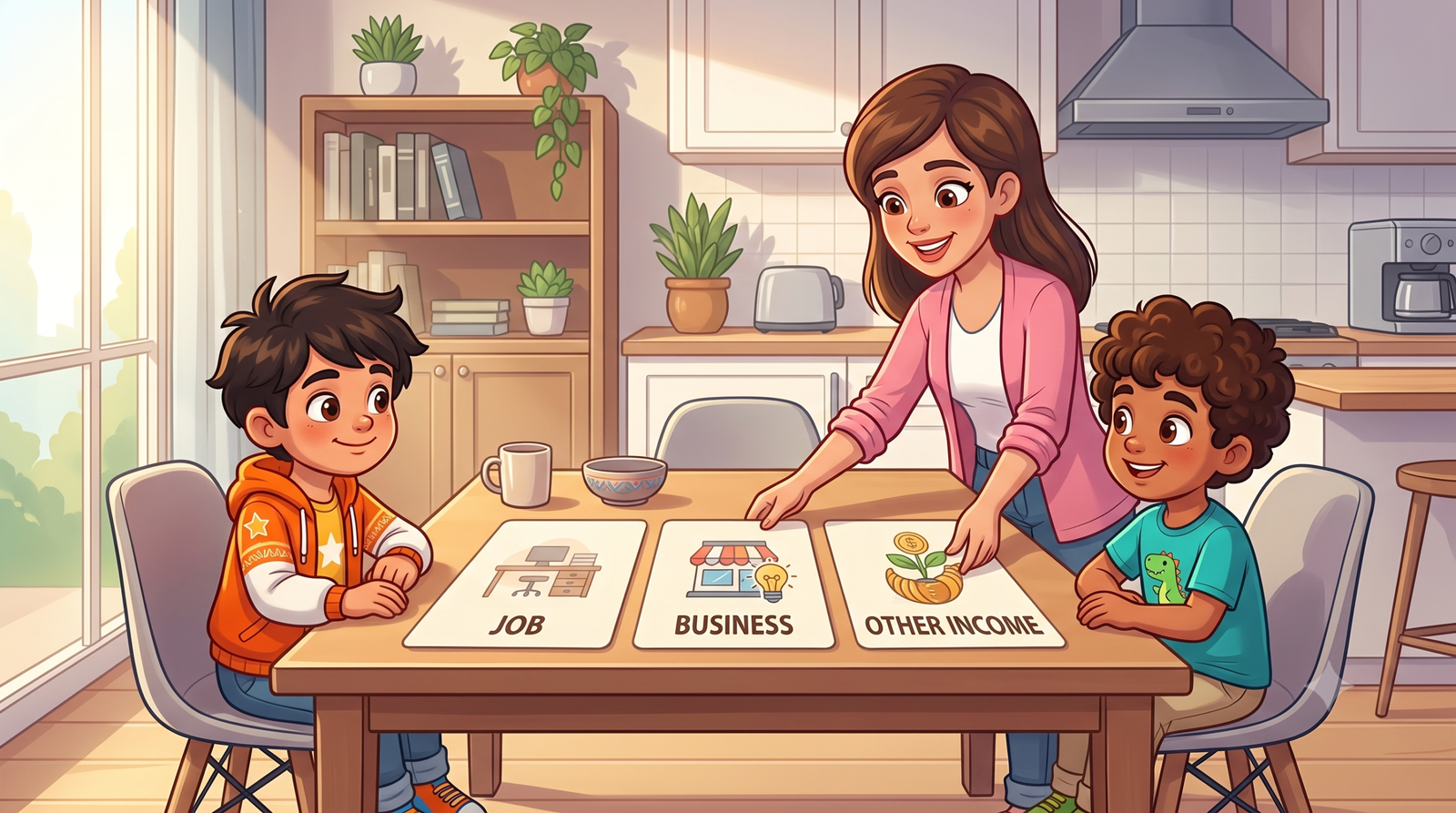
Mum’s Interesting Question
One evening, Adu and Roro were talking about all the people they had met during their Magical Money Adventure.
“Some people work in offices, some run shops, and others seem to earn money without going to an office every day,” Adu wondered. “How do they all earn?”
Mum smiled and sat beside them. “That’s a wonderful question! People can earn money in several different ways. Let’s explore some of them together.”
Three Broad Ways People Can Earn
People may earn through employment, running a business, or receiving income from investments and other sources. Let’s see how each one works.
Wages and Salaries
Employees work for an employer and receive wages or a salary in return for their work.
A teacher receives a salary for teaching students. A shop assistant may receive wages for working shifts.
Business Profits
Business owners sell products or services. If their revenue is greater than their expenses, they may make a profit.
A bakery sells cakes and bread. After paying for ingredients, wages, rent, and other expenses, money may remain as profit.
Income From Other Sources
People may also receive income from investments, property, creative work, or money they lend.
Someone may receive rent from a property or royalties when their book or music is used under an agreement.

Earn by Working for Someone
Many people work for a company, school, hospital, shop, or another organisation. Their employer pays them for the work they do.
Teacher
Receives a salary for teaching and supporting students.
Restaurant Worker
May receive wages or a salary for preparing food or serving customers.
Hospital Employee
May receive a salary for providing healthcare or support services.
Earn Through a Business
Business owners provide products or services to customers. They receive revenue from sales, but they also need to pay the costs of running their business.
If the revenue is greater than the relevant expenses, the business makes a profit. If expenses are greater than revenue, it may make a loss.
A Bakery’s Simple Example
Other Ways People May Receive Income
Not all income comes directly from a job or from operating a business. Here are some other possible sources.
Investment Income
Some investments may provide dividends or other distributions. Investments can also rise or fall in value, and income is not guaranteed.
Money investedRent
A property owner may receive rent from someone using a house, flat, shop, or other property under an agreement.
Property incomeRoyalties
An author, musician, or creator may receive royalties when their work is used or sold under the terms of a relevant agreement.
Creative workInterest
Someone may receive interest on eligible savings or money they lend, depending on the account or agreement.
Interest earnedWho Earns Money, and How?
These simple examples help Adu and Roro remember the difference.
Employee
Works for an employer.
Business Owner
Sells goods or services and pays business expenses.
Property Owner
Allows someone to use their property under an agreement.
Author
Creates a book that may earn royalties.
Saver or Lender
Keeps eligible savings or lends money under agreed terms.
There Is More Than One Way to Earn
People may earn money by working for an employer, running a business, or receiving income from investments, rent, royalties, and interest.
Each source works differently. A salary is payment for work, business profit depends on revenue and expenses, and other sources of income depend on the asset, agreement, or investment involved.
Understanding these differences helps us make better decisions about earning, spending, saving, and planning for the future.
Can You Identify the Income Source?
Imagine three people:
- Meera works at a school and receives a monthly payment.
- Raj runs a shop and has money left after paying his business expenses.
- Sana receives rent from a flat she owns.
Check Your Answer
Meera receives a salary, Raj may earn a business profit, and Sana receives rental income. Each person receives money in a different way!
Adu and Roro thanked Mum for explaining the different ways people earn. They realised that understanding income was not only about knowing how much money someone receives, but also about understanding where that money comes from.
“Understand how you earn, and you can plan how you grow!”
✦The Final Lesson: Value Comes Before Income
Before we earn money, we can learn, practise, imagine, create, and help. Every valuable journey begins with something we bring to the world.
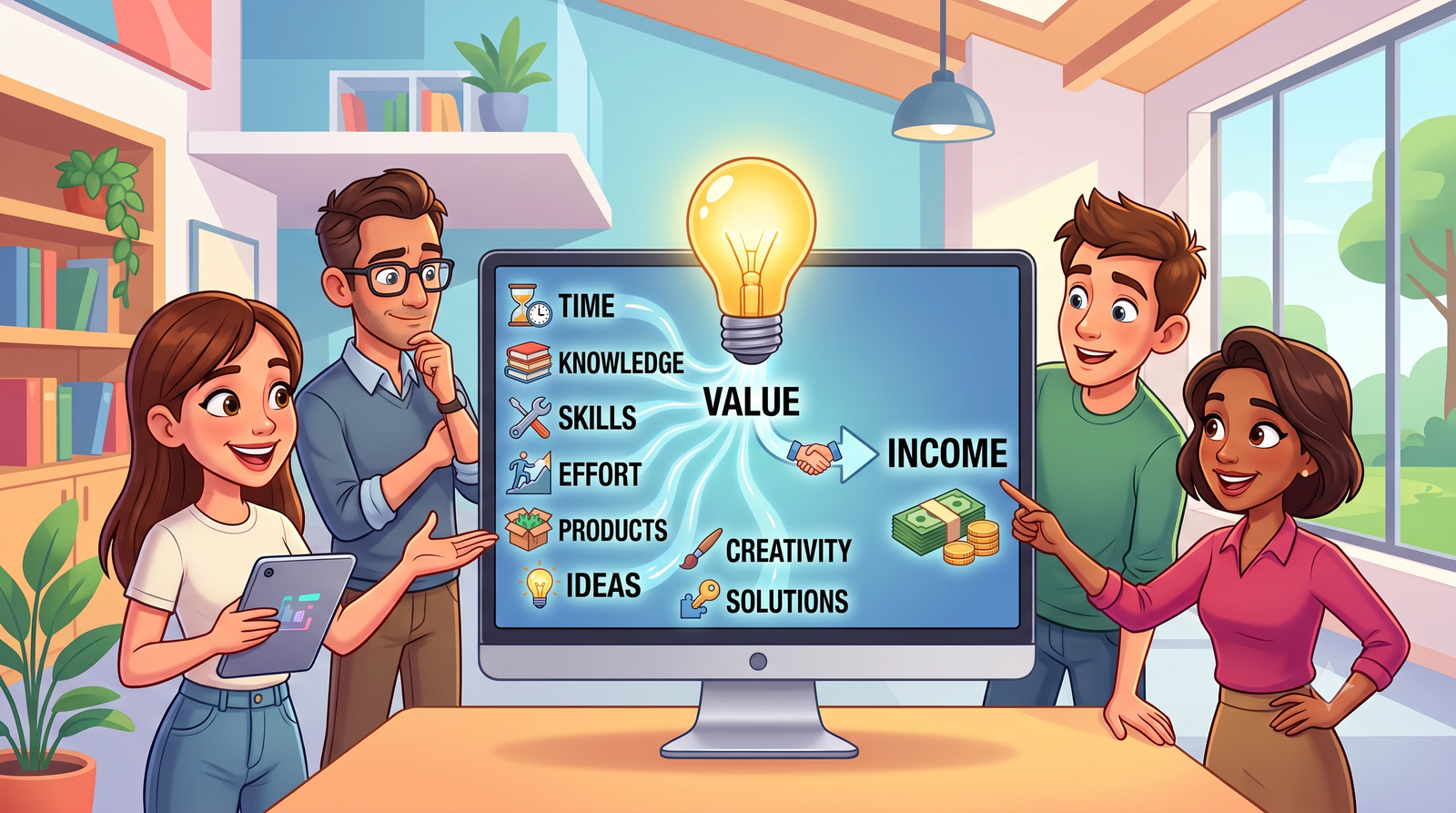

Roro Finally Understands
Roro looked back at everything the boys had discovered about money. They had explored jobs, businesses, products, services, revenue, profit, and different sources of income.
“I think I understand now,” Roro said. “Money isn’t always the starting point. Before income can happen, someone might learn a skill, solve a problem, make something useful, or help another person.”
“Exactly!” said Adu. “The first question isn’t always about money. Sometimes, it’s about the value we can create.”
Every Valuable Journey Starts Somewhere
Income isn’t the only thing we can begin with. We can begin by building what we have.
Knowledge
Learn something new and understand how the world works.
Skills
Practise until you become better at doing something useful.
Time & Effort
Give a task your attention, patience, and honest effort.
Creativity
Imagine new possibilities and find different ways to help.
Ideas
Notice opportunities and think of solutions to real problems.
What Can You Bring to the World?
Imagine someone who loves drawing. They can start by learning new techniques and practising every day. Over time, they may create artwork that people enjoy or find useful.
Or think about someone who enjoys fixing things. By learning, practising safely, and improving their skills, they may help others solve everyday problems.
The same idea applies to many activities: learn, practise, create, improve, and look for ways to be useful.

Ask Better Questions
Instead of thinking only about getting money, Adu and Roro learned to ask:
What can I learn?
Build knowledge that helps you understand or do something better.
What can I create?
Turn your imagination, skills, or ideas into something useful.
What problem can I solve?
Look for a need, challenge, or difficulty that you could help address.
How can I become useful to others?
Think about how your time, effort, knowledge, or creativity could help someone.
From Learning to Possible Income
There is no guaranteed shortcut, but this is one way value can grow over time.
Discover knowledge and build understanding.
Use your time and effort to improve.
Make something useful or solve a problem.
Share what you can offer with people who need it.
Income may follow. People may choose to pay for something valuable, but earning money is never automatic or guaranteed. Keep learning, improving, and understanding what others need.

The Most Important Thing to Remember
Adu and Roro realised that money is only one part of a much bigger story. Behind many useful products, helpful services, and successful ideas are people who learn, practise, solve problems, and create value.
You don’t have to know everything today. Start small. Stay curious. Build your skills. Try your ideas. Learn from mistakes. Look for ways to make life a little better for someone else.
The ₹500 Question!
One little question. Two brothers. A surprising decision that nobody saw coming!

Mum Has One Important Question
Back home, Mum looked at the boys and asked what they planned to do with the ₹500.
Adu, who had learned quite a lot about money during their adventure, stood up confidently and announced his plan.
“We should spend ₹100 on ice cream and save the remaining ₹400!”
Mum smiled at his answer. But Roro? Roro was absolutely stunned. He stared at Adu as if he had just witnessed the most unbelievable event in the history of the universe.
Roro Could Not Believe His Ears!

“WHO ARE YOU AND WHAT HAVE YOU DONE WITH MY BROTHER?!”
Roro was clearly not prepared for this new, responsible version of Adu!
Mum burst out laughing. Adu started laughing too, and soon everyone was laughing together.
So, What Will They Do With ₹500?
A little treat today, with money saved for tomorrow.
Ice Cream Treat
Enjoy a little something today.
20% of the moneySave for Later
Keep most of the money for a future need or goal.
80% of the money₹100 + ₹400 = ₹500 The whole amount has a plan!
The Adventure Ends.
The Learning Never Does.
From wondering where money comes from to discovering how value is created, Adu and Roro have travelled a long way. Now, it’s time to bring every lesson together.
Learn with curiosity. Create with purpose. Earn with effort. Use money with wisdom.

Every Great Adventure Leaves You with Something Valuable
And so, our adventure with Adu and Roro reaches its final page. Along the way, the boys discovered that money is more than coins, notes, prices, or numbers on a screen. Behind money are people, choices, ideas, hard work, and the things we create to help one another.
They learned that income can come from different places, that businesses must think about costs as well as revenue, and that knowledge and skills can help people solve problems and create value.
But the most important lesson was this: earning money isn’t only about receiving it. It’s also about what you learn, what you contribute, and how you use your time, effort, creativity, and ideas to make something worthwhile for others.
Your Money Adventure Toolkit
Four powerful ideas to carry with you long after this story ends.
LEARN
Stay curious. Build knowledge, develop skills, ask questions, and learn from mistakes. You don’t have to know everything to begin.
CREATE
Turn ideas into something useful. Make, improve, imagine, design, or solve a problem that matters to someone.
EARN
Use your knowledge, skills, time, and effort to offer value. Income may follow when people are willing to pay for what you provide.
USE MONEY WISELY
Once you have money, pause and make thoughtful choices about today’s needs, tomorrow’s goals, and the people you care about.
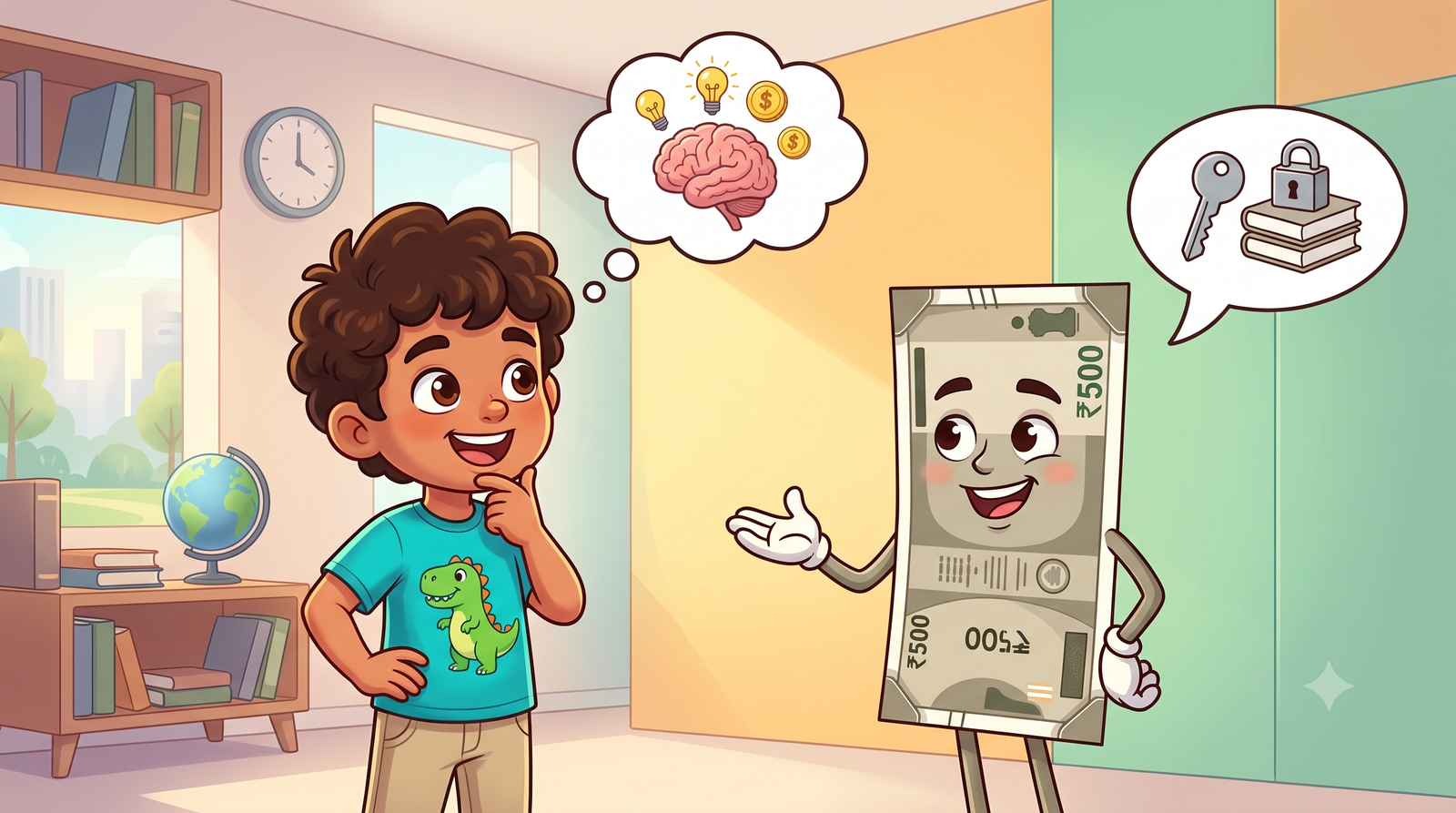
It Started with Questions. It Grew into Understanding.
At the beginning, money might have seemed like something people simply received or spent. Now, you know there is a bigger story behind it.
People learn, work, create products, provide services, run businesses, solve problems, and help meet the needs of others. These activities can create value, and that value can sometimes lead to income.
Because Knowing How to Earn Is Only Half the Story
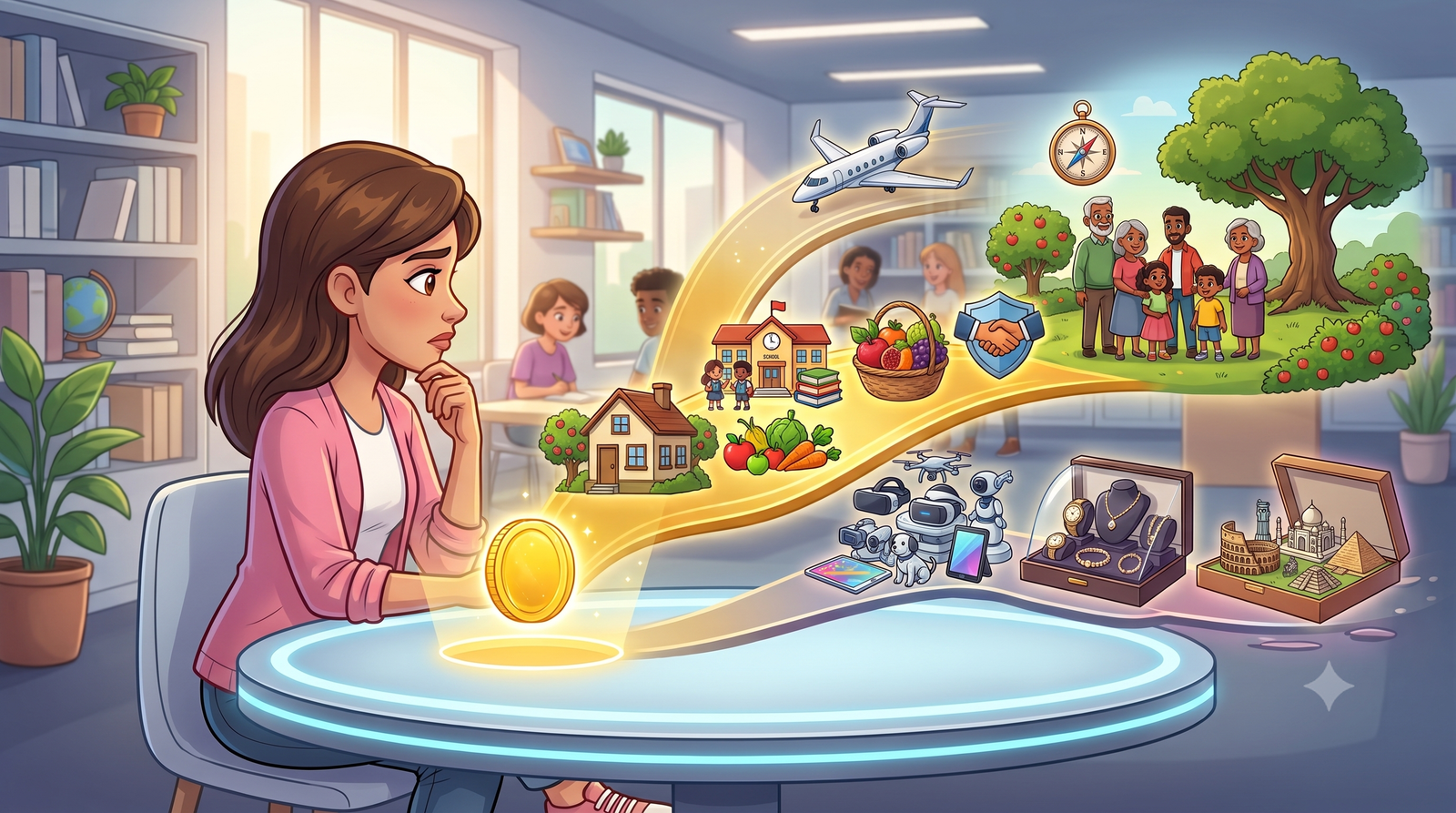
Learning to earn money can help you create opportunities. Learning to use it thoughtfully can help you make decisions that support your goals and values.
And that opens the door to another exciting adventure—one filled with choices, goals, generosity, patience, and planning.

Learn skills. Create value. Help people. Solve problems. And learn to use the money you earn wisely.
Enjoying the Adventure?
Support our channel and join us for more stories, learning, and adventures!




Leave a Reply